Choosing the right punching bag is key to improved workout performance and success in your at-home boxing training. With so many options and sizes available, it can be difficult to determine which heavy bag is right for you, especially as a beginner boxer. We’ll show you how to choose a punching bag for at-home use.
Выбор боксерского мешка. На что обращать внимание?
Understanding Heavy Bags
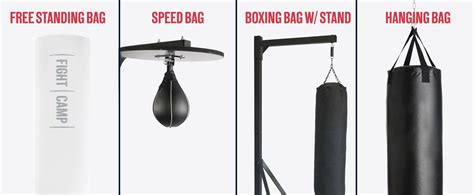
Heavy bags are punching bags generally weighing up to 200 pounds. There are two types of heavy punching bags you can use:
- Traditional hanging bags
- Free-standing punching bags
Traditional hanging punching bags are usually attached to the ceiling or a stand and swing when kicked or punched. Free-standing punching bags are fitted onto a base that provides a stable foundation.
Generally, heavy bags are used to improve punching and kicking skills. Heavy bags may be used in a number of different combat sports including boxing, kickboxing, Muay Thai, taekwondo, and karate.
Heavy punching bags hang from the ceiling and range between four and six feet. True to their name, each weighs at least 100 lbs. or more. The height and weight are effective in building endurance and power as you mimic hitting the target areas of an opponent. On the other hand, smaller bags are between two and four feet and weigh between 50-70 lbs. are better suited when focusing on hand strikes and improving precision. Their bounce-back factor is more noticeable than what you’ll experience with a 100-lb. heavy bag which also helps with footwork drills.
Read also: Choosing the Right Everlast Bag
Factors to Consider When Buying
Several factors must be considered, including the size and weight of the bag, as well as its construction and style. Do you want to hyper-focus on developing speed? Or, do you need equipment that will aid in your full-body workout?
Size and Weight
If you’re wondering what weight and size of heavy punching bag is best for you, the general rule is that heavy bags should be approximately half your body weight. A 200 pound person may find a 100 pound bag suitable for use. For most adults, hanging bags should be at least 80 pounds to provide a good experience.
Here are some basic guidelines regarding various punching bag weights:
- 40 pounds: optimal for youth boxers and young beginners
- 70 pounds: designed for teenagers and beginners
- 100 pounds: suitable for intermediate boxers
- 200 pounds: designed for heavyweight boxers
Construction and Material
When training with a heavy bag, it’s crucial to invest in quality construction that can withstand intense rounds of punches and kicks without breaking down. When it comes to leather vs. Natural leather provides superior durability with a soft, comfortable feel but requires regular maintenance. Some fighters also prefer canvas or vinyl options. Canvas bags aren’t as durable and often lose their shape more quickly. Whereas, vinyl is easier to clean but can also wear over time and aren’t as flexible as other materials.
Soft filling is best for beginners. It allows athletes to focus on endurance training as they improve their form. Whereas, medium to hard fillings are suggested for intermediate or advanced athletes.
Read also: Exploring the Advantages of Electronic Punching Bags
Heavy bags are versatile enough to fit within all different types of fighting and boxing training styles.
Hanging vs. Freestanding
Hanging punching bags are most commonly used in traditional boxing gyms. A free-standing heavy bag works well for small spaces and is easy to set up. Heavy bags weigh 100 lbs. or more and are ideal for full-body workouts and building strength and endurance. The best heavy punching bag for home use can last 8-10 years and beyond. Boxing training bags are versatile, but a heavier punching bag for MMA is recommended.
Are you going for a home boxing gym setup or you’re deep in training and looking for an upgrade? Does style matter to you? Or is budget your concern? But the question you need to ask yourself is: freestanding vs hanging heavy bag? It might feel like a lot, but don’t worry.
What Is a Hanging Heavy Bag?
The most authentic representation of boxer training. Whenever you see a training montage, chances are you’ll see this too-the hanging heavy bag. The concept is quite simple: it’s a cylinder-shaped boxing training bag suspended in the air by a wall mount, stand, or directly attached to the ceiling.
Read also: Unleash Your Cat's Inner Champion
The most common weights you’ll find for these are around 60 to 150 lbs, so this thing is made to be immovable. If you want that authentic gym feel, it’s for you. But it’s also ideal for power training thanks to its stability, if you get the right one.
The caveat is that the heavy bag installation may be a hassle for those who don’t have the space or support, since you need a stable mounting system to hang it, preferably one that’s made with quality in mind.
What Is a Freestanding Heavy Bag?
Can’t maintain the space for a hanging heavy bag? Tend to move around? Then maybe the freestanding heavy bag is what’s right for you. Bottom line is that, unlike its counterpart, this one is a punching bag with stand, usually filled with water or sand, depending on what you get.
It’s easy to install and is perfect for a beginner to get used to. It also helps that you don’t need any drilling to set it up, so property damage is no concern.
But, you might find it can’t sustain you for long since they tend not to handle stronger strikes as well, which means more tipping or sliding. Still, for a home boxing gym setup, you won’t find a better fit for you, especially if you get it from somewhere reputable.
Every boxing style has its own needs and you can find something in each one.
The hanging heavy bag’s weight makes it ideal for boxing conditioning drills that focus on footwork or the timing of your swings.
Freestanding heavy bags work for practicing your combos or stationary drills. The thing to remember vis-à-vis freestanding vs hanging heavy bag is that both take up a certain amount of space. A freestanding bag is more compact and can work anywhere pretty easily, whether you’re in an apartment or you want to practice in your garage.
The hanging heavy bag needs overhead or wall support so you have to have an idea of placement before you can consider buying it.
Pros & Cons Breakdown
Each side has its pros and cons, and we’re going to break it down for you:
Free Standing Pros
- Mobile so you can take them with you anywhere you like.
- Only setup is filling in the sand at the base, after which the freestanding heavy bag is ready for your strikes.
- Versatile in how you want to use it.
- Great for beginners who want to dip their toes in any field of boxing.
Free Standing Cons
- Tend to tip when too much force is applied.
- Durability tends to be weaker than its competitors, especially under power punches.
Hanging Pros
- Durable enough to handle anything you throw at it.
- Swings when struck realistically which helps with timing.
- Great for conditioning drills since you don’t have to chase it thanks to its weight.
- Great for those trying for an authentic gym feel.
When to Choose Which Bag
- You’re just starting out. You need something simple and easy to handle. You want to get a feel for it before you consider investing your time. You want to get into boxing but you don’t have the space to put one or the right to modify the place. Well, you can’t go wrong with a freestanding bag.
- You’re no rookie. You have the skill. You already put the time and effort in. But you want something that can handle you. That’s why you should go for the hanging heavy bag. It’s durable and more realistic. You need a heavy hanging bag.
- You want to bring some focus to your kids’ lives. You want to put some discipline in their lives. Make sure they can defend themselves. You want something for your gym. Something that will last.
- You’re not here to try out a new hobby or test the waters. You know what you want and you’re invested.
For a lot of boxers, they don’t stick to one or the other. In fact, they tend to get a variety of boxing training bags. So if you have the space and the price range, we’d advise you to consider getting both types to make sure there’s no gap in your training.
Whether it’s a freestanding vs hanging heavy bag, there are a few things universal to both and we have some tips you want to consider.
- Make sure to wrap your hands and wear gloves if you plan on striking.
- Mix up your boxing conditioning drills. Switch up your rounds to keep yourself ready in any stance.
- On hanging heavy bags, practice your swing timings. Your angles. Your footwork.
- For freestanding heavy bags, work on your speed. Your precision.
Honestly, this comes down to what you need in your equipment. The hanging variety has the best heavy bag durability and tends to be more realistic. Freestanding bags take no effort to set up and are the best in mobility.
Punching Bag Stands
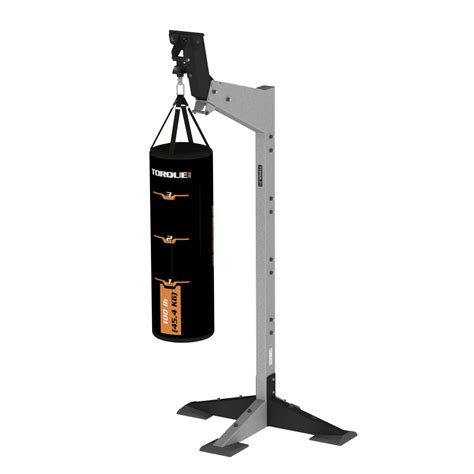
In many homes and even in some commercial gyms, it’s not possible to mount into a ceiling or wall. This is where a heavy bag stand comes into play. A punching bag stand might be needed in a home to avoid structural damage, drilling into a wall, having to remove dry wall, or just to reduce the amount of vibrating or shaking that hitting a bag can create. The same is true for a traditional gym, but a boxing bag stand might be necessary due to restrictions placed on gym property that is being rented or leased. In both cases, punching bag stands take the place of traditional wall or ceiling mounts and give the user added flexibility for placement of the bags.
One isn’t necessarily better than the other, but the gyms that are able to use wall or ceiling mounts for the bags may feel like that’s the best option for creating a more open and usable space. Heavy bags, double end bags, speed bag platforms, and reflex bags can easily be mounted from ceiling rafters, into studs in the wall, or directly in the floor, instead of using a punching bag stand.
All boxing bag stands, walls, ceiling, and floor mounts should be constructed of heavy gauge steel to reduce vibration, improve safety, and ensure durability to withstand heavy punching. Most punching bag stands are made to hold a variety of bags: double end, speed bags, horizontal bags, uppercut bags, or heavy bags of varying sizes and weights.
Regardless, even if a wall mounted or free-standing heavy bag stand is only going to be holding a limited amount of weight, it is always better to have more stability than what is expected to be needed. With free standing units, wall, or ceiling mounts it’s important to remember to allow for space to work all the way around a bag. It’s good to account for movement of the bag as well.
All bags should be hung or mounted so that, as it swings back and forth, there is still plenty of room for the athlete to properly move. If there is limited space to move, stand at a distance, and use angles, an athlete might create bad habits and not use their full range of motion. A punching bag stand or where a bag is mounted shouldn’t make a fighter restrict their movements or change their fighting style.
A good way to get the best use of a punching bag stand is to use it as a circuit, alternating the heavy bags or light bags that are mounted so that the athletes change their approach and switch between speed vs. power. A regular heavy bag stand also allows a coach to position all their fighters within close enough proximity to watch, correct, and teach each athlete.
Choosing the Right Punching Bag Stand
When choosing the best heavy bag stand for your home gym or training space, prioritize stability, weight capacity, and space efficiency. The ideal heavy bag stand for home use should support at least 150% of your punching bag's weight, feature adjustable height options, and offer solid construction-typically steel with reinforced joints. Avoid lightweight models under 60 lbs unless paired with sandbags or anchors. For most users, a freestanding model with wide base legs and vertical adjustability delivers optimal balance between performance, safety, and versatility.
A heavy bag stand is a freestanding frame designed to securely hold punching bags during martial arts, boxing, or fitness training. Unlike wall- or ceiling-mounted systems, these stands are portable and do not require permanent installation. These stands are commonly used in home gyms, martial arts studios, and functional fitness centers where structural modifications aren't allowed or practical.
The rise in popularity of heavy bag stands correlates with the growth of at-home fitness and hybrid workout routines. Heavy bag stands offer a safe and effective way to practice striking techniques without needing high ceilings or reinforced joists. Their portability makes them ideal for renters, small apartments, or multi-purpose rooms.
Types of Heavy Bag Stands
- Standard Freestanding: This is the most common type. It features a tripod or quadpod base with a central mast and suspension arm(s).
- Wall-Mounted with Floor Base: These attach partially to a wall bracket while still maintaining a floor base.
- Foldable Stands: Built for limited spaces, these models fold vertically or horizontally when not in use.
Key Features to Consider
- Weight Capacity: Ensure the stand supports at least 1.5 times the weight of your punching bag. For example, a 100-lb bag needs a stand rated for 150 lbs or more.
- Base Diameter: Larger base diameters (over 40 inches) improve resistance to tipping.
- Frame Material: Look for powder-coated steel frames. Thicker gauge tubing (below 14-gauge) offers better durability than aluminum or thin steel.
- Adjustability: Adjustable models let you change the bag’s hang point, accommodating everything from knee strikes to overhand punches.
- Portability: Consider both assembled size and disassembly ease. Units with caster wheels simplify relocation.
- Noise Reduction: Rubberized feet prevent floor scratches and reduce vibration noise-important for apartment use.
Steps to Choosing the Right Stand
- Determine Your Training Needs: Will you focus on boxing combos, kicks, or full MMA routines?
- Select Appropriate Weight Capacity: Match the stand’s max load to your bag’s weight plus dynamic impact forces.
- Evaluate Base Design: Wider, heavier bases resist tipping better.
- Assess Portability Needs: Do you need to move or store it frequently?
Price Tiers
- Budget Tier ($120-$200): Entry-level steel frames with basic stability.
- Mid-Range ($200-$350): Reinforced joints, fillable bases, height adjustment.
- Premium ($350+): Commercial-grade materials, advanced dampening, lifetime warranties.
Best value often lies in mid-tier models offering 150+ lb capacity and modular design.
User Feedback
Users appreciate stands with smooth height adjustment, sturdy feel, and ease of assembly. Fillable bases are frequently highlighted as critical for preventing movement during vigorous sessions.
Top issues include difficult assembly (especially aligning bolts), instability with heavier bags, and inadequate hardware. Some customers report premature rusting in humid environments-emphasizing the importance of indoor use and dry storage.
Where to Buy
Buy from reputable fitness equipment suppliers or authorized dealers. Major brands like Rogue, Century, and Ironmaster sell directly online and through select distributors. For bulk purchases (gyms, schools), contact manufacturers for volume discounts. Always request product specifications sheets and warranty details before ordering.
Maintenance and Safety
To extend lifespan, keep the stand clean and dry. Periodically inspect bolts and joints for loosening-retighten every 2-3 months with moderate use. Safety-wise, ensure the area around the bag is clear of obstacles. Use mats to protect flooring and reduce slip risks. Never allow children near a swinging bag.
Legal Considerations
No specific legal regulations govern heavy bag stands, but landlords may restrict their use in rental units due to noise complaints.
Final Recommendations
Choosing the right heavy duty heavy bag stand comes down to matching your space, training intensity, and long-term goals. Prioritize structural integrity, adequate weight capacity, and base stability. Mid-range models from trusted brands often deliver the best balance of cost, performance, and durability.
Whether you're setting up a corner for daily workouts or building a serious training zone, a well-chosen stand enhances safety, effectiveness, and consistency in your routine.
FAQ
Do stands work on carpet?
Yes, most stands work on carpet, but ensure the base remains level. Fill the base with water or sand, use anti-slip mats, and avoid excessive lateral strikes.
What size bag will it hold?
Most stands fit standard 12"-diameter cylindrical bags.
Are tools required for assembly?