Leg lock wrestling is a grappling technique used in the sport of wrestling that targets the leg joints, specifically the knee or ankle. This technique can be used to immobilize an opponent, cause pain or injury, and potentially force a submission.
Overall, leg lock wrestling is just one of many wrestling locks and holds that wrestlers can use to gain an advantage over their opponents. However, it is important to remember that these techniques should be used with caution, as they can also cause injury if executed improperly.
Wrestling locks are essential techniques that allow wrestlers to gain control over their opponents, enabling them to manipulate their bodies and create advantageous positions. These locks require a combination of strength, technique, and strategic thinking.
From the fundamental headlock and lock-up to the more specialized leg locks, key locks, and ankle locks, mastering these techniques requires a combination of strength, technique, and strategy. Let's explore some of these techniques in detail.
Common Wrestling Locks and Holds
One of the most popular wrestling locks is the wrestling headlock. This involves wrapping one's arm around an opponent's head and applying pressure to their neck, potentially leading to a submission or a pin. Headlocks are among the most recognizable and commonly used locks in wrestling.
Read also: Discover the story of Casey Swiderski
This technique involves securing an opponent's head under your arm, applying pressure to control their movement and limit their options. Headlocks can be executed from various positions, such as standing, on the ground, or in a clinch.
The Indian deathlock wrestling move is another effective technique used by wrestlers. It involves twisting an opponent's legs together while applying pressure to their knees, causing the opponent to submit or potentially causing injury.
Grapevine wrestling moves are often used to immobilize opponents and prevent them from escaping. Ankle lock wrestling is another common wrestling lock used to immobilize opponents.
This technique involves twisting or bending an opponent's foot in a way that puts pressure on the ankle joint, potentially causing injury or forcing a submission. Ankle locks are highly effective leg submissions that target the ankle joint. Wrestlers employ these locks to immobilize or force their opponents to submit.
By applying pressure on the foot and twisting or hyperextending the ankle, a wrestler can elicit tremendous discomfort and potential injury.
Read also: Sectional Wrestling Tournament Details
The lock-up is the initial contact between two wrestlers at the beginning of a match. This crucial moment sets the tone for the rest of the bout.
The lock-up involves wrestlers gripping each other's upper bodies, typically collars or arms. It's a test of strength and technique, where wrestlers try to gain control over their opponent's posture and position.
The key lock, also known as a figure-four armlock or Americana, is a submission hold commonly used in wrestling. It involves controlling an opponent's arm by applying pressure on their elbow joint.
By manipulating the arm into a vulnerable position and exerting force, wrestlers can cause significant pain or even force their opponent to submit.
Leg Locks in Wrestling
Leg locks in wrestling are powerful maneuvers used to immobilize or submit an opponent by targeting their lower extremities. These locks primarily focus on the knees, ankles, or feet. Techniques such as the single-leg takedown, double-leg takedown, or various leg submissions fall under the category of leg lock wrestling.
Read also: The story of Angelo Posada
Let’s take a look at 5 leglock entries from a standing position. It’s always easier to apply a technique when your opponent doesn’t expect it. In this entry you first push into your opponent, typically from a collar tie position with one forearm on his collar bone and the other hand controlling his elbow. In MMA Palhares typically set up this entry from a double leg takedown instead of a collar tie, but the mechanics remain almost identical.
But sometimes you just can’t take the other guy down, or maybe you’re running out of time in a match. Fortunately the 50-50 from the rear bearhug is a very surprising move.
The false reap is a relatively new position in leglocking where you control one of your opponent’s legs with your forearm behind his knee and your leg passing over his thigh. I can’t think of any examples of this technique being used in MMA but ultimately it’s just a matter of time until some fighter pulls it off.
From Standard Ashi the simplest option is to elevate and rotate your hips (i.e. The Viktor Roll is made easier and safer if you first break your opponent’s posture forward.
By the way, click here for a PDF cheat sheet covering the leglock positions we’re going to be using today.
Leg Locks in Brazilian Jiu-Jitsu (BJJ)
Brazilian Jiu-Jitsu (BJJ) is a martial art known for its intricate grappling techniques, and leg locks have emerged as a significant aspect of the sport. Leg locks involve manipulating an opponent's lower limbs to submit them, and they've generated both fascination and controversy within the BJJ community.
Leg locks primarily target the knee, ankle, or foot joints of an opponent, aiming to hyperextend or compress them to force a submission. There are two main categories of leg locks in BJJ: heel hooks, which target the knee and ankle, and straight ankle locks, which focus on the ankle and foot.
Common Leg Lock Techniques Include:
- Heel Hook: A heel hook is a powerful leg lock that can be applied quickly and with little warning. It involves controlling an opponent's heel and twisting it, putting immense pressure on the knee joint. Heel hooks can cause severe injuries if not applied correctly or if resisted too long, making them a subject of controversy in BJJ.
- Straight Ankle Lock: The straight ankle lock is a fundamental leg lock that puts pressure on the ankle joint. It is considered a safer and more controlled technique compared to heel hooks. However, it requires precise positioning and execution to secure the submission.
- Kneebar: A kneebar targets the knee joint by hyperextending it. This technique can be applied from various positions, and it is considered less risky than heel hooks but still demands caution to prevent injuries.
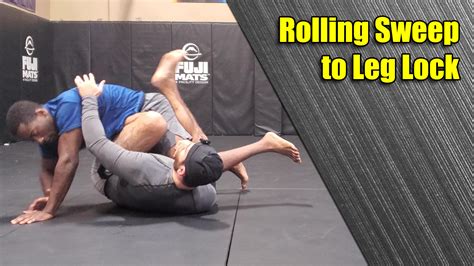
Controversy Surrounding Leg Locks in BJJ
The controversy surrounding leg locks in BJJ primarily revolves around safety concerns and their perceived "cheap" or "dirty" nature in some circles. Here are some key points of contention.
- Heel hooks, in particular, are viewed as high-risk submissions due to their potential to cause severe knee injuries if applied with excessive force or resistance. Critics argue that their use should be limited or heavily regulated to protect practitioners.
- Some traditionalists argue that leg locks rely more on strength and explosiveness than technique, deviating from the core principles of BJJ. Proponents counter that mastering leg locks requires skill and finesse, like any other aspect of the art.
- Critics contend that leg locks may not be as effective in real-life self-defense scenarios, leading some academies to limit their use or prioritize other techniques. Advocates argue that leg locks offer valuable options in both sport and self-defense situations.
The rules surrounding leg locks can vary significantly between BJJ organizations and competitions, adding to the controversy.
Leg Locks in MMA
Leg locks aren’t just submissions; they’re game-changers. From the feared heel hook to the technical knee bar, these moves have reshaped MMA’s ground game. This guide breaks down how they work, who mastered them, and why one twist can end it all.
When a fight hits the mat, the legs become the great equalizer. One wrong move, one twist, and the tide can flip instantly. A perfectly timed MMA leg lock can end a match in seconds, even against someone bigger, stronger, or more experienced.
A perfectly timed MMA leg lock can end a match in seconds, even against someone bigger, stronger, or more experienced.
From heel hooks to knee bars, these submissions sit in a strange spot in the fight world. They’re feared, respected, and sometimes even misunderstood. For years, they were the dark arts of grappling - too risky, too brutal, too unpredictable.
Today, leg lock techniques in MMA have become a language every fighter must speak. In this guide, we’ll unpack the science, the history, the rules, and the legends behind them.
What are Leg Locks in MMA?
At their core, MMA leg locks are submission techniques that target the joints and ligaments of the lower body - the ankle, the knee, even the hip. The goal is simple: create enough pressure to force a tap before something tears.
They work through hyperextension, rotation, or compression - all fancy ways of saying “your leg’s not supposed to bend that way.” And that’s exactly what makes them so effective.
Here’s the thing: leg locks can level the playing field. They don’t care about your size or reach. A smaller fighter can flip a bigger opponent in seconds if they find the right angle. They’re also momentum changers. In a scramble, when control is lost, a quick leg entanglement can turn chaos into control.
Different leg locks attack different targets.
- The ankle for control or pain compliance.
- The knee for deep ligament submissions like the knee bar.
- The heel for devastating rotational attacks like the heel hook.
In short, leg lock techniques in MMA are brutal, technical, and incredibly precise.
A Brief History of Leg Locks in MMA
Leg locks didn’t just appear out of nowhere. They evolved from old-school grappling arts like catch wrestling, sambo, and Brazilian jiu-jitsu. Each discipline had its own spin on how to twist or trap the leg, long before MMA was even a thing.
But in early MMA, leg locks had a bad rep. Fighters saw them as “cheap shots” or dangerous gimmicks. Even in BJJ circles, they were the taboo techniques - the kind that could end training careers if misused. Some gyms banned them altogether.
Then came the innovators. Masakazu Imanari rolled onto the scene (literally) with his wild, unpredictable entries. Rousimar Palhares made everyone fear the heel hook again. Ryan Hall showed how technique could beat raw power.
These fighters flipped the script. They proved that MMA leg locks weren’t just traps for the reckless; in fact, they were tools for the intelligent. And as no-gi jiu-jitsu and submission grappling exploded, so did the leg lock revolution.
Agonizing LEG LOCK Submissions Wins in UFC/MMA (Tap or Don't Walk for 6 Months)
Common Leg Lock Techniques Explained
Let’s break down the big four - the leg locks every fighter, fan, and coach should know.
- Heel Hook: The king of pain. The heel hook in MMA attacks the ankle and knee ligaments with a twisting motion that sends torque through the entire leg. When applied, it feels like your knee’s being unscrewed from the inside. Famous users? Ryan Hall, with his slick Imanari rolls, and Rousimar Palhares, whose heel hooks ended fights before opponents even realized what happened.
- Straight Ankle Lock: The straight ankle lock MMA fans know and love is the “classic” of leg submissions. It’s cleaner, safer, and more controlled than a heel hook. The attacker uses their forearm to hyperextend the opponent’s ankle joint while locking their leg in place. You’ll see it a lot in early MMA and BJJ competitions. It’s one of the first leg locks beginners learn because it teaches control before chaos.
- Knee Bar: Think armbar but for the leg. The knee bar submission targets the knee joint, forcing it to straighten past its natural limit. It’s a pure hyperextension move that can destroy ligaments if held too long. The setup often comes from top control, half guard, or wild scrambles.
- Toe Hold: The toe hold is a rotational submission that twists the foot and ankle against each other. Fighters often chain it with heel hooks or straight ankle locks, creating nasty submission traps.
Together, these four represent the core of MMA leg lock knowledge, each with its own risks, setups, and rewards.
Rules & Leg Lock Legality in MMA
So, are leg locks legal in MMA? Mostly, yes but with rules.
In professional MMA, almost all MMA submissions are fair game. Heel hooks, knee bars, toe holds, and ankle locks - all are legal under most major organizations like the UFC, ONE Championship, and Bellator. Fighters just need to apply them responsibly.
Amateur MMA, though, plays it safer. Many amateur promotions ban heel hooks altogether because they’re too easy to misuse and too dangerous when mishandled.
Referees are the silent guardians here. They watch for unnatural joint rotation and step in fast if something looks wrong. And fighters? They’ve got one rule - tap early, live to fight another day.
Leg locks can end a fight beautifully or end a career brutally. The difference lies in control.
How Leg Locks Work? The Science of Leverage
Every MMA leg lock is built on the same foundation: leverage. The attacker uses their entire body to isolate and twist the opponent’s joint. It’s not about brute strength. It’s about angles, positioning, and timing.
By controlling the hips and ankles, the attacker traps the limb in a way that even small pressure turns into massive torque. Think of it like a wrench on a bolt; a tiny twist can do big damage.
The scary part? Ligaments don’t stretch much. So when they tear, they tear instantly. Sometimes the pain comes after the damage. That’s why you’ll hear fighters yell “tap early” over and over in training.
The best leg lock techniques in MMA rely on precision, not aggression.
Famous MMA Fighters Known for Leg Locks
A few fighters made their names twisting legs into submission.
- Masakazu Imanari - nicknamed “The Leg Lock Master.” He didn’t just use leg locks; he reinvented how to get to them. The Imanari Roll, his signature move, has been copied worldwide.
- Rousimar Palhares - feared for his speed and strength. His heel hooks in MMA were lightning fast, sometimes too fast, leading to controversy when he held on after the tap.
- Ryan Hall - the modern technician. He showed that leg locks could be part of a high-IQ gameplan, not just desperation moves.
- Minoru Suzuki - a catch wrestling legend whose old-school style laid the foundation for many modern techniques.
- Charles Oliveira - better known for his chokes, but don’t be fooled. His smooth transitions into ankle locks and knee bars show how versatile he really is.
These names turned MMA submissions into art. They proved that the lower body, often overlooked, could be a fight-ending weapon.