Fighting games have left an indelible mark on the arcade gaming landscape, evolving from simple mechanics to complex, highly competitive experiences. This genre’s journey is a testament to innovation and creativity, offering players around the world the thrill of head-to-head combat. In this article, we’ll take a chronological journey through the evolution of fighting games, highlighting their innovation, cultural impact, and enduring legacy. Along the way, we’ll explore how iconic titles shaped the genre and influenced competitive gaming communities.
The fighting game genre involves combat between characters, often (but not necessarily limited to) one-on-one battles. The mechanics of combat in fighting games often features blocking, grappling, counter-attacking, and the ability to chain attacks together into "combos". Characters generally engage in hand-to-hand combat, often incorporating martial arts, but some may include weaponry. Battles are usually set in a fixed-size arena along a two-dimensional plane, where characters navigate horizontally by walking or dashing, and vertically by jumping.
The fighting game genre is distinctly related to the beat 'em up genre, which pits many computer-controlled enemies against one or more player characters. Aside from restricting movement space, fighting games confine the player's actions to offensive and defensive maneuvers. Players must learn each game's effective combinations of attacks and defenses.

A typical fighting game: the green fighter is blocking blue fighter's punch.
The Birth of Fighting Games: Early Pioneers
The first video game to feature fist fighting is Heavyweight Champ (1976), but Karate Champ (1984) actually features the one-on-one fighting game genre instead of a sports game in arcades. Yie Ar Kung-Fu was released later that year with various fighting styles and introduced health meters, and The Way of the Exploding Fist (1985) further popularized the genre on home systems. Several fighting games were fundamentally inspired by martial arts films, especially Bruce Lee's Hong Kong action cinema.
Read also: The fighting style of Chuck Norris
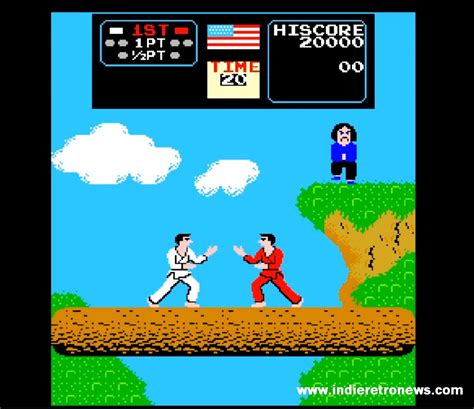
Karate Champ (1984)
- Innovation: One of the first one-on-one fighting games, Karate Champ introduced dual joystick controls to execute moves.
- Legacy: Paved the way for the genre, setting a foundation for competitive gameplay. It uses a best-of-three matches format like later fighting games, and has training bonus stages.
Yie Ar Kung-Fu (1985)
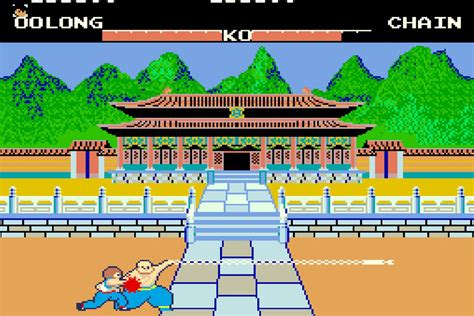
- Innovation: Expanded the genre with a variety of opponents, each with unique fighting styles and weapons. Konami’s creation also introduced the idea of two player life bars that both drained towards a ‘KO’ marking at the centre.
- Legacy: Served as a precursor to modern fighting games with diverse character rosters. Many of today’s fighting game aficionados will tell you those are the factors that makes Yie Ar Kung-Fu the first true example of the genre.
The Golden Age of Fighting Games
By 1987, Capcom had made and published a game that would change everything. At this time scrolling brawlers were still the most popular form, but Capcom’s dev team was set to change that. That first Street Fighter certainly wasn’t a slouch when it came to innovation and quality. Street Fighter introduced a foundational concept that continues to fascinate fighting game fans: it expected players to experiment with controls to discover new abilities, and work hard to uncover hidden depth and while exploring fresh strategies.
In 1987, Capcom's Street Fighter introduced special attacks, and in 1991, its highly successful sequel Street Fighter II refined and popularized many genre conventions, including combos. Fighting games subsequently became the preeminent genre for video gaming in the early to mid-1990s, particularly in arcades. As arcade hardware became more capable, fighters not only became more visually elaborate; they could equally be more fluid and responsive, raising the skill ceiling while drilling down the limit of depth.
Street Fighter II (1991)
The release of Street Fighter II in 1991 is considered a revolutionary moment in the fighting game genre. Yoshiki Okamoto's team developed the most accurate joystick and button scanning routine in the genre thus far. This allowed players to reliably execute multi-button special moves, which had previously required an element of luck. The graphics took advantage of Capcom's CPS arcade chipset, with highly detailed characters and stages. Whereas previous games allowed players to combat a variety of computer-controlled fighters, Street Fighter II allowed players to play against each other.
- Innovation: Introduced the concept of special moves and combos, as well as a diverse roster of fighters with unique backstories.
- Legacy: Defined the competitive fighting game genre and became an arcade sensation worldwide. By 1994, Street Fighter II and its variants had generated over $1 billion in revenues for Capcom, setting the gold standard for future games.
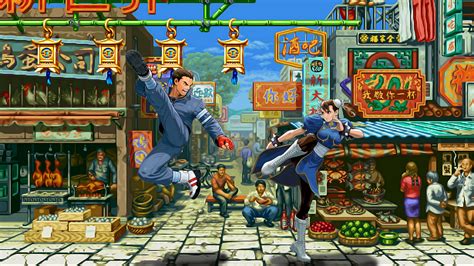
SNK released Fatal Fury shortly after Street Fighter II in 1991. It was designed by Takashi Nishiyama, the creator of the original Street Fighter, which it was envisioned as a spiritual successor to. Fatal Fury placed more emphasis on storytelling and the timing of special moves, and added a two-plane system where characters could step into the foreground or background.
The History of Street Fighter II: The Fighting Game That Started It ALL
Mortal Kombat (1992)
Chicago's Midway Games achieved unprecedented notoriety when they released Mortal Kombat in 1992. The game featured digital characters drawn from real actors, numerous secrets, and "Fatality" finishing maneuvers in which the player's character kills their opponent. The game earned a reputation for its gratuitous violence, and was adapted for home game consoles. The home version of Mortal Kombat was released on September 13, 1993, a day promoted as "Mortal Monday".
Read also: Exploring the Iron Fist Martial Art
- Innovation: Combined digitized graphics with brutal finishing moves (“Fatalities”) and a dark storyline.
- Legacy: Sparked debates about video game violence and led to the creation of the ESRB rating system. By the mid-1990s, Mortal Kombat had sold over 8 million copies worldwide, affirming its influential status.

Tekken (1994)
The 1995 PlayStation game Battle Arena Toshinden is credited for taking the genre into "true 3D" due to its introduction of the sidestep maneuver, which IGN described as "one little move" that "changed the fighter forever". The "sidestep" in the game, however, consisted of shoulder rolls instead of actual sidesteps. That year, Namco released Tekken 2, which introduced actual sidestepping or "mist steps" as first released in arcade games and in the international fighting game community.
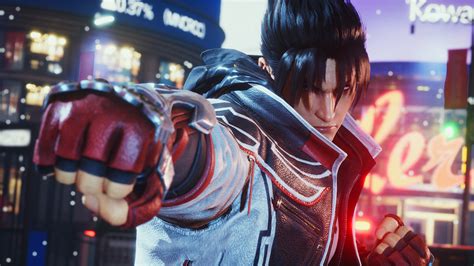
- Innovation: Brought 3D graphics and intricate character movement to the forefront, creating a new layer of depth.
- Legacy: Cemented itself as one of the most beloved fighting game franchises, with ongoing competitive appeal. In 1995, Tekken made its home console debut on the original PlayStation. The game's vibrant graphics and varied character roster contributed to its sales of over 7 million copies, making it a household name.
Modern Fighting Games: The Competitive Era
The late 1990s and early 2000s saw fighting games continue to evolve, thanks to advancements in technology. The 2000s ushered in a new era with the rise of online gaming, allowing players to compete globally.
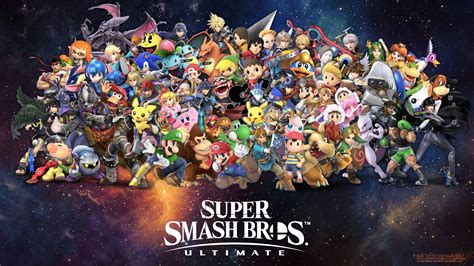
Super Smash Bros. (1999)
- Innovation: Redefined fighting games by focusing on platform-based combat and introducing characters from various franchises.
- Legacy: Created a subgenre of fighting games that remains immensely popular in competitive gaming. Its accessibility attracted a wide audience while still offering depth for skilled players.
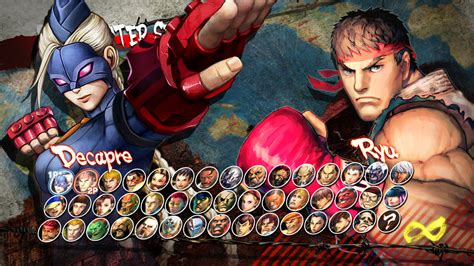
Street Fighter IV (2008)
- Innovation: Revived the series with cel-shaded 3D graphics while retaining classic mechanics.
- Legacy: Ushered in a new wave of fighting game enthusiasts and revitalized interest in the genre. Its release marked a renaissance for competitive fighting games, especially at tournaments like EVO. Within a year of its launch, the game had sold over 2.5 million copies in North America alone, proving the genre’s lasting appeal.
Cultural Impact of Fighting Games
Fighting games have transcended their arcade origins to become a global phenomenon.
- Defined Competitive Gaming: Tournaments like EVO (Evolution Championship Series) showcase fighting games as a major esport. These events attract players and audiences from around the world, highlighting the genre’s enduring appeal.
- Encouraged Diversity: Representing various cultures through character designs and fighting styles, these games have helped normalize global influences in gaming.
- Built Communities: Arcades fostered social interactions, rivalries, and friendships that persist in online gaming today. These communal roots remain evident in local tournaments and gaming conventions.
Fun Facts
- Ryu and Ken’s Legacy: These iconic characters have appeared in nearly every Street Fighter title, serving as benchmarks for players.
- Fatality Origins: Mortal Kombat's "Fatalities" were inspired by developers wanting to reward players with over-the-top finishing moves.
- Tekken’s Realism: Developers used motion capture extensively to give characters realistic movement and weight, setting a new standard for 3D fighting games.
| Game Title | Year Released | Key Innovation |
|---|---|---|
| Karate Champ | 1984 | Dual joystick controls |
| Yie Ar Kung-Fu | 1985 | Diverse fighting styles and health bars |
| Street Fighter II | 1991 | Special moves and combos |
| Mortal Kombat | 1992 | Fatalities and digitized graphics |
| Tekken | 1994 | 3D graphics and intricate movement |
| Super Smash Bros. | 1999 | Platform-based combat |
| Street Fighter IV | 2008 | Revival of classic mechanics with modern graphics |
Read also: The Viltrumite Fighting Doctrine