The narrative that Hip Hop emerged from the ashes of gang life in the South Bronx is familiar to many. However, the full significance of the gangs and their role in birthing Hip Hop is often overlooked. This article delves into the complex relationship between gang culture, martial arts, and the rise of Hip Hop, exploring the stories of influential figures and movements that shaped this unique cultural phenomenon.
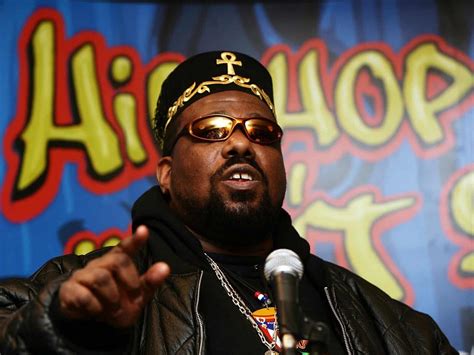
Afrika Bambaataa, a key figure in the transition from gang culture to Hip Hop.
This past month (June 28 2008) at the Mitchell Housing projects in New York’s infamous South Bronx, those of us who are dedicated to unearthing and preserving Hip Hop history and culture were treated to a landmark moment. Former gang members came from all over the city and throughout the country to commemorate the 40th anniversary of the Black Spades.
Hip Hop dance pioneer Popmaster Fabel, a member of the East Harlem street organization the Savage Samurai, pointed out the irony of how Hip Hop provided a cultural imperative through traditional dance, music, and artistic traditions, which helped move people away from the destructive aspects of gang life.
Fabel explained why it was important to understand the inner workings of the street organizations that gave birth to Hip Hop. He then introduced Karate Charlie, the former president of the Ghetto Brothers, who talked about how he was a former marine who went AWOL when he saw how the government had destroyed the Black Panthers, Young Lords, and other leaders in the community. Charlie emphasized how he and others would teach everyone martial arts and Spanish.
Read also: Individual Martial Arts Instruction
Charlie’s story was reiterated throughout the day by other gang members who talked about how they saw themselves as children to the Panthers and Young Lords who really wanted to make a change and found themselves dealing with overwhelming forces outside their control. As I listened to these stories I couldn’t help but draw parallels to what was depicted in the film ‘Bastards of the Party‘ put out by Bone who is a member of the LA Bloods and traced the groups history.
Fabel pointed out how many of the early gangs had cultural elements that they used to communicate and express themselves. The Black Spades adapted James Brown and changed the lyrics to his song Soul Power to ‘Spade Power‘. We saw that actually demonstrated that afternoon with some of the Spades doing their original dances.
As Fabel pointed out it what we were seeing was an example of that cultural imperative. As I watched it you could not help note that long before the infamous Crip walk and Blood dances that are ritualistically done by gangs today and glorified by rappers in their videos, the street tribes before them had their own dances.
The Reunion of Bam Bam and Karate Charlie
Perhaps the most incredible moment of the afternoon came when Karate Charlie came together and hooked up with Bam Bam who was an original leader of the Black Spades 1st division and the person who gave Afrika Bambaataa permission to use the name Bam. The pair had not seen each other in close to 40 years when they came together and attempted to put together the 1971 Gang Truce.
Bam spoke passionately about what it meant when they all came together to unify. He talked about how the Spades protected the community. He then addressed the younger members and told them its easy to take a life, but if one is really tough try saving one. If you’re really tough try living instead of dying.
Read also: The Jade Fortress Martial Arts System
Fabel reiterated that Hip Hop came out of the government’s attempt to crush leadership in our communities. He did his movie after coming face to face with a young Blood gang member in his class where he teaches. He saw this young man who was on a path to self destruction and wanted to help him and others like him out. Hence he spent the last few years meticulously documenting the culture and people who came before him who were in gangs.
Fabel has been troubled by the Hollywoodizing of inner city gang culture which has stripped away the deeper meanings and messages. Another highlight of the afternoon was talking with original Zulu King and B-Boy Charlie Rock who was once a member of Black Spades 22cd division.
Rock also talked about how the Spades and other large gangs came under-fire from the police with some of the members assassinated. He attributed these attacks to the fact that the Black Spades were willing to confront the police and that the gang was so large and organized. Rock reminded us that the Black Spades and other groups were not alone in the Bronx.
He talked about how the police hung him over a roof top and threatened to kill him. Rock saw those murderers as part and parcel to the attacks and killings that were simultaneously happening to Panthers, Young Lords and other Black Liberation organizations. There was a litany of white gangs who had proceeded them and in fact used to start trouble with groups like the Spades until they began dominating. In our interview Charlie Rock talks about white gangs like the Golden Guineas, The Ministers, the White Angels and the White Assassins. He also talked about how the police would sometimes help these white gangs in attacking the Black Spades.
Rock’s remarks were deep and reminded me of the stories we heard surrounding the origins of Black gangs in LA and in Chicago. At the center were white gangs and police reigning terror on the community.
Read also: Relentless Martial Arts
At the 40th Anniversary of the Black Spades we see Bam Bam re-uniting and talking with Karate Charlie after 40 years. They talk about how the two gangs merged together to stop the Hells Angels from coming into the Bronx and stepping to another gang….We chop it up with Popmaster Fabel about his new documentary The Apache Line from gangs to Hip Hop.. We also talk to him about the current move to try and pit Black against Brown.. Fabel gives a history of why that happens and talks about how early Black and Brown gangs came together.
We also speak with Karate Charlie who is featured in Fabel’s documentary about the legacy of the Ghetto Brothers. He talks about how the Black Spades the Ghetto Brothers united and became a family. We caught up with original B-Boy and Zulu Charlie Rock who hails from the 22cd division of the Black Spades up on Gun Hill road in the Bronx.
The Black Karate Federation and the Black Arts Movement
By 1969, a year after the publication of the crucial Black Fire anthology, Grandmaster Steve Muhammad had created a black martial arts community in Los Angeles along with seven other martial artists. They met to work out on Saturday mornings in South Central Los Angeles’ Van Ness Park and soon named themselves the Black Karate Federation (BKF). Muhammad and his cohort were influenced by older masters like William Short, who had begun training Los Angeles youth in the 1950s.
The Black Karate Federation’s usage of martial arts allowed them to carve, with their closed fists and cocked limbs, both an unabashedly black identity and a black artistic consciousness. The Black Karate Federation derived many of their speedy kicks and hand strikes from Muhammad’s American Kenpo training, but they showed their identity through the logo that the founders conceived using cultural nationalist symbolism.
The B.K.F logo blazed from the patch of students’ uniforms: a clenched, golden fist, its fingers facing away from the eye, covered by a red, black, and green banner, upon which a cobra calmly but dangerously hissed, all falling downward toward a scroll with the letters B.K.F written upon it (Muhammad 80-81). The patch went through other iterations, including one that wrote “Power to the People” over the cobra and another that was shaped like a globe with a black fist at the center.
In all its usages, the fist’s meaning served two purposes. One, it represented the word “kenpo”‘s meaning, which is “Fist Law” according to Muhammad. Two, it stood as a symbol of “power and righteousness” (Muhammad 81). Inspired by the 1968 Olympic Games podium gesture by sprinters Tommie Smith and John Carlos, the BKF used the fist to demonstrate their desire “to fight injustice” and “to overcome racism” (Muhammad 82).
The fist’s golden color signified its wealth and power (Muhammad 82). Its red, black, and green banner mirrored the Pan-African flag created by Marcus Garvey, serving as a “bold and powerful vision” for “all peoples of Africa, regardless of land and birth” (Muhammad 83). The cobra represented the swift movements of Muhammad and the BKF’s fighters but also carried a Pan-Africanist meaning for venomous snakes, i.e. cobras, are considered indigenous to many regions on the continent of Africa.
In addition to theorizing school representation and uniform, black martial arts instructors also explicitly tied their pedagogy to agendas being using by other contemporary activists. Shaha, or learned elder, Mfundishi Maasi was a cultural and martial theorist who would also teach hundreds of students during the 1960s and 1970s (Maasi 2013). Maasi taught them that life lies with the individual and stressed that “the art[s] can be utilized as an instrument for enlightenment” (Hinton 88). He imparted to his students the most valuable knowledge he gained through his own martial arts training, which was the knowledge of self (Hinton 87).
The particular style Maasi co-developed tied the search of the personal self to the search for the cultural self. Due to collaboration with Nganga Tolo-Naa, a Chicago martial artist who founded the All African Peoples Art and Cultural Center, the style became known as “Kupigana Ngumi,” a Kiswahili term signifying “the way of fighting with the fist” (Maasi 2013). The motive behind teaching Kupigana Ngumi was to provide an art that, though partly based in East Asian movements, integrated cultural reflections youth could identify with.
Maasi’s teaching was a part of his role with Newark’s Black Community Defense and Development (BCD), a part of the coalition Committee for a Unified NewArk (CFUN) (Woodard 109-110). Both the personal and philosophical links between the Black Arts and Black Power movements and Black martial arts instructors forces us to expand our understanding of both movements to include martial artistry. Besides CFUN, there is evidence that other organizations such as the US, the East, the Republic of New Africa, and the Black Panther Party practiced martial arts for similar yet varying purposes.
To conclude, I want to turn briefly to the moment when Bruce Lee’s legend was solidified if only to do the work of looking past him. What would happen if we paused the Blu-ray of Enter the Dragon at 24:58? We would find that Lee is no longer the object of the frame. Instead, the figures of Grandmaster Steve Muhammad and film star Jim Kelly replace him. Muhammad and an early version of the BKF patch are prominently displayed on screen as Kelly and Muhammad speak in the BKF’s “103rd Street School” (Muhammad 54). What would happen then if we relocate this moment in history and resituate Steve Muhammad and the BKF in the history of growing Black fervor for martial arts?
What if we talked about Jim Kelly as a form of anti-colonial, anti-racist masculinity as he flips and defeats two racist cops? Would we stop using Bruce Lee as a mirror to imagine the masculinities of Black men who were present in their own struggle? Could we go a step further and interrogate why the scene is devoid of Black women’s presence, an illusion that incorrectly typecasts the BKF as male-only?
The Spades & Savage Skulls, the largest Black and the largest Rican gangs in the Bronx, rumbled
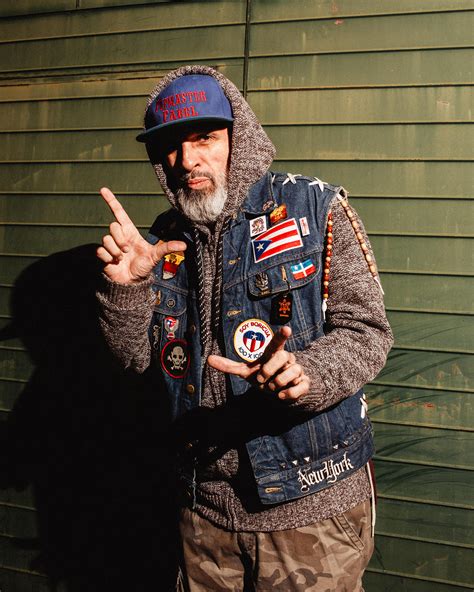
Popmaster Fabel's documentary sheds light on the transition from gangs to Hip Hop.
The story of the Black Spades, Afrika Bambaataa, and other key figures highlights the complex interplay between gang culture, martial arts, and the rise of Hip Hop. By understanding the historical context and the motivations of those involved, we can gain a deeper appreciation for the cultural forces that shaped this unique and influential movement.
The information in the table is based on the text provided and may not be exhaustive.
This information is intended to provide a general overview of the topics discussed in the article.
| Figure/Group | Role/Contribution |
|---|---|
| Afrika Bambaataa | Transformed gang culture into Hip Hop culture |
| Black Spades | Gang that played a significant role in the birth of Hip Hop |
| Popmaster Fabel | Hip Hop dance pioneer, documented the connection between gangs and Hip Hop |
| Karate Charlie | Former president of the Ghetto Brothers, taught martial arts and Spanish |
| Charlie Rock | Original Zulu King and B-Boy, member of Black Spades 22cd division |
| Black Karate Federation (BKF) | Black martial arts community in Los Angeles |
| Grandmaster Steve Muhammad | Founder of the Black Karate Federation |
| Shaha Mfundishi Maasi | Cultural and martial theorist, taught Kupigana Ngumi |
| Ghetto Brothers | United with the Black Spades, taught martial arts |