Bare knuckle fighting is experiencing a resurgence, demanding intense physical preparation and strategic recovery. This article delves into the recovery methods and training routines employed by bare knuckle fighters, offering insights applicable to any high-intensity combat sport.
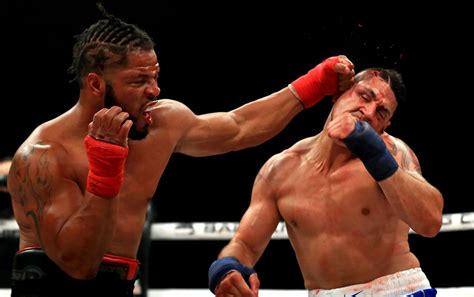
A fist fight can leave your knuckles as bloodied as Rocky Balboa's after training in the meat locker in the first Rocky film-but taking other aspects of bare knuckle fight training can shred up your whole body like Adonis Creed without all that mess. Now, the Philadelphia-based BKFC claims its debut show will be the first-ever legal, regulated, and sanctioned bare knuckle fighting event to take place in the States since 1889.
The Resurgence of Bare Knuckle Fighting
Bare knuckle fighting has seen a legalized resurgence. The June 2 card will have BKFC bouts taking place in a squared circle via a 22-foot circular ring encased in a 28-foot square platform. Fighters begin matches standing within the squared circle, each positioned behind markers just three feet apart, "toeing the line." Once the referee gives the command to “knuckle up,” the combatants are free to slug it out (with punches only), working their way around the ring.
Fighters’ wrists and thumbs will be taped, with their knuckles left completely exposed for the "purest form of hand-to-hand combat," according to the promotion. Bouts will be five to seven two-minute rounds, depending on the weight class. Championship bouts will extend to nine rounds. Like boxing and MMA, bare knuckle fight wins can be claimed by knockout, ref’s stoppage or judges’ decision.
“This is literally bringing it back to the old times,” said Rodriguez, a former UFC heavyweight champion. “You think about Tom Cruise in Far and Away, when they just draw a line and fight on the docks.”
Read also: BKFC Albuquerque
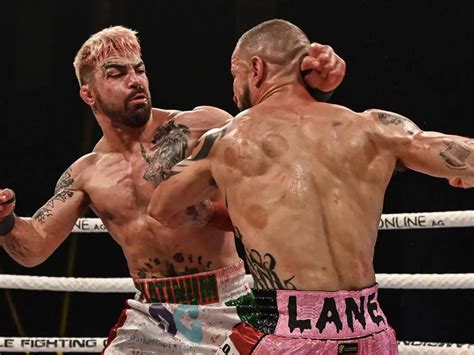
Recovery Strategies for Intense Training
When it comes to your mixed martial arts training, there is a lot of running and a lot of weightlifting required, as well as plenty of rest and recovery time in between. However, what are ways you can speed up recovery from your intense workouts? Here are some strategies to help you recover faster and more effectively:
- Temperature Regulation: It is common for athletes, especially those who participate in contact sports, to apply a very cold touch to their skin in an effort to break down the lactic acid that builds up during training. Pour a bag of ice into the bathtub and bathe for five minutes with the hardest of the toughest. Those of us who lack the guts to endure a cold shower will instead take a hot shower that rapidly cools down. If you want to speed up your recovery, you should follow the lead of professional athletes across a wide range of sports by regulating your body temperature!
- Immediate Refueling: Immediately after your exercise, offer your body fast carbohydrates and rapid protein to get the healing process started as soon as possible. Consume a sports drink to replenish your glycogen which is your body’s source of energy. Your muscle fibres are in desperate need of the protein from your whey protein drink or protein snack at this moment.
- High Protein Intake: Recovering from intense workouts need a high intake of protein such as having lean meat like beef or chicken, this should be consumed between 50-90 minutes after working out to aid and help muscle recovery and to prevent discomfort throughout your body.
Bare Knuckle Specific Cardio Workouts
We caught up with Rodriguez and Gunn in the lead up to the Bare Knuckle Fighting Championship pay-per-view event. The two explained the exercises they use to boost their cardio and strength in preparation for a bare knuckle fight. You can try out the training techniques-but remember, some of these are fight-specific, so they might not fit your routine or fitness level. Be careful, and adjust accordingly. And unless you find yourself within the squared circle, leave the actual scrapping to the pros.
Ricco Rodriguez's Cardio Workouts:
- Treadmill to Pads: Whatever the exercise, Rodriguez tries to get his heart rate pumping while simulating a fight. He accomplishes both in one shot by running on the treadmill for 30 seconds, then immediately jumping off to hit pads for two minutes. “Leave the treadmill running the whole time, so you don’t waste too much time turning it off and on,” Rodriguez advised. “Have a coach or pad person there waiting.” Rodriguez added that doing five to seven rounds of this treadmill-to-pad work gets his explosive power up. He recommends hitting the pads with an assortment of punches in eight to 10-ounce gloves and only donning a heavier glove - say 16-ounce - to increase difficulty. As you get more comfortable, Rodriguez said you can also add a five-degree incline on the treadmill.
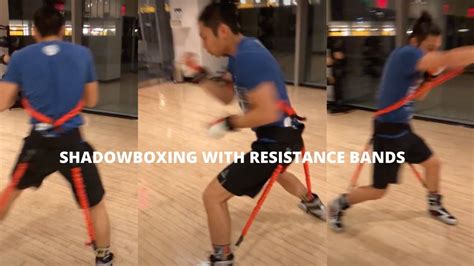
- Resistance Band Shadowboxing: The same resistance band you’ve used for all types of exercises in the gym or your home can be used to increase your punching speed and overall striking prowess while shadowboxing. Rodriguez says to get in front of a mirror and wrap the resistance band over your shoulders. “That cord will give you the resistance of retracting your punches, but at the same time you’re shadowboxing and keeping your elbows in,” he says. “It works on your hand speed, keeping your hands up and fast. Don’t think about what punches you’re going to throw, but throw them in repetition, so that it becomes fluid and natural.” Five rounds at two minutes per clip of this routine should make you a quicker hitter and Rodriguez vows that it also keeps your form correct. “If you get too wild, those bands will go underneath your elbows and that means you’re punching improperly,” he points out.
Bobby Gunn's Cardio Workouts:
- Jump Rope: The ability to remain light on your feet while throwing solid punches is crucial to bare knuckle fighting. Gunn keeps his footwork sharp by jumping rope, a time-tested exercise synonymous with boxing. His jump rope philosophy? Aim for 10 minutes straight-a mark you’re either going to achieve or fail trying to reach. If you need to, take short breaks while on the clock. Either way, “let’s see what kind of shape we’re in,” he said, and take it from there.
- Shadowboxing: Gunn shadowboxes to increase his punching speed-but the exercise is also to build his overall stamina. Whether you’re interested in bare knuckle fighting, boxing, or MMA, Gunn vowed shadowboxing is “the finest exercise of all for your heart, cardio, blood flow, oxygen, lungs.” He recommended starting out pumping the jab (front straight punch) in front of a mirror, before working in a variety of punches and combinations. Beginners should attempt to shadowbox for five minutes straight, Gunn advised, before building themselves up to the point where they’re doing it vigorously for 20 minutes per night. “Pump your hands as fast as you can,” he said. “Do it like you’re going to fight. In one month’s time of doing it, your life will change.”
- Slipping Punches/Bobbing And Weaving: At 5'11'', Gunn loved the way Mike Tyson slipped punches and bobbed and weaved an inch shorter at 5'10''. “Everybody was a Mike Tyson fan,” Gunn said. "When you know you’re going to fight a bigger opponent, slipping that jab to get inside on him is key." That’s why Gunn recommended incorporating slipping punches and bobbing and weaving into your shadowboxing regimen. “Slipping back and forth, slip to the left, slip to the right,” he advised. "Slip" means to emulate a side-to-side evasion, while "bob and weave" means you'll both bend laterally at the waist to change your head level and move forward and backwards in place. “Any [opponent] who’s taller with a big jab, that’s how you get into them - move forward with short moves, to the left six inches, to the right six inches, slipping, slipping, slipping. You get in and that takes away his reach.” If you don’t have any intentions of actually fighting or even shadowboxing, though, the moves can still help to hone your movement skills and your cardio endurance.
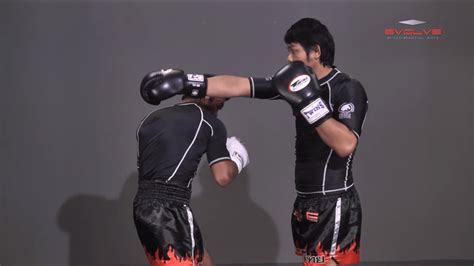
Bare Knuckle Specific Strength Training
Ricco Rodriguez's Strength Workouts:
- Sky Punch, Medicine Ball Ab Smash: Rodriguez has a go-to ab exercise that he said “correlates most to the squared circle.” It entails Rodriguez laying down on his back with two eight-pound dumbbells in his hands. “I’m punching to the sky, while my coach is hitting a 10-pound or 15-pound medicine ball on my stomach,” he said. Ouch. “You got to control your breathing, so when you’re getting hit to the body, you exhale and you’re punching at the same time.” Rodriguez does that for a grueling 200 reps twice a week, preparing himself to take the most-punishing body shots. You might not have the guts (literally) to match that, but he advised for beginners to aim for as many reps as possible.
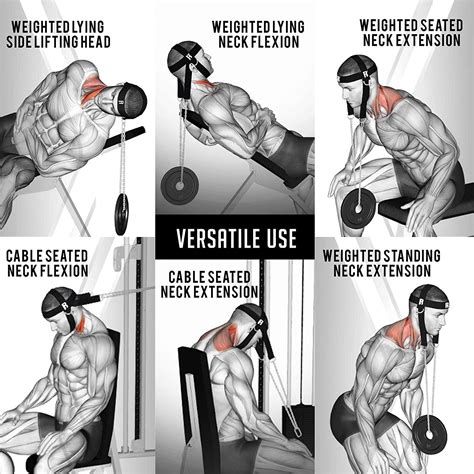
- Neck Ups: Now, that you’ve strengthened your ability to take a body shot, you’re going to need to be able to eat a bare knuckle sandwich without crumpling to the mat. To prep for upper body blows, Rodriguez trains his neck. First, lay down in the ring under the ropes, so your neck is hanging off the edge of the ring. If your gym doesn’t have a ring, lay down on a bench, so your neck is hanging off it. Raise your neck up until your chin touches your chest in a controlled motion for 50 reps. Shift to lay on your right and then left shoulders and knock out another 50 reps each, before laying face down and hitting another 50 for 200 total. “The reason why you do this is when you’re getting hit by a jab or punch, your neck will shift,” Rodriguez explains. “So, you have to strengthen those muscles in your neck.” The former UFC champ does this two days per week.
By integrating these recovery tips and training techniques, fighters can enhance their performance and longevity in the demanding world of bare knuckle fighting.
From Addiction & Bare Knuckle Fighting To Founder Of SAFE: Darren Wilson Tells His Story Of Hope
Read also: Romero's Transition to Bare Knuckle
Read also: Bare Knuckle Boxing's Roots in Nashville