Sebastiaan "Bas" Rutten, born on February 24, 1965, is a Dutch-American actor, former mixed martial artist, kickboxer, and professional wrestler. He left an indelible mark on the world of combat sports.
Here’s an extensive look at his career, focusing on his UFC record and overall impact on mixed martial arts.
Early Life and Martial Arts Beginnings
Rutten was born in Tilburg, Netherlands. At the age of six, he developed eczema and severe asthma. These conditions initially restricted his physical activities. Rutten became interested in martial arts at age 12 after his family went on vacation to France, where the movie Enter the Dragon starring Bruce Lee was playing at a local movie theatre.
At first, his conservative parents did not allow him to pursue his interest but at age 14, after two years of begging, they allowed him to practice taekwondo. He picked it up very quickly, even defeating adults in sparring, and after a few months he got in a street fight with his worst bully, whom Rutten knocked out with the first punch he threw, breaking his nose. The police came to his parents' house and Rutten was immediately prohibited by his parents from further practicing martial arts.
At age 21, he moved out of his parents' house, going to work as a chef as he went to culinary school for four years. He also started training taekwondo once again, eventually earning a 2nd degree black belt.
Read also: Demetrious Johnson: MMA GOAT?
Kickboxing Career
Rutten started competing in kickboxing at the age of 20 while working also as a bouncer and model. As a kickboxer, he fought 16 times, winning the first 14 matches by knockout, 13 in the first round, and losing his final two fights. One of them would be against Frank Lobman for the European Muay Thai title on 12 February 1991, with Rutten losing by KO in the first round.
According to Rutten, he signed up for the match while under the influence and without any kind of earlier preparation, but he decided not to pull out. He decided to end soon his kickboxing career after being criticized for this single match. His second to last fight was against Rene Rooze, who bit Rutten's ear during the match.
Pancrase Career
Rutten began his professional mixed martial arts career when he was working as an entertainer. He was scouted by Chris Dolman and invited to train at the Fighting Network RINGS Holland dojo. In September 1993, Rutten had his debut in Pancrase against the 45lb heavier Ryushi Yanagisawa, knocking him out with palms and knee strikes in only 48 seconds. The KO was so brutal that Yanagisawa was carried from the ring and spent two days in hospital, with Bas himself fearing for his life.
Rutten's second match, however, would be against a more experienced opponent, Takaku Fuke, and it would expose his main weakness, his lack of groundfighting experience. His third match would be his first loss in Pancrase, as he faced a superior opponent in the form of Pancrase founder Masakatsu Funaki. Rutten was taken down and forced to close guard, a moment in which he accidentally hit Funaki with a closed-fisted punch. When he tried to apologize, the Japanese fighter capitalized and executed a toehold, making Rutten tap out.
The training paid off, as Rutten submitted Japanese wrestler Kazuo "Yoshiki" Takahashi with an inverted heel hook during a grappling exchange that had been overconfidently initiated by Kazuo. The hold itself, which Rutten had learned the previous day by watching it in a promo, completely broke Takahashi's shin bone and earned Rutten an honorary 5th-degree black belt in Kyokushin Budokai by Jon Bluming after he witnessed it.
Read also: John Dodson: Career Highlights
Rutten then got his first high-level win against the other co-founder of Pancrase, the previously undefeated Minoru Suzuki. The Dutch fighter knocked him down with a body kick, resisted successfully all his submissions attempts on the ground and then hit a knee to the liver on a downed Suzuki, finishing him off. Just 20 days later, Rutten faced another steep test, fighting future UFC Hall of Famer Ken Shamrock, who was then one of the best Pancrase fighters.
The more experienced Shamrock made Rutten spend rope escapes by submitting him with a pair of heel hooks and a rear naked choke, and although Rutten still tried on, he was ultimately choked out. Rutten found a measure of redemption after the upset loss by choking out expert grappler and King of Pancrase tournament finalist Manabu Yamada in his next fight, on 26 January 1995.
Rutten was taken to the ground, but he clamped an arm triangle choke from half guard and exerted such a pressure that Yamada, refusing to tap out, was choked out and remained unconscious with his eyes wide open after the hold. Thanks to this performance against the tournament finalist, Rutten received a rematch and a title shot against tournament winner and then-current King of Pancrase Ken Shamrock for the King of Pancrase title on 10 March.
The match was very anticipated, but it ended early when Shamrock executed a kneebar and forced Rutten to submit. After this failure, Rutten focused on grappling even harder and started training 2 to 3 times a day solely on submissions. Rutten's new training paid off, and he stole a win from Takaku Fuke with an armbar from the guard and a finishing heel hook. He then faced another dangerous striker, American kickboxing champion Maurice Smith, who in turn fell down to the mat to avoid Bas's striking.
Rutten grappled with him and showed his technical brilliance, firstly submitting Smith with a heel hook performed with his own chin and later executing a figure-four toehold for the win. After dispatching next Jason DeLucia by submission as well, Rutten got a rematch with Frank Shamrock on 23 July. The win granted him a challenge title match in September 1995 against the King of Pancrase Minoru Suzuki, which was their rematch from the fight at the beginning of their careers. After putting his title defenses on hold due to an injury, Rutten returned to the ring in a rematch against Maurice Smith.
Read also: Discover the details of Gyllenhaal's UFC regimen.
Overwhelmed by Rutten's strikes, Smith opted for taking him down every time possible, but Rutten ended up performing a half guard sweep into a rear naked choke for the tap out. His next time would be against the man he debuted against in Pancrase, Ryushi Yanagisawa, and this time the match lasted 27:35. In March 1996, Rutten faced Lion's Den fighter and future Ultimate Fighting Championship winner Guy Mezger.
Through the fight, Rutten dominated the stand-up with liver shots and palm strikes, forcing Mezger to take him down and meet him on the ground. There Mezger was able to control Rutten, but was unable to score a submission, while the Dutch defended and capitalized on the stand-up segments to inflict damage. On 16 May 1996 Rutten defended his title before Frank Shamrock in their third match, which was also for Shamrock's interim King of Pancrase title.
Right after his match against Shamrock, Rutten had his rubber match against Jason DeLucia. At Pancrase 1996 Anniversary Show, taking place on 7 September, Rutten defended his undisputed title against Masakatsu Funaki in what is considered to be one of the greatest fights in Pancrase history.
His next fight was an anticipated rematch with Manabu Yamada, which lasted only 0:54 before Rutten made him to tap out to a leg-entangled toehold. On 22 March 1997 Rutten returned to Pancrase in a match against Osami Shibuya, a bout in which he was unexpectedly forced to fight for the draw after his own sternum broke through the struggle. Rutten left Pancrase as one of the most dominant fighters in the history of the organization. MMA legend Ken Shamrock was the only fighter Rutten did not avenge a loss to.
UFC Career
Rutten was originally told about Ultimate Fighting Championship (UFC) before its first event in 1993, when would-be UFC competitor Ken Shamrock proposed it to him, but Rutten decided to stay in Pancrase, as he felt the "no rules" format was too dangerous and he did not want to risk his career so early. However, he signed with the UFC in 1998, after his Pancrase career.
Rutten was originally scheduled to fight heavyweight champion Randy Couture in a title match for the UFC Heavyweight Championship in his first fight, but Couture had a contract dispute and left the UFC to sign with a different promotion. The title was then stripped from Couture and a tournament of sorts was set up to determine the next champion. Thus, the Dutchman's first fight in his quest for the UFC belt was against Fighting Network RINGS exponent Tsuyoshi Kosaka at UFC 18.
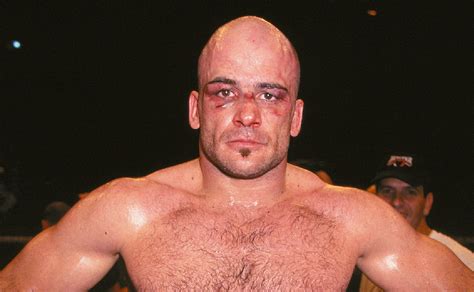
On 7 May 1999, at UFC 20, Rutten faced Kevin Randleman for the UFC Heavyweight Championship. The first four minutes consisted of Rutten taking unanswered punishment from his guard, getting blood on his face, but after the fight was stood up to check Rutten's cut, Rutten landed a hard kick to Randleman's liver, slowing his pace for the rest of the fight. They then exchanged strikes in Bas's guard, with the Dutch fighter opening a cut in Randleman via elbow strikes on top of his head, until the end of the overtime. Rutten vacated the title later in the year, in order to drop down to what was at the time middleweight.
Mental Fortitude and Training Philosophy
Rutten emphasized the importance of mental strength in fighting. He believed that everything starts in the mind, from making decisions to pushing through physical exhaustion. He developed strategies to trick his brain into enjoying the challenges of training and competition.
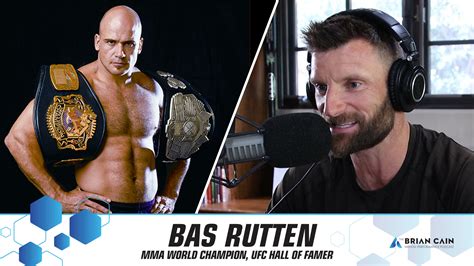
Bas is a retired Dutch MMA fighter, a tae kwon do black belt, Muay Thai kick boxer, and former professional wrestler. He was a UFC Heavyweight Champion and a three-time King of Pancrase World Champion, and finished his career with an unthinkable 22-fight unbeaten streak.
In the 4 hours, 27 minutes and 8 seconds he spent as a professional fighter, Rutten scored 13 knockdowns without getting dropped himself. His significant strike accuracy was 70.6, the highest FightMetric ever recorded.
Rutten has capitalized on his celebrity status since retiring from fighting in 1999, working as an MMA commentator and appearing in numerous television shows, movies, and video games.
Rutten: It’s all about the mind. Everything is created in the mind. I always tell the fighters we’re just talking about it; everyone says, “oh, it’s a 50/50, 50% physical, 50% mental.” I say it’s not. I say everything happens in the mind. The decision for you to get out of bed in the morning to get your breakfast is made up in the mind.
Calmness beats everything. When I see fighters getting beat up by the coaches and they’re hitting themselves in the faces, I think it’s maybe for them to realize that they’re in the moment, at this moment, but it doesn’t work for me. You start overcommitting to punches. The mind is the master in everything in life.
I was a super-aggressive fighter in Holland when I was Thai boxing. Literally I would come out very technical, I would play my game, I would get hit once and I would destroy the guy. It worked really well in the first 12 fights because I knocked them out all in the first round except for one. So that worked really well.
Then at one time - it was I also had a reason. I was partying, I didn’t train for three years, and apparently I accepted a fight because I was drunk and didn’t know I accepted it. Two and a half weeks before the fight this promoter calls me - “hey, where do I send the posters to?” I said, “what do you mean, what posters?” He said, “from the fight.” I said, “which fight?” He says, “your fight.” I said, “am I fighting?” So then we went over that and I realized, oh yeah, I kind of said that so I’m going to have to do this fight. When is the fight? In two and a half weeks. Anyway, I lost. That pretty much changed everything. I didn’t want to fight in Holland anymore because the throwback I had from one loss was insane.
I always come up with that name, the poker face. I truly believe that was when I really started putting things together. I was in complete control.
It’s a hard thing. Again the poker face comes. There are a lot of times where if they hit back and they have to go really hard on the back, they’re not allowed to make grimaces in their faces. It needs to stay calm. Everything needs to be calm. You need to tell your brain that you’re okay.
Once you start squeezing your face muscles, you’re telling your brain it’s not okay. People don’t fight for themselves. My biggest trick, what I always said, is that I fight for me. It sounds very egomaniacal but it’s not because - they say “but you have to fight for your family because they need money.” No. Once I start being bothered by those kinds of problems I don’t perform at my best.
But once I fight for myself and I don’t care what people say - because I learned that in all the Thai boxing, I stepped away from it - then that’s it.
I always think that I’m not as good as I really am. I think it’s a very important thing because I think people in general always think they’re way better than they are. I think it’s very important to train your brain like that and make sure you know everything. Once I start doing the ground then everything started coming together and I got obsessed with the ground fighting.
So then I started tricking my brain. Constantly, every time when I was really tired, I’d go, “oh yeah, I love it! I love it.” I would tell myself the whole time “I love it” and boom, suddenly I started catching on. Then I started enjoying getting tired. Now I needed to get tired. It got me a high, getting really extremely tired. So I just forced myself. I always tell people I’m really good at telling myself what to do.
I was always telling my mind, “listen, this is just for a week or for eight days; there are people out there that have it all year long.” I had eczema (horrible skin disease) everywhere on my face, my hands. I had to wear gloves. I got bullied a lot because of it because they thought I was a leper. That’s what they called me. I always thought people have it worse. I think my brain training started there. I told myself, “no, don’t go down.”
The glass has always been half full with me and I’ve been always that guy. It’s just tricking the brain. Maybe it’s not even tricking. If you really go over a fight - this is what I tell my students. I say, “what is the worst thing that can happen?” “I’m going to get knocked out.” “Well, apparently you’re not going to feel that.”
Once you can step away from your ego - and again this is people outside, this is your family, friends, everybody who knows it better but has never been in a gym - they’re complaining about you. Once you realize that those people don’t know anything, they don’t know, they never did it - so why would you be bothered by what they’re saying?
Evolving. It’s all about that. They all know it. They all say it in interviews - other guys - but they don’t do it. I go work on your weaknesses. It’s so in your face but people don’t do it. Once you do it, truly do what you’re preaching - well, everybody can be good. I’m just a guy like anybody else.
We all have the same mindset. Especially if you talk to the good guys. If you talk to beginner fighters, they will have completely different answers than once they start maturing as well. They realize that talking can put a lot of pressure on you. If you talk like that to Dan Severn, Dan Henderson, all these guys, Frank Shamrock - Frank is a good friend of us as well - they’re all calm, they’re all relaxed.
It’s simply just looking at other people. In an interview if you hear somebody - any artist. It doesn’t matter what artist we’re talking about. It can be a musician, an actor, whatever. They always say “don’t give up.” They all say that. There is always that moment of I wanted to quit but then I pushed a little further, and boom, suddenly there was the success. Once you start listening you realize that hundreds of great stars are saying all the same thing - “don’t give up.” So you put it in your mind - don’t give up.
Career After Fighting
Since his retirement, he has worked as a color commentator in several martial arts organizations, including Pride and Karate Combat (KC), and has appeared in numerous television shows, movies, and video games. From 2007 to 2016, he was the co-host of Inside MMA on AXS TV. Rutten also coaches MMA and has authored several instructional materials.
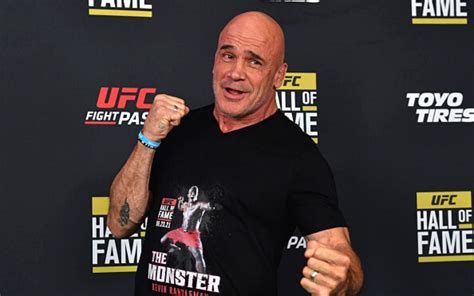
In 2008, Rutten was ranked by Inside MMA as the fourth-greatest mixed martial arts fighter of all time. In 2015, he was inducted into the UFC Hall of Fame.
Bas Rutten's Key Accomplishments
Here is a table summarizing Bas Rutten's key accomplishments:| Achievement | Details |
|---|---|
| UFC Heavyweight Champion | Won the title at UFC 20 against Kevin Randleman |
| Three-Time King of Pancrase World Champion | Dominant run in Pancrase, showcasing versatile skills |
| 22-Fight Unbeaten Streak | Finished his MMA career on a 22 fight unbeaten streak (21 wins, 1 draw) |
| Significant Strike Accuracy | Recorded 70.6% accuracy, the highest ever recorded by FightMetric |
| UFC Hall of Fame Inductee | Recognized for his contributions and impact on MMA |
Bas Rutten's career is a testament to his skill, mental fortitude, and adaptability. From overcoming childhood health issues to achieving greatness in multiple combat sports, Rutten has inspired many and left an enduring legacy in the world of MMA.
Here are some suggested video topics about Bas Rutten: