Filipino martial arts (FMA) are known for their devastatingly effective techniques and their emphasis on using weapons - especially sticks, knives, and swords - along with empty-hand skills. Among the many FMA systems, Kali, Eskrima, and Arnis are three of the most recognized names. While these terms are often used interchangeably, there are distinctions in their usage, history, and approach.
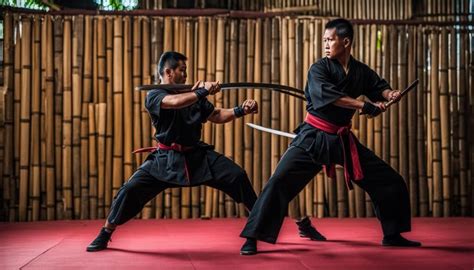
Filipino martial arts practitioners
Historical Context
The history of Kali, Eskrima, and Arnis is deeply rooted in the cultural and military history of the Philippines. For centuries, Filipino warriors faced both indigenous and foreign invaders. From the pre-colonial period through the Spanish colonization, Filipinos developed unique methods of combat using whatever weapons were available, including sticks, knives, and even improvised tools.
Kali
The name "Kali" is believed to have originated from the ancient Filipino word "Kalis," meaning sword, or from the word "Kali" itself, referring to the Filipino word for combat. Kali is often regarded as the oldest and most traditional form of Filipino martial arts. It is considered the root of both Eskrima and Arnis, with its origins dating back to the early Filipino tribes before Spanish colonization. Historically, Kali was used as a self-defense system by indigenous Filipinos, primarily in the context of warfare and tribal defense. During the Spanish colonial period, the Filipino people, who were not allowed to own firearms, turned to sticks and blades as their primary means of defense. Kali was used to defend against both foreign invaders and other local rival tribes.
The defining feature of Kali is its emphasis on fighting with weapons from the very start. Training typically begins with single and double-stick fighting before progressing to empty-hand techniques and other weapons, such as knives and swords. Kali is deeply rooted in the Filipino philosophy of fighting "anywhere, anytime," adapting to various environments and situations. The use of sticks is just as effective in defending against knives, swords, or even unarmed combat.
Read also: Filipino Martial Arts Techniques
Eskrima
Eskrima is the term most commonly used in the Philippines to describe the system of stick fighting and weapon-based combat. Eskrima, like Kali, is deeply embedded in the history of the Philippines, and the terms are often used interchangeably. The word "Eskrima" derives from the Spanish term "Esgrima," meaning fencing, which is why Eskrima is sometimes seen as a blend of both Spanish swordsmanship and indigenous Filipino martial arts. Eskrima, while similar to Kali, places more emphasis on the structured, tactical use of weapons in both combat and self-defense scenarios. Eskrima practitioners often focus on using one stick (single-stick fighting) or two sticks (double-stick fighting) to deliver strikes, blocks, thrusts, and sweeps. Like Kali, Eskrima also teaches hand-to-hand combat techniques, but the weaponry is more emphasized in its training curriculum.
Traditional Eskrima includes learning various weaponry combinations and applying them in realistic combat scenarios, such as street fights, ambushes, and tactical scenarios. Historically, Eskrima was used by Filipinos to defend against armed invaders - particularly the Spanish colonizers. Eskrima training is typically divided into three ranges of combat: long range, medium range, and close range. Long-range combat involves using the escrima sticks to strike or block at a distance, while medium range focuses on quick strikes and counters.
Arnis
Arnis, often referred to as "Arnis de Mano" (harness of the hand), is a term widely used today in the Philippines and internationally. It focuses on the use of sticks, blades, and empty-hand techniques, incorporating elements from both Kali and Eskrima. In the late 1800s, the term "Arnis" came into popular use as a way of unifying the various regional systems of martial arts in the Philippines. The rise of Arnis marked a period when the Filipino people were trying to preserve their cultural heritage and martial practices during the Spanish occupation. Like Eskrima and Kali, Arnis emphasizes weapons training, particularly with sticks, but it also integrates other weaponry, including knives, swords, and improvised tools. Arnis practitioners often train in Serrada (close-range techniques) and Dos Manos (two-handed techniques), emphasizing control, timing, and the flow of attack. The art also places a strong emphasis on learning defensive tactics, such as blocking, parrying, and counter-striking.
The Role of Sticks in FMA
When it comes to Filipino martial arts, escrima sticks, kali sticks, and arnis sticks are essential tools used in training, sparring, and real-world combat. While the terms escrima, kali, and arnis are often used interchangeably, the sticks associated with each martial art also have subtle differences. These differences can be found in the materials, length, and specific techniques that are taught in each system. Sticks are typically used for training and sparring because they offer a balance between safety and realism. Unlike bladed weapons, sticks are less likely to cause permanent harm, making them ideal for practice. The flexibility and precision of stick work also translate well to other weapons like knives and swords.
Kali Sticks
Kali sticks are often regarded as the traditional weapon of choice in Kali, the oldest and broadest of the Filipino martial arts systems. Kali emphasizes a wide range of weaponry and combat techniques, and the stick is typically the starting point for training.
Read also: History of Eskrima, Arnis, and Kali
Kali sticks are usually around 28 to 30 inches (71 to 76 cm) in length. This is the most common length for training, though some practitioners may use slightly shorter or longer sticks depending on their training goals or the specific type of Kali they are practicing.
The most traditional Kali sticks are made from rattan, a lightweight, flexible, and durable material. Rattan sticks absorb shock well, making them ideal for contact training without risk of splintering or breaking easily. However, as Kali evolved and spread globally, other materials such as waxwood, bamboo, and synthetic materials like fiberglass or plastic are sometimes used for increased durability or weather resistance.
Kali practitioners focus on flow drills and angles of attack. The use of the stick is highly dynamic, incorporating slashes, thrusts, and circular strikes. The movements are fast, with an emphasis on angle control and the ability to switch between offensive and defensive modes effortlessly.
Filipino Martial Arts Expert Breaks Down Moon Knight Kali Stick Fight | Scenic Fights
Eskrima Sticks
Eskrima, or Arnis de Mano, is another well-known Filipino martial art that focuses primarily on stick fighting techniques. The term Eskrima itself comes from the Spanish word "Esgrima," meaning fencing or swordsmanship, and the art developed with a distinct focus on using one or two sticks in tactical, precise combat.
Eskrima sticks are typically around 28 inches (71 cm) long, though they can range from 26 inches to 30 inches (66 to 76 cm), depending on the practitioner's preference and the school of Eskrima they follow. These sticks are often slightly thicker than Kali sticks to allow for a better grip during combat.
Read also: Arnis Sticks: A Comprehensive Guide
Like Kali sticks, rattan is also commonly used in Eskrima, thanks to its shock-absorbing qualities and durability. However, Eskrima sticks can also be made from waxwood, bamboo, or hardwood, depending on the practitioner's preference for weight and strength.
Eskrima is often considered a more tactical form of stick fighting, with an emphasis on precise strikes and defensive maneuvers. Eskrima training frequently involves drills focused on blocking and countering attacks, as well as weapon retention - a critical aspect when facing opponents with either hand-to-hand or bladed weapons. While Kali incorporates more free-flowing techniques, Eskrima tends to be a little more structured in its approach to using the stick in combat.
Arnis Sticks
Arnis (also referred to as Arnis de Mano) is another Filipino martial art that shares many similarities with Eskrima and Kali but also has distinct characteristics. Arnis is often practiced as a more sport-oriented system today, but its roots lie in practical self-defense and combat scenarios.
Arnis sticks are generally of similar length to those used in Kali and Eskrima, ranging from 26 to 30 inches (66 to 76 cm). Arnis sticks are often made to match the body size of the practitioner and are frequently chosen for comfort and control. In some schools, longer sticks may be used, depending on the specific curriculum and techniques being taught.
Traditional Arnis sticks are most commonly made of rattan or waxwood, although modern versions made from aluminum or thermoplastic materials are also available for specific types of training (such as outdoor or heavy-contact sparring). Rattan remains the most popular choice due to its balance of flexibility and strength.
Arnis, like Eskrima and Kali, teaches practitioners how to wield sticks for both offensive and defensive purposes. However, Arnis often places a stronger emphasis on self-defense and combat readiness. Arnis training typically involves single-stick techniques and the application of multiple strikes - especially in response to incoming attacks.
Key Differences Summarized
While Kali, Eskrima, and Arnis share many similarities in their approach to stick fighting, the subtle differences in their sticks - such as material, length, and training focus - are significant. Kali sticks are often slightly more lightweight and flexible, emphasizing fluidity and adaptability. Eskrima sticks are often thicker and sturdier, reflecting the tactical precision of Eskrima techniques. The choice of stick material (typically rattan or waxwood) plays a key role in the feel of the weapon, with rattan being preferred for its shock-absorbing properties and waxwood offering a denser, more durable stick.
Here is a table summarizing the key differences:
| Characteristic | Kali | Eskrima | Arnis |
|---|---|---|---|
| Typical Length | 28-30 inches (71-76 cm) | 26-30 inches (66-76 cm) | 26-30 inches (66-76 cm) |
| Common Materials | Rattan, Waxwood, Bamboo, Synthetic | Rattan, Waxwood, Bamboo, Hardwood | Rattan, Waxwood, Aluminum, Thermoplastic |
| Training Focus | Fluidity, adaptability, diverse weaponry | Tactical precision, structured techniques | Self-defense, combat readiness |
In the end, the differences between Kali sticks, Eskrima sticks, and Arnis sticks are subtle but meaningful. Each style's stick is designed to suit the principles and tactics taught within that system.