Brazilian Jiu-Jitsu (Portuguese: jiu-jitsu brasileiro [ʒiw ˈʒitsu bɾaziˈlejɾu, ʒu -]), often abbreviated to BJJ, is a self-defense system, martial art, and combat sport based on grappling, ground fighting, and submission holds. It is a versatile martial art with varied applications that include a highly effective self-defense system, a competitive sport, a proven realistic fighting style, and a fun and healthy recreational activity. Because its versatility, Brazilian Jiu-Jitsu is quickly becoming one of the most popular martial arts in the world today, and is without question, the most effective.
Brazilian jiu-jitsu was first developed by the Brazilian brothers Carlos, Oswaldo, Gastão Jr., and Hélio Gracie around 1925, after Carlos was taught jujutsu and catch wrestling in 1917 by either Mitsuyo Maeda, a traveling Japanese judoka, or one of Maeda's students Jacyntho Ferro. Later, the Gracie family developed their own self-defense system that they named Gracie jiu-jitsu.
This article aims to explore the origins of BJJ, its evolution through the decades, and how it has shaped the martial arts landscape today. Understanding its history provides insight into its techniques, culture, and global impact. From its ancient roots in Japan to its modern-day form as both a self-defense system and competitive sport, Brazilian Jiu-Jitsu has undergone a remarkable transformation.
Brazilian Jiu-Jitsu has become one of the fastest-growing martial arts in the world, known for its effectiveness, adaptability, and inclusive nature.
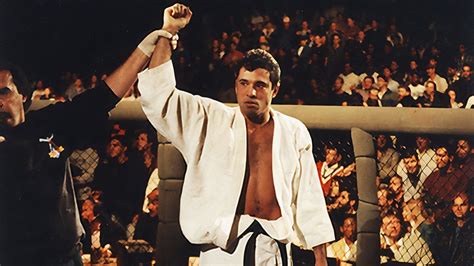
Royce Gracie
Read also: From Sitcom Star to BJJ Master
Roots in Japanese Jiu-Jitsu and Judo
Brazilian Jiu-Jitsu finds its roots in traditional Japanese Jiu-Jitsu and Judo. These methods of grappling and self-defense, which came to Japan between the late 17th and mid-19th century, eventually evolved into what is known today as jujutsu or jiu-jitsu. The term jiu-jitsu is translated as the “gentle art.” This “gentle art” was practiced and perfected by the Japanese over centuries, kept hidden from other nations.
These martial arts emphasized throws, joint locks, and submission techniques, focusing on using leverage and technique over brute strength. The ancient origins of basic grappling aspects can be found in Greece, China, and Rome; historians and a wealth of evidence indicate to Buddhist monks in India around 2000 B.C.
A method of self-defense that sought to neutralise an aggressor without doing them any harm was developed as a result of the Buddhist principles of non-violence and profound regard for all living things. It makes sense to link this to the beginnings of Jiu-Jitsu. Jiu-Jitsu made its way to China & Japan with the spread of Buddhism in the area.
Jigoro Kano and the Birth of Judo
In the late 1800s, Japanese martial artist Jigoro Kano sought to modernize traditional Jiu-Jitsu by emphasizing technique, safety, and education. Born in January of 1956, Carlos Gracie Jr. was raised under the close guidance of his father, (Carlos Gracie Sr.) brother (Rolls Gracie), and uncle (Helio Gracie). Carlos Gracie Jr. excelled in competition and loved teaching, training, and learning from his family.
He developed Judo, a system that retained many submission and throwing techniques but removed more dangerous aspects to make it suitable for training and sport. It also improves your ability to reason because you continuously decide what to do next, whether in a defensive or advantageous position. Lastly, Jiu-Jitsu has been found to give most people a release for their daily concerns.
Read also: The Art of Brazilian Jiu-Jitsu
Kano created Jiu-Jitsu with this in mind, doing away with harmful practices and implementing fresh teaching strategies. These techniques gave practitioners the ability to perform high-intensity training drills-now known as sparring and live training-with complete resistance in a secure manner! This innovative method significantly improved Japanese society and contributed to Jiu-Jitsu's actual return to prominence.
Kano's Judo quickly gained popularity in Japan and abroad. One of his students, Mitsuyo Maeda (also known as Count Koma), became instrumental in spreading the art internationally.
Maeda’s Journey to Brazil
Mitsuyo Maeda, a distinguished judo black belt from the Kodokan, trained under Tomita Tsunejirō-the first student of judo's founder, Kano Jigoro-and embarked on a global mission to showcase and spread judo. Departing Japan in 1904, Maeda traveled to various countries, demonstrating his skills and taking on challengers like wrestlers, boxers, savate fighters, and other martial artists.
In 1914, Maeda arrived in Brazil, where he gave demonstrations and taught Judo. He eventually settled in Belém do Pará and developed a relationship with the Gracie family. Maeda taught Carlos Gracie the fundamentals of Judo, laying the foundation for what would become Brazilian Jiu-Jitsu.
In Brazil, Maeda's demonstrations of "Kano jiu-jitsu"-a term then synonymous with judo-laid the groundwork for what would become Brazilian jiu-jitsu.
Read also: Jiu Jitsu Classes
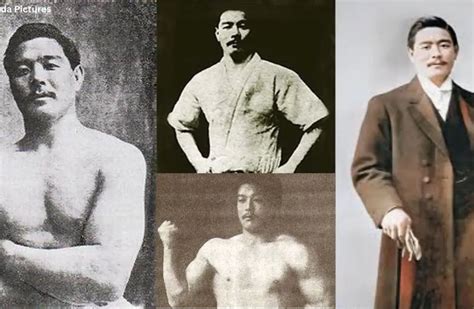
Mitsuyo Maeda
The Gracie Legacy: Birth of Brazilian Jiu-Jitsu
Carlos Gracie, along with his younger brother Hélio Gracie, played a pivotal role in adapting Maeda's teachings into a new martial art.
According to the Gracie family's account, Carlos became a direct student of Maeda at his school, which was overseen by Jacyntho Ferro. However, some Brazilian jiu-jitsu practitioner historians like Robert Drysdale challenge this narrative, proposing that Carlos was primarily instructed by Ferro rather than Maeda himself. Regardless, Carlos went on to share his knowledge with his brothers, including Hélio Gracie.
Hélio, who was smaller and physically weaker, modified techniques to rely more on leverage and timing rather than strength. Due to his smaller build, Hélio struggled with executing many judo throws and with judo techniques that relied on overpowering opponents.
By the late 1920s and early 1930s, the Gracies weren’t just teaching Jiu-Jitsu-they were turning it into a movement. While the Gracie family is widely celebrated for popularizing Brazilian jiu-jitsu, another significant parallel lineage emerged through Luiz França and gained prominence through his student Oswaldo Fadda.
Gracie Jiu-Jitsu
The Gracie family's version of Jiu-Jitsu emphasized ground fighting, submissions, and control. Instead, he refined the art, emphasizing ground fighting and leverage-key aspects of jiu-jitsu and judo's ne-waza-over traditional throws.
They began teaching and spreading their style throughout Brazil, challenging practitioners of other martial arts in "vale tudo" (anything goes) matches to prove the effectiveness of their system.
The Gracie Challenge
The Gracie Challenge became a cornerstone of BJJ’s growth. They issued an open invitation to fighters from any background-boxing, wrestling, judo, capoeira, karate-to come and see if they could defeat Gracie Jiu-Jitsu. No rules, no time limits, just pure fighting.
The family issued open challenges to fighters from other disciplines, using these matches to showcase the superiority of their ground-based grappling art. Helio Gracie became the face of these challenges, and despite his smaller stature, he consistently managed to defeat much larger and more powerful opponents.
These matches were instrumental in establishing Brazilian Jiu-Jitsu as a credible and effective martial art. As the family continued to win these challenge matches, their influence grew.
Brazilian Jiu-Jitsu Goes Global
While BJJ flourished in Brazil throughout the 20th century, it wasn’t until the 1990s that it truly gained international recognition. By this point, the Gracie family had already started to plant the seeds of expansion. In 1978, Rorion Gracie, one of Helio’s sons, moved to the United States with the goal of bringing Brazilian Jiu-Jitsu to a wider audience.
Beyond the Gracie and França-Fadda lineages, Brazilian jiu-jitsu in Brazil has branched into several prominent schools, including Gracie Humaitá, Gracie Barra, Carlson Gracie Jiu-Jitsu, and Alliance Jiu Jitsu.
The UFC and Royce Gracie
On This Day: Royce Gracie vs Ken Shamrock (1993) | UFC 1 Free Fight
In 1993, the first Ultimate Fighting Championship (UFC) took place in the United States. Rorion’s idea was to create an event that would pit martial artists from various disciplines- BJJ, karate, wrestling, boxing, Muay Thai -against each other in a no-holds-barred contest to prove which style was the most effective in a real fight.
Royce Gracie, a relatively small and unassuming figure compared to his opponents, represented BJJ. In UFC 1, Royce shocked the world. He submitted larger, stronger opponents from various martial arts backgrounds with ease.
Using his family’s techniques, he defeated larger and stronger opponents from various martial arts backgrounds, winning the tournament and capturing global attention. Royce fought successfully against several larger opponents proficient in other fighting styles, including boxing, shootfighting, Muay Thai, karate, wrestling, and taekwondo.
The success of Royce Gracie introduced BJJ to a global audience and validated its effectiveness in real combat scenarios.
The Gracie family and other Brazilian instructors traveled internationally to teach seminars and establish schools, further expanding the art's reach.
Modern Developments and Sport BJJ
As Brazilian Jiu-Jitsu grew, it evolved into more than just a self-defense system. It became a sport, a lifestyle, and a global community.
Jiu-jitsu came to international prominence in martial arts circles when Brazilian jiu-jitsu expert Royce Gracie won the first, second and fourth Ultimate Fighting Championships, which at the time were single elimination martial arts tournaments. BJJ has since become an elementary aspect of MMA, revealing the importance of ground fighting in a fight.
IBJJF and Competitive Structure
The International Brazilian Jiu-Jitsu Federation (IBJJF) was established to create standardized rules for competition. The International Brazilian Jiu-Jitsu Federation (IBJJF), established in 2002 by Carlos Gracie, Jr., started hosting organized jiu-jitsu tournaments worldwide.
Today, the IBJJF oversees major tournaments like the World Jiu-Jitsu Championship, the Pan Jiu-Jitsu Championship, and the European Open. Sport BJJ tournaments continue to grow in popularity and have given rise to no-gi submission grappling tournaments, such as the ADCC Submission Wrestling World Championship and NAGA, the North American Grappling Association.
Sport BJJ emphasizes points, positions, and submissions, and has developed its own strategies, techniques, and innovations.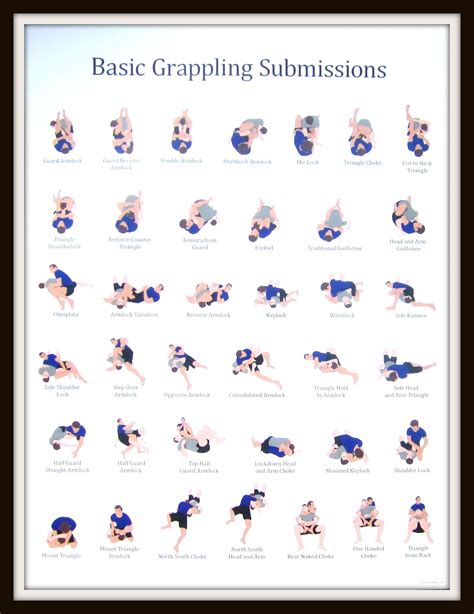
BJJ Positions
Gi vs. No-Gi
BJJ has branched into two primary styles:
- Gi BJJ: Practiced with the traditional kimono, emphasizing grip fighting and technical control.
- No-Gi BJJ: Practiced in athletic wear (rash guards and shorts), focusing on speed, agility, and different submission strategies.
In contrast to some other martial arts BJJ can be practiced using a gi or without it, also called 'no-gi', for this purpose rash guards are used. BJJ also allows heelhooks and knee-reaping which are prohibited in judo, and any takedowns used in wrestling, sambo, or other grappling arts, including direct attempts to take down by touching the legs or dragging the opponent to the ground
Both styles are practiced worldwide, and many athletes train in both to become well-rounded grapplers.
Another divergence of BJJ from judo and jujutsu is that the first allows no-gi practice and competition, with its own subset of rules.
The Rise of Submission-Only and Professional Grappling
In recent years, the professional grappling scene has grown significantly, with organizations like ADCC (Abu Dhabi Combat Club), Who's Number One (WNO), and Polaris offering submission-only or hybrid rulesets.
ADCC
The ADCC World Championship is considered the most prestigious No-Gi tournament in the world. It emphasizes wrestling, positional dominance, and submissions, attracting elite grapplers from various disciplines.
Superfights and Professional Leagues
Modern BJJ has moved into the realm of entertainment, with professional events offering cash prizes, live streaming, and celebrity athletes. Grapplers like Gordon Ryan, Craig Jones, and the Ruotolo brothers have become stars, helping to popularize BJJ even further.
BJJ as a Lifestyle and Community
Beyond its physical and competitive aspects, BJJ fosters a unique culture and sense of community.
Inclusivity and Accessibility
One of BJJ’s greatest strengths is its accessibility. People of all ages, sizes, and backgrounds can train together. From children and hobbyists to world champions, everyone shares the mats and contributes to the learning environment.
Health and Wellness
Practicing BJJ offers numerous health benefits, including improved fitness, flexibility, mental clarity, and stress relief. Many practitioners speak of the therapeutic and life-changing effects of training regularly.
Global Connection
BJJ has created a worldwide network of practitioners who share common values of discipline, respect, humility, and continuous improvement. Seminars, competitions, and social media platforms allow students to connect across continents and learn from one another.