Starting your journey on the mats can feel overwhelming. With so many techniques and positions, knowing where to begin is key. This guide breaks down the 11 most essential Jiu-Jitsu moves that every beginner should learn first.
1. Double Leg Takedown
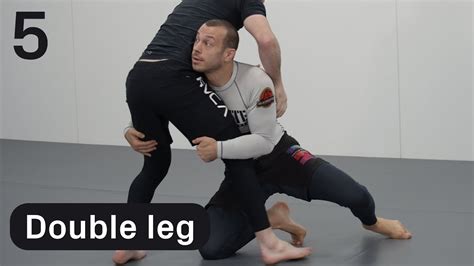
The double leg takedown is one of the most fundamental and effective techniques in Jiu-Jitsu and grappling sports, providing a reliable way to transition the fight from standing to the ground. This move is especially valuable for beginners, as it demonstrates the importance of timing, proper body mechanics, and control when closing the distance with an opponent.
To perform this technique, you begin by getting into an athletic stance, ensuring your knees are slightly bent and you're balanced on the balls of your feet. The execution starts with a penetration step, where you "shoot in" toward your opponent by stepping forward with your lead leg, ensuring it lands between their legs. Simultaneously, you lower your level by bending at the knees while keeping your chest upright. At this point, your head should be positioned to one side of their torso, with your gaze forward and not down.
Once in position, you wrap your arms around both of your opponent’s legs, gripping firmly behind their knees. Your head acts as a crucial point of leverage, pushing into their torso to destabilize their balance. Using the power from your legs and hips, you drive forward explosively, pulling their legs toward you while moving their weight backward.
Mastering the double leg takedown provides not only a strong entry point to initiate grappling exchanges but also highlights the importance of combining strength with technique.
Read also: Training at Alliance Chula Vista
2. Scissor Sweep
The scissor sweep is one of the most accessible and effective techniques to learn when starting your Jiu-Jitsu training. This move teaches the principles of leverage, timing, and body mechanics-cornerstones of grappling that will serve you well as your skills develop.
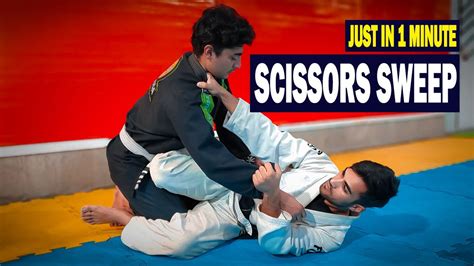
Executing the scissor sweep begins by solidifying your guard control. You should secure a grip on one of your opponent’s sleeves while simultaneously holding the collar of their gi with your other hand. Establishing these grips ensures you can control their upper body and posture, limiting their ability to counter.
Next, you open your guard by releasing the leg lock around their waist, planting one foot on the mat to create a pivot point. Your other leg extends outward and across your opponent’s torso at an angle, resting just below their ribs.
To create momentum, you shift your hips slightly to the side while pulling their sleeve and collar toward you. This action not only disrupts their balance but also encourages their weight to shift forward. With the movement set up, your bottom leg sweeps out and hooks behind their leg while your extended leg drives across their body. This coordinated motion applies the principle of leverage, allowing you to topple even larger opponents without relying on brute strength.
The scissor sweep doesn’t just teach a practical way to reverse the position and take the top-it also instills vital skills, such as recognizing weight distribution, applying leverage efficiently, and transitioning smoothly to dominant control positions. When successfully executed, you will find yourself on top in the mount or half-guard position, giving you a significant advantage in both self-defense scenarios and competitive grappling exchanges.
Read also: New Jujutsu Odyssey Codes
3. Upa Escape (Bridge and Roll)
Being stuck under mount is widely regarded as one of the most vulnerable and uncomfortable positions in grappling. Your opponent has the advantage of pinning you to the mat, limiting your movement, and setting up potential attacks, such as submissions or strikes. The Upa escape, also known as the bridge and roll, is a fundamental technique for reversing this position and gaining a more neutral or favorable outcome.
To execute the Upa escape, the first step involves identifying the right moment when your opponent is slightly off balance or applying pressure towards one side. Begin by securing control of one of your opponent’s arms, typically by trapping it tightly against your chest or locking it down with both hands to prevent them from posting. At the same time, ensure you trap their corresponding leg by hooking it with your foot.
The next crucial step is to perform a powerful bridge motion. Drive your hips upward explosively, creating a high arch with your back. This movement not only shifts your opponent’s center of gravity but also disrupts their stability, making it difficult for them to maintain their position.
Once their balance is compromised, execute a controlled roll towards the side you’ve trapped. Use the momentum generated by your bridge to continue the roll, flipping your opponent over and reversing your positions.
Mastering the Upa escape requires a strong understanding of the finer details. For example, keeping your elbows tight and avoiding excessive space is critical for minimizing your opponent’s chances to re-establish control. Repetition is vital for embedding the muscle memory required to perform the Upa escape effectively under pressure, whether in sparring or self-defense situations.
Read also: Benefits of Jiu Jitsu
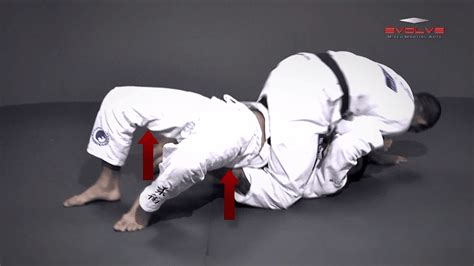
Jiu Jitsu Basics: Bridge (aka Upa / Trap and Roll) Mount Escape - Leicester Shootfighters
4. The Kimura
The Kimura is one of the most versatile and essential submissions in Brazilian Jiu-Jitsu, suitable for practitioners at all levels. This powerful shoulder lock can be applied from a variety of positions, making it a dynamic and effective tool in your arsenal. Among its most common setups are from the guard, half guard, side control, and even standing or scrambling situations, showcasing its adaptability to countless scenarios.
The submission works by isolating an opponent’s arm and securing a figure-four grip, allowing for significant control and leverage over the shoulder joint. When setting up the Kimura from the guard, the technique begins with controlling your opponent’s wrist with one hand while threading your other hand under their arm to secure a figure-four grip. This combination creates a strong mechanical advantage, enabling you to maintain control even against stronger opponents.
Success lies in maintaining tight wrist control, aligning your hips for proper rotation, and gradually applying pressure to maximize efficiency. Beyond the technical aspects, the Kimura teaches important principles in Brazilian Jiu-Jitsu, such as the ability to use leverage, positioning, and controlled force to neutralize an opponent.
5. The Triangle Choke
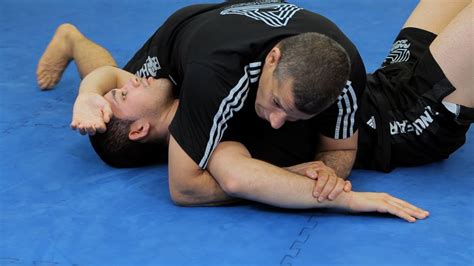
The Triangle Choke is a classic submission in Brazilian Jiu-Jitsu, embodying the essence of using leverage, anatomical knowledge, and precise technique to subdue an opponent. This submission is typically executed from the guard, where a practitioner skillfully uses their legs to trap the opponent’s head and one arm.
To set up the Triangle Choke, one must begin by breaking down the opponent’s posture in the guard. This is typically accomplished by using grips to control the opponent’s wrist and collar while pulling them forward. Once the posture is compromised, you isolate one of their arms and thread your leg across their neck, maintaining a tight clamp with your thighs.
The key to a successful Triangle Choke is adjusting for proper angles-shifting your hips outwards to create a sharper posture-and ensuring your foot placement locks the opponent securely in place.
Aside from its effectiveness, the Triangle Choke is a foundational move that develops critical skills for any BJJ student, such as hip mobility, posture control, and awareness of positioning. It is a technique that reinforces the key concept of using an opponent’s vulnerability to gain control, striking a balance between finesse and power.
6. The Americana
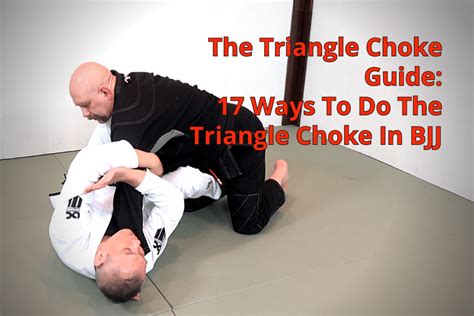
Another fundamental shoulder lock in Brazilian Jiu-Jitsu is the Americana, also known as the keylock. This submission is primarily applied from dominant positions like mount or side control and is both simple to execute and highly effective.
The Americana targets the shoulder joint by isolating the opponent's arm and applying controlled, yet devastating, pressure. To set up the Americana, you begin by pinning your opponent's arm to the mat. This is typically done by using one hand to push their wrist down while simultaneously using your other arm to hook underneath their elbow, creating a secure grip. Once the arm is in place, you "paint the canvas" by slowly sliding their wrist along the mat while applying downward pressure. This motion stretches and rotates the shoulder joint toward its limit, forcing the opponent to submit or risk serious injury.
Proper control is vital throughout the technique, as maintaining your positional dominance prevents the opponent from escaping or countering. The Americana is especially effective because it combines powerful leverage with controlled pressure, making it one of the hallmarks of fundamental Jiu-Jitsu techniques.
7. Rear Naked Choke (RNC)
Among all grappling techniques, the Rear Naked Choke (RNC) stands out as one of the most reliable and effective submissions. Celebrated for its high success rate and practicality in both sport and self-defense scenarios, the RNC is a staple finish in Brazilian Jiu-Jitsu. The move is executed after securing the back position, which is considered one of the most dominant positions in grappling.
To set up the RNC, you begin by achieving back control, often by using hooks to anchor yourself around the opponent's hips. With one arm, you slide it under your opponent’s chin, ensuring that it rests snugly against their neck, avoiding unnecessary pressure on the windpipe. Your other arm then loops across the back of their head, clasping the first arm in a figure-four lock.
To finish the choke, you squeeze your arms together while expanding your chest, applying pressure to the carotid arteries, which limits blood flow to the brain. This results in a fast and efficient submission. Control throughout the move is essential, as losing position can allow your opponent to escape or counter. The RNC is praised for its versatility and effectiveness, making it the go-to finishing hold for many practitioners, from hobbyists to top-level competitors.
8. Guard Passing (Knee Cut Pass)
Guard passing is an essential skill in Brazilian Jiu-Jitsu, forming the bridge between neutral positions and dominant, attack-ready positions like side control or mount. When your opponent is on their back with their legs engaged in a defensive posture, they are "playing guard." To advance your position and threaten submissions, you first need to pass their guard.
The knee-cut pass begins with proper posture and grip control. Typically, you’ll secure a grip on your opponent's collar to stabilize their upper body and another grip on their pants or leg to control their movement. Once grips are established, you step one leg forward, inserting your knee between the opponent's legs to create space while simultaneously pinning their other leg with your shin or hand. This creates a slicing motion as your knee "cuts" through the guard.
Timing and precision are critical, as your opponent will often try to disrupt your balance or recover their guard. To counteract this, maintaining strong base and posture throughout the pass is crucial. The knee-cut pass not only allows you to move into side control or mount but also sets the foundation for chaining passes together, ensuring you stay ahead in the positional hierarchy.
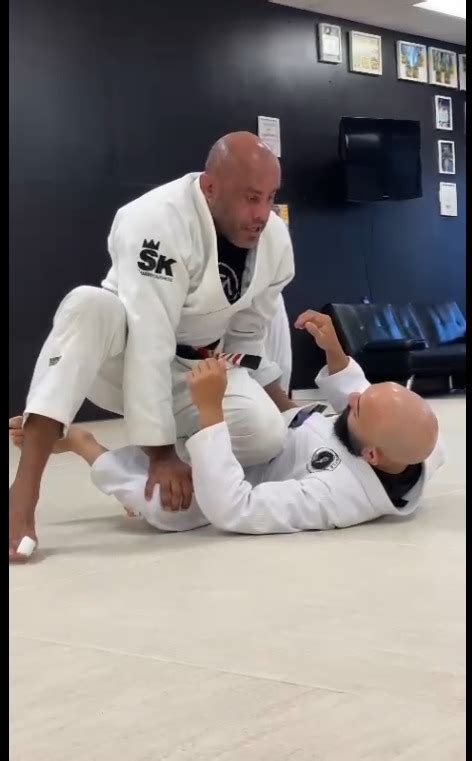
9. Guard Recovery (Shrimping)
Sometimes, the best offense is a good defense, and when it comes to Brazilian Jiu-Jitsu, guard recovery is an essential defensive skill that can make or break a roll. When an opponent is actively working to pass your guard, knowing how to maintain composure and effectively recover your position is vital.
Key movements like shrimping, also known as hip escaping, are at the heart of guard recovery. Shrimping helps create space between you and your opponent, allowing mobility to reposition your legs and reestablish a functional guard. Combining this with proper framing using your arms and legs creates a powerful defensive posture.
Re-establishing a strong guard often requires awareness and adaptability. Whether it's achieving closed guard, open guard, or even transitioning into a defensive half-guard, the objective remains the same-regaining control and preventing the opponent from solidifying their position. Preventing a guard pass is often more critical than attempting a sweep. A well-timed recovery halts the opponent's momentum, keeping you in the fight and allowing room to work your offensive game. Developing this skill not only strengthens your overall game but also builds confidence in your ability to handle pressure and maintain a strategic advantage.
10. Side Control Escape (Elbow Push Escape)
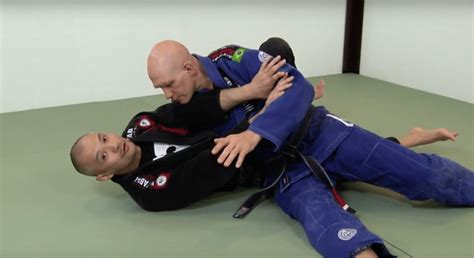
Being stuck in side control is one of the most challenging and uncomfortable positions Jiu-Jitsu practitioners face. The opponent exerts pressure, limiting movement and imposing control. The first step in this escape is framing effectively. Frames act as barriers to control the opponent's weight and movements. Start by placing one forearm against the opponent's neck to create distance while ensuring the other forearm presses firmly against their hip.
Once the frames are established, the next critical step is to create enough space to insert a knee between yourself and your opponent. This begins by slightly shifting your hips away from their pressure, working to open a small pocket of space. The beauty of the Elbow Push Escape lies in its reliance on leverage over core strength. The objective isn't to forcefully push the opponent off but to move just enough to gain the positional advantage for your escape.
Once the knee is inserted, you gain a wedge that acts as a shield and a pivot. From here, using the knee and your frames, you can work to recover your guard by bringing the other leg around and securing a defensive position or even transitioning into an offensive opportunity.
11. Technical Stand-Up
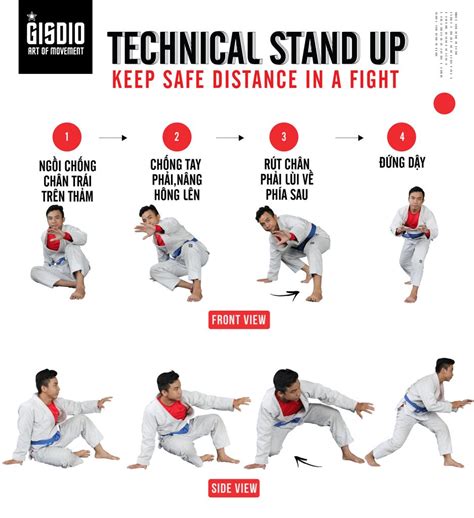
The Technical Stand-Up is one of the most fundamental and versatile movements in grappling, essential for escaping from bottom positions when disengaging and returning to a standing position is the best option. This technique begins with the practitioner positioning themselves defensively on the ground, typically in a seated posture, with one hand posted on the mat behind them and the opposite leg bent, foot firmly planted.
The practitioner shifts their weight onto the planted hand and foot, lifting their hips off the ground. This creates space for the extended leg to be drawn back underneath them, transitioning into a low squatted stance while maintaining constant visual awareness of their opponent's movements. Finally, as they fully rise to their feet, the practitioner keeps their guard up and their body angled to defend against immediate attacks.
The Technical Stand-Up is an unparalleled tool for maintaining safety and reestablishing a neutral position in sparring or combat.