Wrestling is a challenging and demanding sport that requires physical strength, mental toughness, and technical skills. If you’ve ever watched Olympic wrestling and thought, “Wait, this doesn’t look like what we do in high school,” you’re not alone. Wrestling comes in a few different styles, each with its own rules, scoring, and strategy. Many of the best wrestlers in the United States compete in three uniquely different styles: folkstyle, freestyle, and Greco-Roman.
Each style sharpens different tools in your wrestling arsenal. Folkstyle builds control and work ethic. Freestyle trains explosiveness and scrambling. Greco-Roman emphasizes leverage, positioning, and raw upper-body power.
Let's delve into the distinctions between these three prominent wrestling styles.
Folkstyle: wrestling (sometimes called collegiate wrestling) is what most American kids grow up on. Control is king.
Freestyle: Exposure is everything. Big moves = big points.
Read also: Rules of Freestyle Wrestling Explained
Greco: is all about leverage, positioning, and raw upper-body power.
All of them. At Arlington Wrestling Club, we believe in developing complete wrestlers. Ready to try a new style? Grab your wrestling shoes and hit the mat with us this spring.
Folkstyle simply means native style. Some say that the United States is the only country to have folkstyle wrestling, which simply isn’t true. There are hundreds of countries with “folkstyle” wrestling.
- Iceland has Glima.
- Turkey has oil wrestling.
- Japan has Sumo.
Our folkstyle is high school and collegiate wrestling.
Freestyle and Greco-Roman are used for international competitions, namely the World Championships and the Olympic Games.
Freestyle has similarities to our American folkstyle system, while Greco-Roman is uniquely different from the other two.
Key Differences in Rules and Techniques
American folkstyle and freestyle allow leg attacks and Greco-Roman does not. All Greco-Roman attacks must be above the waist. Touching legs in Greco-Roman results in a penalty or a foul. Taking your opponent off his or her feet and exposing your opponent’s back to the mat is the objective in all three styles.
Think of Greco-Roman as boxing and folkstyle and freestyle wrestling as kickboxing. Boxing only allows strikes to the body and head, while kickboxing allows strikes to the head, body, and legs.
Folkstyle and freestyle allow leg attacks but there are a variety of differences between the two. The biggest difference is that the American folkstyle system rewards control and freestyle rewards execution. Freestyle wrestling is just that: a free style of wrestling. Points come faster and matches often end quicker.
Folkstyle won’t have as many throws since referees will stop any potentially dangerous moves. Greco-Roman, as mentioned above, only allows attacks above the waist, which often leads to spectacular throws. This can also lead to low-scoring matches since attacks are limited to half of the body.
Why have Greco-Roman wrestlers done better in MMA than Freestyle?
Here's a breakdown of the key differences in scoring and match structure:
Scoring and Match Structure
Fall/Pin: Securing your opponent’s shoulders to the mat - known as a pin or a fall - is an effective way to end a match. This is universal between all three styles and is the ultimate goal of wrestling. The match ends and a winner is declared once a fall is secured.
Technical Fall/Technical Superiority: Our American folkstyle system calls it a technical fall, while freestyle and Greco-Roman call it a technical superiority. The concept is the same: outscore your opponent by a specified number of points and the match ends early. Below is the current point threshold for each style to end a match early.
| Wrestling Style | Point Threshold for Technical Superiority |
|---|---|
| Folkstyle | 15 points |
| Freestyle | 10 points |
| Greco-Roman | 8 points |
Takedown: All three styles begin with both wrestlers standing. The object is to take your opponent off his or her feet and secure points. A takedown is worth three points in folkstyle, but takedowns can be worth two, four, or five points in freestyle and Greco-Roman depending on how the move is executed.
Near Fall and Exposure Points: Folkstyle wrestling requires the top wrestler to hold the bottom wrestler in a danger position for two to five seconds to secure points (known as a near fall), while freestyle and Greco-Roman require the top wrestler to expose his or her opponent’s back for a split second to score (known as exposure). Freestyle and Greco-Roman matches can end quickly if a wrestler secures a takedown and earns multiple exposures (worth two points) in sequence. Folkstyle matches require the top wrestler to hold an opponent on his or her back multiple times for multiple seconds to tabulate enough points for a technical fall.
Reversal: Reversals involve stopping an opponent when he or she is in the top position and reversing the situation. A reversal is worth two points in folkstyle and one point in Greco-Roman and freestyle.
Escape: A point is awarded in folkstyle if the bottom wrestler gets out from underneath, faces his or her opponent, and gets to the standing position. There are no escapes in freestyle and Greco-Roman but the referee will stand both wrestlers on their feet after several seconds if neither wrestler scores from par terre (French for on the mat).
Length of matches: Folkstyle matches consist of three periods while freestyle and Greco-Roman consist of two periods with a 30-second break between each. Below is a breakdown with period lengths for each style and age division.
| Wrestling Style | Period Lengths |
|---|---|
| American Folkstyle (college) | 3-2-2 |
| American Folkstyle (high school) | 2-2-2 |
| Freestyle | 3-3 |
| Greco-Roman | 3-3 |
| U17 Freestyle | 2-2 |
| U17 Greco-Roman | 2-2 |
Matches will always end after six minutes during freestyle and Greco-Roman matches.
All three have takedowns, turns, and pins and the primary goal of each style is to pin your opponent. In both Folkstyle and Freestyle, you can do takedowns by either shooting or throwing.
The main difference between Freestyle and Folkstyle is that in Freestyle competition (and Greco) you do not do anything while you’re on the bottom besides trying not to get turned.
Like in all styles of wrestling you want to pin your opponent. An alternative way to end your period early would be being a Technical Superiority.
During Folkstyle competition you can only lock your hands while trying to pin or trying to takedown your opponent, but not while riding... An alternative way to end your match early would be being a Technical Superiority.
Greco-Roman Wrestling: A Closer Look
Wrestling, a sport with a diverse range of styles, has evolved over centuries, creating a tapestry of techniques and rules that showcase the athleticism and skill of its athletes.
Greco-Roman wrestling finds its roots in ancient civilizations, particularly in ancient Greece and Rome. In ancient Greece, wrestling was a central component of the Olympics and held tremendous cultural and sporting significance. The sport's emphasis on upper-body techniques, with throws, takedowns, and holds originating solely from the upper body, has persisted throughout history and remains a hallmark of Greco-Roman wrestling.
An intriguing aspect of Greco-Roman wrestling is the "passivity" rule, designed to promote active engagement and aggressive wrestling. Wrestlers are required to actively seek opportunities to score, and failure to do so may lead to penalties for passivity. This rule ensures that matches remain dynamic and engaging, rewarding those who initiate action and showcase their offensive skills.
Greco-Roman wrestling has produced legendary athletes who have left an indelible mark on the sport. Among the most celebrated wrestlers is Aleksandr Karelin of Russia, famously known as "The Russian Bear." Karelin's phenomenal strength and dominance earned him nine World Championship titles and three Olympic gold medals, solidifying his place as one of the greatest wrestlers of all time. Other iconic figures such as Hamza Yerlikaya of Turkey and Rulon Gardner of the United States have also contributed to the illustrious legacy of Greco-Roman wrestling.
Freestyle wrestling and Greco-Roman wrestling are two of the most prominent wrestling styles practiced worldwide. While both styles require exceptional skill and athleticism, they differ in terms of permissible techniques. In freestyle wrestling, athletes can attack both the upper and lower body, offering a broader range of offensive moves and strategies. In contrast, Greco-Roman wrestling focuses exclusively on upper-body techniques, placing a significant emphasis on strength and control in that region.
Greco-Roman wrestling, with its historic roots and focus on upper-body techniques, remains a captivating and revered style in the world of competitive wrestling. The sport's origins in ancient civilizations contribute to its timeless appeal and enduring legacy. The Greco-Roman passivity rule further adds to the strategic nature of matches, rewarding those who actively pursue opportunities to score.
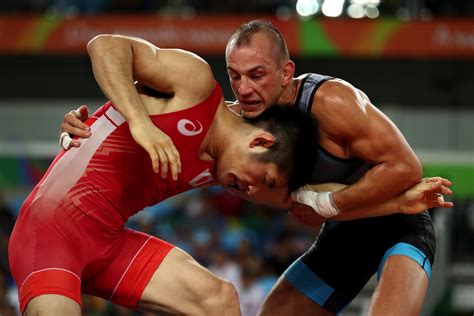
Benefits of Training in Multiple Styles
Folkstyle wrestling is clearly the most popular style of wrestling in the United States, wrestling freestyle and Greco-Roman, or International Wrestling Styles, will help make you become a better folkstyle wrestler. Let’s take a look at some of the benefits of freestyle and Greco-Roman for improving your folkstyle wrestling skills.
Wrestling freestyle and Greco-Roman will improve your overall technique and skills. Freestyle and Greco-Roman wrestling have different rules and scoring systems than folkstyle wrestling, which can help you develop new moves and techniques that you can use in your folkstyle matches. Freestyle wrestling emphasizes throws, takedowns, and exposure techniques, while Greco-Roman wrestling focuses on upper-body throws and par terre turns. By learning and practicing these techniques, you can become a more well-rounded wrestler with a wider range of moves and improves mat strategies.
Freestyle and Greco-Roman wrestling are faster-paced attacking styles of wrestling, more so than folkstyle wrestling, which is based on control. With more emphasis on explosive movements and quick transitions between positions, freestyle and Greco-Roman can improve your overall speed and agility. By training in these styles, you can improve your footwork, quickness, and reaction time, which can help you during your folkstyle season. The increased speed and agility you gain from freestyle and Greco-Roman wrestling can give you the needed edge in both offensive and defensive situations.
Freestyle and Greco-Roman wrestling can be more physically and mentally demanding than folkstyle wrestling, due to the increased pace and intensity of the matches. Wrestling freestyle and Greco-Roman can help you develop mental toughness and faster decision-making skills. By pushing yourself to compete in these styles, you can develop mental toughness and resilience that will benefit you in all areas of your wrestling. Mental toughness is a crucial skill for wrestlers, as it allows you to stay focused and motivated even in the face of adversity.
Finally, wrestling freestyle and Greco-Roman can help you become a more versatile wrestler. By training in multiple styles, you can adapt to different opponents and situations more easily. You can also learn to recognize and exploit different strengths and weaknesses in your opponents, which can give you a strategic advantage in your matches. Becoming a versatile wrestler is essential for long-term success in the sport, as it allows you to continually improve and adapt your skills to new challenges.
Wrestling freestyle and Greco-Roman will make you a better folkstyle wrestler by improving your overall technique and skills, enhancing your speed and agility, developing mental toughness, better mat awareness, and making you a more versatile wrestler. While folkstyle wrestling is the most popular style in the United States, training in these other styles can give you a competitive advantage and help you become a more complete wrestler.