Freestyle wrestling is a dynamic and globally recognized combat sport, one of the two wrestling styles contested in the Olympic Games, alongside Greco-Roman. It is governed by specific rules and procedures that ensure fair competition and safety for all participants.
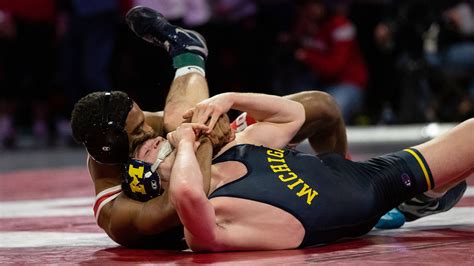
Eligibility and Divisions
Each athlete must meet the age group requirements and have the proper USA Wrestling membership. The 2024-2025 Membership Year is September 1, 2024-August 31, 2025.
For 8U, 10, 12U, & 14U Criteria there is no seeding for this event, draw numbers are assigned randomly by the computer. However, this event will be separated by the PIN for 8U, 10U, 12U, & 14U divisions. Brackets with Four (4) or less will use a round robin system. Brackets with Five (5) or more will use line bracketing.
Separation is used for all brackets by USA Wrestling Performance Index (PIN). The number of separated spots will be based on registered numbers and decided upon by tournament director and head operations official.
About the USA Wrestling PIN
The USA Wrestling Performance Index (PIN) measures consistency over time and rates the probability of a person winning against an opponent based on their bodies of work. A person with a higher PIN is considered more likely to beat someone with a lower PIN and the closer the PINs are between athletes, the closer the probability gets to 50/50 chances.
Read also: Understanding Wrestling Disciplines
This does not reward the one-time win or head-to-head over an opponent. What it does is reward an athlete’s consistency over time.
If you consistently beat people with higher PINs, you will gain PIN points to surpass them in the index, given that you do not lose to lesser competition along the way.
The more you wrestle, the more opportunity you have to change your PIN.
The baseline number for a person’s PIN is 1,000 points. The more points your PIN has above 1,000 reflects positive success against your opponents.
Scoring System
In freestyle wrestling, points are awarded mostly on the basis of explosive action and risk. For example, when one wrestler performs a grand amplitude throw that brings his opponent into the danger position, he is awarded the greatest number of points that can be scored in one instance.
Read also: A History of Penn State Wrestling Arenas
Also, a wrestler who takes the risk to briefly roll on the mat (with his shoulders in contact with the mat) could give a certain number of points to his opponent.
Here's a breakdown of the scoring elements:
- Takedown (2 to 5 points): A wrestler is awarded points for a takedown when the wrestler gains control over his opponent on the mat from a neutral position (when the wrestler is on his feet).
- Exposure, also called the Danger Position (2 or 3 points): A wrestler is awarded points for exposure when the wrestler exposes his opponent's back to the mat for several seconds.
Criteria for exposure or the danger position is met when:
- A wrestler's opponent is in a bridge position to avoid being pinned.
- A wrestler's opponent is on one or both elbows with his back to the mat and avoids getting pinned.
- A wrestler holds one of his opponent's shoulders to the mat and the other shoulder at an acute angle (less than 90 degrees).
- A wrestler's opponent is in an "instantaneous fall" position (where both of his shoulders are on the mat for less than one second).
- The wrestler's opponent rolls on his shoulders.
A wrestler in the danger position allows his opponent to score two points.
Other ways to score points include:
Read also: Penn State Wrestling vs. Wyoming Recap
- Escape - (1 point)
- Reversal - (2 points)
- Near Fall (Back Points) - (2 or 3 points)
Penalties
Penalty points are awarded to the opponent when infractions occur. Here are some examples of infractions that can result in penalty points:
- Locked or overlapped hands: If you are down on the mat in control of your opponent, you cannot lock or overlap your hands, fingers or arms around your opponent's body or both legs unless you have met criteria for a near pin of your opponent, or your opponent stands up and has all his/her weight on two feet, or you have lifted the opponent off the mat.
- Figure 4 head scissors from the neutral position.
- Stalling (you get one warning before you are penalized and points are awarded).
- Incorrect starting position or false start (You get two cautions before points are awarded).
The first and second time you are penalized, your opponent is awarded one point. The third time you are penalized, your opponent is awarded two points. The fourth time you are penalized, you are disqualified.
Under the 2004-2005 changes to the international styles, a wrestler whose opponent takes an injury time-out receives one point unless the injured wrestler is bleeding.
Each penalty is worth up to two points for the opposing wrestler.
Cautions are given for fleeing the mat, fleeing a hold, refusing to start, or an illegal hold. Cautions may result in points given to the opponent with the number of points being decided on the severity of the penalty.
A single-point penalty will be given to their opponent if the wrestler stops the bout by injury without bleeding or any visible injury.
Any throw where a wrestler is completely lifted off the ground and lands on two arms or on their chest, the attacking wrestler will get four points.
Any grand amplitude throws from a standing position that puts a wrestler’s opponent in immediate danger position will result in five points for the attacking wrestler.
There are six technical violations in wrestling and all are penalized in the following manner:
- First Offense - 1 penalty point (for opponent);
- Second Offense - 1 penalty point;
- Third Offense - 2 penalty points;
- Fourth Offense - Disqualification.
"Leaving the Mat Proper" -- No wrestler may completely step off the wrestling mat without permission of the referee.
"Intentionally Going Out-Of-Bounds" -- If either wrestler goes out-of-bounds to avoid wrestling his opponent for any reason (except when near-fall points are scored), this technical violation will be enforced.
"Grasping of Clothing" -- A contestant may grab nothing but his opponent while wrestling or this encroachment will be called. Furthermore, when a wrestler grasps his adversary's uniform to prevent him from scoring , the appropriate penalty point(s) will be given along with any points his opponent may have obtained.
"Interlocking or Overlapping Hands" -- The offensive (or top) wrestler may only lock or touch hands around his opponent's body or both legs when he is scoring near-fall points or his antagonist stands up. If his rival scores points while he commits this violation, his opponent would also receive the stipulated penalty point(s). Note, the official can only stop the match to award point(s) when the bottom man is unable to gain an escape or reversal due to interlocking or overlapping hands.
"The Figure-4 Head Scissors" -- The figure-4 head scissors is a technical violation in the neutral position.
"Improperly Equipped" -- Reporting to the scorer's table, not properly equipped, or not ready to wrestle or any equipment that is detected as being illegal after the match has started is a technical violation (e.g, no headgear, no mouthguard with braces).
Tie-Breaker Criteria
In the event of a tie between two or more participants in a round-robin, the following criteria shall be used to break the tie:
- If two participants are tied, the head-to-head outcome will determine highest placer.
- Cumulative activity points (2 pts: Fall, Inj. Default, Forfeit, WBD; 1.5 pts: Technical Fall; 1 pt: Major decision).
- Most pins.
- Most technical falls.
- Fastest time of falls (cumulative).
- Fastest time of technical falls (cumulative).
- Most match points.
- Lowest contestant weight.
Here are the tiebreakers for Olympic freestyle wrestling:
- Highest value of holds: The wrestler who scored the most points on a single hold is declared the winner.
- Last technical points scored: This is the final tiebreaker in freestyle. Whoever scores the last point in the match will be declared the winner if the two tiebreakers above are tied.
Additional Rules and Modifications
All Regional/National events will follow these rules and policies.
Regional/National Rules Modifications:
- If an athlete flees the mat during an attack and the offensive wrestler finishes his/her takedown or other scoring maneuver, the offensive wrestler will score the takedown/scoring maneuver (2, 4, or 5 points) PLUS caution to his/her opponent and one more point (2, 4, 5 + 1). Match will restart in PAR TERRE. This rule applies to all styles.
- If an athlete flees the mat during an attack and the offensive wrestler is unable to finish his/her attack, the offensive wrestler will score the step out (1 point) PLUS caution to his/her opponent and one more point (1 + 1). Match will restart STANDING. This rule applies to all styles.
- If an athlete flees the mat in par terre, caution to the defensive wrestler and his/her opponent receives one point. Athletes will restart in par terre. -- If an athlete flees in danger, caution to the defensive wrestler plus two points to the offensive wrestler, restart par terre (no change from previous rules).
- Par Terre Starting Position: Match will start once the offensive athlete places hands on any part of the back.
- If an athlete is put on activity time and does not score, the active wrestler will get one point on top of any points he/she scores in activity time. The passive athlete on activity time must score in that 30 seconds or their opponent will receive one point. The point will be awarded without stopping the match.
- In the 14U and younger, U15, 16U, U17 and Veteran age categories, no verbal warning for inactivity will be given due to the shortened periods. The first stoppage in the match for passivity will go directly to activity time.
- All Masters age categories will wrestle 2-minute periods.
- In a fall situation where the defensive athlete nearly has his/her shoulders to the mat and screams to simulate an injury and a reason for this potential injury is not observed, the refereeing team is obligated to call a fall, with mat chairman approval.
- Headgear is not required for wrestlers 14U and younger. A distinguishable shade of red or blue is acceptable for singlets.
- Double arm bar with sit-out, three quarter nelson w/leg hook and west point ride (iron cross/cross chest cradle) maneuvers are now LEGAL in all age divisions.
- Technical superiority in GR will now be 8 points across ALL age divisions.
- Kickbacks are legal in FS, assuming the offensive wrestler does not use undue force against the defensive wrestler’s knee. This has always been legal.
- In Greco the offensive wrestler DOES NOT have to accompany his opponent to the mat during a throw or action in order to score points.
- Mouth guards are not required for wrestlers (even wrestlers with braces) but recommended
- Rest time in between matches is a minimum of 15 minutes
- A match can be started when a wrestler does not have a coach
USA Wrestling rules governing ages, weights and match time will take precedence where applicable.
All AAU referees, judges, mat chairs, and pairing masters shall conduct themselves in a professional manner at all times. It is essential that each official exhibit good citizenship and high moral conduct in their relationships with athletes, parents, coaches, fans, and fellow officials. Each must, at all times, maintain the highest degree of personal integrity.
Match Structure
A typical freestyle wrestling bout is divided into two periods of three minutes each with a 30-second break in between. At the end of the six-minute period, the total scores are tallied and the wrestler with more points wins.
Before each match, each wrestler's name is called, and the wrestler takes his place at the corner of the mat assigned to his color. The referee then calls both of them to his side at the center of the mat, shakes hands with them, inspects their apparel, and checks for any perspiration, oily or greasy substances, and any other infractions.
When the session (or match) has concluded, the referee stands at the center of the mat facing the officials' table. Both wrestlers then approach each other, shake hands, and stand on either side of the referee to await the decision. The referee then proclaims the winner by raising the winner's hand.
Winning a Match
A wrestler wins the match when he has outscored his opponent at the end of the two three-minute sessions. For example, if one competitor were to score four points in the first session and his opponent two, and then two in the second session, his opponent zero, the competitor would win.
Other ways to win a match include:
- Win by Fall: The object of the entire wrestling match is to attain victory by what is known as the fall. A fall, also known as a pin, occurs when one wrestler holds both of his opponents' shoulders on the mat simultaneously.
- Win by Injury: If one wrestler is injured and unable to continue, the other wrestler is declared the winner. This is also referred to as a medical forfeit or injury default. The term also encompasses situations where wrestlers become ill, take too many injury time-outs, or bleed uncontrollably.
- Win by Disqualification: Normally, if a wrestler is assessed three Cautions for breaking the rules, he is disqualified.
Equipment
Wrestlers are required to wear specific gear to ensure safety and fair play:
- Singlet: A one-piece wrestling garment made of spandex that should provide a tight and comfortable fit for the wrestler.
- Wrestling Shoes: A special pair of shoes is worn by the wrestler to increase their mobility and flexibility.
- Handkerchief: Also called a bloodrag, is carried in the singlet.
- Headgear: Equipment worn around the ears to protect the wrestler, is optional in freestyle for younger wrestlers.
The Wrestling Mat
The match takes place on a thick rubber mat that is shock-absorbing to ensure safety.
For the Olympic Games, all World Championships, and World Cups, the mat has to be new. The main wrestling area has a nine-meter diameter and is surrounded by a 1.5-metre border of the same thickness known as the protection area.
Inside the nine meter in diameter circle is a red band of one meter in width that is on the outer edge of the circle and is known as the red zone. The red zone is used to help indicate passivity on the part of a wrestler; thus, it is also known as the passivity zone.
Inside the red zone is the central wrestling area which is seven meters in diameter.
In the middle of the central surface of wrestling is the central circle which is one meter in diameter. The central circle is surrounded by a band 10 centimeters wide and is divided in half by a red line eight centimeters in width.
For competition in the Olympic Games, the World Championships, and the Continental Championships, the mat is installed on a platform no greater than 1.1 metres in height. If the mat lies on a podium and the protection margin does not reach two meters, the sides of the podium are covered with 45° inclined panels.
Team Competition
In an international wrestling tournament, teams enter one wrestler at each weight class and score points based on the individual performances. For example, if a wrestler at the 60 kg weight class finishes in first place, then his team will receive 10 points. If he were to finish in tenth place, then the team would only receive one.
A team competition or dual meet is a meeting between (typically two) teams in which individual wrestlers at a given weight class compete against each other. A team receives one point for each victory in a weight class regardless of the outcome. The team that scores the most points at the end of the matches wins the team competition.
Women's Freestyle Wrestling
Women compete in freestyle wrestling at the collegiate, world, and Olympic levels. Women's freestyle wrestling made its Olympic debut at the 2004 Summer Olympics.