The guillotine choke is a grappling submission technique widely recognized in various martial arts. It is taught in several grappling martial arts and is considered worldwide to grappling, involving Brazilian jiu-jitsu, Judo, as well as in mixed martial arts competition and exists as one of the most natural chokes. It can be used in self-defense, jiu-jitsu and mixed martial arts. It seems like a big power move, but the smallest, weakest grappler can make the biggest, strongest grappler quickly tap out with it.
The guillotine choke is named after the medieval torture instrument.
This technique can cause unconsciousness if performed correctly. It is also important to reiterate that the guillotine is submission and not just a headlock. The guillotine is effective and useful in each group; submission, position, and self- defense technique which makes the move highly popular. This is a big reason why all students should practice and learn to master this technique.
Understanding the Guillotine Choke
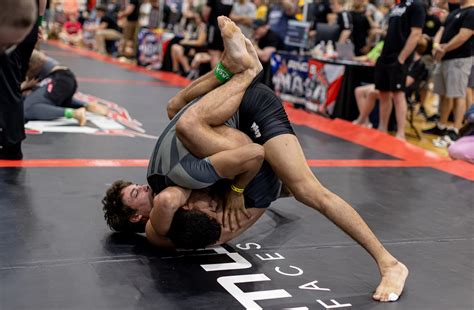
The guillotine is a chokehold that is executed by wrapping one arm around the opponent's neck and grasping the hands together to apply pressure to the neck. The end goal is to restrain your opponent by choking them out. The guillotine choke works by placing enough pressure on the carotid arteries, leaving the opponent trapped in the submission to tap out.
Nicky Ryan Teaches High Wrist Guillotine | B-Team Technique
Not only is the guillotine choke effective, it is also highly versatile as it proposes several other different variations. Also, the guillotine can be used as a position, giving the attacker control of their opponent.
Read also: Mastering the Guillotine Choke
Safety First
It is important to note that the guillotine, like any submission move, can be dangerous if not performed correctly and can cause serious injury or death. It should only be performed by trained professionals in a controlled environment. Never apply the technique in a quick, snapping, or jerking manner. Instead, the technique should be applied with firm, steady pressure that is applied gradually.
Executing the Guillotine Choke: A Step-by-Step Guide
Here’s a detailed breakdown of how to perform the guillotine choke effectively:
- Get Your Opponent's Head Down: This can be done by waiting until your opponent makes a move toward your legs or if their head is slightly bent toward you.
- Yank Their Head Down: Reach out and yank their head down by gripping your hands behind their neck and simply pull down.
- Wrap Your Arm Around Their Neck: Make sure their head is still facing down. After their head is in that position, you will wrap one of your arms around the back of your opponent's head. It is important to fully wrap your arm around their neck so that your forearm is completely against their neck.
- Secure Your Grip: Take your other hand and grab your choking arm. Simply grab the wrist of the arm you have wrapped around your opponent with your other hand. Make sure you have this hold tight so that your opponent can’t slide their head out from the pressure you created with your arms.
Grip Variations
There are a few grips you can utilize to secure this hold:
- The Cup-and-Saucer Grip: This is performed by making the hand of your choking arm into a fist and gripping the fist with the open palm of your other hand.
- The Chain Link Grip: In this variation, the fingers of each hand are cupped to grasp the other.
Completing the Hold
- Pull Up and Stretch: As you have your hold in place around your opponent's neck, next you want to pull up with both hands as if you are trying to stretch your opponent out.
- Push Hips Forward and Squeeze Elbows: To complete this hold, you want to make sure you push your hips forward and squeeze your elbows in toward your body.
Advanced Techniques
An optional way to advance the hold is to sit back onto the ground with the opponent's head still within your choke. After your opponent is on the ground, move them into the guard position by wrapping your legs around them. While in the guard position, reach for your opponent's right wrist with your left hand. From here, you want to pull yourself all the way into a sitting position while wrapping your right arm around the back of your opponent's head and neck. Next, place your left hand under your opponent’s chin and then grip your right wrist. To finish the guillotine move, you want to position your opponent back into the guard position by wrapping your legs around their midsection as their head is kept tight in the choke with your arms.
Read also: Is the Hayabusa S4 Right for Your Child?
Guillotine Choke in Combat
The final and last method to perform the guillotine wrestling move is using this choke during combat. While aligning yourself up to secure the hold, you need to decide if you either want to constrict your opponent's blood flow or airflow. If you choose to constrict blood flow, make sure your radial bone on your inner wrist is against your opponent's carotid artery, found on the side of their neck. If your aim is to constrict their airflow, you need to fully apply pressure with your forearm against your opponent's windpipe, found at the front of their neck.
Mastering the Technique
These many guillotine variations will certainly work if you put enough hours into drilling and practicing them. Remember that these techniques are based on the situations you may find yourself in. Take time to really understand and dig into the subtle differences between each of these techniques. It is important to be aware of how your body is positioned at all times. Drill all the variations, use and play around with the grips and finishes with your training partners or instructor. Keep your body calm and composed at all times.
Position your arm that is over your opponent’s shoulder as high as possible. Then place pressure on your opponent’s face with your own shoulder. Place your opposite arm and position it against your opponent's leg with your elbow bent. This step is crucial as it will force your opponent into an extremely uncomfortable position. Place your leg over the leg that your elbow was pushed up against.
Additional Youth Wrestling Moves
Youth wrestling moves, in particular, is a great way to introduce kids to the sport and help them develop skills.
Here are some quick wrestling moves that can be a great way for young wrestlers to gain an advantage over their opponents:
Read also: Choosing Wide Wrestling Shoes for Youth
- Sprawl: The sprawl is a defensive move that is used when your opponent attempts a takedown. It involves dropping your hips to the mat and moving your legs back to prevent your opponent from taking you down.
- Granby Roll: The Granby roll is a move that can be used to escape from the bottom position. It involves rolling your body over your shoulder and onto your back, then quickly rolling back over to your feet.
- Duck Under: The duck under is a move that can be used to evade your opponent's attacks and gain control of the match. It involves ducking under your opponent's arm and coming up behind them to take them down.
- Switch: The switch is a move that can be used to escape from the bottom position. It involves quickly changing your position and coming up behind your opponent to take them down.
- Arm Spin: The arm spin is a move that can be used to take your opponent down from a standing position. It involves grabbing your opponent's arm and spinning around them to take them down to the mat.
tags: #guillotine #youth #wrestling