The Guillotine Choke is an essential technique in Brazilian Jiu-Jitsu (BJJ) that you'll find effective not only in this martial art but also in mixed martial arts and self-defense scenarios. It's a submission maneuver that focuses on grappling, where you apply pressure on your opponent's neck using your arms. Understanding the intricacies of this move enables you to expand your BJJ arsenal significantly.
In practical terms, the Guillotine can be applied from various positions, making it a versatile option in your repertoire. With consistent practice and attention to detail, you can refine your Guillotine to make it a reliable submission in competitions or as a self-defense tool. The Guillotine Choke is a powerful submission that requires proper technique and an understanding of the mechanics behind the choke.
When you go for the Guillotine Choke, it's essential that you lock your grip correctly to ensure maximal pressure. Keep your grip snug and your body positioned in such a way to maximize leverage-details about optimal grip types and submission strategies can be found in guides such as Understanding the Guillotine Choke. Establishing a dominant position and maintaining precise control are essential elements in executing an effective guillotine choke.
To secure a guillotine choke, determine your position relative to your opponent-typically aiming for top position or a dominant guard. The pressure applied through your hips, the angle at which you attack, and the ability to control your opponent's head and arm with your arm are critical. A higher hip position dictates the level of control and the feasibility to finish the choke. The role of guard variations in executing a guillotine can't be overstated.
The Guillotine Choke is a versatile submission technique in grappling and Brazilian Jiu-Jitsu (BJJ). The objective of the Guillotine Choke is to trap the opponent’s neck and lead them into a headlock. By using your forearms and elbow, you create a choking mechanism, forming a distinct position that resembles a guillotine-hence the name. This technique involves blocking the flow of air by targeting a vital area, the windpipe.
Read also: From Sitcom Star to BJJ Master
The Guillotine Choke is a popular move in Brazilian Jiu Jitsu because it is not only highly effective, but can also be used in every possible situation. Add in the fact that it looks spectacular and requires relatively straightforward technique, and you will understand why every Portland, OR Brazilian Jiu Jitsu training facility will expound its importance in a well-based and rounded teaching method.
A good Guillotine Choke application relies on three core components: arm placement, body alignment, and the proper way to apply pressure. The small details matter, and in some cases, they are overlooked in a competitor’s training. This can result in a weak choke. Proper arm placement prolongs the choke and prevents the opponent from escaping. This requires an awareness of where you are making contact and how you apply pressure. Your grasping arm is your free hand. Body positioning determines how effective the choke will be.
When executed from the ground, the person applying it will try to control the opponent by the hips, for instance using a closed guard. This is done to prevent the opponent from escaping the hold, and to be able to apply additional pressure by extending the hips. The arm is wrapped around the trachea and the hands are clasped. Pressure is applied upwards to restrict blood flow to the head, eventually causing unconsciousness and, if applied for more time, even death.
Alternatively, it can also be a neck crank that strains the cervical vertebrae and possibly damages the trachea, larynx and hyoid bone and other parts of the neck, and can potentially cause paralysis, unconsciousness and death.
It has been recommended to have a firm understanding of Flying Guillotine Choke. When a fighter finds that the opponent has stopped struggling, he has to wait for him to tap or for the referee's decision. Make sure to keep the firm and steady pressure on the neck.
Read also: The Art of Brazilian Jiu-Jitsu
Here’s you’ll learn about the critical importance of using the guillotine choke as a control position before using it as a submission to tap out your opponent! Here’s why you shouldn’t just jump the guillotine and squeeze. You’ll learn the basics of the guillotine control position and using the chin-strap to control the head, using extension and rotation to weaken his posture.
In this drill you focus on flaring your own elbow out to internally rotate your opponent’s arm and weaken his structure. Here you’re working on going from the bottom to the top with your hands connected to create a head and arm headlock position (you use this when you can’t get the underhook). Also include the transition where you use the chinstrap to spin to the back and establish the seatbelt.
This video covers frames and hooks as secondary forms of control and distance management in the guillotine position. The key is doing the guillotine with the opposite-side butterfly hook (e.g. If your opponent has passed your guard and now has you on your weak side then DON’T try to finish the choke from here.
The guillotine choke is a very high percentage choke used in Brazilian Jiu Jitsu, MMA, and no gi grappling. Once you have the guillotine choke secured it can be very difficult if not impossible to escape. It might seem like an easy choke to do at first glance, but there many small details that go into an effective guillotine choke. The guillotine choke is known for its versatility, and ability to be hit from a multitude of positions.
To escape from it you need to target the hands, arms, and the space in between. Make sure not to let the fighter grip you completely, focus on the alleviation of the pressure.
Read also: Jiu Jitsu Classes
The safest place to be in a fight, while standing, is in a clinch. From the clinch, your opponent’s striking power is almost entirely eliminated. Once you establish the clinch, there is a good chance that they will get desperate and try to hit you in the face.
The Guillotine Choke is a powerful submission in that requires proper technique and an understanding of the mechanics behind the choke.
Whether you are applying the Guillotine Choke from a standing position or from the mat, it can be executed effectively. A standing Guillotine Choke occurs when the opponent moves toward you, often attempting to grab your legs for a takedown or to transition to side control. The possibility of transitioning to a submission via Guillotine Choke is high when on the ground. First, you need to get your opponent into a guard position. A guillotine choke is ideal for when you want to force an opponent into submission.
Countering defense during a Guillotine Choke can be tricky, yet it’s an effective tactic. The ideal time to secure the Guillotine Choke is when you want to compromise your opponent’s position-such as when they attempt a sweep or try to pass your guard.
But just because your opponent countered the original move, does not mean that you have lost the offensive, one of the important facets of BJJ.
Types of Guillotine Chokes
The guillotine comes with a lot of variations, that make the fighter more competent and can make the fighter unbeatable. As you learn the different variations of the guillotine choke, it will be an essential tool in the BJJ arsenal. Guillotine offers a variety of submission methods that are also unpredictable. The headlock methods are one hundred percent useful and effective. In addition, it is the best tool to put inside the BJJ arsenal.
Here are some of the types of Guillotine Chokes:
- Flying Guillotine
- Arm-In Guillotine
- 10 Finger Guillotine
- High-Elbow Guillotine
Flying Guillotine
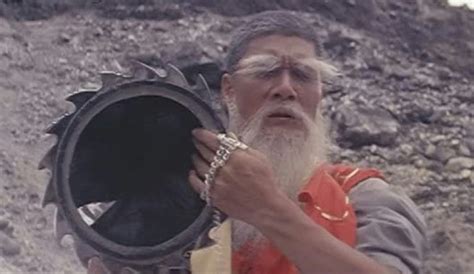
Flying Guillotine Choke is a submission method that is used in the Brazilian arts of jiu-jitsu, and it is also part of various martial arts. It originated from the martial arts of Judo where it is named the Mae Hadaka Jime. This submission method targets the front area of the neck, which is why it is often called the front neck choke. The fighter is required to use the arm that is encircled around the neck of the opponent. The blade of the arm resists the airflow due to the immense pressure. The opponent immediately taps for the submission. Flying Guillotine chokes are often used by the armies to defend themselves.
Flying guillotine chokes the blood and air at the same time. It cuts off the supply of blood to the brain.
Flying Guillotine choke is a submission method that is often used in the Brazilian jiu-jitsu. It can be applied to various positions. It is the most effective air choke in jiu-jitsu. The flying guillotine choke is the most effective submission method in Brazilian jiu-jitsu, it is also a complicated one and difficult to master.
Arm-In Guillotine
Arm in Guillotine: The Arm-in Guillotine, sometimes called the “Renzo Trick” after its inventor Renzo Gracie, involves using a chinstrap grip to cup your opponent’s chin and apply the choke. The Arm-In Guillotine is a potent variation where you entrap your opponent’s head and one arm within your choking grip. This requires a precise setup with your arm positioned under the opponent’s chin and your forearm pressing against their trapped arm.
Most of the time when your opponent shoots in with a double leg takedown you’re going to end up with an arm-in guillotine as opposed to a high elbow guillotine.
From the closed guard and the arm-in guillotine position your second hand underthe edge of your chinstrap grip. This finish is most successful when you can push someone back into a wall or a cage to give you some control over the body.
10 Finger Guillotine
10 Finger Guillotine: The 10-Finger Guillotine starts from a sprawl position, often as a counter to a double-leg takedown. As you sprawl, you weave your hands together, gripping your opponent’s chin as if holding a football.
The Ten finger guillotine is a technique that will have you submitting your training partners and opponents in no time. The 10 finger guillotine is best used when your training partner’s head is in the middle of your body. In this case, you want to box in your opponent’s head with both your arms. While blocking the head your training partner will not be able to escape to either side.
From here Lachlan gets his chest on top of his opponent’s head. He pushes down on the back of his opponent’s head while pulling up with his hands. Notice that Lachlan likes to grab his opponent’s chin which really helps him control his head. When he is ready he secures his grip with both hands, pulling upwards to tighten up the choke, causing his opponent to tap.
High-Elbow Guillotine
High-elbow Guillotine: Popularized by Marcelo Garcia, the High-Elbow Guillotine is designed to counter the Von Flue choke. The high elbow guillotine choke is a very powerful finish popularised by Marcelo Garcia. This standing guillotine entry uses the wrestling ‘snap down’ move to force your opponent’s hands to the mats.
Mike Palladino, is a World Champion Grappler, Brazilian Jiu Jitsu Player, and Founder of Evolution Grappling Academy. in the Combat Wrestling World Championship, held in Honjo, Saitama, Japan. Mike is a BJJ Black belt under the tutelage of 3x IBJJF World Champion and Soul Fighters Co Founder, Rafael “Formiga” Barbosa and Submission Grappling Wizard and Sambo Master Vladislav Koulikov. Mike has a nasty high elbow guillotine that comes straight out of his Combat background.
Mike sets this technique up from the turtle position, which occurs quite often in BJJ. Mike likes to enter this guillotine by using a chin strap to control his opponent. Once he has the chin strap he pulls his opponent’s neck up in order to create space. To finish the choke, Mike establishes his grip and falls back.
Mike sits into a position where his knee is across his opponent’s hip to control the distance and his leg opposite the side of the arm that is choking. This prevents his training partner from being able to jump out of the submission.
Start with the front headlock and using the chinstrap, driving your shoulder into the back of his neck. Start circling to your partner’s back, which will usually force him to block your hip with his arm. The moment when he blocks your hip is the perfect time to go for the high elbow guillotine.
Guard Variations and the Guillotine Choke
The role of guard variations in executing a guillotine can't be overstated. If operating from a closed guard, focus on trapping your opponent's body to limit their ability to escape. Use your legs actively to break their posture. When in half guard, pay attention to preventing your opponent from passing. Full Guard offers the most control, allowing you to break their posture down and set up a tight choke. Within bottom position, your guard acts as both defense against strikes and a launching pad for submissions.
The guillotine choke is a powerful submission that varies in application depending on your guard position. When you have your opponent in Closed Guard, you're in an excellent position for a guillotine choke. Focus on gaining a deep grip on your opponent's neck, using your arm like a noose. From the Butterfly Guard, the guillotine can be quite dynamic due to your ability to elevate and shift your opponent using your legs. Once you trap the head and establish your grip, use a combination of elevating with your butterfly hooks and crunching towards the angle where their head is trapped.
The Half Guard is often seen as a defensive position, but it is also an unexpected place to launch a guillotine attack. Secure your grip under the chin as soon as you see an opening, then use your legs to control their body and prevent the pass. To finish the submission, you need to either get to your side or create enough angle with your upper body.
Here's a breakdown in table format:
| Guard Position | Key Strategies |
|---|---|
| Closed Guard | Deep grip on opponent's neck, arm as a noose. |
| Butterfly Guard | Elevate and shift opponent, trap head and use butterfly hooks. |
| Half Guard | Secure grip under chin, control body with legs, prevent passing. |
Mastering the transitions to advanced positions and escape techniques is essential. Your ability to transition effectively can mean the difference between maintaining control or being submitted.
Defense Against Guillotine Chokes
Escaping a Guillotine Choke involves a combination of techniques tailored to the situation you find yourself in. Firstly, to relieve pressure on your neck, use your hand on the choke side to create space. If your opponent has closed guard, you should look to sprawl to reduce their leverage. Remember to stay calm, focus on controlling your opponent's wrists or arms to prevent them from tightening their grip, and create the necessary space to breathe and plan your next move.
Mastering the Standing Guillotine Choke
Mastering the standing guillotine choke requires technical knowledge of entries and setups, along with the ability to execute with precision. When you want to enter into a standing guillotine, positioning is key. Aim to secure a collar tie, which involves gripping the back of the opponent's neck with one hand while your other hand controls their arm or wrist. For a chinstrap entry, you'll capitalize on moments where your opponent's head is low. You can snap their head down from a collar tie and quickly switch to a chinstrap grip, cupping their chin with the blade of your wrist.
To properly execute the choke, quickly loop your free arm under your opponent's chin and over their shoulder. Ensure your grip is snug, with the chinstrap grip secure, aiming to place your forearm against their windpipe. Once you have your grips, apply upward pressure to the chin and downward pressure with your shoulder to intensify the choke. It's crucial that your elbows are close to your body to maximize the choke's force. By honing these tactics, you can turn the standing guillotine into a reliable and formidable weapon in your grappling arsenal.
When you establish the clinch, and your opponent no longer has the space or distance to strike you effectively, they will often wrap your neck in an attempt to submit you. For this reason, the Guillotine Choke is one of the most common techniques used by unskilled individuals because it’s simple and it gives them a feeling of control during the chaos.
No-Gi BJJ Guillotine Chokes
In no-gi BJJ, the absence of the gi demands greater emphasis on grip strength and precision. The guillotine chokes are no exception.
Conclusion
Those who can execute the Guillotine Choke effortlessly add another achievement to their Brazilian Jiu-Jitsu journey. Not everyone who attempts to apply the Guillotine Choke in ground fighting is successful. However, those who understand the importance of the finer details often find success and win tournaments. Mastering the core components of this technique requires effort and a commitment to practice. Hopefully you find these three guillotine chokes useful! Be sure to give them a try the next time you are on the mats.
If you love this choke, then you will love these techniques.
ARE YOU A BJJ FANATICS INSIDER?
BJJ / Grappling Transition Concepts - Transitional Guillotines Jason Scully
tags: #brazilian #jiu #jitsu #guillotine