In the realm of martial arts, the concept of "forging" the body like iron holds significant importance. Traditional martial artists understand that every strike is a two-way street, and without proper conditioning, the body can suffer as much as the opponent. Iron Skills were developed for a harsh reality, when one’s body was one’s weapon.
This article delves into the art of Iron Skills, exploring how it transforms the body into a resilient weapon and armor, emphasizing longevity, effectiveness, and health benefits over violence.
The Science Behind Forging One’s Body
How does hitting a heavy bag over and over turn bone and flesh into something “harder”? The answer lies in your body’s amazing ability to adapt. Full-body conditioning means strengthening every part of your striking anatomy, knuckles, shins, forearms, core, and more, so that you can learn how to take some unavoidable hits and absorb strikes with minimal damage to yourself.
When you subject bones, skin, and connective tissue to controlled stress, they respond by rebuilding themselves stronger. Some key factors behind conditioning include:
Bone Remodeling
Bones obey Wolff’s Law, meaning they adapt to repeated loads. Strikes cause tiny micro-fractures in the bone tissue. Just like muscles get stronger by healing micro-tears, bones get tougher by healing micro-fractures. In response, the body repairs these micro-injuries with new bone material, making the bone denser and stronger over time.
Read also: "Iron Mike" Origins
This process gradually turns your shins or knuckles into formidable striking surfaces instead of fragile ones. It’s a slow process, at least months and years of consistent training, but it works.
Skin Callus Formation
The skin also toughens up. Repeated friction and impact lead to thicker skin and calluses on areas like knuckles. For example, karate practitioners who do frequent knuckle push-ups and Makiwara strikes often develop protective calluses on their knuckles. Over time, the skin becomes less likely to tear or bruise when you hit a target. These act like natural pads, reducing cuts and abrasions on impact.
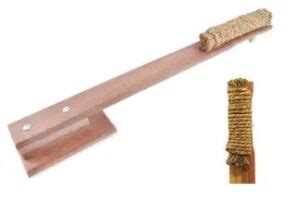
A Makiwara.
Nerve Desensitization
Ever notice how beginners yelp in pain when they knock their shin, but experienced fighters seem unfazed? Repeated strikes dull the pain receptors (nerves) in those areas.
The nerves don’t exactly “die off” completely (you’ll always feel something), but your pain threshold increases. Essentially, you’re training your brain and nerves to not overreact to the familiar shock of impact. After thousands of controlled hits, a once-sharp pain may register as only mild discomfort.
Read also: Exploring the Iron Fist Martial Art
Important: the goal isn’t to destroy your nerves or feel nothing. It’s to be able to continue fighting through normal pain. As one expert puts it, effective conditioning is about building structural resilience, not just numbing pain.
Mental Fortitude
One more benefit of conditioning is mental. It builds confidence. When you know your body has been toughened through hard training, you carry yourself differently. There’s a psychological edge in knowing “I can take it, and I can give it back.” This confidence, however, comes only from gradual progress and consistency, there are no shortcuts.
The Alchemy of Iron Skills: Qìgōng
Chapter Three goes deep in the alchemy of Iron Skills, which is Qìgōng. Qìgōng is a complex notion which allows us to become one with ourselves. It is a conversation with our psyche, which is as crucial in today’s society as it was for the battlefield of yesteryear, but at the same time improves our body. Without those two core notions you cannot have Iron Skills. The art of Iron Skills has been shrouded in secrecy-and worse, in ignorance-for so long that it has led to countless myths and apocryphal legends.
Even though Iron Skills grant a pugilist a sound method to condition the body-be it for sport as a competitive fighter or for the harsh reality of that the streets may offer-its true benefit is actually health; not violence as some may believe. It goes beyond the obvious, which is a physicality, into something deeper, which benefits our health tremendously.
Practical Conditioning Tips
So, as exciting as the idea of iron-like limbs may be, remember that it’s a slow forge, not a quick hack.
Read also: Martial Arts in Alpharetta
Kyokushin karate legend Mas Oyama emphasized that “Perseverance and step-by-step progress are the only ways to reach a goal.”
Here are some practical tips to consider when beginning your body conditioning journey:
- Start Soft, Go Gradual: Conditioning is a gradual process, never an overnight transformation. Begin with softer targets and light contact.
- Use Proper Targets: “Never strike something harder than your own bones,”. In practical terms, use equipment that provides some give.
- Allow Recovery: Especially in conditioning, overtraining is a real danger. Your bones and tissues need time to recover and rebuild stronger after being stressed.
- Never Train Injured: Conditioning should never be done on an injury. If you have a bone bruise, stress fracture, or severe inflammation, give it time to heal before resuming conditioning.
A Beginner's Conditioning Routine
If you are a beginner at body conditioning, I suggest you dedicate 2 days a week to conditioning exercises, spaced out (e.g. Wednesday and Saturday), plus light daily habits. Focus on fundamental drills with moderate intensity. Always warm up before and stretch after.
Sample Exercises
- Knuckle Push-Ups: 3 sets of 10-20 on a mat or carpet. Rest ~1 minute between sets.
- Makiwara or Pad Strikes: 5 minutes of light strikes with wraps (no gloves). Throw 50 light punches focusing on penetration and form, not power.
- Shin Conditioning: 5 rounds of heavy bag kicking, 1 minute each. In each round, do ~15 controlled kicks per leg (50-60% power).
- Forearm Conditioning: 3 sets of 10 partner forearm clashes. Go light, it should sting a bit, not hugely painful.
Total time: ~20-30 minutes. Finish with icing any particularly sore spots for 10 minutes and gentle massages on knuckles or shins that were hit.
The Significance of Iron Skill
Chapter Two shares the significance of Iron Skill, which is the science behind forging one’s body. Dr. Dugas has over 35 years of training in Chinese, Okinawan and Japanese martial arts, including Uechi-ryu Karate, Judo/Jujitsu, Jook Lum Tong Long Pai/Southern Mantis, Shuai Jiao, Xingyiquan, Baguazhang, Taijiquan and Internal/External Qigong systems. In other words, conditioning is about longevity and effectiveness: turning your body into a resilient weapon and armor at the same time.
Chapter Six allows us to gauge our progress with different mediums, which should bring a smile to one’s face, as seeing one’s progress is so rewarding. That is why I introduce this methodology in a step-by-step process to grant the practitioner the ability to gauge his progress.
Chapter Seven ventures beyond the hand and started to focus on tempering the body for impact. At times, some individuals forget that fighting is not like in the movies; no wires, but up and close.
Finally, Chapter Eight ties it all in to demonstrate why we train Iron Skill, which is to be able to survive an encounter when needed.
In closing, this is the beginning of one’s journey in exploring oneself and what we are able to do if we focus our intent into forging our body into Iron.
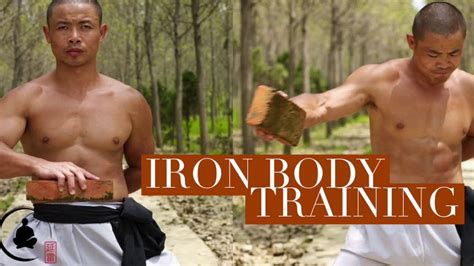
In time and with proper training I found this to be a valuable training asset. And after decades of study in kung-fu and Chinese medicine I brought all my knowledge together into a comprehensive book, Fundamental Iron Skills. Chapter One introduces to the roots of Iron Skills within the United States of America.
On non-conditioning days, focus on technique, cardio, and general strength. If something is sore from the conditioning day, avoid hitting it again until recovered. You can do light shadowboxing or footwork on off days to keep active. Also, stretch daily, because flexibility in hips, ankles, wrists will help prevent injury when you start hitting harder.
This beginner routine prioritizes safety while still laying the groundwork. After 4-6 weeks, you might increase the volume (e.g. more kicks or push-ups) or add a third conditioning day if you feel ready. Always adjust based on how your body feels. The goal in the first couple of months is to establish conditioning as a habit and toughen up a notch from untrained. You might notice by week 6 that your knuckles are a bit thicker, your shins don’t bruise as easily, and planking a medicine ball on your stomach doesn’t hurt so much. That’s progress, keep it up!
Remember, effective conditioning is about building structural resilience, not just numbing pain. Patience is part of the game. Start gradually if you plan to incorporate these drills in your training routine.
As a coach taught me, “If their strikes do more damage to themselves than to the opponent, longevity will be an issue”.
Table: Sample Weekly Conditioning Schedule
| Day | Activity | Focus |
|---|---|---|
| Monday | Technique Training | Perfecting Form |
| Tuesday | Cardio | Endurance |
| Wednesday | Conditioning | Knuckles, Forearms |
| Thursday | General Strength | Weightlifting |
| Friday | Technique Training | Sparring |
| Saturday | Conditioning | Shins, Core |
| Sunday | Rest | Recovery |
By following these guidelines and incorporating conditioning into your martial arts training, you can enhance your body's resilience, improve your striking power, and extend your longevity in the sport.