Amidst global uncertainties, the concept of martial law has resurfaced, sparking discussions about its role in managing crises. Martial law, defined as the complete control over all aspects of civilian life by national military forces, is often implemented during war, states of emergency, natural disasters, or times of unrest.
While there is no universal definition, the term often refers to the use of the military for law enforcement. Many legal experts consider martial law to be the use of military personnel to dramatically assist or completely replace a nation's normal legal system in times of emergency. Under total martial law, the normal American law enforcement and legal system is replaced by a stricter set of laws and punishments that is completely controlled by the military or executive branch of the government.
During its implementation, all constitutional rights, including habeas corpus, are suspended. All civilian courts are disbanded and replaced by military courts, and mandatory checkpoints and curfews can be established within the region of control. Soldiers may search any suspicious person, confiscate belongings, and even evict individuals from their homes without a warrant. There is no limitation on the duration of martial law in any country because its use is determined by necessity, which is also the only prerequisite needed to implement it.
Though debated in some legal discussions, martial law can also occur in stages, without ever getting to total takeover by the military. In the United States, martial law may be declared by proclamation of the President or a State governor, but such a formal proclamation is not necessary.
Technically, the ability to impose martial law in the US remains with Congress through the Posse Comitatus Act which prohibits federal troops from arresting or detaining people, but allows them to enhance civilian authorities; for example, when cleaning debris and looking for survivors in Louisiana after Hurricane Katrina. The Insurrection Act, however, allows the President to override Congress and deploy federal troops militarily either by request or without state consent if there is unlawful obstruction or civil unrest. These two American laws juxtapose each other and give uncertain information about who can impose martial law and when it is valid.
Read also: Individual Martial Arts Instruction
Unfortunately, legislation about martial law is just as unclear in other countries as well. While martial law can be beneficial in true emergencies, it has a history of allowing political leaders to abuse power.
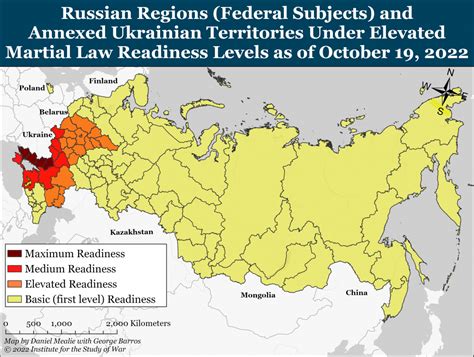
Countries that have experienced martial law.
Historical Context
Martial law has been used sporadically throughout modern American history and has been declared by governors, the federal government, and the President across time. It was used to integrate schools in Little Rock in 1954 and to quell riots after the assassination of Martin Luther King Jr. in 1968 and the Rodney King verdict in 1992, which was not dissimilar to today’s BLM protests. It has also been used throughout modern history in Ukraine, Egypt, Poland, and Thailand following both internal and external threats.
Martial law has twice been implemented nationally by a president during wartime, first by Abraham Lincoln in border states between the North and South during the Civil War, and then again by local military officials in Hawaii during World War II. This was later approved and expanded by Franklin Roosevelt's executive order to include the incarceration of Japanese-Americans on the West Coast.
Federal troops can be used to enforce law and order without an official declaration of martial law. For example: see Rasul v.
Read also: The Jade Fortress Martial Arts System
In several examples of martial law -- such as when President George W. court jurisdiction and was later overruled by the Supreme Court, or a loophole in current law that gave President Donald Trump control of all D.C. National Guard troops deployed to the district during the Jan. 6, 2021, insurrection at the Capitol -- Congress and the courts have usually reacted swiftly and strongly to any domestic military deployments. Two laws enacted as the result of previous actions include the Insurrection Act and the Posse Comitatus Act. Both are now widely used in emergency situations, even though their constitutionality is still often called into question more than 100 years after they were enacted.
Federal troops acting under the Posse Comitatus Act are limited to only performing the duties of a deputized posse to assist civilian police in enforcing existing laws. In fact, the military is severely limited in exactly what duties it may perform when assisting civilian police, rules spelled out in DoD Instruction 3025.21.
Law enforcement support during martial law falls into two broad categories: direct and indirect. Direct support involves enforcing the law and engaging in physical contact with offenders.
Examples of Presidential Actions:
- 1950s -- President Dwight D.
- 1980s -- President George H.W.
- 2000s -- President George W.
Pros of Martial Law
In times of chaos and emergencies, martial law offers a way for the government to take control of the situation and restore stability. While it may seem extreme, martial law re-establishes order and can allow response teams to better help those who most need aid.
In the current pandemic, martial law could ensure people follow regulations by the Centre for Disease Control and Prevention (CDC). This could minimise the spread of the disease and increase hospital productivity to better treat infected individuals.
Read also: Deep Dive into Court Martial Films
Martial law also offers an alternative way to regain control following the Black Lives Matter riots without worsening the already problematic relationship between local police officers and black citizens. Because martial law is extreme, it is only beneficial in emergency situations where it is truly needed to protect the wellbeing of citizens when local authorities cannot do so.
Cons of Martial Law
While the executive branch of the government may often rely on the military to assist civilian law enforcement, Congress and the judicial branch tend to frown upon these actions and, depending on the situation, move to prevent that from happening.
All the benefits of martial law are currently outweighed by the lack of clear grounds on which it can be enacted and who can mandate it. Governments across the world must work to establish more concrete rules regarding martial law to eliminate the possibility of exploitation by state officials at any level in times of crisis. Courts must establish clear precedents for martial law to be implemented to avoid abuse of power and prolong civilian unrest. It is essential to set clear prerequisites in all countries for martial law to be legally justified, particularly in a state of emergency like the global COVID-19 pandemic.
A lack of justice and accountability can lead to further human rights violations and erasure of the horrors of the past fuels attempts to revise history. Former President Marcos was never held accountable and was instead granted a hero’s burial with full military honours by the Duterte administration in 2016. Amnesty International believes that all those suspected of criminal responsibility for crimes under international law or other human rights violations should be brought to justice in fair trials, regardless of when and where the crimes were committed.
There should be no amnesties, pardons or similar measures of impunity for such crimes if such measures prevent the emergence of the truth, a final judicial determination of guilt or innocence and full reparation for victims and their families.
Martial Law in the Philippines: A Case Study
For example, in the Philippines an infamous government-orchestrated scheme sentenced the country to almost nine years of military rule. President Ferdinand Marcos declared martial law in September 1972 which remained in place until January 1981. During that time, he possessed absolute power which he used to quell political opposition and strengthen his control over the country. Despite constitutional reforms in 1987, there are fears that the Philippines may be headed towards another abuse of power through martial law by President Duertes.
In September 1972 Marcos declared martial law, claiming that it was the last defense against the rising disorder caused by increasingly violent student demonstrations, the alleged threats of communist insurgency by the new Communist Party of the Philippines (CPP), and the Muslim separatist movement of the Moro National Liberation Front (MNLF). One of his first actions was to arrest opposition politicians in Congress and the Constitutional Convention.
Initial public reaction to martial law was mostly favourable except in Muslim areas of the south, where a separatist rebellion, led by the MNLF, broke out in 1973. Despite halfhearted attempts to negotiate a cease-fire, the rebellion continued to claim thousands of military and civilian casualties. Under martial law the regime was able to reduce violent urban crime, collect unregistered firearms, and suppress communist insurgency in some areas. At the same time, a series of important new concessions were given to foreign investors, including a prohibition on strikes by organized labour, and a land-reform program was launched.
In January 1973 Marcos proclaimed the ratification of a new constitution based on the parliamentary system, with himself as both president and prime minister. He did not, however, convene the interim legislature that was called for in that document.
General disillusionment with martial law and with the consolidation of political and economic control by Marcos, his family, and close associates grew during the 1970s. Despite growth in the country’s gross national product, workers’ real income dropped, few farmers benefited from land reform, and the sugar industry was in confusion. The precipitous drop in sugar prices in the early 1980s coupled with lower prices and less demand for coconuts and coconut products-traditionally the most important export commodity-added to the country’s economic woes; the government was forced to borrow large sums from the international banking community.
Also troubling to the regime, reports of widespread corruption began to surface with increasing frequency. Elections for an interim National Assembly were finally held in 1978. The opposition-of which the primary group was led by the jailed former senator Benigno S. Aquino, Jr.-produced such a bold and popular campaign that the official results, which gave Marcos’s opposition virtually no seats, were widely believed to have been illegally altered.
In 1980 Aquino was allowed to go into exile in the United States, and the following year, after announcing the suspension of martial law, Marcos won a virtually uncontested election for a new six-year term.
The assassination of Benigno Aquino as he returned to Manila in August 1983 was generally thought to have been the work of the military; it became the focal point of a renewed and more heavily supported opposition to Marcos’s rule. By late 1985 Marcos, under mounting pressure both inside and outside the Philippines, called a snap presidential election for February 1986. Corazon C. Aquino, Benigno’s widow, became the candidate of a coalition of opposition parties. Marcos was declared the official winner, but strong public outcry over the election results precipitated a revolt that by the end of the month had driven Marcos from power. Aquino then assumed the presidency.
Aquino’s great personal popularity and widespread international support were instrumental in establishing the new government. Shortly after taking office, she abolished the constitution of 1973 and began ruling by decree. A new constitution was drafted and was ratified in February 1987 in a general referendum; legislative elections in May 1987 and the convening of a new bicameral congress in July marked the return of the form of government that had been present before the imposition of martial law in 1972.
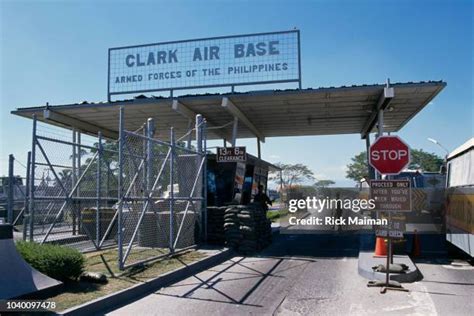
Clark Air Base, Philippines, destroyed by the eruption of Mount Pinatubo in 1991.
Euphoria over the ouster of Marcos proved to be short-lived, however. The new government had inherited an enormous external debt, a severely depleted economy, and a growing threat from Moro and communist insurgents. The Aquino administration also had to weather considerable internal dissension, repeated coup attempts, and such natural disasters as a major earthquake and the 1991 eruption of Mount Pinatubo.
The resumption of active partisan politics, moreover, was the beginning of the end of the coalition that had brought Aquino to power. Pro-Aquino candidates had won a sweeping victory in the 1987 legislative elections, but there was less support for her among those elected to provincial and local offices in early 1988. By the early 1990s the criticisms against her administration-i.e., charges of weak leadership, corruption, and human rights abuses-had begun to stick.
But as campaigns are under way, a disturbing revisionist narrative that is attempting to play down the numerous human rights violations committed during the Martial Law regime back in the 1970s has started to emerge. Attempts to downplay what happened during Martial Law include arguments that the country should move on and forget the past. Indeed, the country must move on towards a radically different approach to human rights. However, forgetting a past of grave human rights violations without guaranteeing the rights to truth, justice and reparations is dangerous and will lead to further human rights violations.
Here are five things to know about why the period under Martial Law matters in the ongoing fight for truth, justice and reparations in the Philippines.
- The nine-year military rule ordered by then President Ferdinand Marcos in 1972 unleashed a wave of crimes under international law and grave human rights violations, including tens of thousands of people arbitrarily arrested and detained, and thousands of others tortured, forcibly disappeared, and killed. During the martial law era (1972-1981), and during the remainder of President Marcos’ term, Amnesty International documented extensive human rights violations which clearly showed a pattern of widespread arrests and detention, enforced disappearances, killings and torture of people that were critical of the government or perceived as political opponents.
- Many other civil society organizations have also documented similar crimes under international law and human rights violations during martial law, including the Task Force Detainees of the Philippines, the International Commission of Jurists, the Lawyers Committee for International Human Rights, and the Foundation for Worldwide People Power. The United Nations Working Group on Enforced or Involuntary Disappearances also presented a damning report to the then Human Rights Commission after a visit to the country in 1990.
- Given the immensity and pervasiveness of violations, keeping records of violations, including precise figures, remains a difficult and unfinished task to this day. One of the reasons why it is difficult to ascertain the exact number of human rights violations is the lack of accountability and genuine processes of truth-telling to seek more detailed information and contribute to the fight against impunity.
- A lack of justice and accountability can lead to further human rights violations and erasure of the horrors of the past fuels attempts to revise history. Former President Marcos was never held accountable and was instead granted a hero’s burial with full military honours by the Duterte administration in 2016. Amnesty International believes that all those suspected of criminal responsibility for crimes under international law or other human rights violations should be brought to justice in fair trials, regardless of when and where the crimes were committed.
- Reparations remain elusive for many victims and their families who are unable to prove the violations that they or their relatives experienced during martial law, in the absence of documentation and other requirements.
The Human Rights Victims’ Claims Board - created by the government to “receive, evaluate, process, and investigate” reparation claims made by victims of human rights abuses during martial law, and which ceased its work in 2018 - received as many as 75,000 claimants, but only over 11,000 of these were recognized following the board’s assessment.
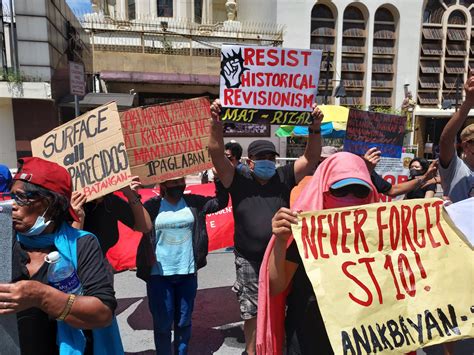
Protests against martial law in the Philippines.
Legal Framework
When martial law is in effect, the military commander of an area or country has unlimited authority to make and enforce laws. Martial law is justified when civilian authority has ceased to function, is completely absent, or has become ineffective.
Further, martial law suspends all existing laws, as well as civil authority and the ordinary administration of justice. In the United States, martial law may be declared by proclamation of the President or a State governor, but such a formal proclamation is not necessary. Constitution makes no specific provision for the imposition of martial law, nearly every State has a constitutional provision authorizing the government to impose martial law.
The power of martial law, once held to be nearly absolute, has limitations; for example, civilians may not be tried by military tribunals as long as civilian courts are functional. Nonetheless, within the bounds of court decisions, a military commander's authority under martial law is virtually unlimited.
Martial law has been declared nine times since World War II and, in five instances, was designed to counter resistance to Federal desegregation decrees in the South. Although a climate of mutual aid has always existed between the military and civilian law enforcement and should continue to exist, Department of Defense personnel are limited in what they can do to enforce civil law.
| Aspect | Description |
|---|---|
| Definition | Complete control over civilian life by national military forces. |
| Implementation | During war, state of emergency, natural disaster, or unrest. |
| Legal Basis (USA) | Insurrection Act, Posse Comitatus Act. |
| Rights Suspended | Constitutional rights, including habeas corpus. |
| Pros | Restores order, aids emergency response. |
| Cons | Potential for abuse of power, human rights violations. |