The Black Karate Federation (BKF) holds a significant place in martial arts history, particularly in the United States. Founded in the late 1960s, it emerged as a united voice for black martial artists seeking fair representation and recognition in sport karate. This article explores the BKF's origins, its key figures, and the enduring impact of its members, with a special focus on KC Jones and the influence of the ridge hand technique.

The Genesis of the Black Karate Federation
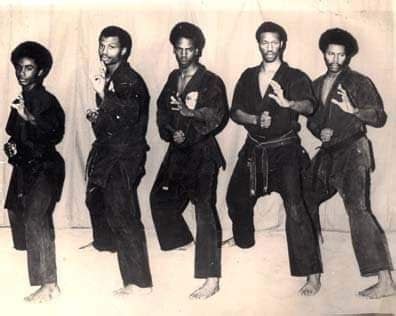
In the late 1960s, a group of young martial art enthusiasts, including Jerry Smith, united in Los Angeles, California, to train and exchange techniques. Smith recalls, "We were the right mix of people at the right time. We created a great and unbeatable mix of techniques." This collaboration led to the formation of the Black Karate Federation (BKF). Jerry Smith, with his background in graphic design, created several logos for the group containing the initials "BKF".
The organizational structure of the BKF took shape with Steve Sanders as its first president, Jerry Smith as the first vice-president, Cliff Stewart as the secretary, Ron Chapel as the technical historian, and Karl Armelin as the treasurer. From this core group, which included Donnie Williams and Curtis Pulliam, the Black Karate Federation was officially founded.
The 103rd Street School: Home of BKF Champions
The first official BKF School opened in late 1971 at 10302 South Western Avenue in Los Angeles. Known as "The 103rd Street School", it was the home of the original students of the BKF. Martial arts champions such as Joe Lewis, Cecil Peoples and Benny Urquidez often visited the school to train. In the early 1970s, Jerry captained the BKF team that won the International Karate Championships three times.
The 103rd Street School achieved notoriety as the location chosen to film a portion of the immortal martial arts films, "Enter the Dragon" starring Bruce Lee. In the "Enter the Dragon" scene, BKF co-founder Jerry Smith, as well as several BKF students can be identified. As fate would have it, those few seconds of exposure in "Enter the Dragon" has cemented the continuing legacy of the BKF because of Bruce Lee and the global impact that the film continues to have.
Read also: Aspinall-Jones Dream Matchup
Jerry Smith and the Five-Level Method
Senior Grandmaster Jerry Smith is one of the original founders of the Black Karate Federation (BKF) in Los Angeles, California. In addition to being a three-time international champion in semi-contact karate, and a former trainer of world-rated full-contact fighters.
In the late 1980s, Jerry Smith founded a martial art training system called "The Five-Level Method", based on his decades of experience as a martial artist. The concepts and principles in The Five-Level Method were born from Jerry's need to develop a template that assessed a professional athlete's abilities in a combative sport, and then could be used to train those athletes to be professional fighters. Shorin-Ju Kenpo teaches fighting principles as well as five levels of preparing for self-defense: physical, technical, mechanical, psychological, and academic.
KC Jones: A Force in the California Tournament Scene
In the vibrant California tournament scene of the 1970s, KC Jones carved out his place among the elite, securing victories in prestigious competitions like the Internationals. Jones fondly recalls the pivotal role of a particular technique-the ridge hand.
Jones's journey to mastering the ridge hand began in the mid-1970s while training under the tutelage of Joe Lewis in Hollywood. Its simplicity, speed, and deceptive nature appealed to him-it was like a martial arts hook, easily executed due to the loose structure of the hand. The ridge hand became a cornerstone of Jones's fighting arsenal, and he observed its widespread use among his peers, notably Cliff Stewart.
The Ridge Hand Technique: A Legacy of Power and Precision
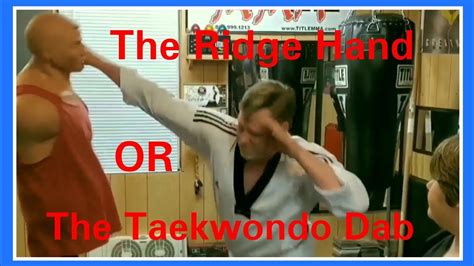
The ridge hand technique is a testament to the indomitable spirit of martial arts. By tucking the thumb into the palm and executing a circular motion akin to a hook punch, practitioners unleash a force to be reckoned with. The legacy of the ridge hand endures - a timeless testament to the indomitable spirit of martial arts and the enduring legacy of those who mastered its artistry.
Read also: Jones' MMA Dominance
According to Jeff Smith, his inspiration to incorporate the ridge hand into his martial arts repertoire traces back to the golden era of Karate, where luminaries like Mike Stone, Fred Wren, and Jim Harrison held sway. For Smith, the ridge hand wasn't just a defensive maneuver; it was a versatile weapon capable of both offense and defense. Decades later, Smith continues to pass on the legacy of the ridge hand through his teachings.
Dan Anderson, renowned for his dominance on the American Tournament circuit under the moniker "Super Dan," reminisces about his strategic use of the ridge hand in combat. Anderson emphasizes its versatility in both sport karate and self-defense scenarios. As martial artists adapt and refine their skills, Anderson's journey underscores the importance of versatility and adaptation in the ever-evolving world of combat sports.
In the dynamic world of 1980s Sport Karate, Keith Vitali emerged as a dominant force on the tournament circuit. Vitali elaborates on his strategic use of the ridge hand, particularly as a defensive counter against opponents' back-fist strikes. Today I still practice the move when I work out, as it is still an effective weapon.
Hailing from Texas, full-contact legend and World Champion Ishmael Robles struck fear into the hearts of his opponents with his devastating hands and feet. While the reverse punch was a cornerstone of his sport karate arsenal, Robles found versatility in the ridge hand, seamlessly transitioning between sport and full-contact styles.
In the South East Karate scene of the 1980s, Mike Genova and his South Carolina martial arts style reigned supreme. For Genova, the ridge hand became an integral part of his fighting strategy, often employed as a follow-up to the back fist. When asked about his approach to teaching the ridge hand in his martial arts school, Genova affirms its continued inclusion in their curriculum.
Read also: "Jon Bones" Jones Career Overview
Richard Plowden, a distinguished inductee of the Black Belt Hall of Fame, boasts an impressive resume as both a World Champion and coach of world champions. Plowden notes that Fisher's protégé, Freddy Letuli, later adopted this move as his signature technique. Despite its decline in popularity, Plowden affirms that he continues to incorporate the ridge hand into his practice.
Renowned as the GOAT (Greatest of All Time) in Sport Karate, the legendary Denley was celebrated for her mastery of the ridge hand, despite her personal preference for sidekicks. Denley's success with the ridge hand stemmed from its reliability, with a remarkable success rate. With a glint of determination in her eyes, Denley's commitment to her signature move continues to inspire awe in the martial arts world.
Jones emphasizes, "Evolution has transformed the martial arts landscape, but the fundamentals remain essential. I still practice the ridge hand regularly, believing that mastering the basics is key to advancing in the art."
Notable BKF Fighters and Their Techniques
The BKF produced numerous talented fighters who left a lasting impact on the martial arts community. Some of the notable fighters and their techniques include:
- Leroy Charbonnet
- Joe Swift
- Bernis "White Lightening"
- Cecil Peoples
- Benny Urquidez
- Herbert A. Sam Pace
- Roland Talton
- Robert Temple
- Richard Heath
- Gary Goodman
- KC Jones
- Al Harvey
- Burt Cooper
- Ted Taylor
- Ernest “Mad Man” Russell
- Kraiguar Smith
- Terri Dent
- Carl Scott
These fighters, among others, contributed to the BKF's reputation for excellence and innovation in martial arts.
The BKF's Enduring Legacy
The Black Karate Federation's impact extends beyond its contributions to martial arts techniques and competitive success. The organization provided a platform for talented inner-city youth to strive for success, fostering leadership, discipline, and community engagement. Generations that followed, of all backgrounds, benefited from the evolution of this truly American expression of an African American martial arts tradition.
The BKF continues to inspire martial artists and communities around the world, promoting the values of respect, perseverance, and the pursuit of excellence.