Martial arts have existed for almost as long as humanity has existed. Defined most simply as a combat-based fighting system, martial arts is a broad, sweeping term encompassing so-called Western martial arts like wrestling, boxing, and Savate and so-called Eastern martial arts like Karate, Kung Fu, Judo, and Muay Thai. However, earliest known martial arts regardless of its region of the world resemble wrestling and boxing (such as those used in the ancient Olympic games of Greece) and today blending of different martial art styles such as in Jeet Kune Do, American Kenpo, and Mixed Martial Arts make the distinction rather moot. Though, the term martial arts generally encompass in the mind of most people as the described Eastern forms, which will be the basis of this piece, it will be the term most often employed in this manner.
That said, a number of early comic book heroes like Batman, Wildcat, and Captain America employed boxing, wrestling, and tumbling/acrobatics. Further, various early characters in mediums like comic strips, pulp novels, and serial radio programs like the Shadow, Green Hornet’s Kato, and Mandrake the Magician’s Hojo employed Eastern styles but they often were generalized (writers hearing of stuff like Karate and Kung Fu but knowing too little to describe them); such was the same with early comic book characters like the Sandman, Doctor Mid-Nite, and Captain Marvel’s enemy Nippo (in the Silver Age, there was also others like Doctor Strange, Mandarin, Karate Kid, Peter Cannon - Thunderbolt, and Judomaster).
Let's explore how martial arts have been portrayed and celebrated in the world of cartoons.
Bruce Lee and the Kung Fu Craze
Bruce Lee: An expert in Wing Chun, Lee incorporated elements from various fighting styles such as American boxing and Karate to create a devastating hybrid martial art he dubbed Jeet Kune Do. This achievement alone has earned him fame but it pales to the notoriety he brought to martial arts in his capacity as an actor which placed it in the world’s greater consciousness. An early example of this accomplishment came in the portrayal of the aforementioned character Kato as part of the Green Hornet television series spinning out of the massive popularity of the Batman series.
Kato was a character of the Green Hornet radio series whose popularity inspired the likes of Crimson Avenger and Wing and Vigilante and Stuff the Chinatown Kid and was adapted with the Green Hornet for pulp novels, comic strip, comic books, film serials, television, and feature film. Lee inspired enough interest in Kung Fu that it showed producers a television series based on it could catch on with viewers resulting in the series Kung Fu (Lee’s widow contends Lee actually created the series only for it to be stolen and providing him no credit or royalties). Green Hornet would be a huge hit in Hong Kong where fans dubbed it “the Kato Show” and made Lee a star there where he began making films in the country with upstart studio Golden Harvest.
Read also: Individual Martial Arts Instruction
Lee’s biggest film, and what he’s chiefly remembered for, was Enter the Dragon which is largely responsible for bringing martial arts to the forefront of action cinema for the world. In America, where Kung Fu films often from the Shaw Brothers were already present in niche theaters often catering to African-Americans in major metropolises already existed, the popularity of Bruce Lee brought martial arts into the limelight, where his earlier films found new life and were devoured by audiences.
There was a martial arts icon with a global impact just before Bruce Lee’s portrayal of Kato, but the character’s fame generally wasn’t for her fighting prowess. Diana Rigg joined the cast of the British adventure series the Avengers as Emma Peel, replacing Cathy Gale as the partner of the show’s primary protagonist John Steed when the program began airing in the United States. While Gale was known to use Judo, Peel employed high kicks and catlike movement which excited viewers for its action elements but her beauty and penchant for fashion (and a willingness to wear skintight outfits) made her the object of affection from male viewers.
Introduced in December 1973 (four months after the release of Enter the Dragon in America), a thinly veiled analogy to Bruce Lee was introduced at Marvel Comics in Shang-Chi, Master of Kung Fu. Born from a convergence of ideas, Marvel had acquired the comic book rights to the pulp supervillain Fu Manchu and the television series Kung Fu. The publisher chose to borrow from these elements creating Shang-Chi as the son of Fu Manchu raised to be his ultimate weapon against his enemies but instead Shang uncovered the evil his father represented becoming his greatest nemesis. The concept was quite successful, Shang-Chi going on to star in his own title The Hands of Shang-Chi: Master of Kung Fu and was featured in a secondary title named Deadly Hands of Kung Fu.
DC Comics would produce their own Kung Fu title, writer Dennis O’Neil adapted his character Richard Dragon for the series Richard Dragon, Kung Fu Fighter. This series would introduce various martial artist characters which have thrived today including Bronze Tiger and Lady Shiva (Dragon would battle a student of Bruce Lee in the series named Sing). However, O’Neil’s use of martial arts in his writing predated the Kung Fu craze.
Dennis O’Neil was brought onto Wonder Woman to inject new life into the title, having the heroine lose her powers and be forced to learn Eastern martial arts (having already learned Western styles growing up on Paradise Island among the Amazons) from the blind master I-Ching, opening a fashion boutique and becoming an international adventurer. The idea would eventually get scrapped when the feminist movement accused the comic publisher of depowering Wonder Woman in order to oppress one of their chief icons.
Read also: The Jade Fortress Martial Arts System
A short time later, O’Neil joined with creator Neal Adams to produce one of the most memorable runs of Detective Comics in the character’s history. During this run, Batman’s martial art prowess was expanded upon, introducing Ra’s al Ghul (reminiscent of Fu Manchu and various James Bond villains) and connecting the writing duo’s League of Assassins to the character (itself largely a collection of unique, Bond-like henchmen though several were martial art experts, like the Sensei and Bronze Tiger).
As Kung Fu arose and then was on the way out, a new fad began to spring up in the United States. Japanese animation had made its way to American shores for some time but grew in popularity as time went by translating shows like Kagaku Ninja-Tai Gatchaman, Saint Seiya, and Dragon Ball which incorporated martial arts into the program.
Samurai and Ninja in Animation
Samurai films featuring Akira Kurosawa and Toshiro Mifune’s work were gaining popularity in America, the latter doing a Western film with Charles Bronson named Red Sun and the novel Shogun would be adapted into a television miniseries featuring Mifune. Kurosawa’s films began being adapted for American audiences (generally as Westerns), Seven Samurai became the Magnificent Seven, Yojimbo became A Fistful of Dollars, Rashomon became the Outrage, and the Hidden Fortress became Star Wars. The popular film series Zatoichi, featuring a blind swordsman/traveling masseuse, would be adapted for the film Blind Fury. Stan Sakai, inspired by the legendary swordsman Miyamoto Musashi, developed the character Miyamoto Usagi which would star in his own series Usagi Yojimbo.
Samurai villains were introduced in comics like Sumo the Samurai, Kung, and Krakko the Samurai Robot for retroactive stories about World War II. The All-New Super Friends Hour added the character of Samurai to their ranks and Filmation’s the Freedom Force included Super Samurai.
Dubbed by many the next Bruce Lee, Japanese martial artist and actor Sonny Chiba starred in the Street Fighter series of films and his Karate-centric movies began replacing those played in American theaters featuring Kung Fu in previous years (Chiba would also star in a live action adaptation of Golgo 13 and would perform roles as a Ninja or Samurai in television and films including historical figure Jubei Yagyu).
Read also: Deep Dive into Court Martial Films
Every Fight Scene in Kung Fu Panda 3 | Legendary Martial Arts Moments
The television series the Master largely introduced America to Ninjutsu, the ancient Japanese art of invisibility developed by infantrymen and Chinese immigrants (the Chinese Lin Kuei predating the Ninja) and adopted by monks, farmers, and peasants growing into secret clans, like the Iga and Koga, across that country becoming mercenaries and spies for militant forces. The primary antagonist for the Master was portrayed by Sho Kosugi, a Japanese immigrant that claims to have been taught Ninjutsu as a child by a neighbor, who went on to become the face of Ninjutsu starring in various films.
Golan-Globus, the studio who produced many of Kosugi’s films (and known for making low-budget action movies), would go on to develop the American Ninja series soon after the first Kosugi film Enter the Ninja. Video games like the Last Ninja, Shinobi, Ninja Gaiden, Bad Dudes vs. DragonNinja, and Shadow of the Ninja also began springing up.
Archie Goodwin and Walt Simonson reimagined one of the Golden Age Manhunter masked men as a globe-trotting adventurer trained in Ninjutsu by its last surviving master Asano Nitobe in the pages of Detective Comics. Frank Miller, an up and coming creator at Marvel Comics and fan of Japanese culture and history (including the Lone Wolf and Cub franchise), reimagined the ailing comic book series Daredevil making the titular character a student of Ninjutsu and introducing the assassin Elektra and the Ninja clan called the Hand. The success of Daredevil and Uncanny X-Men, as well as Dave Sim’s Cerebus, inspired creators Kevin Eastman and Peter Laird to develop the series Teenage Mutant Ninja Turtles for their Mirage Studios (which became wildly popular turning into an animated television series, film series, toyline, licensed comics, video games, and much more). Frank Miller would go on to team with Chris Claremont of Uncanny X-Men fame to produce a Wolverine miniseries, detailing the titular character’s past involving Japanese Samurai and Ninja.
G.I. DC Comics introduced Kana the Shadow Warrior as a Ninja who was betrayed by the Japanese military and went to work for the Office of Strategic Services during World War II. Batman discovered a new enemy in the Ninja-like Night-Thief. G.I. Joe would also predate the craze when Hasbro went to Marvel to resurrect their defunct toyline and, handed over to editor/writer Larry Hama, helped herald the G.I. Joe: A Real American Hero franchise that included toys, cartoons, and a comic book series. The series introduced Ninja Snake-Eyes and Storm Shadow (whose popularity spawned the Arashikage Ninja Clan and an army of Ninja characters) and the Samurai Budo. Further, Eastern martial artists like Scarlett, Quick Kick, and Firefly were introduced. When Hasbro went to Marvel again to develop the Transformers franchise, an original character created for the animated series was Nightbird, a robot Ninja.
DC Comics would continue fostering martial arts content where Dennis O’Neil added a great deal of martial arts to his Question run (incorporating his Richard Dragon and Lady Shiva characters and introducing Marco, an expert in Capoeira), Mike Barr introduced samurai warrior Katana for his Batman and the Outsiders series, and Mike Grell introduced Shado, an expert in the Japanese longbow (Kyudo) and Yakuza hitperson, to his today much-revered Green Arrow: The Longbow Hunters limited series.
Alan Moore adapted elements of the Count of Monte Cristo with dystopian literature and a protagonist with martial arts skill for his work V for Vendetta.
Blending into the American Melting Pot
It wouldn’t be long before Eastern martial arts blended into the American melting pot. Chuck Norris, an expert in Tang Soo Do with one of the best records in competitive Karate in America, was one of the primary antagonists of Bruce Lee’s character in Return of the Dragon. Lee’s fame helped propel Norris into several popular films becoming one of the United States’ most sought after action stars leading to a toyline, animated series, comic book series, and live action television (most notably, Walker, Texas Ranger). The film series Karate Kid also came into being in the mid-1980s which also proved to be hugely popular spawning toys and a cartoon (DC Comics’ Jim Shooter developed a Karate Kid character during the Silver Age for the Legion of Super-Heroes series that’s not affiliated with the film series). Other martial artists began to emerge as major action stars towards the end of the 1980s including Steven Seagal (Aikido) and Jean-Claude Van Damme (Shotokan).
By the mid-1990s, Mighty Morphin Power Rangers was one of the hottest shows on television, fighting games like Street Fighter II and Mortal Kombat were some of the most popular video games produced, and by decade’s end major Hong Kong action stars Jackie Chan (Peking opera) and Jet Li (Wushu) had become well-known in the United States, the former having his own animated television series, and it had almost become mandatory for an action star to know martial arts (action stars of the 1980s in Arnold Schwarzenegger, Sylvester Stallone, and Bruce Willis have over the years become more familiar with martial arts in their acting roles).
Today, the comic book market brims over with martial art characters, so far as it may as well be a super power. Even in this climate, two writers stand out for developing martial art heavy content: Kelley Puckett and Chuck Dixon.
Puckett, an accomplished martial artist in Taekwondo, was tasked with introducing a new Green Arrow when the original dies tragically in a bomb blast and replaced him by his son in Connor Hawke. Raised in a monastery, Hawke spent his life learning martial arts before uncovering his heroic parentage and joining his father shortly before his death, leaving the son to inherit his mantle. Within a few years, Chuck Dixon (during much lauded and prolific runs on Robin and Detective Comics, creating characters like King Snake and Lynx) was brought on to pen a new Nightwing series, one that was packed with martial arts action as the hero set up shop in a city on the outskirts of Gotham named Blüdhaven and battles the likes of Lady Vic, Stallion, Brutale, Double Dare, and Shrike. The same year, Dixon also helmed another series in Birds of Prey teaming Oracle, Black Canary, and Huntress (first as miniseries and eventually an ongoing series) also taking on martial art characters like Cheshire and the Ravens. Kelley Puckett would later return to create Cassandra Cain, the daughter of...
Cartoon Character Spotlights
Here are some iconic cartoon characters who have showcased their martial arts skills:
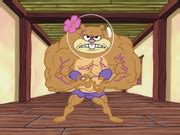
- Sandy Cheeks (SpongeBob Squarepants): Hailing from Texas, Sandy is an astronaut, genius, and a karate expert. She often breaks records, boards, and bones with her "kurah-tey" skills. In the episode "Karate Island," she dons Bruce Lee’s yellow jumpsuit and fights her way up a tower, defeating boss after boss.
- Lion-O and Panthro (Thundercats): While Lion-O is often considered the coolest Thundercat, Panthro, with his shaved head, spiked suspenders, and cat paw nun-chucks, deserves recognition. He can kick Mum-Ra’s false teeth down his throat and build a ThunderDeathTank.
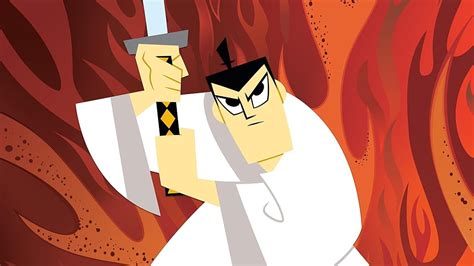
- Samurai Jack: The story of a prince who seeks revenge against Aku. He travels the world, learning the art of battle to avenge his fallen kingdom.
- Hong Kong Phooey: The NUMBER ONE SUPER GUY! Behind the mask of Penry, he uses his genius cat, transforming Phooey Mobile, and the Hong Kong Book Of Kung Fu to fight crime.
- Usagi Yojimbo: A renegade rabbit and fearless fighting force who even appeared on The Ninja Turtles to give their show some street-cred.
- Master Splinter (Teenage Mutant Ninja Turtles): The wise rat sensei of the Ninja Turtles, Splinter is a master of ninjutsu and a father figure to his adopted sons.
In the 1980’s, martial arts ruled the world and so, in a constant effort to stay topical I’ve finally gotten around to doing a martial arts Top Ten list…about cartoon characters!
In a totally original cartoon concept…Samurai Pizza Cats is the story of four anthropomorphic animals that happen to be ninjas fighting evil having some laughs and having some pizza! SPC is more than just one giant Ninja Turtles parody though, at times it’s almost a parody of itself with an interactive narrator and enough “in-jokes” to shake a stick at! But there is some badassery to be had as well and the group’s leader Cerviche helps to dish out his fair share.
Tough as nails, lightning quick (and did I mention all the cats are also cyborgs?) watch it with the volume off if you are one of those communists that hate hilarious cartoon humor but watch it! This show really delivers!! See what I did there? Delivers? Cause they own a pizza parlor?
Designed and drawn by Nancy Beiman and Bob Camp (the writer and directors of Ren and Stimpy) Developed by Rankin Bass, voiced by The ThunderCat’s Larry Kenny and loved by me as a kid. No one else seems to remember the show other than an elite, select few (apparently including amazingly talented internet artist ShoNuff44 who drew the header illustration. The real star of this show however was the AMAZING catch phrase “I’m Lean I’m Mean, A Karate Machine.
As legend has it, in 1986, American icon and cartoon enthusiast Chuck Norris was given a tour of Ruby Spears productions to check out some of their new animated projects. His sheer presence in the building had an incredible impact on the company. The biggest effect of Chuck Norris tour however was the fact that his sheer manliness was so overwhelming that an animated version of himself materialized on an animation cel of it’s own free will. It killed seven animators before an epic enough cartoon was created to satisfy it.
Sure his character may have been the teeniest tiniest most itty bitty bit racist but come on, the guy had an enormous gold hand permanently formed in a karate chop!! His nemesis the hero Fisto (stop snickering…you’re so childish!) didn’t stand a chance against this endless array of masterful martial arts moves especially the one where Fisto stood still while Jitsu pulled back his spring-loaded right arm and then let it go bringing his awesome gold karate hand straight down on his goofy bearded head!
When you’re thinking of the most badass bunnies (and who doesn’t?) only one name really comes to mind. And no it isn’t that stupid CGI rabbit from the “Hop” movie; why would you even say that? No the only renegade rabbit that really matters is Usagi Yojimbo. Star of comic books, graphic novels, books and is even such a fearless fighting force that The Ninja Turtles themselves!
Alright, alright, I know what you’re saying… WHAT??? You didn’t put the turtles on the list but you added splinter? Well the explanation is easy. In cartoon martial arts circles, the Turtles are epic and their arrival from space to save all of us is a time-honored story to every kid that grew up in the 80’s/90’s. Plus, this is one of those generic blog ranking list and how could I POSSIBLY rank the Ninja Turtles? That should put that issue to rest once and for all. (by the way, that ranking is Donatello-1 , Raphael-2, Leonardo-3 and Michelangelo-4)
You’ve gotta love Master Splinter though,! I don’t really know that this needs any explanation.
Claymation Werewolf has an evil plan to bring about a Nostalgia Revolution for a time when cartoons were actually good.
Table of Influential Martial Arts Figures in Cartoons
| Figure | Notable Style/Influence | Cartoons |
|---|---|---|
| Bruce Lee | Jeet Kune Do, Kung Fu | Shang-Chi, Master of Kung Fu (Marvel Comics) |
| Sonny Chiba | Karate | Various Samurai and Ninja roles |
| Chuck Norris | Tang Soo Do, Karate | Walker, Texas Ranger (animated series) |