Mixed Martial Arts (MMA) is a dynamic and captivating sport that has transitioned from its controversial origins to a regulated and respected form of competition. MMA has rapidly risen to become one of the most popular and fastest-growing sports worldwide. Combining various forms of martial arts and fighting styles, MMA offers a full-contact combat sport that allows a wide range of techniques, including striking and grappling.
As the sport evolves, the emphasis on safety, skill development, and inclusivity ensures that MMA remains accessible to individuals of all backgrounds and abilities.
Ancient Roots and Early Influences
What we know today as Mixed Martial Arts (MMA) may seem modern, but its roots stretch back thousands of years. The history of Mixed Martial Arts (MMA) dates back to the Olympics of ancient Greece. The earliest known form of mixed martial arts can be traced to 648 B.C.E. when the Greeks introduced pankration to the Olympic Games. In 648 BCE, the ancient Olympic Games featured a similar combat sport known as pankration, integrating wrestling and striking techniques-a reflection of Greek army combat training.
Meaning “all powers,” pankration was a no-holds-barred competition that combined striking, grappling, and submission techniques. The Greek competitors had only two rules: no biting and no eye gouging. Fighters used punches, kicks, elbow strikes, knee strikes, joint locks, and chokeholds, and bouts often ended only when one competitor submitted by raising his hand or was knocked out.
These matches took place in a small, squared ring, promoting close-quarter combat and endurance, as fights could last for hours. Pankration remained popular for centuries, but the sport faded with the decline of Greek civilization.
Read also: The Appeal of Mixed Pantyhose Wrestling
The teachings of ancient Greek pankration spread to India thanks to Alexander the Great and his habit of recruiting athletes as soldiers because of their strength and combat knowledge. As people branched into new lands, they took these arts and built on them, often creating a new style or form of martial art. Some historians suggest that these early martial arts techniques influenced combat styles across Asia, contributing indirectly to the development of various traditional martial arts.
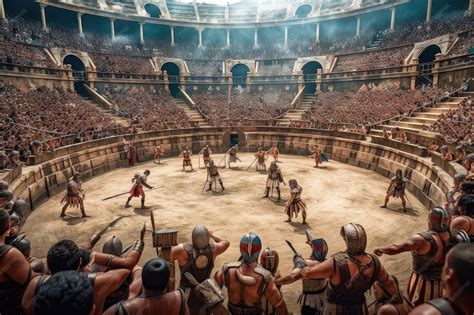
Ancient Greek pankratiasts fighting.
Emergence of Distinctive Fighting Styles
Throughout the 19th century, distinctive fighting styles emerged, laying the foundation for modern mixed martial arts (MMA). As martial arts spread, so did the idea of mixed-style competitions. Often a practitioner of one martial art challenged a practitioner of a different one for ultimate bragging rights. For instance, if a kickboxer was matched with a Brazilian Jiu-Jitsu practitioner, the kickboxer would realize that he must become more adept at defending takedowns, thus prompting him to train with Brazilian Jiu-Jitsu fighters.
Catch wrestling gained popularity later in the century, blending various wrestling styles and challenging other forms like boxing and judo.
The Brazilian Renaissance
MMA resurfaced in the 20th century in Brazil, where the development of Brazilian Jiu-Jitsu (BJJ) in the 1920s created a new paradigm for mixed-style fighting. BJJ emphasized ground fighting, submissions, and leverage, providing a foundation for modern MMA. The art spread internationally, and by the early 1980s, Brazilian Jiu-Jitsu reached California, where it gained popularity and became the catalyst for contemporary MMA competitions.
Read also: Tia's Mixed Wrestling Career
In the early 20th century, Russian martial artists blended wrestling, judo, and striking to create Sambo.
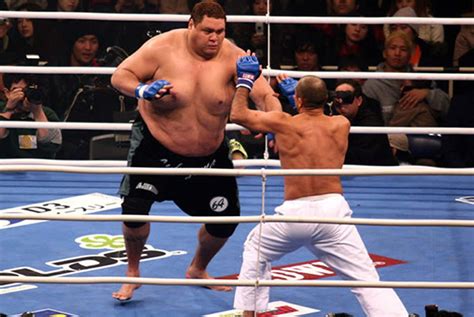
Royce Gracie vs Akebono Taro Dynamite 2004.
The Rise of the Ultimate Fighting Championship (UFC)
Brazilian Jiu-Jitsu's arrival in the United States in the late 20th century paved the way for the Ultimate Fighting Championship (UFC) in 1993. In 1993, the Ultimate Fighting Championship (UFC) introduced MMA to a broader audience, showcasing “no-holds-barred” matches in an octagonal cage. MMA first came to the attention of many in North America after the Gracie family decided to showcase its trademark Brazilian jujitsu in the United States in the 1990s.
Hélio’s son Royce Gracie represented the family in a 1993 tournament in Denver, Colorado, that came to be called UFC 1. The name referred to the Ultimate Fighting Championship (UFC), an organization that became the leading promoter of MMA events. Early MMA competitions were minimal in rules, emphasizing raw combat effectiveness.
The earliest aim of the UFC events was to pit fighters of different styles against each other-such as wrestler against boxer and kickboxer against judoka. Initially, the only rules decreed no biting and no eye gouging. Bouts ended when one of the fighters submitted or one corner threw in the towel.
Read also: The Science of MMA Knockouts
Royce Gracie emerged as the champion of UFC 1, which was held in a caged ring at Denver’s McNichols Arena. As the UFC’s first cable television pay-per-view event, the tournament attracted 86,000 viewers. That number increased to 300,000 by the third event. The UFC initially marketed its product as a no-holds-barred sport in which anything could happen. Sen. John McCain, who famously called caged combat “human cockfighting” and sought to have the sport banned.
Evolution of Rules and Regulations
In 2001 new UFC management created rules to make the sport less dangerous. The UFC was instrumental in pushing for a set of rules to standardize the sport globally, and by 2009 regulatory bodies in the United States and many fighting promotions worldwide had adopted standards known as the Unified Rules of Mixed Martial Arts. It added weight classes, rounds, and time limits and extended the list of fouls in the ring. The revamped UFC no longer featured mostly brawlers.
Newer fighters were more skilled as boxers, wrestlers, and martial arts practitioners, and they were forced to train extensively and remain in peak condition to perform well. In the United States the sport came under regulation by the same bodies that governed the sport of boxing, including the Nevada State Athletic Commission and the New Jersey State Athletic Control Board. Although the UFC struggled to make money in its early years, it eventually developed into a highly profitable organization.
Between 2003 and 2006, a trilogy of fights between two of the sport’s biggest stars, Americans Randy (“the Natural”) Couture and Chuck (“the Iceman”) Liddell, at UFC 43, 52, and 57 helped elevate MMA and the UFC. The sport also received a boost from The Ultimate Fighter reality TV show, which first aired in 2005. The show traditionally features fighters looking to break into the UFC.
Divided into teams under celebrity fighter coaches, combatants live under the same roof and fight each other in a knockout format, with the final winner earning a UFC contract. Beginning in 2013, women also appeared on The Ultimate Fighter both as coaches and as competitors.
Unified Rules of Mixed Martial Arts
Under these rules, MMA participants compete in a ring or a fenced area, and they fight using padded fingerless gloves but do not wear shoes or headgear. They may strike, throw, kick, or grapple with an opponent, and attacks may be launched either from a standing position or on the ground. However, head butting, gouging (thrusting a finger or thumb into an opponent’s eye), biting, hair pulling, and groin attacks of any kind are prohibited.
Downward elbow strikes, throat strikes, and strikes to the spine or to the back of the head are also illegal, as are certain attacks against a grounded opponent, including kicking or kneeing the head. If a fighter violates a rule, the referee may issue a warning, deduct points, or-particularly when a flagrant foul is deemed to have been committed-disqualify the offending contestant.
Fight Structure and Judging
Under the Unified Rules, non-championship MMA fights consist of three five-minute rounds, with a one-minute break between each round. Championship bouts are set for five rounds. A fighter can win a bout by knocking out the other fighter or by forcing an opponent to submit (either by tapping with his hand or verbally indicating that he has had enough). If a fight goes the distance, however, the winner is decided by a panel of three judges, using boxing’s 10-point must system (the winner of the round gets 10 points; the loser is awarded nine or fewer points).
In the United States, MMA referees and judges are assigned by state athletic commissions, which also conduct medical and drug tests on fighters.
Weight Classes
Weight classes in MMA vary by region or organization. The UFC currently recognizes a total of eight weight classes in men’s MMA. The upper weight limits of these classes are as follows:
| Weight Class | Weight Limit (lbs) | Weight Limit (kg) |
|---|---|---|
| Flyweight | 125 | 57 |
| Bantamweight | 135 | 61 |
| Featherweight | 145 | 66 |
| Lightweight | 155 | 70 |
| Welterweight | 170 | 77 |
| Middleweight | 185 | 84 |
| Light Heavyweight | 205 | 93 |
| Heavyweight | 265 | 120 |
While the UFC has no formal super heavyweight division for fighters weighing more than 265 pounds, some MMA organizations recognize the weight class. In the UFC, women’s MMA is currently restricted to just four weight classes: strawweight, 115 pounds (52 kg); flyweight; bantamweight; and featherweight. Other MMA organizations, however, have sanctioned women’s bouts in several additional weight classes, including atomweight, for fighters weighing up to 105 pounds (48 kg).
Modern MMA: A Fusion of Styles
Today, MMA is a full-contact combat sport that combines striking, grappling, and submissions from a wide array of traditional martial arts, including:
- Boxing for hand strikes and defensive movements
- Muay Thai for knees, elbows, kicks, and clinch work
- Judo and wrestling for throws and takedowns
- Brazilian Jiu-Jitsu for ground control, submissions, and leverage
Modern MMA allows competitors to employ techniques from standing or ground positions while adhering to rules designed for safety. Certain techniques taught in LOTAR-enhanced Krav Maga, such as groin strikes and eye gouges, remain prohibited in MMA competition.
MMA fighters cross-train in multiple disciplines to anticipate and counter opponents’ moves, creating a dynamic and strategic sport.