Muay Boran (Thai: มวยโบราณ, RTGS: muai boran, pronounced [mūa̯j bōːrāːn], lit. "ancient boxing") isn’t just another martial art; it’s the original Thai fighting system that came long before modern Muay Thai. Unlike modern boxing, this traditional form was both armed and unarmed, used by military personnel and ordinary people alike as a way to fight and protect themselves. Learn how different regional styles like Chaiya, Korat, Lopburi, and Thasao bring their own flavor to the art.
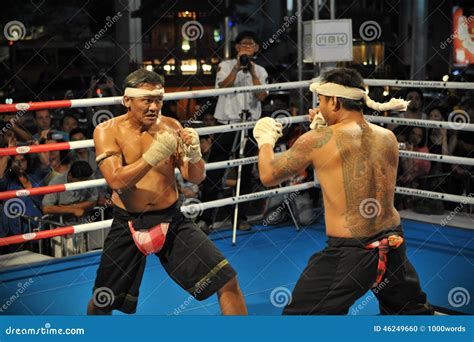
Muay Thai was originally known simply as "muay". The addition of "Thai" was to differentiate the style from western boxing in the early 1900s. Muay "Boran" only recently became a term used to encompass the origins of Thai martial arts due to the historical writings of Grandmaster Khetr Sriyaphai (a Muay Chaiya practitioner) in the "Parithat Muay Thai" column.
The Nine Limb System
The Nine Limb System in Muay Boran goes beyond the Art of Eight Limbs seen in Muay Thai, by including the head as a ninth limb, turning the body into a complete weapon for real close-range impact. The Nine Limb System in Muay Boran isn’t just about more weapons it’s about survival, control, and cultural performance.
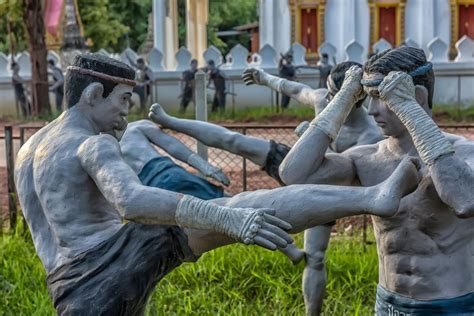
Real Survival Technique
Before official rules and rounds, this was a battlefield survival style.
Muayboran defense training ep.1
Mae Mai and Look Mai: Foundational and Advanced Techniques
Mae Mai, known as the mother techniques of Muay Boran, are the foundational moves every practitioner must master to build control, timing, and defensive structures. Look Mai, often called the child techniques of Mae Mai, take things to a true advanced level with complex sequences, tactical counters, and brutal finishing blows. Look Mai chains moves like double punches, quick climb strikes, and intercepted knees that strike mid move each one a fight ending opportunity.
Read also: The Significance of the Mongkol
Examples of Look Mai Techniques
- Hanuman Thawai Waen: This technique draws inspiration from the agility and strength of the monkey god Hanuman. It involves a fast, spinning motion where the fighter combines a rapid series of punches with a precise piercing dagger strike aimed at vulnerable targets like the face and throat.
- Phra Ram Yeab Longa: Throwing two uppercuts quickly one after the other, followed by a cracking, sharp blow to the chin or skull, is an amazing and very effective combo.
- Crocodile Tail Kick (Jorakhe Fad Hang): Named after the whipping motion of a crocodile’s tail, this is a powerful heel strike delivered to the opponent’s thigh or leg. The goal is to dislocate joints or muscles, causing significant pain and imbalance.
- Ruesi Bod Ya: This technique emphasizes smooth transitions and control through the use of open palms and palm push defense. Practitioners use this flowing style to maintain distance, parry incoming attacks, and prepare for counter attacks with minimal energy expenditure.
- Fake and Strike: A clever deceptive tactic involving a fake teep kick to mislead the opponent into reacting prematurely. The practitioner follows with a powerful reverse push-kick directed at the chest whenever the opponent is unsteady or determined to defend the fake.
- Nao Taeng Krit: A precise and targeted attack using the shoulder and elbow to strike vulnerable areas such as the temple and neck.
- Batha Loop Phak: A focused downward palm strike aimed at breaking through the opponent’s body defenses. It is designed to target key pressure points and create openings by forcing the opponent to react defensively.
- Hirun Muan Phaendin: This technique is a powerful slam used to disrupt the opponent’s flow and control the fighting space. It involves grabbing or controlling the opponent and using leverage and weight to bring them down forcefully.
- Hong Peek Hak: A strong arm manipulation move aimed at dislocating joints or breaking the opponent’s grip. This technique is especially useful in close range combat where controlling the opponent’s limbs can dictate the outcome.
- Kamae Kham Sao: A gripping and piercing technique focused on trapping an opponent’s arm to prevent counter attacks. Once the arm is controlled, the practitioner can execute lethal follow-up strikes, exploiting the opponent’s compromised position.
Regional Styles of Muay Boran
Muay Boran styles vary by region but share sharp, fast strikes, joint locks, and animal inspired movements.
- Muay Chaiya: One of the oldest Muay Boran styles, known for its strong defensive postures and slow, deliberate motion. Fighters use a wide stance for solid protection, focusing on powerful elbow strikes, clasping, and tight grip to control opponents.
- Muay Korat: From the Korat region in central Thailand, is a more aggressive style featuring hard-hitting buffalo punches, heavy knee strikes, and robust grappling. This style favors clinch work, neck control, and ground control methods similar to jujutsu, making it effective in close quarters.
- Muay Lopburi: Comes from the Lopburi province and is characterized by fast footwork, quick snapping strikes, and deceptive feints. This style is very speed focused, blending jumping and swinging attacks with precise counters.
- Muay Thasao: From the northeastern regions, incorporates smart wrapping and grip techniques that emphasize control and mobility.
Is Muay Boran Safe for Beginners?
Yes, with a trainer’s guidance, Muay Boran techniques are taught in a controlled, safe way. Beginners start with basic moves, using proper gear and practice to build physical readiness and progress carefully.
Muay Sena: An Efficacious Adaptation
From a strictly technical standpoint, Muay Sena makes extensive use of Muay Thai Boran's "Chung" (เชิงมวย), "Kon" (กลมวย) and "Blam" (มวยปล้ำ) curricula, including all of the traditional nine weapons or "Nawa Awut" (นวอาวุธ). From these technical portfolios of Muay Thai Boran a selection of the most efficacious techniques for use in reality-based combatives have been selected.
It should be noted that the targeting strategies are non-restrictive, vital targeting as a means to open lines to the primary target, the head, therefore Muay Lutrits (มวยเลิศฦทธิ์), rather than ring Muay Thai, targeting strategies are utilized.
Defensively, MuayThai Boran's "Mai Rap" (ไม้รับ) techniques are utilized. In addition to striking aspect of the standing phase, Freestyle Wrestling's shooting takedowns, shot blocking, sprawling and hooking defenses are employed.
Read also: Authentic Muay Thai Training
The clinching portion of M.S. technical arsenal is derived from Muay Blam, Muay Thai Boran's stand-up grappling, with accompaning punches , headbutts, elbow and knee attacks as well as "Mai Tum"(ไม้ทุ่ม), the tripping, throwing and sweeping techniques; and "Mai Hak" (ไม้หัก), the articular destructions in the form of techniques which compromise or destroy the joints of the neck, arms or legs. This provides practitioners with a clinch echelon and the respective tie-ups, transitions, escapes, throws, sweeps, trips, lifts, dumps, slams etc.
In accordance with the conceptual guidelines of the Combative King Elephant Style or Muay Kochasan (มวยคชสาร), the Muay Sena stylist is advised to precede an attempt of a throw, trip or off-balancing with a strike of some kind to psychologically and physically off-balance the adversary and facilitate a clean throw or break.
M.S. utilizes 6 basic clinch positions which can be generally placed into a hierarcaly of dominance exerted over the foe as follows:
- Front Headlock Clinch
- Muay Thai Clinch (Jab Kaw)
- Rear Clinch
- Double Underhooks
- Collar & Elbow Clinch
- Over-Under Clinch
Obviously, the foes skillset, size, strength & familiarity with clinch fighting dictates which clinch is most advantageous, but generally this echelon informs M.S. positions. Defenses to both the pure grappling & grappling with striking aspects of the clinch phase are derived from Muay Blam's curriculum.
In addition to above techniques, the M.S. man is advised to consider & employ foul tactics as a means to transition, escape, open-up targets, etc. These include neck torsions , foot stomping, kneeing/grabbing of the groin, eye gouges, hair pulling & throat/jawline targeting & raking with knuckles ,forearms, etc.
Read also: Choosing a Muay Thai Gear Bag
Finally, selected "flying" submission techniques from Gracie Jiu-Jitsu & clinch escapes with locks/breaks are included; these typicaly are "Flying Lion Kill" ( Portuguese: Mata Leao ; Japanese : Hadaka Jime ) with body triangle/Do-Jime or drag down usually , "Flying Armbar", "Standing & Flying Guillotine", "Rolling Kimura", etc. These are used judiciously, dependent on milieual factors (e.g. hard surfaces, space etc.) & nature of combat ( e.g. 1 on 1, or present/potential multiple-foes ) & are often finished on the ground.
The ground portion of the M.S. technical syllabus is primarily adopted from Gracie Jiu-Jitsu, including a modified positional theory & "position before submission" strategy. In M.S., limb & joint locks are executed in a violent explosive manner to break/destroy the foes appendages outright.
Stranglations ("Blood Chokes") are the prefered techniques in the constrictions category ,while chokes or techniques which effect the trachea are generally avoided if possible unless a psychological advantage can be gained. Digital chokes are discouraged & gross-motor movements are emphasised.
Various neck cranks are part of the curricula, however, spinal locks, that is, locks effecting the thoratic vertebrae are generally not utilized. Manipulations (destructions) are kept simple, with various armbars emphasised, in addition to Kimura breaks, Americanas, ankle & knee breaks, some compressive locks are utilized, normally attacking the foes arm at the elbow.
Compled with the locks/breaks & chokes/strangles of GJJ, a full range of Bokator & Ling Lom inspired elbow & knee strikes are used from all positions on the ground.
M.S. practitioners are however, generally taught to first gain a solid, dominant position before unleashing offensives of all types, however, this is a guideline, rather then a strict rule, which M.S. doesn't condone.
Modified Western Boxing punches & heel of palm strikes of Muay Boran are also utilized in this phase.
As a tactic, M.S. Stylists will also, when necessary and/or advantageous, utilized some traditional Jujitsu attacks, such as biting, eye gouging, hair pulling, groin attacks etc. These are not seen as legitimate skills but rather, last resort tactics to secure an escape, release, transittion, or finishing move, they are therefore not part of training.