Taekwondo, a Korean martial art of self-defense, emphasizes foot and hand techniques such as kicking, striking, and blocking. If you are into martial arts or would like to get into some kind of fighting sport, you should definitely check out Taekwondo.
The term "taekwondo" dates to 1955 and is a combination of three Korean words that translate into English as "foot," "fist," and "way." The practice has its roots in earlier martial arts forms from Korea, Japan, and China. It became an Olympic sport in 2000.
Beyond self-defense, Taekwondo offers numerous benefits for fitness, mental discipline, and overall well-being. Let's explore these advantages in detail.
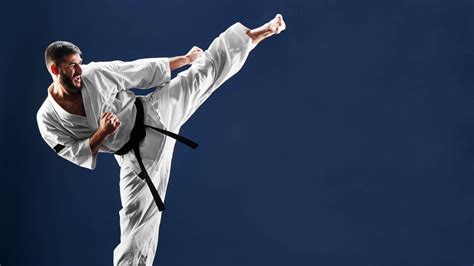
Physical Fitness Benefits
Taekwondo is a fantastic martial art that can work to improve not only your physical health but also your mental wellbeing.
Weight Reduction and Muscle Toning
Besides the obvious benefits of increased self-defense skills, Taekwondo provides excellent weight reduction training, strengthening and toning of all major muscle groups. If you want to get into shape, burn calories, and burn away that pot belly, practicing Taekwondo on a regular basis will definitely help.
Read also: Is the Century Taekwondo Uniform Worth It?
Cardiovascular Health
While Taekwondo is not purely a cardiovascular training art, it does involve certain aspects which train your cardio. It takes a lot of cardiovascular endurance to be able to get through an hour-long Taekwondo class and you train for that in various ways.
First of all, a stronger heart means that it can pump blood and oxygen to your muscles with increased efficiency, something that is important for increasing your physical output. Furthermore, a strong heart is also very important because it leads to a reduction in heart disease, arterial disease, heart attacks and strokes, it helps keep cholesterol in check, it helps keep blood sugar levels in moderation, it helps keep your blood pressure at a respectable level, and it keeps your resting heart rate lower too.
Flexibility and Balance
Another upside to practicing Taekwondo is that it works to increase your flexibility. Stretching is of course beneficial because it loosens and limbers your muscles, getting them ready for strenuous activity and greatly reducing the chances of suffering from an injury such as a pulled muscle.
Of course, having better flexibility is also beneficial because it helps to do things like reduce back pain, reduce the chances of injury, increase your ability to balance, and a whole lot more.
Bone Strength
Taekwondo also has the advantage of being a bone building exercise. This is a martial art that involves a lot of kicking, jumping, pushing with your arms and legs, punching, and landing on your body as you spar with your opponents.
Read also: The Meaning Behind Taekwondo Belts
You see, every time you put an increased amount of weight on your bones, or you cause them to receive impact, such as when you do a kick, it causes your osteoblasts to lay down bone matter. Your osteoblasts lay down new bone matter with every weight bearing exercise, something which makes them thicker, denser, and stronger.
Mental and Emotional Benefits
Taekwondo is not all about the physical, and as with the case with most martial arts, Taekwondo has much to do with mental discipline as it does with physical discipline.
Improved Focus
The next big mental benefit that comes along with practicing Taekwondo is that it can go a very long way in helping you to better your focus. Whether you are mastering a grappling move, practicing various strikes and kicks, or if you are trying to break a board, you need to spend a lot of time focusing on one specific task at hand in order to perfect whatever you are trying to master. Taekwondo can definitely teach you to focus on a given task at hand, and that is something which can translate to your everyday life.
Stress Relief
Something else that Taekwondo can definitely help you with is to relieve stress. It does also have to do with the fact that regular exercise helps your brain to produce a type of chemical known as endocannabinoids. Endocannabinoids are chemicals which naturally occur in the brain and are also one of the active agents in marijuana.
These chemicals produce sensations of calmness, relaxation, and can actually help to reduce the perception of pain as well. Learning to strike involves a lot of training, by which we mean you spend a lot of time punching and kicking a punching bag, a wooden training dummy, or even sparring with real people.
Read also: Excellence in Taekwondo
Stress is often caused by anger, and a great way to get rid of anger is by punching and kicking a defenseless bag hanging off of the ceiling.
Increased Confidence and Self-Esteem
Another big benefit that you can get from practicing Taekwondo on a regular basis is that it can go a very long way in increasing your confidence and your self-esteem. Every single time you learn a new move and you perfect it, it gives you a confidence booster and it’s as simple as feeling good because you have accomplished something.
Taekwondo can also help you improve your self-confidence because it tones your muscles and helps you lose weight, both which happen through the virtue of it being a high-intensity martial art to be practicing. Finally, as we mentioned before, a martial art like Taekwondo teaches you how to defend yourself, and knowing that you can hold your own in a tough situation definitely inspires confidence and self-esteem.
Happiness Boost
Yet another big benefit that you can get from practicing Taekwondo on a regular basis is that it makes you feel happier. One of the main ways in which Taekwondo can make you feel happier is because of the nature of any type of exercise.
Serotonin is a chemical produced by your brain which produces feelings of happiness, joy, elation, and calmness. This is a chemical which makes you feel happier than you usually would. Taekwondo can help to balance those chemicals and that will make you feel happy. Not to mention that you will be happier with yourself thanks to the fact that you are learning a new discipline and learning to defend yourself as well.
Life Skills and Community
In addition to the many benefits mentioned above, martial arts teaches and reinforces what we like to call Life Skills. Life Skills are inherent in all of us, but as with any traitor skill, must be practiced and reinforced often.
In Taekwondo, we have 5 tenets (rules) that we learn, practice, and strive to develop into everyday Life Skills. They are Courtesy, Integrity, Self-Control, Perseverance, and Indomitable Spirit.
The 5 Tenets of Taekwondo
- Courtesy: Treating others with respect.
- Integrity: Being honest and having strong moral principles.
- Self-Control: Managing one's emotions and actions.
- Perseverance: Continuing despite difficulties.
- Indomitable Spirit: Having courage and determination.
Learning Taekwondo in a community, a family-type atmosphere is one of many ways to strengthen family ties, both within the family and within the community. Even though the learning of Taekwondo requires energy and hard work, often learning in a warm and friendly family environment strengthens and reinforces any learning that takes place.
There is potential for great camaraderie and friendship with other students and siblings (as well as parents) as they learn to build trust with each other as they develop and improve their skills.
One of the things that we really like about Taekwondo is that it is a group activity. This is true both for you and for your children who may be taking a Taekwondo class. Humans are by nature gregarious creatures and that means that we don’t like to be alone, we are herd animals and that is a fact. Taking a Taekwondo class a few times, or even just once per week, is a great way to get out of the house and get a change of scenery. Moreover, a Taekwondo class is a great place to meet new people and make new friends.
Friends are people you can talk to, friends are people to rely on, friends are people that get you into parties and can get you jobs too.
These tenets tie in and work hand-in-hand with the YMCA Mission Statement: To put Christian principles into practice through programs that build healthy spirit, mind, and body for all.
Learn Martial Arts: 3 Basic Kicks for Beginners
Taekwondo Techniques and Styles
Taekwondo begins with learning specific offensive and defensive moves. Those are combined into patterns that students practice alone and then use against an opponent. Students are placed at different levels based on the techniques they've mastered.
Different schools teach different techniques. But they include many of the same main disciplines. Patterns or forms are a basic element of taekwondo. These are punches, kicks, and blocks that are put together into choreographed series. A yell called a ki-yap is designated at certain places. Students learn set patterns at each level. These patterns become more elaborate and difficult as they advance. These patterns may be called poomsae, hyung, or tul depending on the school.
Sparring teaches students to use the moves they've learned against an opponent. Beginners practice set combinations in pairs without actually making contact. Once they reach a certain level, they can make light contact while wearing protective gear, then move on to improvised bouts called free sparring.
Combat is the form of taekwondo included as a sport in the Olympics. Advanced students make full contact with unstructured attacks and defenses.
Board breaking is another element of many taekwondo practices, where students learn to break wooden boards held by an assistant using certain hand and foot strikes.
Some styles of taekwondo use movement sequences that involve weapons, including knives and swords.
Taekwondo Kicks
Taekwondo features several powerful kicks. Many of them are delivered at head height and can involve spins and leaps. Here's how to do some of the most commonly used kicks:
- Front kick or snap kick: Lift your knee to waist level straight in front of you and extend your foot forward.
- Side kick: Turn sideways while bringing your knee up to waist level, keeping your knee pointed straight in front of you and the bottom of your foot pointed at the target. Extend your leg to kick straight at the target.
- Back kick: Turn away from the target, bend your knee, and extend your leg straight backward.
- Roundhouse kick or round kick: Turn sideways while bringing your knee up to waist level, keeping your knee pointed at the target and your foot behind you. Bring your foot forward to deliver a kick from the side of the target.
- Crescent kick: Lift your knee in front of you as high as you can, then extend your leg while sweeping it to the side in an arc. The kick can either arc inward, across your body's center line, or outward.
- Hook kick: Turn sideways while lifting your knee to waist level in front of you with your foot facing the target. As you extend your leg, sweep it in an arc behind you.
- Axe kick or hammer kick: Lift your straight leg as high as you can in front of you and chop it downward. This can either be done straight forward or in an arc inward or outward.
Taekwondo Commands
The commands given by instructors and referees are usually spoken in Korean. Common commands include:
- Attention (cha-ryeot)
- Bow (kyeong-rye)
- Ready (joon-bi)
- Start (shi-jak)
- Break (kal-yeo)
- Resume (kye-sok)
- Stop (keu-man)
- Back to ready position (ba-ro)
Taekwondo Uniform and Equipment
The taekwondo uniform includes a belt, the color of which signifies the rank that the student has achieved. The colors and their order vary by school, but beginners often start with white. Some schools add stripes to the belt that mark a student's progress toward the next level.
Students who have mastered the fundamentals earn a black belt.
There are nine black belt levels, known as dan. The different styles of taekwondo have different rules, but in general, it takes decades to move through the black belt levels to become a grand master.
The equipment you need for taekwondo will depend on the type of taekwondo you’re doing and if you’re performing in a competition.
The uniform, called a dobok, includes pants, a short V- or Y-neck jacket, and a fabric belt.
For combat, taekwondo contestants must wear protective gear such as:
- Trunk protector
- Headgear
- Groin guard
- Gloves
- Forearm protectors
- Shin protectors
- Sensing socks
- Mouth guard