Valdosta offers a variety of martial arts styles, each with its unique approach to physical discipline, mental well-being, and self-defense. This article explores one specific style practiced in Valdosta, while also touching on the broader world of martial arts.
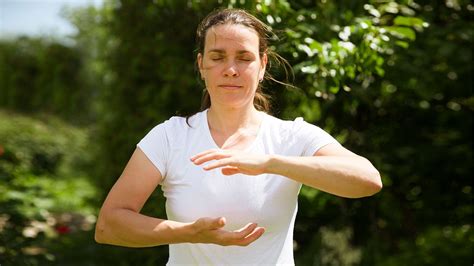
The Taoist Tai Chi Society in Valdosta
In Valdosta, members of the Taoist Tai Chi Society gather to practice a series of motions, or forms. To an uninitiated viewer, it looks like Bruce Lee moving in slow motion, a martial-arts ballet, rhythmic line-dancing without music, punctuated by the inhale and exhale of breath, the twist of feet on floor. The group moves through a series of motions, or forms. Each person can execute these moves at his or her own pace, but they move through their forms in synchronized steps.
For nearly 20 years, Luana Goodwin and her husband, Dennis Bogyo, have been leading classes in the art of tai chi. Coming to South Georgia, they attended classes in Tallahassee then, for several years, a Florida instructor often traveled to Valdosta to help the couple lead a new group. Within a few years, Bogyo and Goodwin became certified instructors.
Tai chi resembles a martial art for good reason: It is one. The story goes that unarmed Taoist monks developed tai chi as a form of protection and they shared tai chi with unarmed peasants as a form of defense. The Taoist Tai Chi Society uses a method based on the Yang style of tai chi. Members use a series of 108 moves in the Yang style.
Not Just a Dance
It is tempting to refer to their movements as something akin to choreography, to relate it to dance. References to dance easily explain what the eyes see. But as practitioners stress: Tai chi is not dancing, with an underlined emphasis on NOT. “Tai chi is not a dance,” says instructor Luana Goodwin. “Dance is about these people watching you. Tai chi is about what’s happening inside the body. Dancing is about taking cues from the external music. Tai chi is about taking cues from inside yourself.”
Read also: Individual Martial Arts Instruction
Benefits Beyond Self-Defense
Members of the Taoist Tai Chi Society in Valdosta do not view tai chi as a weapon, nor as a route to achieving belts of accomplishments, but rather as a key to life balance and self-awareness. “When we come to tai chi, we leave our egos at the door,” says Bill Reeves, who has been with the Valdosta group almost since its inception. “We’re learning about our bodies, how to overcome limitations, such as age, illness or injury.” Many of the Valdosta members have admittedly lived their share of years. They tell how tai chi is a social occasion; how it helps maintain balance physically, intellectually and spiritually.
“Most people have some sort of hurt or injury,” Reeves says. “Some of us are at an age where we can’t do gymnastics but tai chi strengthens muscles, strengthens nerve tissues around places that hurt. It improves our balance. … What it does with older people, who have a fear of falling, it improves the balance so we are better prepared if we start to fall.”
Even though they do not use tai chi as a preparation for self defense, Reeves believes their bodies are in better shape and better tuned for the possibility of self defense than if they had never practiced their forms. Jean Logan has no thoughts of practicing tai chi as a combative martial art. She travels each week from Brooks County to the society’s meeting place in Valdosta’s Unitarian Universalist Church because tai chi makes her feel healthier, stronger, and better balanced.
Robbie Chambers, an area middle school teacher, views tai chi as a stress reliever. Years ago, Reeves underwent surgery. He first returned to tai chi using a walker, then two canes, one cane then no cane. “Without tai chi, I would still be in my house using a walker.” Charlotte Jones underwent a valve replacement. She started tai chi and feels it accelerated her recovery. Vicki Pennington has endured leukemia then a condition that compromised her lung capacity. Tai chi helped her recuperate from leukemia. Tai chi cannot increase her lung capacity but it can help her breathe better with the capacity she has.
They all mention the beauty of having no stress of competing for belts, no uniforms, no need for equipment. How, when not together, they can practice tai chi wherever they are. It uses the “dynamic tension” of how much pressure each individual wants to apply to the forms. Members also can better understand other cultures. Today, for example, is Chinese New Year. “There is an element of cultural exchange,” Goodwin says. “We may celebrate Chinese New Year, but we may do so with Polish food.” Members of the group laugh with Goodwin’s remark but, even in cultural celebrations, they seek and find balance.
Read also: The Jade Fortress Martial Arts System
The local Taoist Tai Chi Society meets regularly on Thursday evenings at the Unitarian Universalist Church, but interested people should call Luana Goodwin or Dennis Bogyo, (229) 247-2450 in advance.
The Broader World of Martial Arts
“Martial Art” is a broad term encompassing the many styles of physical discipline (fighting) arts that have been developed over the centuries. The term martial art is heavily associated with the fighting arts of eastern Asia, but was originally used in regard to the combat systems of Europe as early as the 1550s. The term is ultimately derived from Latin, and means “Arts of Mars,” where Mars is the Roman god of war.
Traditional Korean martial arts place emphasis on the development of the practitioner’s spiritual and philosophical development. A common theme in most Korean styles, such as taekkyeon and taekwondo, is the value of “inner peace” in a practitioner, which is stressed to be only achieved through individual meditation and training.
Japanese styles, when concerning non-physical qualities of the combat, are strongly influenced by Zen philosophy. Concepts like “empty mind” and “beginner’s mind” are recurrent. Through systematic practice in the martial arts a person’s physical fitness may be boosted (strength, stamina, flexibility, movement coordination, etc.,) as the whole body is exercised and the entire muscular system is activated.
Beyond contributing to physical fitness, martial arts training also has benefits for mental health, contributing to self-esteem, self-control, emotional and spiritual well-being.
Read also: Deep Dive into Court Martial Films
Another key delineation of Unarmed martial arts is in the use of Power & Strength-based techniques (as found in Boxing, Kickboxing, Karate, Tae Kwan Do and so on) vs. techniques that almost exclusively use the Opponent’s own energy/balance against them (as in Tai Chi Chuan, Aikido, Hapkido and Aiki Jiu Jitsu and similar).
Those traditional martial arts which train armed combat often encompass a wide spectrum of melee weapons, including bladed weapons and polearms. Such traditions include eskrima, silat, Kalarippayattu, kobudo, and historical European martial arts, especially those of the German Renaissance. Sometimes, training with one specific weapon will be considered a style of martial arts in its own right. This is especially the case in Japanese martial arts with disciplines such as kenjutsu and kendo (sword), bojutsu (staff), and kyudo (archery).
Xtreme Martial Arts (XMA)
XMA (Xtreme Martial Arts) signifies the transition of martial arts from the traditional towards the contemporary. Having evolved from an ancient form of self-defense, the modern martial arts movement is now more sport and entertainment, while still remaining true to the time-honored principles of Honor, Discipline, Integrity and Respect.
XMA is a fusion of all martial arts styles blended together with performance arts, high-flying acrobatic maneuvers and the hottest Hong Kong, chop-saki style action! However, XMA cannot exist without, and is only an extension of traditional martial arts. It is designed to enhance the traditional with more speed, power, presentation and performance value. At the basic levels, Xtreme Martial Arts is used as a tool to develop Life and Leadership Skills.
With over 650 XMA licensed schools worldwide, in four short years, Mike Chat, XMA Performance Team members and xtreme tournament competitors have penetrated Hollywood’s elite with starring roles in major motion films The Adventures of Shark Boy & Lava Girl, Spy Kids 3, Cheaper By the Dozen 2, Jackie Chan’s House of Fury and his newest film Baby along with appearances on major network talk shows and NBA half-time shows.
Mike Chat is responsible for implementing Xtreme Forms & Weapons division categories every international competitive circuit and is televised by ESPN2. The international release of Discovery Channel’s Emmy Award Winning documentary special, XMA, Xtreme Martial Arts, starring Mike Chat, his instructor and students was translated into over 35 languages and viewed in over 170 countries worldwide!

There are 50 million martial arts participants worldwide, 9 million in the United States with roughly 25,000 martial arts schools in the US alone. More people participate in martial arts than play Little League and millions more are exposed to Martial Arts everyday through print ads, commercials, video games, television, film and the Internet. The appeal of XMA is simple give the public what they want but can’t currently get. They see Xtreme Martial Arts in the mainstream media but get “Karate Kid” in the schools.
| Martial Art Style | Focus | Examples |
|---|---|---|
| Power & Strength-Based | Emphasizes physical strength and speed | Boxing, Kickboxing, Karate, Tae Kwon Do |
| Energy/Balance-Based | Utilizes opponent's energy against them | Tai Chi Chuan, Aikido, Hapkido, Aiki Jiu Jitsu |