The question of whether professional wrestling is "fake" is nearly as old as the sport itself. From WWE to AEW, TNA, NJPW, and countless independent promotions worldwide, the debate rages on among fans and critics alike. But the answer is more nuanced than a simple yes or no.
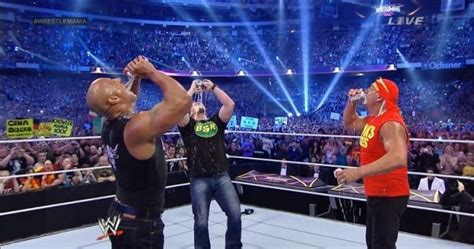
Hulk Hogan, a prominent figure in professional wrestling. Source: Wikipedia
The Reality of Predetermined Outcomes
It cannot be disputed: Professional wrestling matches are fixed. The winners and losers are determined before the opening bell by the "booker," who is in charge of the show. The booker makes the matches and chooses who goes over in the end. The job of the wrestlers once the action begins is not to injure one another or inflict as much pain as possible; it's actually quite the opposite.
The objective is to work with your opponent to put on the most entertaining show possible for the fans and walk away at the end of the match as close to 100 percent as humanly possible. One of the first lessons taught in in-ring training is to think of a pro wrestling match as more of a dance than a fight. You have to move with your opponent at the right time and in the right rhythm to make the magic happen and avoid injury.
The Physical Toll
While wrestlers can certainly blunt the amount of damage done during a match, there's just no escaping that fact that some moves hurt. Some are extremely dangerous. These men and women literally trust each other with their lives every single time the head out to the ring. Former WWE Superstar and current OVW CEO Al Snow once said that a single bump in the center of the ring has roughly the same impact on your body as a car accident at 25mph.
Read also: Alvarez vs. Berlanga: Fight Analysis
Pain is real. Scars last forever. Injuries linger. And that's if everything goes right in a match. Accidents do happen and they can have catastrophic, real life results. There's simply no dismissing that aspect of the business, predetermined outcomes or not.
Prior to his Hall of Fame professional wrestling career, Kurt Angle won an Olympic gold medal in freestyle wrestling at the 1996 summer games. If you ask him, he'll tell you that stepping into the world of WWE and sticking with it for as long as he did was hardest thing he's ever endured as an athlete. "The bumps that we take, we're bumping on plywood. It brings long-term injuries," Angle said in a recent interview with WFAN. "Your neck goes, your back goes, your knees go."
History of Pro Wrestling
The Spectacle of Professional Wrestling
Professional wrestling is a larger-than-life spectacle that offers a unique experience to its audience - a perfect blend of both entertainment and athleticism. The scripted nature of the business allows for richer storytelling and character development, which is perhaps the biggest appeal of it all, and why many wrestlers have gone on to become global icons outside of the ring.
The Rock, John Cena and Dave Bautista have all gone on to incredibly successful careers in Hollywood. It's the grueling physical demands of the business where professional wrestlers often do not get the credit they deserve. They are among the best athletes in the world.
Even professional football players have crumbled under the rigors of a WWE tryout, let alone survived the year round travel schedule that comes with performing on a live television show that airs 52 weeks a year. This is a sport that takes strength, toughness, cardiovascular endurance and certain level of grit and determination that very few athletes possess.
Read also: Competitions of Spencer Lee

The Rock, John Cena and Dave Bautista have all gone on to incredibly successful careers in Hollywood.
When Matches Turn Real: Shoots in Pro Wrestling
In professional wrestling, where scripted drama and physicality intertwine, there are moments when the line between performance and reality blurs. While most matches go according to plan, some have taken a shocking turn, becoming real-life brawls. When pro wrestling matches turn real, the results can be truly shocking!
Here are some examples of matches that turned into real fights:
- Rikishi vs. Russ McCullough: Things took a turn for the worse when 6ft 11 in, 350-pound former football player Russ McCullough stepped in the ring with Rikishi.
- Vader vs. Ken Shamrock: In 1997, at In Your House 15, Ken Shamrock threw several punches that broke Vader’s nose.
- APA vs. Public Enemy: The match was run-of-the-mill fare until the APA started working particularly stiff with their opponents, leading to a legitimate fight in the ring.
- "Hacksaw" Jim Duggan vs. Bruiser Brody: Jim Duggan admitted that Brody was a bully.
- Kevin Nash vs. Jean-Pierre LaFitte: The two had heat going into the contest.
The Evolution of Wrestling Styles
Our story starts in America. Coinciding with the American Civil War, three styles of wrestling became dominant and proved important to the formation of modern pro wrestling:
- Irish Collar and Elbow wrestling: Introduced by Irish immigrants, this style favored smaller wrestlers and was popular for its accessibility.
- Greco-Roman wrestling: This style favored larger physiques and focused on the upper body, but its slow pace led to its decline.
- Catch-as-Catch-Can Wrestling (Catch Wrestling): With roots in Lancashire wrestling in England, this style had a freer set of rules and adapted holds from various grappling styles.
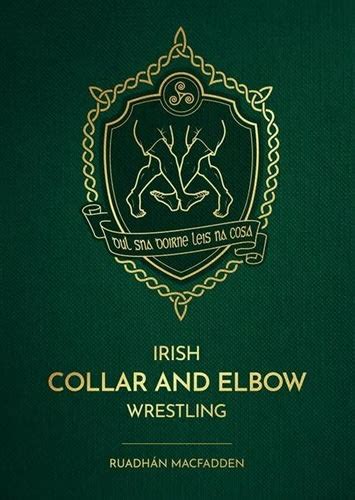
Irish Collar and Elbow wrestling.
Read also: History of Japan's Sumo Wrestling
Important to the story of the evolution of wrestling from legitimate matches to fixed ones is where people commonly wrestled. Namely, mostly in one of two places: in the city inside bars and theaters, and in the country as part of touring carnivals.
The "Worked" Era: The Rise of Promoters
Starting in the 1920s, promoters took control of the industry by controlling the booking of wrestlers and champions. They adopted methods used in carnival wrestling and elevated the idea of "hippodroming" (fixing matches) on a national level. Wrestlers like Toots Mondt, and managers like Billy Sandow helped design and spread a way of catch wrestling that is staged or “worked” to make matches more exciting.
With the worked era, the concept of “heel” and “babyface” were also introduced to clearly show audiences who they were supposed to boo and who they were supposed to cheer. Another trend familiar with wrestling fans is a struggle between shifting the emphasis more on entertainment over skill.
Kayfabe: Maintaining the Illusion
Kayfabe is the portrayal of staged elements within professional wrestling (such as characters, rivalries, and storylines) as legitimate or real. It's often described as the suspension of disbelief essential to creating and maintaining the non-wrestling aspects of the industry. Kayfabe was fiercely maintained for decades with the intent to deceive fans, and the lack of a conventional fourth wall often led to wrestlers being expected to maintain their characters even when living their everyday lives.
The first public acknowledgment by a major insider of the staged nature of professional wrestling came in 1989 when World Wrestling Federation owner Vince McMahon testified before the New Jersey State Senate that wrestling was not a competitive sport.
Heels and Faces: The Characters of Wrestling
Faces, short for "babyfaces", are hero-type characters whose personalities are crafted to elicit the support of the audience. Heels are villainous or antagonistic characters, whose personalities are crafted to elicit a negative response from the audience. A wrestler can change from face to heel (or vice versa) in an event known as a turn, or gradually transition from one to the other over the course of a long storyline.
| Character Type | Description | Traits |
|---|---|---|
| Faces (Babyfaces) | Hero-type characters | Humility, patriotism, hard-working nature |
| Heels | Villainous characters | Narcissism, egomania, unprompted rage |
Wrestling is a great many things. It's scripted and choreographed, but also dangerous. It can be dramatic, humorous and exciting. A barbaric display of violence that leaves men and women broken, battered and bloody. But is it fake? It's whatever you want it to be, but I highly suggest stepping foot inside a ring and finding out what it's all about before you start throwing around four letter words.