Traditional Tae Kwon Do, also known as Korean Karate, is a martial art developed over thousands of years. The earliest records of Tae Kwon Do date back to about 50 BC.
During this time, Korea was divided into three kingdoms: Silla, founded on the Kyongju plain in 57 B.C.; Koguryo, founded in the Yalu River Valley in 37 B.C.; and Paekche, founded in the southwestern area of the Korean peninsula in 18 B.C. Taekkyon (also called Subak) is considered the earliest known form of Tae Kwon Do.
Paintings from this time period have been found on the ceiling of the Muyong-chong, a royal tomb from the Koguryo dynasty. The paintings show unarmed people using techniques that are very similar to those used in Tae Kwon Do today.
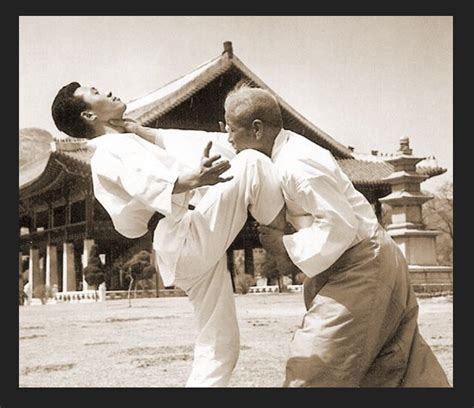
Silla’s Hwarang Warriors
Although Tae Kwon Do first appeared in the Koguryo kingdom, it is the Silla’s Hwarang warriors that are credited with the growth and spread of Tae Kwon Do throughout Korea. Silla was the smallest of the three kingdoms and was under frequent attack by Japanese pirates. Silla received reinforcements from King Gwanggaeto and his soldiers from the Koguryo kingdom to drive out the pirates.
During this time a few select Sillan warriors were given training in Taekkyon by the early masters from Koguryo. The Taekkyon-trained warriors then became known as the Hwarang. The Hwarang set up a military academy for the sons of royalty in Silla called Hwarang-do, which means “The way of flowering manhood.”
Read also: Reunited after 23 years: Carlina White
The Hwarang studied Taekkyon, history, Confucian philosophy, ethics, Buddhist morality, and military tactics. The guiding principles of the Hwarang warriors were loyalty, filial duty, trustworthiness, valor, and justice. The makeup of the Hwarang-do education was based on the Five Codes of Human Conduct written by a Buddhist scholar, as well as fundamental education, social skills, and the study of Taekkyon.
During the Silla dynasty (A.D. 668 to A.D. 935) Taekkyon was mostly used for sport and recreational activity.
Koryo Dynasty
During the Koryo dynasty (A.D. 935 to A.D. 1392), Taekkyon’s name was changed to Subak. The focus of the art shifted with the reign of King Uijong from A.D. 1147 to A.D. 1170 from a system that promoted fitness to one that that was primarily a fighting art.
Yi Dynasty
The first widely distributed book on Tae Kwon Do was during the Yi dynasty (A.D. 1397 to A.D. 1907). This was the first time Subak was intended to be taught to the general public, having been previously limited to members of the military.
During the second half of the Yi dynasty, political conflicts and the preference for debate over military action almost led to the extinction of Subak. The emphasis of the art was changed back to that of recreational and physical fitness. The subsequent lack of interest led to the fragmentation of Subak as an art as it became scarcely practiced throughout the country.
Read also: Fixing Boxing with Zuffa
In 1909, the Japanese invaded Korea and occupied the country for 36 years. To control Korea’s patriotism, the Japanese banned the Korean language, the practice of all military arts, and burned all books written in Korea. Resistance and resentment toward this ban was responsible for renewed interest in Subak.
Many Koreans organized themselves into underground groups and practiced martial arts in remote Buddhist temples. Others left Korea to study martial arts elsewhere, including China and Japan.
In 1943, Judo, Karate and Kung-fu were officially introduced to Korean residents, and martial arts, in general, regained popularity. In the last few years before Korean liberation in 1945, there were many different variations of Subak/Taekkyon in Korea, due to the influx of influence from other martial arts.
The first Tae Kwon Do school - or “kwan” in Korean - was started in Yong Chun, Seoul, Korea in 1945.
Numerous schools were opened from 1945 to 1960, each claiming to teach the traditional Korean martial art, each emphasizing different aspects of Taekkyon/Subak. As a result, many names emerged from each system, competing for dominance, among them Soo Bahk Do, Kwon Bop, Kong Soo Do, Tae Soo Do, Kang Soo Do, Tang Soo Do, and Tae Kwon Do.
Read also: A Look at Wrestling Masks
The Korean Armed Forces was formed in 1945 and in 1946 Second Lieutenant Hong Hi Choi began teaching Taekkyon at a Korean military base called Kwang Ju. Americans were first introduced to Taekkyon when Choi instructed Korean army troops and some American soldiers stationed with the 2nd Infantry Regiment.
Hong Hi Choi attended Ground General School in 1949 at Fort Riley near Topeka, Kansas, in the United States. While in the United States, Choi gave public Taekkyon demonstrations for the troops. This was the first display of Taekkyon in America.
The greatest turning point for Korean martial arts began in 1952. During the height of the Korean War, President Syngman Rhee watched a 30-minute performance by Korean martial arts masters. He was especially impressed when Tae Hi Nam broke 13 roof tiles with a single punch.
After the demonstration, Rhee spoke with Hong Hi Choi about martial arts and then ordered his military chiefs of staff to require all Korean soldiers to receive martial arts training, leading to a tremendous surge in Taekkyon schools and students. President Rhee also sent Tae Hi Nam to Fort Benning, Georgia, for radio communications training.
During this same time period in Korea, special commando groups of martial-arts-trained soldiers were formed to fight against the communist forces of North Korea. One of the most famous Special Forces was known as the Black Tigers.
The Korean War ended in 1953.
On April 11, 1955 at a conference of kwan masters, historians, and Taekkyon promoters, most of the kwan masters decided to merge their various styles for the mutual benefit of all schools. The name “Tae Soo Do” was accepted by a majority of the kwan masters. Two years later the name was changed again, this time to “Tae Kwon Do.”
The name was suggested by General Hong Hi Choi (who is considered the grandfather of Tae Kwon Do) because of its resemblance to Taekkyon, thus providing continuity and maintaining tradition. Further, it indicates the use of both hand and foot techniques.
Dissension among the various kwans that did not unify continued until September 14, 1961. Then, by official decree of the new military government, the kwans were ordered to unify into one organization called the Korea Tae Kwon Do Association (KTA), and General Hong Hi Choi was elected as its first president.
In 1962, the KTA re-examined all the black belt ranks to determine national standards. Also in 1962, Tae Kwon Do became one of the official events in the annual National Athletic Meet in Korea, and the KTA sent instructors and demonstration teams all over the world.
In Korea, the study of Tae Kwon Do spread rapidly from the army into high schools and colleges. In March of 1966, Choi founded the International Taekwon-do Federation (ITF), which he also served as president. Choi later resigned as the KTA president and moved his ITF headquarters to Montreal, Canada, where he concentrated on organizing Tae Kwon Do internationally. His emphasis was on self-defense methodology, not particularly on the sport.
By 1974, Choi reported that some 600 qualified ITF instructors were dispersed throughout the world.
Young-wun Kim was later elected the new KTA president and dissolved ITF’s connection with the KTA on May 28, 1973, creating a new international governing body called the World Tae Kwon Do Federation (WTF) and bringing the world headquarters back to Korea. The creation of WTF coincided with the first World Tae Kwon Do Championships which were held in Seoul, Korea.
At the first inaugural meeting, Un Yong Kim was elected president of the WTF and drafted a charter for the federation. The WTF is the only official organization recognized by the Korean government as an international regulating body for Tae Kwon Do.
The World Tae Kwon Do Federation has since made a major effort to standardize tournament rules and organize world-class competitions. After the 2nd World Tae Kwon Do Championship in Seoul, the WTF became an affiliate of the General Assembly of International Sports Federation (GAISF), which has ties to the International Olympic Committee (IOC). The IOC recognized and admitted the WTF in July 1980.
In 1982, the General Session of the IOC designated Tae Kwon Do as an official Demonstration Sport for the 1988 Olympic Games in Seoul, Korea. It is now an official Olympic sporting event.
Since modern-day Tae Kwon Do’s official birth on April 11, 1955, its development as a sport has been rapid. Today, over 30 million people practice Tae Kwon Do in more than 156 countries.
Modern (Olympic style) Tae Kwon Do is characterized by a disproportionate emphasis on high spinning and jumping kicks. The Traditional Tae Kwon Do taught at Sun Soo Center for Excellence, as the art was originally conceived, is a multi-faceted, comprehensive and effective form of self-defense.
Early Koreans developed unique martial arts forms for unarmed self-defense to complement their skills with weapons. The first recorded evidence of what was to become modern Tae Kwon Do is found about two thousand years ago in Korean history.
A mural painting from the Koguryu kingdom (37 B.C. to 66 A.D.) was found in a tomb believed to have been built sometime during the period 3 to 427 A.D. This mural depicts figures practicing martial arts techniques. Historical records from this Koguryu period also mention the practice of martial arts techniques and tournaments.
The early forms had different names, such as Kwonbak, Bakhi, Dangsoo, Taeso, and Kongsoo. From about 600 A.D. to about 1400, the dominant form was Soobak, which further evolved into Taekyon beginning in the late 1300s. Taekyon was the dominant Korean martial art form until the Japanese invasion and occupation of Korea in 1909.
The modern period of Tae Kwon Do began with the defeat of the Japanese and the liberation of Korea in 1945. Korean martial arts masters wanted to eliminate Japanese influences. They began discussions on how to return to the traditional Taekyon based Korean martial arts and on how to unite the various martial arts schools (or Kwans) and styles into a single style and national sport.
After several years of discussions, the name "Tae Kwon Do" was chosen in April 1955 by the board of masters of the various Kwans, and the kwans started to unify through the late 1950's. The spread of Tae Kwon Do as a martial art and competitive sport continues to this date.
Taekwondo is a Korean martial art that’s well known among the general population worldwide. Although Korea has had its own native martial arts for thousands of years ̶ Taekwondo, as we know it today, originated in the 1950s. Taekwondo is a Korean martial art that focuses on striking techniques, including kicks, punches, and blocks. It’s well known for its emphasis on high, fast kicks and dynamic movements. It includes various forms (patterns of movements), sparring, and self-defense techniques.
Taekwondo is predominantly known today as an Olympic Sport. However, it has long been a part of military hand-to-hand combat training for Republic of Korea (ROK) solders, as evidenced here. During the Vietnam War, the ROK Tiger Division was respected by American GIs and feared by the Viet Cong.
Taekwondo is characterized by its focus on high, powerful kicks, rapid footwork, and dynamic movements. It places a strong emphasis on kicking, flexibility, balance, and agility. Taekwondo also makes use of hand techniques such as punches, blocks, and strikes.
Additionally, Taekwondo places great importance on discipline, respect, and the development of mental strength alongside physical skills.
What is now called Taekwondo largely originated between the 1940s-1960s. In fact, most of the founders of the original 5 kwans trained in Japanese karate (predominantly Shotokan). Some founders were exposed to, or also trained in, Chinese kung fu via personal travels or military service.
The only “ancient” influences on the development of Taekwondo come from very old, indigenous Korean martial arts, such as Taekkyeon , an indigenous combat sport, and Kwon Bup (alternately Romanized as Gwonbeop), the empty-hand fighting techniques found in the Muyedobotongji, a 4-volume, Chinese-influenced, field manual of 24 specific military skills.
Taekwondo kwans refer to the original schools or styles, which would later be called “Taekwondo”, that were developed after World War II in South Korea. Each kwan had its own unique approach to training and techniques. The kwans played a significant role in the development and standardization of modern taekwondo.
There were 3 phases of Taekwondo kwans: the “original” kwans, the “nine kwans”, and a third phase of splintering that added 3 more styles of Taekwondo. The kwans laid the foundation for what would eventually become modern taekwondo.
The phrase “9 Kwans” refers to the original 5 schools PLUS 4 major schools that opened after the conclusion of the Korean War.
Here is a list of some of the original Kwans:
- Chung Do Kwan: Founded by Lee Won Kuk in 1944.
- Moo Duk Kwan: Founded by Hwang Kee in 1945.
- Yun Moo Kwan: Founded by Yoon Byung-in in 1946.
- Chang Moo Kwan: Founded by Ro Byung Jick in 1946.
- Ji Do Kwan: Founded by Chun Sang Sup in 1946.
- Oh Do Kwan: Founded in 1955 by Choi Hong Hi, who also became honorary head of the Chung Do Kwan.
World Taekwondo (WT) is the international governing body for the sport of taekwondo. Formerly known as the World Taekwondo Federation, it was established in 1973 and is responsible for promoting and organizing taekwondo competitions and events on a global scale.
WT’s mission includes fostering the growth and development of taekwondo worldwide, promoting the values of respect, self-discipline, and fair play, and providing a platform for athletes of all levels to compete and showcase their skills. It also plays a role in promoting gender equality and inclusivity within the sport.
The Kukkiwon is the official headquarters of the World Taekwondo Federation (WT) and the center for taekwondo education and training. It’s located in Seoul, South Korea, and serves as a hub for promoting and developing the sport of Taekwondo internationally.