World of Sport Wrestling (WOS) holds a significant place in the history of British professional wrestling. From its humble beginnings to its peak popularity on television and its eventual revival, WOS has left an indelible mark on the sport.
The story begins, though, in the mid-nineteenth century: the cultural Zeitgeist in the Britain sought to resurrect Ancient Greco-Roman cultures.
Early Days of British Wrestling
Initially, wrestling was introduced at variety shows to add a new element to strong man acts. Born in Michigan, Jack Carkeek, renowned strong-man, challenged members of the audience to go bell to bell with him. Inevitably, Carkeek would triumph over the challengers in emphatic fashion. During the same period in the north of England, Lancashire to be specific, JG Chambers was establishing his own unique school of wrestling known as Catch as Catch Can, more simply known as Catch. Various promotions popped up throughout the country from from Cornwall to Cumbernald.
Born in Estonia, George Hackenschmidt emigrated to Russia before moving to England in 1903 following conscription to the Russian Army. Similarly in England, George Hackenschmidt’s Greco-Roman training in addition to his strong-man training led to further domination. Each and every misguided foe that dared to enter the ring with Hackenschmidt would be summarily despatched with equal disdain and displeasure. Charles Cochran, promoter of wrestling in the UK, displayed considerable interest in the career of George Hackenschmidt and, in 1903, offered to manage the Russian. Hackenschmidt duly accepted and heeded the advice of Cochran to combine an element of entertainment with legitimate wrestling.
The first World War put a halt on the development of wrestling in Britain. Towards the end of the thirties, Sir Atholl Oakley and Henry Irslinger, tow wrestlers, launched All in Wrestling which soon became a popular venture: in the early 40’s, All in Wrestling ran forty venues in London alone. Demand for wrestling grew to such an extent that Oakley and Irslinger could no longer supply the proliferating demand.
Read also: The Rise and Fall of WWA
Although popular in certain circles today, the London city council banned wrestling due to the added hardcore element. Post World War 2, the ban on wrestling was rescinded. Appalled by such an absurd condemnation, Admiral Lord Mountevans established a set of rules that formed the backbone of British wrestling in decades to come.
Taking a leaf out of their American counterparts, in 1952, wrestling promotions around the UK formed Joint Promotions, similar in all but name to the American NWA. However, despite the implicit self-serving motives, the venture was an economic success that, in its prime, ran up to forty shows a week in various counties around the UK. The added exposure television provided ensured a growing number of the population began watching wrestling on a weekly basis.
World of Sport Era (1965-1985)
World of Sport is a British television sport programme which ran on ITV between 2 January 1965 and 28 September 1985 in competition with the BBC's Grandstand. From the programme's launch until the lifting of restrictions on broadcasting hours in 1972, sports coverage was one of the few programming areas which was exempt from the restrictions. Originally sporting coverage and outside broadcasts were provided with a separate quota of broadcasting hours per year. By the start of World of Sport this amounted to 350 hours per year.
Eamonn Andrews was the first host and the programme itself was "compiled for Independent Television" by ABC Weekend TV from its Teddington Studios, with the other ITV stations contributing footage of events in their regions. Before World of Sport, sports events had been shown across the ITV network on Saturdays as separate programmes. From the summer of 1968, after ABC lost its franchise, it was produced by London Weekend Television (LWT) under the ITV Sport banner and hosted by Dickie Davies, who would remain the face of the show until it ended in 1985. Other World of Sport presenters were Fred Dinenage, Steve Rider and Jim Rosenthal.
Because LWT held a weekend-only broadcast franchise, Thames Television produced bank holiday editions, which were renamed Bank Holiday Sport and later Bank Holiday Sports Special. STV and Grampian sometimes opted out and showed their own version, billed as Scotsport Special which was presented by Arthur Montford from the STV studios in Glasgow, Scotsport Special did include some live coverage from England of events which were often not shown in their entirety due to the regional sporting events taking place in Scotland.
Read also: The Story of WBC Muaythai
Most of the show was focussed around three popular segments - On the Ball (a preview of the day's football action), the ITV Seven (horse racing), and wrestling with commentator Kent Walton - alongside a results section to close the programme. Coverage of other sports was mostly restricted to the part of the first hour of the programme, and the 3pm hour.
The BBC had purchased the rights to as many established events as it could and a joke of the period was that the BBC were going through the list of sports in alphabetical order and had run out of money before it reached wrestling which is how ITV got it. Therefore, output often showcased sports not seen elsewhere, such as women's hockey, netball, lacrosse, water skiing and stock car racing or sports that were not popular with the British mainstream, such as NASCAR and ice speedway. It also featured bizarre sports like the World Barrel Jumping Championships, and even death-defying stunts.
Two sports in particular, ten-pin bowling and kart racing, benefited from television exposure to a British public hitherto unaware of them. Whilst the majority of ten-pin bowling shown from 1965 onwards focused on regional league competitions in the UK, a surge in popularity in the sport in the UK in the mid-1970s led to footage from the biennial WTBA World Championship, and telecasts from the US Professional Bowlers Tour, being included increasingly in later years (Mark Roth becoming the first bowler to convert a 7 - 10 split on television on 5 January 1980 at the ARC Alameda Open in Alameda, California, was possibly the best-remembered of the US telecasts shown on the programme).
The programme did occasionally acquire the rights to major sporting events, such as the Tour de France and the Ryder Cup and each year, the FA Cup Final featured on World of Sport, with the BBC and ITV often competing for viewers by broadcasting unusual features with early starts to their broadcasts to entice viewers to watch their coverage. The only other football match that would be shown live on the programme would be the England v Scotland match in the Home International Championship which from 1971 to 1982 was shared with the BBC, and the 1984 match, which was the final match in the last ever Home International Championship, was live as part of World of Sport.
Schoolboy England Internationals from Wembley were shown on an exclusive basis and whenever ITV showed a World Cup or a European Championship finals tournament match live and the kick off time fell within World of Sport's timeslot, the programme would sometimes be extended.
Read also: The story of Master Kim
Typical World of Sport Schedule
- 12:20 On The Ball - football preview with Brian Moore and in later years Ian St.
- 13:00 Sports Special 1 - A wide array of sports, often including clips from US show Wide World of Sports some major sports Motor Racing, Show Jumping, Tennis, Motorcycle Racing, Cycling would feature regularly. Less prominent sports such as darts, snooker, bowls, water skiing, speedway, rallying and others would also feature.
- 16:00 Wrestling - a mainstay of the World of Sport schedule from 1965 until it ended.
World of Sport had a theme tune and opening credits which featured the ITV Sport logo and the programme name as trailing banners from white Piper Super Cub light aircraft. Wayne also composed a new theme tune for the opening and closing credits to the Results Service during its period as a standalone programme between 1985 and 1992. The show featured rows of typists sitting behind the main presenter, mainly preparing items for the show. After the lunchtime ITN News summary, previous On the Ball hosts Ian St. John and Jimmy Greaves got their own stand-alone programme, Saint and Greavsie.
It continued with its format of football news, action and live chat. Wrestling with Kent Walton would follow immediately after Saint and Greavsie, before being dropped in December 1988 just before the popularity of the US World Wrestling Federation promotion (now World Wrestling Entertainment) started to gain momentum in the UK via coverage on Sky Television from early 1989. During this period, matches from Joint Promotions, who previously held exclusive rights to ITV coverage, were supplemented with matches from rival promotion All Star Wrestling.
It was originally planned to bring US wrestling to viewers on average of once a month in this slot-three weeks of the UK version and one of the American version - but the US version only appeared on a total of six occasions in the two years that it played in that slot. The move to a permanent lunchtime slot, as it had generally been for several months previously, badly decimated wrestling's ratings as it had a primarily working-class audience, much of which worked half-day shifts on Saturday mornings. Between 1992 and 1995, several ITV regions screened rival US promotion World Championship Wrestling's programme WCW Worldwide in the old Saturday afternoon slot, having previously transmitted the promotion as late-night viewing.
In the mid 2000s, The Wrestling Channel, later The Fight Network, purchased the broadcasting rights to World of Sport's wrestling shows until the channel stopped transmitting. It was then shown on UK satellite channel Men and Movies. Next would be the two-hour live broadcast with coverage of sports such as athletics, darts, ice skating and snooker being shown. with a single event being shown for two hours. Saturday afternoon sport on ITV would conclude with the Results Service. Lasting for 15 minutes, it was presented by Elton Welsby with Jim Rosenthal hosting in Welsby's absence. As with Saint & Greavsie, the programme ended at the end of the 1991/92 season.
On the Ball was later relaunched by ITV in 1998 as a half-hour football magazine programme on Saturday lunchtimes. When ITV secured the rights to highlights of FA Premiership football beginning from the 2001/02 season, On the Ball was revamped into an hour long programme. Following the launch of ITV2 in 1998, a football results programme was included as part of its initial Saturday afternoon schedule entitled Football First. When ITV refreshed its football offering for the 2001/02 season, this was relaunched as The Goal Rush and began on ITV2 before switching over to ITV1 when the matches were approaching full time.
ITV paid tribute to World of Sport as part of its 50th anniversary celebrations in September 2005.
The Demise and the Rise of "New School" Wrestling
In 1988 the promotion was hit hard by the network, seeing that the ratings for the general World of Sport program was dropping (even though Wrestling was still drawing the bulk of the viewers) ITV decided to revamp their sports coverage and dropped World of Sport from their network, with an out of date product no major network was willing to offer any television time to wrestling anymore and the Crabtree's left the promotion to return to touring their small territory. Under a different booker WSW was able to evolve beyond the dimly lit arenas of the past and brought the product up-to-date.
As the 90's moved on wrestling on Sky developed its network becoming the biggest cable network in the United Kingdom and by 1995 wrestling was the biggest draw during the summer months that the following year Sky started joint promoting big events using the vacant football stadiums and expanding the promotion to higher levels.
Despite the cancellation, professional wrestling in the distinct British style has continued in the United Kingdom to the present day. Additionally, since the early 1990s, a second strand of wrestling promotions has emerged, producing more American-styled shows. The two genres have become known commonly as "Old School" and "New School" respectively, after the names used in an invasion angle run by the FWA promotion around 2001.
Attempts to Relaunch Televised British Wrestling
Over the years, numerous attempts were made to relaunch televised British wrestling, with various promotions covered on local television or satellite/digital channels and often touted as the "revival" of British Wrestling. The mid 2010s saw an increasing drive to return British Wrestling to ITV. A pilot for World Of Sport Wrestling (branding itself as a direct revival of the old slot on the World Of Sport programme) was filmed at the Fairfield Halls, Croydon in 2013 but rejected by ITV.
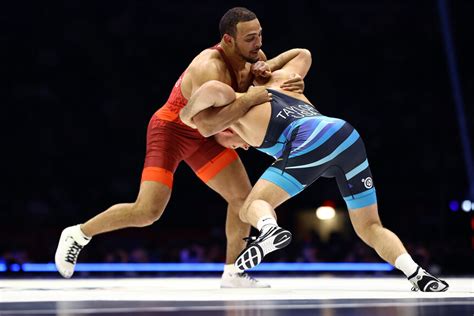
Sammy Lee v Mark Rocco 4 4 81
The 2016 Revival and Beyond
On 17 October 2016, ITV announced that they would be bringing back professional wrestling, arguably World of Sport's most popular segment. They announced they would be recording a pilot episode on 1 November 2016, being filmed at MediaCityUK in Salford, Greater Manchester. The show featured independent wrestlers such as El Ligero, Grado and Sha Samuels. ITV also announced that former WWE commentator Jim Ross would call the pilot episode.
It aired on New Year's Eve on ITV, where Grado won the World of Sport Championship. The following year on 23 March, Impact Wrestling (formerly known as TNA/Total Nonstop Action Wrestling) announced that they would be teaming with ITV to yet again bring back the show with Jeff Jarrett as an executive producer as a ten-episode series. The show was announced to be taping at Preston Guild Hall on 25 May, and 26 May.
In April 2018 ITV announced World of Sport Wrestling would air a ten-part series later in the year on Saturday afternoons. The shows were taped in Norwich from 10-12 May. Jim Ross was not involved, and neither was Impact Wrestling. World of Sport Wrestling aired from 28 July 2018 at 17:00 on ITV until 29 September 2018.
On 17 October 2016, ITV announced that they would be bringing back professional wrestling, arguably World of Sport's most popular segment. They announced they would be recording a pilot episode on 1 November 2016, being filmed at MediaCityUK in Salford. The show featured independent wrestlers such as El Ligero, Grado, and Sha Samuels. ITV also announced that former WWE commentator Jim Ross would call the pilot episode.
Champions and Key Events
Key highlights from the revival era include:
- Dave Mastiff defeating Grado to win the WOS Championship.
- Kenny Williams winning a Ladder match against Sam Bailey, CJ Banks, and Danny Hope.
- Viper defeating Alexis Rose.
- Joe Coffey and Mark Coffey defeating Rampage and Ashton Smith.
- El Ligero defeating Zack Gibson.
At 09:00 BST on 28 June 2024, a short teaser video was posted announcing the promotion's return with a TV taping event called "WOS: The Return". The event will be held on 14 September. Fightful reported that, due to trademark issues with ITV, the official name of the promotion would be shortened to WOS Wrestling. It was also announced by WOS that the promotion's programming would be broadcast through online platforms, rather than on ITV's television networks.
Legacy and Impact
World of Sport Wrestling was founded during the peak of British Wrestling on television.
Notable Wrestlers from the World of Sport Era
The late Davey Boy Smith is probably one of the most famous British wrestlers of all time; former WWF Intercontinental Champion, two time European, Tag Team and Hardcore Champion. The British Bulldog became a household name across the world in the 1990’s; however, long before his worldwide fame Davey started out on World of Sport, teaming with his cousin Dynamite Kid.
Fit Finlay is another one of the British wrestlers from the WOS era that broke out into mainstream American wrestling and make a big name for themselves. Debuting for WCW in 1995 and eventually having a WWE run in 2006, Finlay is someone who most wrestling fans will be aware of. His opponent in this match is one of the legends of British Wrestling, Marty Jones.
Les Kellett was the king of comedy in wrestling, while also being feared as a legitimate threat to his opponents. However, it was his opponent that made me have to include this match. About a year ago I discovered a wrestler called Johnny Czeslaw, and was mesmerised by the way he handled himself in the ring. I never thought I’d be sitting here in 2016 laughing at something a wrestler did in the 1970’s, it doesn’t matter who you are, watching a Czeslaw match will bring a smile to anyone’s face. A good mix of classic British grappling and comedy from two fantastic wrestlers in this match.
One of the household names of British wrestling, Mark ‘Rollerball’ Rocco had the big personality that is synonymous with today’s wrestling but also incredible in-ring ability. Rocco found fame in Japan as “Black Tiger”, having some of the most famous matches in Japanese wrestling history with Tiger Mask. In the UK, Rocco is well known for his massive feud with Kendo Nagasaki, following the unmasking of Kendo. His opponent, Fuji Yamada is more widely known as Japanese legend Jushin Thunder Liger.
Johnny Saint is the man. Simply put, he is the legend of British wrestling. Wrestlers all over the world now site Saint as one of their major influences, which isn’t all that surprising when you watch one of his matches. He is one of the smoothest wrestlers you will ever watch, transitioning into holds before your brain can actually compute what he’s doing. While he was as good as anyone on his day, he never found success outside of Britain. His opponent Mick McManus is one of the most highly regarded bad guys in wrestling history. He was arguably the most hated man in wrestling at the time and was just so good at getting a reaction from a crowd. This is just a masterclass in wrestling. You’d struggle to find a better example of the golden era of British wrestling than this.
Although some of the wrestlers we detail below broke through to major promotions during their time in the business, often, they aren’t given the recognition they deserve.
With his 64-inch chest and bleach blonde hair, Big Daddy was hard for him not to be popular with fans. In fact, he was so known to the British public that the Queen and former Prime Minister Margret Thatcher were said to be fans! Sadly, his fame and glory in the British circuit were cut short. After one of his shows on December 2nd, 1997, he died from a stroke. He was 67.
Another World of Sport favorite, Martin Austin Ruane, as Giant Haystacks, became a massive star in 1975 after teaming up with previously mentioned Big Daddy as one of the most dominant tag teams in British Wrestling history. Giant Haystacks was one of the best-known wrestlers on the British wrestling scene in the 1970s and 1980s. Not moving as well as his large frame once was able, Arn Anderson recalled this time in Haystacks’ career on his ARN Podcast, stating, “He could only probably fall one more time. On November 29th, 1998, he would sadly die of lymphoma at his home near Manchester, England.
He would later appear on an April 2007 episode of Raw, losing a no disqualification, 3-on-1 handicap match to Shane McMahon, Vince McMahon, and Umaga. In his later years, he continued to be influential within the British circuit, winning titles such as the Frontier Wrestling Alliance’s British Heavyweight Championship. However, he never got his break in what was, at the time, the top promotion in the world, WWE. Although after thirty years of being a performer, he was able to transition into becoming a talent scout for the WWE.
Adrian Street is one of the most influential British wrestlers of his time. Adrian Street with his valet and wife, Miss Linda.
Chris Adams first entered professional wrestling in 1978 with no proper formal training. Instead, he relied on his judo background. The wrestler who popularized the superkick: “Gentleman” Chris Adams back in the late ’80s. His potential and ability have been often overlooked despite his influence on wrestling. “The Gentleman,” as he was known, still did get his due in other less mainstream promotions such as the Global Wrestling Federation, where he won the GWF Heavyweight Championship twice in 1994. It is said that his disillusion with his career direction led to a return to the Texas independent scene in late ’99.
Mick McManus was a man small in stature, though he induced much fear! Legendary British wrestling anti-hero Mick McManus. He was a top heel and was renowned for bending the rules so the crowd would despise him as much as humanly possible. He worked in Brixton offices by day but would become a villain by night. He was so pushed on television that he was unbeaten for twenty years. He was so popular in Britain that in one of his performances, he pulled in twenty million viewers against Jackie “Mr.
Peter Thornley from Stoke, England, was an iconic character in ITV’s World of Sport. British wrestling legend Kendo Nagasaki. [Photo: mirror.co.uk]Nagasaki had “superhuman powers,” such as the power of healing and the ability to hypnotize. Thornley was the original performer who used the Kendo Nagasaki character, but other variations have been used over the years.
Mark Rocco was a fourth-generation British wrestler. After a long battle with dementia, Rocco sadly passed away on July 30th, 2020.
Marty Jones perhaps might be the least known of the names mentioned on this list but is one of the best all-around grapplers of the bunch.
British wrestler “Dynamite Kid” Tom Billington was one of the best to lace up a pair of wrestling boots. Many prestigious titles and awards are under his belt, and he won Wrestling Observer’s “Match of the Year” in 1982 with Tiger Mask on August 5th in Tokyo, Japan.
British grappler Darren “William Regal” Matthews is one of the most well-regarded wrestlers in the business, though he never was able to land on his feet at the top of the professional wrestling mountain, where many believe he could and should have been. Training under Marty Jones, Matthews made his pro wrestling debut at the age of 15 for a local promotor at Blackpool Pleasure Beach. Matthews trained as a shooter (a wrestling term that describes a wrestler with a legitimate fighting background), and he often defended prize money against members of the public.
Not entirely content with only being placed in tag bouts to make his partner Big Daddy look good, Matthews moved over to All Star Wrestling. Here is where he would meet Robbie Brookside. Here, Matthews would go by Steve Regal - a name he had used going back to ’87, and a name he had seen in an American wrestling magazine in use by another wrestler named “Mr. Regal would debut in WCW in 1993. His hard-hitting persona was hard not to hate as he would do anything to win, even if it meant cheating.
Before being released from his WWE contract on January 5th, 2022, which ended his 22-year tenure with the company, Regal had an even bigger role behind the scenes as the WWE Director of Talent Development and Head of Global Recruiting, playing a significant role in building the future stars of WWE. William Regal’s story is a great representation that it doesn’t matter where you come from, what demons you have, or where you are in life.