Muay Thai, also known as “Thai Boxing,” is a dynamic and engaging martial art with roots tracing back to the middle of the 18th century. Initially used as a combat skill for self-defense, it eventually modernized into a popular sport in Thailand, sponsored by the king himself, garnering immense respect throughout the nation. Today, Muay Thai is practiced worldwide.
While it may seem like a dangerous or extreme contact sport, the majority of modern Muay Thai practitioners are non-competitive, using it to improve their mental and physical state. It’s understandable to think that Muay Thai may be too dangerous for your child to participate in, however, the truth is, this type of martial art is no more dangerous than other sports that children practice.
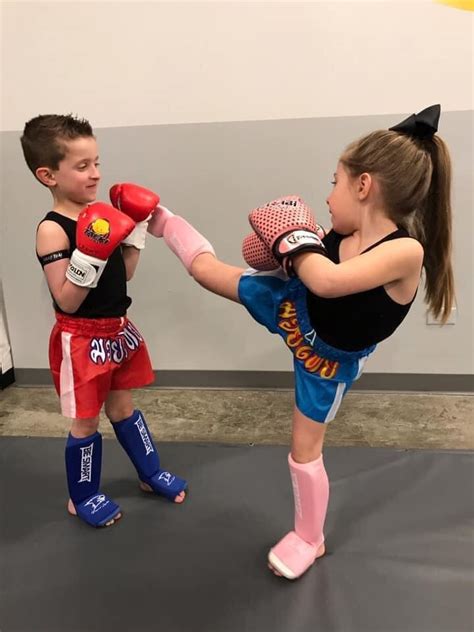
Why Choose Muay Thai for Your Child?
For parents considering Muay Thai classes for their children, there are many benefits apart from fitness.
- Like many Asian martial arts, Muay Thai instills values like respect and humility.
- Muay Thai is a tremendous mental exercise as much as it is physical.
- The sport itself is very technical; practitioners must make sure all movements and techniques are properly executed.
Benefits of Muay Thai for Kids
Here’s a comprehensive look at the advantages of enrolling your child in Muay Thai classes:
- Personal Goals: Muay Thai is practiced in a way that emphasizes personal goals.
- Mindfulness and Respect: Muay Thai was developed within a predominantly Buddhist culture where the importance of mindfulness, respect, and peace is emphasized to a large degree.
- Physical Fitness: Physical fitness is important for children to grow up healthy - both physically and mentally.
With childhood obesity becoming more prevalent today, it’s even more important for children to get involved in physical activities. Muay Thai is a perfect activity to keep your child interested in physical fitness, all while encouraging concentration and coordination.
Read also: The Significance of the Mongkol
- Self-Defense: While we don’t endorse fighting, it’s beneficial for your child, or anyone for that matter, to know how to defend themselves.
- Mental Exercise:Muay Thai is a tremendous mental exercise as much as it is physical.
Registering your child in Muay Thai classes can be absolutely beneficial for their mind, body and overall spirit. However, before enrolling your child in any of mixed martial arts classes, it’s best to discuss it with them first.
Make sure to discuss with them your goals, or why you’d like to enroll them.
Keeping an active lifestyle through physical activities like sports offers many benefits for the human body. It is important for adults to be physically active in order to stay healthy and fit but this is even more so for kids. Sports are integral for the physical and mental development of young children.
With a myriad of sports to choose from, martial arts are emerging as one of the top options for young children today, most notably traditional form-based (katas) martial arts like Karate and Taekwondo.
Muay Thai Basics: Jab - AKA Techniques
Understanding Muay Thai Techniques
Muay Thai is a kickboxing style that originated in Thailand and is one of the most effective striking-based martial arts in the world. Thai boxing techniques involve punches, kicks, elbow and knee strikes along with stand-up grappling. Muay Thai is a highly intense sport of hard knocks.
Read also: Authentic Muay Thai Training
Beginner classes are conducted to familiarize learners with the basic techniques while incorporating strengthening exercises to gradually prepare them for the physical demands of the sport. Under the guidance and watchful eye of coaches, kids can engage in Muay Thai safely in small group settings.
Key Benefits Explained
Let's delve deeper into the benefits of Muay Thai training for children:
- Physical Activity: An active child is a healthy child. Regular Muay Thai training provides a kid with plenty of physical activity and movement.
- Comprehensive Workout: Boxing & Muay Thai provides a comprehensive workout that enhances strength, flexibility, coordination, and endurance.
Muay Thai exercises include simple warm ups like skipping to practicing techniques with partners and coaches or heavy bags. As kids start to master the techniques and various combinations, they will gain self-confidence.
- Self-Confidence: As a child attends more classes, you can see their confidence build. They gain a sense of accomplishment and self-worth. Hitting the bags is one drill that seems. to automatically make a child feel powerful.
Self-Defense Skills: While martial arts are not just about fighting, they teach practical self-defense techniques that can help kids feel more secure and empowered in potentially dangerous situations.
Bullying in schools is a global phenomenon. It can be verbal, mental and oftentimes physical.
Read also: Choosing a Muay Thai Gear Bag
- Motivation and Camaraderie: Having a coach push and motivate you during exercise can reap far more benefits and achieve more gains than exercising alone.
While it isn’t a team sport, Muay Thai training involves partners as well group exercises to finish up the class. The tough training helps build camaraderie and it becomes even easier to make friends.
- Discipline and Focus: Boxing and muay thai requires practice, patience, and adherence to a structured routine, which helps children develop discipline and focus. Kids learn to follow instructions and self-control.
- Respect and Etiquette: Classes expect young students to respect their instructors, peers, and themselves. Children learn the importance of showing respect, practicing good manners, and understanding the value of teamwork, which helps in building strong social skills and positive relationships.
Muay Thai: More Than Just a Sport
Muay thai is an ancient form of thai boxing with a rich history of more than 1000 years that became popular across the globe in the late 20th century. Like any other form of martial arts, to be perfect as a fighter with a calm mind and speedy reflexes, Muay Thai needs to be started in the early years of childhood.
Thailand, as a nation with super-powered neighbors since ancient times, had to be strong enough to fight bravely with and without arms. Muay Thai has gained popularity since World War I and has become a combat sport loved and practiced worldwide. Modern Muay Thai includes elements of traditional boxing.
Safety and Supervision
Yes, Muay Thai is safe for kids as it is practiced under the supervision of a trained instructor. With the right protective gear, including gloves, shin pads, mouthguards, and headgear, Muay trainers ensure that training is appropriate and safe for a child’s age through structured warm-ups, drills, and cool-downs.
Key Elements of Muay Thai Training
Muay Thai sculpts a complete human being with a focused mind, unbreakable strength, a passion for learning, and the ability to be deceived throughout the coming years of life.
- Goal Setting: When a kid starts practicing muay thai kickboxing, the trainer trains him with certain sets of goals.
- Overcoming Limitations: On the other hand, it is human nature to be aspirative in overcoming limitations. Both of these aspects foster the environment to learn new techniques, eventually, overcome their mental and physical limitations.
- Mindfulness: Continuous practice of quick and correct defense and attack moves gradually makes a kid mindful.
As a bare-handed martial art, muay thai emphasizes transforming the limbs into weapons. Muay thai is known as the art of eight limbs, as it is characterized by the combined use of fists, elbows, knees, and shins.
Warm-up, exercise, and cooling processes make the limbs stronger and increase blood circulation. Muay thai teaches a fighter that your body is your best asset.
- Reflexes: Continuous training in defending moves develops natural reflexes against any physical attack. This process also builds a positive mental psyche.
- Body-Mind Connection: With improved reflexes, muay thai improves the connection between body and mind. It promotes the significance of mental awareness.
- Meditation: Muay thai also emphasizes meditation before starting the practice or combat.
- Socialization: Muay Thai for kids promotes sportsmanship and cultivates socialization among the children. Attachment to the coach, coordination, and mutual respect for the opponents help kids to socialize in a community.
Choosing the Right Gym and Instructors
Finding the right environment is crucial for your child’s safety and enjoyment. While the fundamentals of muay thai for kids are consistent, the quality of instruction and the gym’s culture can vary greatly.
Look for a gym that feels like a community and prioritizes your child’s development.
Qualities to Look For:
- Expert, Child-Focused Instructors: Instructors are not only highly skilled in Muay Thai but are also passionate about working with children.
- A Safe and Supportive Community: Foster a team-oriented environment where children learn to encourage one another.
- Emphasis on Discipline and Respect: The core values of martial arts are woven into every class.
For those interested in a well-rounded self-defense skillset, our expertise in jiu jitsu provides an incredible complementary art.
Starting Age and Class Structure
In Thailand and Myanmar, it’s common to start at 4 or 5. There are several reasons behind this idea. Secondly, in earlier years of life, kids have yet to develop great physical strength. So it saves them from causing injuries to others of themselves. That means they get toughened up gradually and develop a competitive spirit before the contests are too hard.
Most gyms welcome children starting between the ages of 5 and 7. At this stage, classes focus less on intense contact and more on the fundamentals: building coordination, discipline, fitness, and basic techniques in a fun, game-based environment.
Comfortable shorts and a t-shirt are perfect to start.
Muay Thai vs. Other Martial Arts
Unlike point-based karate or the grappling focus of Judo and Jiu-Jitsu, Muay Thai is a stand-up striking art. For kids, this translates to a high-energy workout that develops powerful striking skills, exceptional cardiovascular fitness, and full-body coordination.
Muay Thai is an excellent martial art for all children, regardless of gender. The focus is on personal development, technique, and physical fitness, not brute strength. It’s a fantastic way for both boys and girls to build confidence, learn self-defense, and get in great shape in a supportive and respectful environment.
Addressing Common Concerns
Some parents worry that Muay Thai will make their children somehow violent and even turn them into bullies, but that couldn’t be further from the truth. Like we said earlier, some parents worry that if their kid practices Muay Thai, he/she will become aggressive. However, aggression is the exact opposite of what Muay Thai teaches people.
Muay Thai isn’t just about teaching kids fighting techniques, there are also many valuable moral lessons that are learned on the mat.
Muay Thai is about not about using brute force to defeat an opponent. It’s about using skill, focus, balance, self-control, and, most of all, integrity.
Key Moral Lessons in Muay Thai
- Respect: One of the first things Muay Thai will teach your child is respect towards authority figures like his/her instructors and teachers at school, respect for elders, and respect towards his/her peers. Martial arts like Muay Thai employ bows to show respect.
- Self-Discipline: The second most important lesson martial arts teaches is self-discipline. To practice martial arts, especially physically challenging ones, you must commit yourself fully - both mentally and physically.
Through methodised training, children will not only learn techniques and forms, but they will also learn to focus and train hard or risk falling behind their peers. Instructors will spur them on and give them a sense of accomplishment for every technique they learn and every obstacle they conquer.
Muay Thai requires a lot of effort and physical training, which increases your child’s fitness levels and leads him/her towards a healthier lifestyle. If you don’t want your child spending hours in front of the TV or computer screen, signing him/her up for Muay Thai training might just be what you need to get him/her off the couch.
Also, Muay Thai training improves your child’s motor skills, and it helps him/her to focus. It can be very therapeutic for children with attention disorders like ADHD.
Preparing Your Child for Muay Thai Classes
Before you enlist your child in a martial arts training facility, there are some things you should do first to ensure your child has the best experience possible.
- First, find out what kind of martial arts your child might be into. Different martial arts offer different programs and teaching styles. If they are unsure, the best thing to do is have them attend a trial class so they can experience it for themselves to see how they like it.
- Once you’ve signed your child up for classes, make sure he/she is well-prepared for each class. Lots of rest is conducive to good training, as well as a carbohydrate-rich meal a few hours before each session. This will make sure your child is energized while training.
- Ensure any necessary training equipment is packed as well as ample amounts of water.
- Always remember to offer lots of support and encouragement. Children always look to their parents when they’re struggling, so be sure to be there for your child.
As long as you keep encouraging him/her to keep coming to practice and to keep working on getting better, your child will be able to accomplish any goals his/her instructors set.
Conclusion
As you’ve seen, children learn many valuable things when they attend martial arts classes. To recap, by practicing martial arts, children will not only lead healthier lives, they’ll also learn important life and moral lessons. Your child will be more respectful, confident, disciplined, and temperate.
Martial arts training is especially beneficial for kids with attention disorders, socially awkward kids, competitive children, or children who simply need an outlet to release all of their excess energy.