World Wrestling All-Stars (WWA) was a professional wrestling promotion founded by Australian concert promoter Andrew McManus in 2001. The promotion was operated by McManus' International Touring Company. WWA was one of several promotions to come into existence shortly after the closings of Extreme Championship Wrestling (ECW) and World Championship Wrestling (WCW).
I’m forever fascinated with the wrestling landscape of 2001 - 2003. The end of WCW and ECW was like an atomic bomb being dropped on the world of wrestling, as it wiped out the last two major companies with network TV deals, leaving the WWF as the only game in town. The amount of talent and names available is staggering when you look back on it.
With the landscape wide open and so much talent available, promoters big and small began to look for ways to take advantage of all this and create new promotions to fill the void. Some, like Ring of Honor, had inauspicious debuts, but would go on to change the business. Others like TNA would open with much fanfare about becoming a true competitor to the WWF’s now empire.
Take for example this company, WWA - the World Wrestling All-stars, which sought to fill the void left by WCW and inevitably paved the way for TNA. This company was started by a concert promoter out of Australia, which was absolutely starved for wrestling content and hugely underserved in the Attitude era.
Travelling the world between 2001 and 2003, World Wrestling All-Stars was a short-lived touring promotion that held several wrestling PPVs across the globe. WWA boasted countless stars of the Attitude Era, bolstered by an array of impressive up and coming talent, and seemingly picked up where WCW had left off.
Read also: The Story of WBC Muaythai
In an era dominated by WWF as the sole survivor of the wrestling war, fans were given a much needed alternative, if they knew where to look. WWA has since become a forgotten part of wrestling history but their existence was influential in shaping the landscape of things to come.
Australian concert promoter Andrew McManus, the promotion's founder, envisioned WWA as a high-quality alternative to the WWF, targeting underserved global markets with limited access to live wrestling events. McManus explained the strategy: "Realistically, we're not trying to take on America..." Recruitment efforts were spearheaded by Jeremy Borash, who served as Director of Talent and booker after initially approaching Vince Russo for the role, which Russo could not accept due to scheduling conflicts.
Talent Acquisition and Roster
WWA recruited Jeremy Borash as booker and head of talent for its shows. He also acted as ring announcer and commentator for their shows. Borash was recommended to the WWA by Vince Russo, who was not able to work with the company as originally planned. WWA focused on signing the wrestlers that did not get signed by the World Wrestling Federation (WWF) after the WWF-WCW merger.
Borash targeted wrestlers unaffiliated with WWE or WCW following the latter's 2001 closure, drawing heavily from WCW and ECW alumni to leverage their name recognition and drawing power. The roster development also highlighted an emphasis on hardcore and hardcore-style matches, reflecting the gritty, high-impact wrestling popularized in ECW, through the inclusion of performers adept in such bouts alongside technical specialists.
Many popular former WWF and WCW wrestlers wrestled for the company during its nearly two year existence. They also brought in relatively unknown wrestlers, many of whom went on to make names for themselves for other promotions like TNA. These included A.J. Styles, Christopher Daniels, Frankie Kazarian, Shark Boy, and Nathan Jones.
Read also: History of WoS Wrestling
Rising independent stars like A.J. Styles and WCW alumni, such as Sting, Steiner, and Luger, played a pivotal role in reviving post-WCW careers through global exposure, while debuts like Nathan Jones and A.J. Styles foreshadowed future stardom; several, including Jarrett and Styles, later transitioned to TNA with WWA-honed skills.
Further big names like Kevin Nash, Scott Hall, and Randy Savage were scheduled to appear for WWA at some point but their appearances did not happen.
Key Wrestlers in WWA
- Jeff Jarrett
- Sting
- AJ Styles
- Christopher Daniels
- Frankie Kazarian
- Shark Boy
- Nathan Jones
Initial Tours and PPVs
The WWA held its first tour in October 2001, covering dates across Australia. During this time the Road Dogg defeated Jeff Jarrett to become the first WWA World Champion. However this claim is disputed. Either way the title was then vacated to allow for it to be competed for during a title tournament at their first PPV, The Inception.
The WWA’s initial tour of Australia was considered a big success for a new promotion, and it lead up to their inaugural pay-per-view.WWA put together a stacked roster for its first show, drawing a considerably huge crowd of almost 10,000 to this PPV debut in Sydney.
This debut PPV can be considered a decent effort for the WWA's first show. The event was held inside a full sized arena in Sydney and production values were of a decent standard. However the event was universally panned by the critics. The event was generally rather short at 2 hours and a number of the matches were too short to be able to allow them to run to their full potential.
Read also: The story of Master Kim
Some such comic storylines involved Australian kids TV performers, The Fruits in Suits, interfering in matches and former WCW joke team Lenni and Lodi being allowed to compete in the semi final after an injury. The final of the title tournament predictably saw the Road Dogg face Jeff Jarrett. Commissioner Bret Hart was at ringside for the match and interfered on two occasions to prevent either man from winning the match using his sharpshooter move.
Next the WWA toured the UK in December 2001. This tour largely included the same line up as the Inception PPV tour. Additions to the card were former WCW World Heavyweight Champion Scott Steiner and former WWF tag team competitor Brian Christopher.
Following the success of its Australian debut, World Wrestling All-Stars (WWA) expanded to Europe with its first UK and Ireland tour from late November to early December 2001, marking the promotion's initial international venture beyond Australia. The tour lineup largely mirrored the Australian Inception events, featuring WCW and ECW alumni such as Jeff Jarrett, Sting, Road Dogg, and Shane Douglas, with new additions including former WCW World Tag Team Champions Buff Bagwell and Rick Steiner to bolster star power and generate media attention for the promotion's global ambitions.
Although wrestling is well supported in the UK, this new organization failed to draw big crowds for this tour. The main event on this tour was usually Jeff Jarrett v Road Dogg v Scott Steiner for the title in a three-way dance.
In February 2002 the WWA held its second PPV, The Revolution. This took place in the Aladdin Casino in America. This was a smaller venue, which reflected upon the look and style of the show. However this can be considered as WWA's best event in terms of the matches and the longest at 2 hours 50 minutes. However erratic booking continued to have an effect on the company.
Building on the tour's momentum, WWA returned to the United States for its second pay-per-view, Revolution, held on February 24, 2002, at the Aladdin Casino Center in Las Vegas, Nevada, which drew an attendance of 2,800. The event served as a capstone to the European expansion, airing live and featuring a mix of cruiserweight action and heavyweight clashes, though production issues like shaky camera work and awkward commentary by Jeremy Borash and Mark Madden drew criticism.
The event was originally to see the return of Kevin Nash and Scott Hall, however this did not happen. Then Randy Savage was advertised to be appearing, this was only canceled shortly before the show.
A significant amount of talent was underutilized on the show.
In April the WWA returned to Australia for a tour and to film its third PPV, the Eruption. During this tour Nathan Jones won the WWA title after winning a 4 corners match against Jeff Jarrett, Scott Steiner and Brian Christopher. The Eruption PPV was held at the Rod Laver Arena in Melbourne, Australia.
The show started with Jeff Jarrett being escorted away from the building proclaiming he'll be back (Jarrett never appeared after this). It is presumed that this was prerecorded earlier in the week. A new Cruiserweight Champion was crowned at the show after Eddie Guerrero had returned to the WWF. A.J. Styles defeated Jerry Lynn in a four-man tournament in the final to win the title.
Another match of note was a cage match between Sabu and Devon Storm. Sabu won the match after leaping from the top of the cage onto Devon Storm, who was laid on top of a double deck of tables. In the main event Scott Steiner defeated Nathan Jones to win the title.
A further UK and European tour was planned for after this event. The WWA canceled this, citing injuries to its major stars as the reason.
Final Tours and Demise
The WWA eventually toured the UK only in December 2002, filming the Retribution PPV in Glasgow, Scotland. The WWA title remained vacant for the first half of the tour, with it being held up to be decide at the PPV. Mike Sanders took over as commissioner for this tour and fought Joe E. Legend each night.
The Fourth PPV, the Retribution was filmed in Glasgow in early December 2002. This was later broadcast in February 2003. The card included 9 matches and two title matches (WWA and TNA), however it only ran for 1 hour 45 minutes.
This tour included an infamous dispute with a seemingly badly out of shape Lex Luger. He reportedly missed shows due to illness and refused to wrestle more than 5-minute matches despite being in the main events. He faced Sting for the vacant WWA title at the PPV. This was very poor 7 minute match, which largely involved Luger pacing around and avoiding wrestling.
In true bizarre WWA tradition Luger won this match and became WWA Champion after a trademark interference from Jeff Jarrett with his guitar.
In May 2003, the WWA embarked on its final tour. This visited Australia and New Zealand. The Reckoning PPV was held in Auckland in front of a vocal crowd. This show was actually the best in terms of production values from the WWA. It was the first to include replays and split screen shots.
In May 2003, the World Wrestling All-Stars (WWA) launched its final tour across Australia and New Zealand, operating on a significantly reduced scale with just three events, a stark contrast to the expansive international excursions of prior years.
The Reckoning, WWA's fifth and final pay-per-view, was held on May 25, 2003, at the North Shore Events Centre in Auckland, New Zealand, before a crowd of 3,000. Sting, who had recently captured the WWA World Heavyweight Championship by defeating Lex Luger headlined the event in a title unification match against Jeff Jarrett, the reigning NWA World Heavyweight Champion.
Before the PPV the decision had been made to fold the WWA, hence the titles were to be unified with the TNA titles. Chris Sabin won an excellent four corners cruiserweight match to unify the TNA X-Division and WWA Cruiserweight titles.
The unifications at The Reckoning were orchestrated as part of a premeditated closure strategy, signaling the end of WWA's operations immediately following the event. The promotion, launched as a post-WCW alternative, ultimately folded due to mounting financial losses and the persistent inability to secure a viable television deal, which hampered revenue generation and long-term viability despite initial success with international touring and pay-per-views.
During its short history the WWA may not have achieved its goal of establishing itself as an alternative to the WWE, a mantle which TNA eventually took up. It can commented that although the WWA had its faults, its comic nature was one of the main things that endeared it to its fans.
WWA Championships
The World Wrestling All-Stars (WWA) featured several championships during its existence.
Title pursuits, like those in the World Heavyweight and Cruiserweight divisions, were central to many wrestlers' arcs.
WWA World Heavyweight Championship
The World Wrestling All-Stars (WWA) World Heavyweight Championship was a world heavyweight championship in World Wrestling All-Stars.
WWA International Cruiserweight Championship
The WWA International Cruiserweight Championship was first won by Juventud Guerrera by defeating Psicosis on October 19, 2001 in Perth, Australia. The title was vacated to be up for grabs on the company's first PPV, The Inception. The title was then won again by Juventud Guerrera.
The International Cruiserweight Championship served as World Wrestling All-Stars' midcard title, specifically designed for lighter-weight wrestlers to highlight cruiserweight-style competition characterized by high-flying maneuvers and athleticism, providing a contrast to the promotion's emphasis on heavyweight bouts.
Introduced in October 2001 during the lead-up to the inaugural pay-per-view event, the title was created to showcase international talent from regions like Mexico and the United States, featuring wrestlers known for their aerial skills and technical prowess.
The championship's history spanned from its debut until its deactivation in May 2003, with a total of six recognized reigns across five wrestlers amid several vacancies due to scheduling conflicts between tours.
Juventud Guerrera became the inaugural champion on October 19, 2001, in Perth, Australia, defeating Psicosis in a ladder match to claim the title. His first reign lasted just four days before being vacated, but Guerrera recaptured it on October 26, 2001, at The Inception pay-per-view in Sydney, holding it for 43 days until losing to Psicosis on December 8, 2001, in Glasgow, Scotland, during the UK tour.
Following Guerrero's departure, the title was vacated in March 2002, prompting a tournament at the Eruption pay-per-view on April 13, 2002, in Melbourne, Australia, where A.J. Styles defeated Jerry Lynn in the final to become champion and hold it through much of the year.
The belt was vacated again in early 2003 ahead of the final tour, with Jerry Lynn winning it on May 21, 2003, in Sydney in a tournament final (three-way vs. Chris Sabin and Johnny Swinger) and holding it for 4 days before losing to Chris Sabin.
The International Cruiserweight Championship's defenses often featured innovative formats that emphasized the division's speed and creativity, such as the initial ladder match and the four corners unification bout, helping to elevate undercard matches into highlights of WWA events.
List of Champions
| Champion | Reign Number | Date Won | Event/Location | Length | Notes |
|---|---|---|---|---|---|
| Juventud Guerrera | 1 | October 19, 2001 | House show, Perth, Australia | 4 days | Inaugural; ladder match vs. Psicosis |
| (Vacant) | - | October 23, 2001 | - | 3 days | - |
| Juventud Guerrera | 2 | October 26, 2001 | The Inception PPV, Sydney | 43 days | Defeated Psicosis |
| Psicosis | 1 | December 8, 2001 | House show, Glasgow, Scotland | 78 days | - |
| Eddie Guerrero | 1 | February 24, 2002 | Revolution PPV, Las Vegas | ~1 month | Triple threat vs. Guerrera & Psicosis |
| (Vacant) | - | March 2002 | - | ~1 month | - |
| A.J. Styles | 1 | April 13, 2002 | Eruption PPV, Melbourne | ~1 year | Tournament final vs. Jerry Lynn |
| (Vacant) | - | Early 2003 | - | ~3 months | - |
| Jerry Lynn | 1 | May 21, 2003 | House show, Sydney | 4 days | Tournament final (three-way) vs. Chris Sabin and Johnny Swinger |
WWA Hardcore Championship
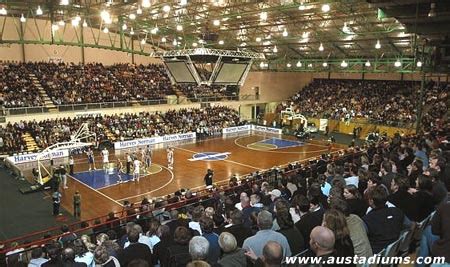
WWA Hardcore Championship - Devon Storm defeated Danny Dominion in a tables match to win the title on October 25, 2001 in Wollongong, Australia.
WWA Hardcore Championship - Crowbar defeated Danny Dominion in a tables match to win the title on October 25, 2001 in Wollongong, Australia.