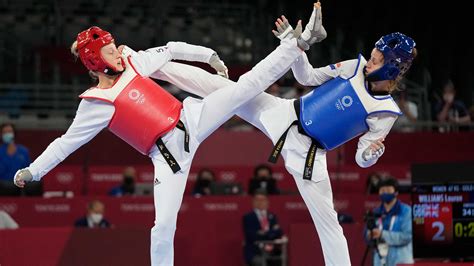
Taekwondo, a martial art renowned worldwide for its dynamic kicks and disciplined mental training, boasts a rich history deeply rooted in Korean culture. To truly appreciate the origins of Taekwondo, we must study Korea’s tumultuous history. Korean martial arts, influenced by neighboring countries and internal strife, have evolved over centuries.
Taekwondo is a Korean martial art that’s well known among the general population worldwide. Although Korea has had its own native martial arts for thousands of years ̶ Taekwondo, as we know it today, originated in the 1950s. It is a Korean art of self-defense. Contrary to the teachings of many master instructors, practitioners and predecessors, Taekwon-do did not originate thousands of years ago in ancient Korea.
Rather, Taekwon-do is a collection of similar unarmed martial arts techniques and foundations created by a number of Korean Grandmasters, including General Choi Hong Hi, when they returned to Korea from Japan following World War II. While in Japan, these Grandmasters learned Karate-Do (meaning way of China Hand or way of Empty Hand) and the techniques they learned formed the basis for a new martial art.
On April 11, 1955, General Choi, then a general in the South Korean army, began to unify and systemize these related martial arts disciplines by giving Taekwon-do its name and its beginnings. In 1961, General Choi became the first President of the Korea Tae Kwon Do Association, and until his death in 2002, he worked tirelessly and selflessly in the promotion of Taekwon-do and in the scientific advancement of Taekwon-do techniques.
Below you can find a more detailed list of the highlights of the development of martial arts on the Korean peninsula from ancient times until the present. As you will see, Taekwon-do is not a martial art that was developed by one single person, nor can it be traced back to any one individual. Instead, Taekwon-do is a discipline that has scientifically developed into a system of various theories, terminology, techniques, methods, rules and spiritual foundations.
Read also: Is the Century Taekwondo Uniform Worth It?
As a result, the discipline, or the Way, can be constantly improved upon by its senior practitioners and instructors. This flexibility allows teachers to teach the fundamentals of Taekwon-do to new generations, and the next generation of teachers can in turn teach the Way of Taekwon-do to following generations, in each case adapting Taekwon-do to the changing times and students, while remaining true to the founding tenets. I consider Taekwon-do to be a living art of self-defense that will continue to evolve for years to come.
It is an unfortunate reality that martial arts are often attributed to a single person or claimed by a particular nation. This usually results from the selfishness of individuals or the nationalism of governments, with something to gain by claiming that they practice the original or pure form of a particular martial art. In particular, dictatorships are prone to these types of claims.
However, teachers of Taekwon-do and other martial arts need to do their part to correct these misnomers by teaching their students the history of their particular style of martial arts. It is important that students be taught the truth about the fundamentals of the martial arts that they study, in order to get the most out of their training. It helps no one if instructors try to make martial arts the product of one nation or try to imbue martial arts with mythological backgrounds and lineages of thousands of years.
The following highlights the history of martial arts on the Korean Peninsula:
- 751 A.D.: At Sok Kul Temple, a statute of Kumgang Yuksa, a famous warrior, was erected in a martial arts fighting stance in a small Buddhist cave during the reign of King Hye-Gong (742-762).
- 935 to 1392: During the Koryo Dynasty, the fighting art Taek Kyon was founded.
- 1147 to 1170: Soo Bak Ki is believed to have peaked in popularity. This was during the reign of King Uljong. Some historians believe that it was during this period that nei-chia or nae-gong (internal kung-fu) and wai-chia or wae-gong (external kung-fu) was introduced in Korea. This time period corresponds to China's Sung and Ming Dynasties.
- 1392 to 1907: Yi Dynasty. Some historians of Karate believe that envoys from Okinawa learned Soo Bak Ki from mainland China and introduced it to Okinawa. A book on Soo Bak Ki was published during the Yi Dynasty to act as a training aid for the military.
- 1921 to 1945: Karate (also known as Do-Te or Okinawa-Te). During the years of Japanese occupation in Korea, the practice of fighting arts was banned.
- 1936: The concept of "Do" was introduced and "Karate" became "Karate-Do."
- 1945: Korea is liberated from the Japanese. Quite a few Koreans (e.g. Choi Hong Hi, Ro Byong Jik, Lee Won Kook and more), who practiced Karate in Japan, brought their martial arts training back to Korea after World War II. In 1945, the first organization to teach martial arts in Korea, Cho Sun (Korean) Yeon Moo Kwan, which was to influence Taekwon-do, was formed. Judo, Karate-Do, Gom-Do (swordsmanship), Kwon Bop (Chuan-Fa in Chinese and Kenpo in Japanese) were taught.
- 1945 to 1955: Taekwon-do Kwans (associations) were formed: Chung Do Kwan, Ji Do Kwan, Moo Duk Kwan, Oh Do Kwan, Chang Moo Kwan, Kang Duk Won and Song Moo Kwan. The name Taekwon-do was created on April 11, 1955. For ten years, however, Taekwon-do was also called Gong Soo Do (meaning empty hand), Tang Soo Doo (meaning China hand) and Soo Bak Do (meaning fighting hand).
- 1961: The Korea Tae Kwon Do Association was founded, recognizing the nine Kwans. It then changed it name on September 16, 1961 to the Korea Tae Soo Do Association and then changed back to the Korea Tae Kwon Do Association on August 5, 1965.
- 1962: On June 20, the Korea Athletic Union recognized Taekwon-do as one of its national competitions.
- 1964: On September 3, Taekwon-do was officially recognized by the Korean Athletic Union as a national event with seven weight categories.
- 1966: The International Taekwondo Federation was founded.
- 1971: The International Taekwondo Federation reached 67 countries.
- 1972: The Kukkiwon was founded.
- 1973: On May 28, the World Taekwondo Federation was founded. The First World Taekwondo Championship at the Kukkiwon was held. By then, Taekwon-do was being practiced in 108 countries and 200 instructors were teaching in schools around the world.
- 1980: The International Taekwondo Federation introduces Taekwon-do to Poland, the former Soviet Union and North Korea.
- 1994: Taekwon-do becomes an official Olympic event.
- 2004: Taekwon-Do International is founded.
The growth of Taekwon-do around the world from 1955 until now has been astronomical. As a result, in 1994 Taekwon-do was recognized by the International Olympic Committee as an official Olympic event and in 2000 it debuted as a medal sport at the Sydney Olympics. The true Grandmasters of Taekwon-do around the world deserve wide recognition for their untiring efforts in the promotion of Taekwon-do, and credit for the tremendous success and acceptance Taekwon-do has received.
Read also: The Meaning Behind Taekwondo Belts
Taekwondo is a Korean martial art that focuses on striking techniques, including kicks, punches, and blocks. It’s well known for its emphasis on high, fast kicks and dynamic movements. It includes various forms (patterns of movements), sparring, and self-defense techniques.
Additionally, Taekwondo places great importance on discipline, respect, and the development of mental strength alongside physical skills. What is now called Taekwondo largely originated between the 1940s-1960s. In fact, most of the founders of the original 5 kwans trained in Japanese karate (predominantly Shotokan). Some founders were exposed to, or also trained in, Chinese kung fu via personal travels or military service.
The only “ancient” influences on the development of Taekwondo come from very old, indigenous Korean martial arts, such as Taekkyeon , an indigenous combat sport, and Kwon Bup (alternately Romanized as Gwonbeop), the empty-hand fighting techniques found in the Muyedobotongji, a 4-volume, Chinese-influenced, field manual of 24 specific military skills.
Taekwondo kwans refer to the original schools or styles, which would later be called “Taekwondo”, that were developed after World War II in South Korea. Each kwan had its own unique approach to training and techniques. The kwans played a significant role in the development and standardization of modern taekwondo.
There were 3 phases of Taekwondo kwans: the “original” kwans, the “nine kwans”, and a third phase of splintering that added 3 more styles of Taekwondo. The kwans laid the foundation for what would eventually become modern taekwondo.
Read also: Excellence in Taekwondo
The Original Kwans
- Chung Do Kwan: Founded by Lee Won Kuk in 1944.
- Moo Duk Kwan: Founded by Hwang Kee in 1945.
- Yun Moo Kwan: Founded by Yoon Byung-in in 1946.
- Chang Moo Kwan: Founded by Ro Byung Jick in 1946.
- Ji Do Kwan: Founded by Chun Sang Sup in 1946.
The phrase “9 Kwans” refers to the original 5 schools PLUS 4 major schools that opened after the conclusion of the Korean War.
- Oh Do Kwan: Founded in 1955 by Choi Hong Hi, who also became honorary head of the Chung Do Kwan.
The unification of these Kwons was driven by a desire to create a distinctly Korean martial art, reflecting national pride and cultural identity. In the early 1950s, efforts began to standardize the various styles. In 1955, a committee of representatives from the various Kwons met to discuss unification. This led to the adoption of the name “Taekwondo,” coined by General Choi Hong Hi.
The ITF was founded in 1966 by General Choi Hong Hi, often credited as the ‘father of Taekwondo.’ General Choi aimed to promote Taekwondo as a means of training both the body and mind, focusing on moral development and self-discipline. He intended to spread Taekwondo internationally as a traditional Korean martial art. ITF Taekwondo is characterized by its emphasis on sine wave movement, a technique involving a rhythmic up and down motion intended to generate power.
The WTF, now known as WT, was established in 1973, following the successful demonstration of Taekwondo at the 1971 Kukkiwon, the World Taekwondo Headquarters in Seoul, South Korea. The WTF was formed to standardize Taekwondo practices and facilitate the sport’s inclusion in the Olympics. It focuses on promoting Taekwondo as a modern sport and international discipline. WT Taekwondo is known for its dynamic, athletic sparring style, with an emphasis on fast and high kicks. The World Taekwondo Federation (WTF) changed its name to World Taekwondo (WT) in 2017.
This change was primarily motivated by the negative connotations associated with the acronym “WTF” in the English language, particularly in the context of social media and digital communication. The split between the ITF and WTF is deeply rooted in the political climate of the time. General Choi, associated with North Korea, found his views increasingly at odds with South Korea’s government.
A critical difference in their histories is the WTF’s successful bid to include Taekwondo as a demonstration sport in the 1988 Seoul Olympics, and later as an official Olympic sport in 2000. The ITF, while internationally recognized, did not achieve the same level of Olympic involvement. The ITF’s reach was initially more international, spreading through Choi’s global tours.
From its inception, Taekwondo was not just a martial art but also a way to build character, instill discipline, and promote peace. Today, it is practiced by millions worldwide and is a recognized Olympic sport. The history of Taekwondo is a testament to the resilience and cultural pride of the Korean people. It stands as a unique martial art that has not only preserved traditional techniques but also embraced innovation and unification.
As Taekwondo’s popularity increased for training in the Olympics, it’s important to mention the difference in training of sport vs self defense. Schools training for Olympic sparring have different needs and requirements than when training for self defense. Currently, Olympic sparring has changed the dynamics of the art creating importance in front leg kicking and more flicks rather than powerful strikes for scoring points.
This can be dangerous when applying these techniques for self defense where an adversary can easily overcome weak strikes. When training for the Olympics, there are rules to consider in order to prevent injury to athletes. While training for self defense, we are studying Taekwondo from the aspects of Martial Arts, the art of war, which has fewer rules and stresses the importance of protecting and controlling one self to stay alive and dissolve conflicts. These ideals in training can often be conflicting and it is important to train both if practicing for the Olympics.
At Fera Academy, we stress the importance of self defense in training where all our moves have a foundation in the defense, movement, and striking application. This refers to the old school traditions of utilizing powerful and fast strikes that deliver more force rather than compromising safety for a soft flicker delivery for points.
While training, it is important to keep in mind that if you are training sparring, you still practice self defense applications, especially strikes to the head. This can ensure your safety while developing skills that can be taken outside the dojang. Like in many other arts, Brazilian Jiu Jitsu (BJJ) for example, transition to sport or competition practice where points are scored. This changes the nature of training prioritizing points and often compromising self defense and utility of a technique.
Keeping a self defense mentality truly helps keep the martial arts roots deeply founded and allow the practitioner to maintain safety above all else. Train to stay alive and not score points and you’ll always find the right path in your training.
Taekwondo is a traditional Korean martial art known for its powerful kicks, fast-paced movements, and strong emphasis on self-discipline and mental discipline. It has evolved into a global sport with millions of practitioners worldwide, making it one of the most popular martial arts today.
Taekwondo has its roots in ancient Korean martial arts, particularly Tae Kyon (태견), which emphasized dynamic foot techniques. It was also influenced by Chinese martial arts and, later, Japanese martial arts during the Japanese occupation of Korea. After World War II, Korean martial artists, including General Choi Hong Hi, played a key role in formalizing Taekwondo as a structured discipline. In 1955, Taekwondo was officially named, and the Korea Taekwondo Association (KTA) was established to standardize training methods.
In the following decades, two major organizations emerged:
- International Taekwon-Do Federation (ITF), founded by General Choi in 1966, which focuses on traditional techniques and self-defense.
- World Taekwondo Federation (WTF), now known as World Taekwondo, formed in 1973, which emphasizes competition and Olympic-style Taekwondo.
Taekwondo gained worldwide recognition and became an official Olympic sport at the 2000 Sydney Games, further solidifying its status as an international sport.
The Philosophy and Principles of Taekwondo
Taekwondo is not just a fighting art; it is a way of life built on strong moral principles. The Tenets of Taekwondo guide practitioners in their training and daily lives:
- Courtesy (Ye Ui (예의)) - Treating others with respect.
- Integrity (Yom Chi (염치)) - Doing what is right, even when no one is watching.
- Perseverance (In Nae (인내)) - Overcoming challenges and setbacks.
- Self-Control (Guk Gi (극기)) - Maintaining discipline in all aspects of life.
- Indomitable Spirit (Baekjul Boolgool (백절불굴)) - Never giving up, no matter the odds.
This philosophy of Taekwondo aligns with its ultimate goal: creating a more peaceful world through martial arts training.
Taekwondo Basics: All Basic Kickings
Taekwondo Training: Techniques and Belt System
Taekwondo practitioners, known as Taekwondo athletes, progress through a ranking system represented by different colored belts.
- White belt - The beginning stage, representing innocence and the start of the journey.
- Black belt - The advanced level, symbolizing mastery of the art and mental discipline.
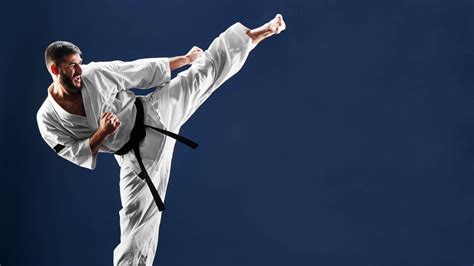
Taekwondo is known for its powerful kicks, which require flexibility, precision, and strength. Some of the most essential kicking techniques include:
- Roundhouse kick (Dollyo Chagi (돌려 차기)) - A fast and versatile kick used in sparring.
- Side kick (Yop Chagi (옆 차기)) - A powerful linear kick aimed at the opponent’s midsection.
- Back kick (Dwit Chagi (뒷 차기)) - A counterattack move delivering forceful impact.
- Hook kick (Huryeo Chagi (후려 차기)) - A deceptive kick used in both self-defense and competition.
- Front kick (Ap Chagi (앞 차기)) - A fundamental kick that sets up other offensive moves.
In addition to foot techniques, Taekwondo training includes hand techniques and hand strikes such as punches, blocks, and open-hand attacks.
Five very important moves:
- The straight punch is a powerful attack with the rear hand.
- This block is known as the most basic found in Taekwondo.
- The key to this movement is to utilize it as a surprise attack.
- This movement is initiated by the knee driving up first and angling towards the opponent.
- This movement is also known as a “high block” and used to defend against an opponent. One arm is hooked to the hip and bent at the elbow.
Taekwondo as a Sport and Self-Defense System
Taekwondo is a highly competitive combat sport, with major events governed by World Taekwondo. Key aspects of competitive Taekwondo include:
- The use of protective gear, such as a trunk protector to ensure safety.
- Scoring points based on accurate and powerful kicks to the head or torso.
- Strategic movement and counters to outscore an opponent.
Taekwondo was first introduced as a demonstration sport at the 1988 Seoul Olympics before becoming a full Olympic event in 2000.
Although Taekwondo is often associated with competition, it is also an effective self-defense system. Training includes:
- Defensive techniques against grabs and strikes.
- Counterattacks using kicking techniques and hand strikes.
- Adaptability for real-world situations.
Compared to kung fu and other physical fighting skills, Taekwondo emphasizes agility, speed, and well-timed counterattacks.
The Global Influence of Taekwondo
From its Korean origins, Taekwondo has grown into a global sport practiced in over 200 countries, including the United States. Organizations such as World Taekwondo and the International Olympic Committee (IOC) continue to promote its expansion. Many taekwondo schools worldwide teach both traditional Taekwondo and modern Taekwondo styles. Master instructors and Grandmasters play a crucial role in preserving the Korean art while adapting it to new generations.
Practicing Taekwondo improves both physical fitness and mental well-being:
- Cardiovascular health benefits from high-intensity training.
- Strength and agility through consistent practice of physical aspects like kicking and footwork.
- Self-discipline and self-confidence develop as students progress in their training.
Major Taekwondo Organizations:
| Organization | Focus | Key Features |
|---|---|---|
| International Taekwon-Do Federation (ITF) | Traditional Techniques and Self-Defense | Emphasis on sine wave movement, moral development, and self-discipline. |
| World Taekwondo (WT) | Competition and Olympic-Style Taekwondo | Dynamic, athletic sparring style, fast and high kicks, and inclusion in the Olympics. |