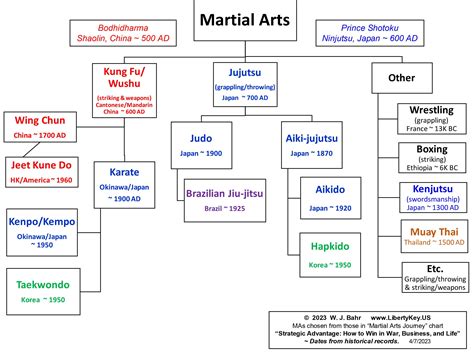
1. Muay Thai
Muay Thai originates from Thailand and emphasizes powerful strikes using fists, elbows, knees, and shins. Muay Thai is a dynamic fighting style characterized by the artful combination of fists, elbows, knees, shins, and devastating clench techniques. It is famous for a full contact sparring component, although most sparring training is in Thai boxing is light. Muay Thai originated in Thailand out of necessity for close-quarters combat and self-defense.
Muay Thai is traced back to Siamese warriors on the battlefield. The techniques and tactics of Muay Thai were honed for warfare. Over time, Thai Boxing has developed into a popular spectator sport and remains an integral part of Thai culture. Muay Thai training focuses on building conditioning, endurance, and precise technique execution. Muay Thai is practiced worldwide and is highly regarded for its effectiveness in competition and self-defense situations.
Thai fighters engage in rigorous training sessions that include pad work, heavy bag training, sparring, and conditioning drills. The training methods aim to develop strength, speed, agility, and mental resilience.
Muay Thai Technique - Basic Punches
2. Taekwondo
Taekwondo hails from Korea and is known for its high and fast kicks, discipline, respect, and mental strength. Taekwondo is a fast-paced martial arts style originating in Korea. Taekwondo draws inspiration from traditional Korean fighting styles such as Taekkyeon and Subak, which date back to 37 BC. Taekwondo emphasizes high and fast kicks, as well as precise hand techniques.
Modern Taekwondo began to take shape in the 1940s and 50s following the end of the Japanese occupation in Korea. The martial arts style of Taekwondo places great emphasis on self-discipline, respect, and mental fortitude. Taekwondo training encompasses various aspects, including self-defense techniques, forms or patterns, sparring, and board-breaking techniques. Practitioners engage in repetitive drills to refine techniques and enhance flexibility by combining intricate footwork, swift strikes, and blocks, making it an art form that blends beauty, athleticism, and practicality. Black belt Olympic taekwondo competition technically classifies as full contact sparring.
Read also: Individual Martial Arts Instruction
3. Tai Chi
An ancient Chinese martial art consisting of slow, graceful movements that promote relaxation, balance, and inner harmony. Tai Chi Chuan was established in China and is rooted in Taoist philosophy seeking to harmonize the body, mind, and spirit. The development of Tai Chi is attributed to Zhang Sanfeng, a Taoist monk, though the precise historical details are often debated. Tai Chi focuses on cultivating internal energy, promoting physical health, and achieving a sense of balance in the body and mind.
Techniques consist of a series of slow, fluid movements (known as sequences) performed in a continuous and connected manner. Training methods in Tai Chi involve practicing sequences in a slow and controlled manner, emphasizing mindfulness of body movements, calm breath, and mental focus. Practitioners also use partner work (tui shou) to develop sensitivity and responsiveness to an opponent’s actions.
4. Kickboxing
A hybrid form of martial arts combining pouches and kicks, emphasizing agility and rapid striking. Kickboxing is a full-contact fighting style that combines pouches and kicks, combining striking techniques from both the upper and lower body. Kickboxing originated in the 1960s blending the martial arts styles of boxing and karate. Kickboxing has gained global popularity as a competitive combat sport. Kickboxing focuses on developing striking skills, physical conditioning, and self-defense techniques.
Kickboxers utilize a variety of techniques, including punches, kicks, knee strikes, and depending on the fighting style, sometimes elbows. Pad work and heavy bag training are integral aspects of training. Practitioners and their coaches use mitts or Thai pads to train for accuracy, speed, and timing. Sparring is another critical aspect of kickboxing training that allows for a practical application in a controlled but realistic environment.
5. Karate
Karate comes from Okinawa, Japan, and focuses on powerful strikes, kicks, knee strikes, and open-hand techniques. Karate is a traditional Japanese fighting style that uses striking techniques using various body parts, including punches, kicks, knee strikes, and elbow strikes. The origins of Karate are traced back to the island of Okinawa during the Ryukyu Kingdom era (14th to 19th century). Karate was practiced during the Ryukyu Kingdom in secret as a means of self-defense against bandits and other threats.
Read also: The Jade Fortress Martial Arts System
Karate is practiced worldwide today with several different styles emphasizing different aspects, such as self-defense, sport, or traditional values. Karate is a martial arts type that pursues constant self-improvement through discipline, respect, and the cultivation of inner strength. The training methods aim to develop posture, balance, coordination, speed, power, and mental focus. Karate training includes practicing basic techniques (kihon), forms (kata), sparring (kumite), and self-defense techniques.
6. Kung Fu
Kung Fu comes from China and uses various martial arts styles, including strikes, kicks, acrobatics, and elaborate forms. Kung Fu refers to several martial arts types, including Shaolin Kung Fu, Wing Chun, Tai Chi, Baguazhang, and Xingyiquan, to name a few. The precise origins of Kung Fu are highly debated. Legends attribute its creation to an Indian monk named Damo, who brought the fighting style to the Chinese temple of Shaolin in the 5th or 6th century AD. Kung Fu has been influenced by various factors, including ancient Chinese philosophy, legends, military combat techniques, and the exchange of knowledge between regions.
Kung Fu encompasses not only physical techniques but also philosophical aspects of discipline, respect, self-cultivation, and the pursuit of balance and harmony. Kung Fu training aims to develop physical and mental skills through a combination of techniques, forms, partner drills, and conditioning exercises. Training methods include repetition and sparring drills that apply techniques to refine timing, distance management, and defense. Students of Kung Fu build a foundation through fluid stances, footwork, hand strikes, kicks, and weapons.
7. Aikido
Aikido was developed in Japan and uses redirection and harmonizing an opponent’s energy through joint locks, throws, and immobilization techniques. Aikido is a martial arts style that focuses on redirecting an opponent’s energy and neutralizing an attack. Aikido focuses on peace, unity, and personal growth. Aikido was developed in the 20th century in Japan, influenced by other fighting styles such as Daito-ryu Aiki-jujutsu.
Aikido places great emphasis on the concept of blending with an attacker’s energy, redirecting their force, and using it to neutralize the attack. Aikidoka incorporates a series of techniques, such as joint locks, throws, and pins, to subdue an attacker without causing excessive harm. The philosophical origins of Aikido make it as much about self-discovery as it is about fighting. Aikidoka take turns as uke (attacker) and nage (defender) during Aikido training, where students apply techniques they’ve learned. Training methods also include randori, which is a freestyle practice involving multiple attackers, kata (forms), and ukemi (falling and rolling).
Read also: Deep Dive into Court Martial Films
8. Judo
The Japanese sport of Judo is a grappling martial art focused on throws and ground-based techniques. Judo is a Japanese fighting style focused on throws, grappling techniques, and submission holds. Judo was founded in the late 19th century by Jigoro Kano, who incorporated elements of traditional jujutsu with other martial arts types to create a system for practical self-defense. Judo emphasizes maximum efficiency with minimal effort, utilizing an opponent’s energy and momentum to execute a series of throws, pins, and submissions.
Judo techniques include throws (nage-waza), grappling (katame-waza), sweeps and reversals, and counters and combinations. Training sessions include a combination of randori sessions, repetition of technique, practice of forms, and strength and conditioning drills. Training methods focus on a progression of skill development and applying techniques that foster mutual respect and sportsmanship.
9. Kendo
Kendo originates from Japan and utilizes bamboo swords and protective armor, emphasizing discipline and mental focus. Kendo is a swordsmanship martial art that uses bamboo swords called shinai. Kendo was officially recognized as a Japanese martial art type in the early 20th century, with roots in the ancient Japanese arts of kenjutsu. The practice of Kendo is deeply rooted in Japanese history, tradition, and Bushido (the way of the warrior).
Kendo focuses on strikes, thrusts, and defensive maneuvers with the shinai, simulating the use of a real sword. During training, footwork and body movement are emphasized for agility and stability. Kata (forms) practices refine technique and strategy while sparring (keiko) allows combatants to apply their skills in controlled bouts. Kendo aims to cultivate precise sword techniques, mental focus, physical conditioning, and the embodiment of Bushido principles.
10. Krav Maga
Krav Maga comes from Israel and is a practical self-defense system prioritizing real-world scenarios. Krav Maga is a powerful self-defense fighting style focused on practical techniques for real-world situations. Krav Maga was developed by Imi Lichtenfield, a Hungarian-Israeli martial artist, in the 1930s. It was initially designed to meet the self-defense needs of Jewish communities facing anti-Semitic violence during a time of political unrest. Krav Maga is focused on the neutralization of threats quickly and effectively through a combination of striking, grappling, and ground fighting.
Krav Maga incorporates various strikes such as punches, kicks, elbows, and knees targeted at an opponent’s vulnerable body parts. The training methods of Krav Maga include close-quarters combat in which clinching is used to control an opponent. Weapons defense against knives, sticks, and firearms is practiced during training in scenario-based simulations. Training methods equip individuals with practical self-defense skills, adaptability, and the ability to respond to threatening situations effectively.
11. Wing Chun
Wing Chun is a Chinese martial art known for its close-range combat and quick strikes. Wing Chun is classified as a Kung Fu type of martial art. Wing Chun is known for its close-range combat techniques and approach to self-defense. Wing Chun originates from southern China during the late Qing dynasty, and according to folklore, it was developed by a Buddhist nun named Ng Mui.
Mui developed Wing Chun for smaller individuals against larger and strong opponents. Wing Chun’s effectiveness lies in its focus on the economy of movement, simultaneous attack and defense, and utilizing an opponent’s energy against them. It emphasizes close-range combat, centerline theory, and rapid strikes. Key fighting styles of Wing Chun include rapid-fire straight punches, targeted attacks on an opponent’s vulnerable areas, and low kicks to disrupt the balance. Training methods focus on reflexes and the ability to read and respond to an opponent's movements.
12. Jeet Kune Do
Jeet Kune Do was developed by Bruce Lee to involve minimal movement and maximum efficiency. Jeet Kune Do is a combat sport founded by legendary martial artist Bruce Lee. Jeet Kune Do translates to “way of the intercepting fist” and was developed in the 1960s. Jeet Kune Do incorporates elements of Wing Chun, Western boxing, fencing, and philosophy.
Jeet Kune Do focuses on simplicity, directness, and the use of the most efficient technique for a given situation. Techniques include punches, kicks, elbows, knees, and trapping maneuvers while minimizing unnecessary movements. Training in Jeet Kune Do involves drills, sparring, and scenario-based exercises that cultivate adaptability, timing, and the ability to flow seamlessly between techniques and ranges. The goal is to develop a well-rounded martial art type to respond with simplicity and adaptability.
13. Hapkido
Hapkido comes from Korea and utilizes joint locks, throws, and striking to redirect an opponent’s energy. Hapkido is a Korean martial art that uses joint locks, throws, and strikes incorporating elements of Taekwondo, Judo, and Aikido. Hapkido is characterized by its versatility and full-scale approach to self-defense. Choi Yong-Sool is often cited as the founder of Hapkido in the mid-20th century.
Hapkido focuses on redirection of an opponent’s energy to use it against them. Hapkido encompasses a range of techniques, including joint locks, pressure points, throws, kicks, strikes, and weapon disarmament, especially when smaller fighters are matched against larger opponents. There are several variations to Hapkido training methods and techniques. Core principles of Hapkido include circular motion, fluidity, and the integration of a harmonious balance of mind and body. Most Hapkido schools have forms and stances, footwork and striking techniques, and drills and combinations structured to progress in skill systematically.
14. Capoeira
A Brazilian martial arts type combining elements of dance, acrobatics, and music. Capoeira is a unique martial arts and Brazilian cultural expression combining rhythm and musical traditions. Capoeira’s origins go back to the 16th century when enslaved Africans incorporated traditional combat and dance forms to disguise martial arts training from enslavers. Capoeira focuses on fluid, rhythmic movements, acrobatic moves, and music.
It incorporates strikes, kicks, sweeps, and takedowns, blending them smoothly with evasive maneuvers, spins, and flips. Capoeira training involves a combination of physical conditioning, enhanced skill, and musical practices. Capoeiristas work on partner drills, where they practice a sequence of attacks, defenses, and evasive moves while promoting camaraderie among the team.
15. Brazilian Jiu-Jitsu
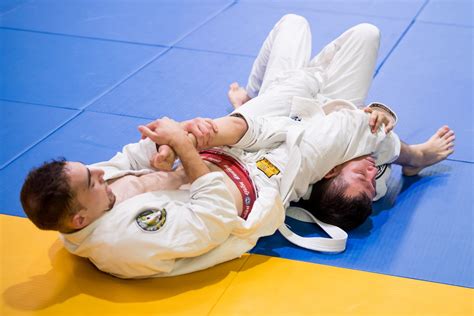
Brazilian Jiu-Jitsu focuses on ground-based grappling and submission holds. Brazilian Jiu-Jitsu (BJJ) is a fighting style that focuses on groundwork, grappling, and submission holds. BJJ was founded by Mitsuyo Maeda, a Japanese judoka who immigrated to Brazil.
16. Jiu-Jitsu
Jiu-Jitsu originates from Japan, emphasizing grappling techniques and submissions.
Here's a table summarizing the key aspects of each martial art:
| Martial Art | Origin | Primary Focus | Key Techniques |
|---|---|---|---|
| Muay Thai | Thailand | Striking | Fists, elbows, knees, shins |
| Taekwondo | Korea | Kicking | High and fast kicks, hand techniques |
| Tai Chi | China | Internal Energy | Slow, graceful movements |
| Kickboxing | Mixed | Striking | Punches, kicks, knee strikes |
| Karate | Okinawa, Japan | Striking | Punches, kicks, knee strikes, open-hand techniques |
| Kung Fu | China | Varied | Strikes, kicks, acrobatics, forms |
| Aikido | Japan | Redirecting Energy | Joint locks, throws, pins |
| Judo | Japan | Grappling | Throws, ground-based techniques |
| Kendo | Japan | Swordsmanship | Bamboo sword techniques |
| Krav Maga | Israel | Self-Defense | Striking, grappling, weapon defense |
| Wing Chun | China | Close-Range Combat | Quick strikes, centerline theory |
| Jeet Kune Do | Mixed | Adaptability | Varied, efficient techniques |
| Hapkido | Korea | Hybrid | Joint locks, throws, strikes |
| Capoeira | Brazil | Acrobatic Combat | Rhythmic movements, acrobatics |
| Brazilian Jiu-Jitsu | Brazil | Ground Fighting | Grappling, submission holds |
| Jiu-Jitsu | Japan | Grappling | Grappling techniques and submissions |