No combat sport on the planet demands as much from a competitor as Mixed Martial Arts (MMA). The modern fighter must adopt a Swiss Army Knife approach to counter the multitude of threats aimed their way. As such, the most crucial aspect of MMA is defense. Without the ability to escape dangerous situations, even the most talented offensive fighter is fair game. Whether it is strikes on the feet or submissions on the floor, hazards are aplenty.
All mixed martial arts fights begin on the feet. Therefore, it is crucial to understand essential MMA techniques aimed at avoiding damage from strikes.
Movement and Distance Management
One of the most tried and trusted ways of avoiding damage inside the cage is to know when it’s time to move. Great movement and distance management are crucial. They make a competitor a difficult puzzle to solve for the most common striking styles in MMA. To apply this art, one must master a couple of key components - lateral footwork and head movement.

Movement and distance management are among the most essential techniques in MMA to practice. They can only be improved through repetition - although you must adjust them to the type of fighter you meet inside of the cage. These techniques are best worked on in light sparring at the gym with a good, reliable training partner. Before sparring, watch videos of master movers and evaders like Anderson Silva and Israel Adesanya to observe the execution behind their movement.
Benefits of mastering movement and distance management:
Read also: Evolution of UFC Combat
- Limit Damage - Mastering head movement can help you avoid taking too many shots.
- Exhausting For The Opponent - Tricky movers can drain an opponent’s gas tank by forcing them to chase.
- Unravel Gameplans - If done right, becoming an elusive target can cause the opponent to become frustrated.
Blocking and Checking
Although not considered as flashy, blocking and checking are essential MMA techniques to learn. This is a sport where you must anticipate a wide array of strikes - punches, kicks, knees, and elbows are all permitted. Blocks and checks form the second line of defense in MMA. It may appear that they are only useful for limiting damage from direct strikes - that is not exactly true. In MMA, strikes can be used to open the door for takedowns and submission attempts, too, which makes it vital to know which ones to use.
Types of blocks and checks:
- High And Low Blocks - The easiest way to discern between high and low blocks is to think about the purpose each serves.
- Inside Block - By pushing your elbow outward, you can protect your body from kicks and strikes.
- Checks - These are essential to dealing with a proficient leg kicker. Dustin Poirier dismantled Conor McGregor at UFC 257 when he identified McGregor’s inability to check his low kicks.
- Catches - While not exactly a block, a catch is a well-executed anticipation of a strike.
- Parries - One of the most important defensive techniques in MMA, the parry is a tremendous tool for fighters to take into the cage. Parries require minimal movement but exceptional timing.
The techniques above can be perfected in training. Partners playing both the defensive and offensive roles can benefit from practicing these moves, as they can identify shortcomings from each side.
The Muay Thai Clinch
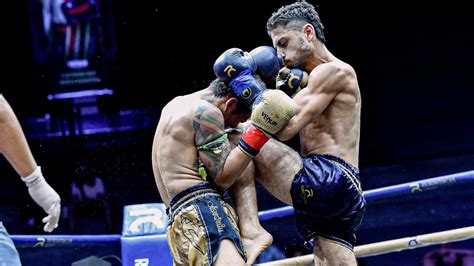
One of the best defensive fighters of all time is ONE Championship’s Demetrious Johnson. One of the most valuable MMA defense techniques is perfecting the Muay Thai clinch. The “Art Of Eight Limbs” is the world’s foremost striking discipline and fits tightly into the sport. Despite the presence of wrestling and BJJ in MMA, most aspects of the clinch still apply. Much of this has to do with the fact that it takes time to hone the craft.
From a defensive position, good clinch work can limit any punishment taken and open doors to advantages.
Read also: Mastering BJJ Submissions
Benefits of using the Muay Thai Clinch:
- Multiple Access - There is no single clinch, which makes a master so dangerous.
- Fight Control - The clinch presents a means of controlling your opponent and applying serious damage on the inside.
- Recovery - Great defensive clinch work in MMA can allow a masterful clincher some breathing time.
- Finishing - One of the best ways to avoid damage, or be knocked out, is to get to your opponent first. Knees and elbows are some of the most devastating tools in a fighter’s arsenal.
Sprawling
Some strike-oriented beginners may be asking, what is sprawling in MMA? The sprawl is one of the most essential MMA defense techniques you will learn early on. Mainly because of its effectiveness from the basic to elite levels. Sprawling is the first physical aspect of stuffing a takedown and can be used to prevent a wrestler from gaining a serious advantage on the ground.

There are three basic steps to sprawling, which should be practiced for maximum effect:
- Anticipate The Takedown - Read your opponent’s movement to anticipate an incoming takedown.
- Drive Your Hips - Press your hips into your opponent while keeping your balance.
It is crucial to ensure you time the drive of your hips while maintaining good form with the posture of your head. These will ensure that the sprawl is effective in applying the right amount of pressure and weight on the opponent when they come in. When the timing and posture are not right, the ability to use the sprawl as a robust defense mechanism may be compromised.
Although the days of sprawl and brawl in MMA are long gone, the sprawl is an essential technique to learn for budding mixed martial artists. Legendary fighters including Georges St-Pierre, Jose Aldo, and Robbie Lawler are great examples of great sprawlers.
Read also: Middleweight Boxing Legends
Shrimping
The last of our essential techniques for MMA defense is shrimping. Also known as the hip escape, it is a valuable asset to any practitioner looking to ensure their safety in grappling exchanges. Shrimping is one of the most important grappling techniques in MMA that strikers moving over to the sport should learn. But competitors of all backgrounds may never stop trying to perfect it.

One of the most effective skills in MMA is shrimping, and it should be an essential part of your ongoing training. Shrimping makes life more difficult for any opponent, especially when you use it to escape the mount and side control. Technically, it’s a skill that seems easy on paper but relies upon effort to master. It is worth noting that shrimping is also good for transitions, such as regaining your guard. It can also be instrumental in an attacking sense, where submissions are concerned.
Benefits of shrimping:
- Escaping From The Bottom - Dominant positions held by the opponent can be turned over with shrimping.
- Defending Submission Attempts - With additional room to maneuver, you can defend against oncoming submission attempts.
- Recovering Guard - Your defense positioning is crucial to recovering your guard, so you need your shoulders and hips to reclaim your guard.
These MMA defense techniques can be practiced with your training partners at the gym. Factors like timing and anticipation are necessary when perfecting your defensive skillset. You can also watch instructional videos to get a better sense of how to better execute movement and distance management. There are advanced MMA footwork and drills that can also help. One of the essential MMA defense techniques on this list involved the Muay Thai clinch. Along with the sprawl and shrimping, these are tools that must be sharpened at the gym.
Varying Your Guard
Varying your guard is a powerful way to improve your defense for MMA, as well as being easy to implement. The first guard to use is the traditional high guard, found in all combat sports. In Boxing, Kickboxing, and Muay Thai, you can raise your gloves to the area between your cheek and eyebrows and use your gloves as a shield to block most shots to the head; however, four-ounce MMA gloves are much smaller, making it necessary to raise your high guard to the area between your eyebrows and forehead.
The next guard you can utilize is the cross guard. Although this guard is more commonly used by old-school boxers, it has many advantages for the octagon and self-defense. The cross guard has your lead arm draped across your body, much like the Philly shell, and your rear arm across your head with your rear hand on your lead shoulder. This places your rear elbow directly in front of your face, allowing you to block powerful hooks or straight punches to both your body and head. It can also damage an opponent’s hands if they strike your elbow while attempting to land a punch to your chin. Yoel Romero is one MMA fighter who frequently used the cross-guard with much success.
Another useful guard is the long guard, commonly found in Muay Thai. This guard keeps your lead hand extended as a measuring stick to block the lanes of attack from an opponent. One fight that showcases this is Sean O Malley vs Peter Yan. Both fighters use the long guard to measure their reach and set up attacks.
The last type of guard we will be discussing is the Philly shell for MMA. Made famous by Floyd “Money” Mayweather in boxing, the Philly shell can be advantageous to use in an MMA context when used sparingly. The Philly shell has your lead arm draped across your body to guard your midsection, while your rear arm is up in a high guard position. In an MMA context, the lowered lead arm can give you a powerful tool to defend takedowns and win the grappling exchange. If an opponent shoots for a takedown or attempts to clinch, the lead arm of the Philly shell stance can be used to capture an underhook, which is crucial for controlling and preventing a takedown.
Footwork
Although varying your guard is important, many fighters and coaches consider footwork your first and most important line of defense. Footwork determines which fighter leads the dance and what range the fight takes place. To begin, you should feel comfortable moving in all directions without crossing your feet. Practice both stepping and pushing movements. For example, to move forward, you can either step with your lead foot, then move your rear foot forward into your stance, or push off of your rear foot and explode forward.
Although once considered technically incorrect, switching stances is an advanced footwork skill that many high-level fighters have proficiency in. There are many different ways to switch, but the most basic is simply to step forward or backward into the opposite stance. Doing so can create new angles, enter or exit an exchange, and even set up a knockout strike. To avoid being hit or taken down while switching stance, it is advised to extend a long guard with the lead arm of the new stance that you are switching into. For example, if you are switching from orthodox to southpaw, extending your right arm while stepping your right leg forward into southpaw can prevent your opponent from capitalizing on the split second that you are out of stance. Combine this with basic straight punches and footwork and you will have a very elusive style.
Fundamental Footwork for MMA with Cory Sandhagen
One drill to help develop mobility and fluid footwork while moving around the ring is what Barry Robinson calls the da da da drill. It involves you doing a lateral gallop, in your stance, followed by a small pivot, less than a quarter turn. Another drill to work on lateral movement and defensive responsibility is called the Locche Drill. It starts with a fighter stepping laterally towards their lead side, then performing a down block after stepping laterally again. This is to emulate stopping an opponent’s single-leg takedown attempt. You then step backwards and throw a cross followed by a lead hook.
Feinting
Feinting is another advanced concept that can be used offensively and defensively. In essence, you are faking someone out by making a motion that convinces them a certain strike is being thrown. There are many feints but the two most common in MMA are the jab feint and the rear hip feint. The jab feint is a quick, twitchy movement that mimics the beginning of a jab. Using this can give you a read on your opponent’s reaction; knowing if they parry, block, or move their head will let you pick your follow-up strike to catch them off guard. For example, if your opponent reacts to your jab feint by parrying, you can feint the jab, then throw a lead hook to catch them when their guard is down. The rear hip feint is used to mimic the beginning of a rear low kick. This can be used to draw out a check and kick the standing leg, or to explode into a long range jab cross combination.
Head Movement
Head movement provides an extra layer of defense to avoid knockout blows, while also setting up counter strikes. Basic head movements include ducking, slipping, and rolling to avoid punches and even kicks. A good rule of thumb for head movement is to either move your head after a combination or while throwing a hard punch or kick.
Striking Skills
Improving your striking skill doesn’t just increase your offensive capabilities, it also keeps you safer defensively. Being able to land a hard shot can discourage an opponent or attacker from closing the gap to infight with you. Having the skill and footwork to dart in and out landing strikes, while not being hit drains your opponent and keeps you safe. Although your striking style will depend on your personal preference and body type, it is important to know how to fight from the outside and inside. Fighting from the outside lets you pick at your opponent while you stay safe or find the chance to escape, in a self-defense situation. Infighting lets you stay safe in encounters that you cannot escape and either knock out your opponent or get them to disengage.
Try these methods and drills to improve your MMA defense.