In Brazilian Jiu-Jitsu (BJJ), positional dominance is crucial, regardless of how much of a submission hunter you may be. Learning how to effectively control and attack from the mount position is fundamental to improving your overall BJJ game.
The mount is one of the most dominant positions in BJJ. The mount position is when you are seated on your opponent’s chest or torso, with your knees on the mat, on either side of their body, feet facing back. Just as with everything in jiu-jitsu, there are different variations of the mount.
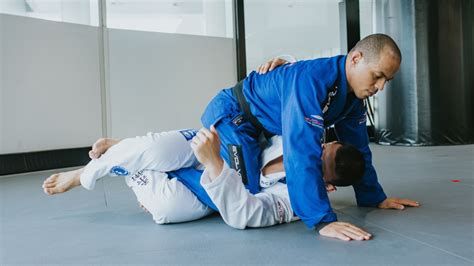
Variations of the Mount
- Standard (or “Low”) Mount: You’re sitting directly on your opponent’s stomach, with your knees close to your opponent’s hips.
- High Mount: You’re sitting a little higher on the chest, with your knees close to your opponent’s armpits, and maybe your feet cupped around his/her hips.
- S-Mount: You’re sitting high on your opponent’s chest, with one knee close to your opponent’s head, and the other leg tucked with the foot facing his/her head (creating an S-shape with your lower body).
To master mount - or any position, really - you need to focus on maintaining control while limiting your opponent's ability to escape or counterattack.
Key Principles for Maintaining Mount
- Base and Balance: The key to a great base in mount is to stay low and wide. In the mount, you’ll want wide knees, with your butt and upper body low.
- Pressure: You’ll want to apply consistent downward pressure through your hips, forcing your opponent to carry your weight. This limits their ability to move effectively or efficiently, thereby draining their energy and ability to attack if they do escape.
- Hooks and Posts: Use your feet and hands to maintain balance and prevent escapes. Your feet will either be cupped over their hips, or hooked tightly under their legs.
An important aspect of mastering any position is being able to transition, both into and out of the position, as well fluidly between variations of the position. The mount is no different.
Transitions
- Into Mount: The number one danger in transitioning into mount is keeping your leg from being caught up in a half guard on your way into the position.
- Out of Mount: Sometimes you’ll find your best course of action is to transition out of mount, either sliding off into side control or transitioning to the back. As you move, your opponent may take advantage of your shift of base and either sweep you or put you into guard.
- Between Mount Positions: Shifting between the different mounts will be easier than into and out of mount, but the dangers remain the same. As you move, you put yourself at risk of your opponent taking advantage of that movement.
The mount position provides a variety of submission opportunities. As with anything in jiu-jitsu, being able to “master” a technique takes a lot of time on the mat. Just “knowing” what you can and cannot do is no replacement for drilling and attempting to execute the positions or technique against opponents of all levels. And always remember… BJJ is a journey.
Read also: Mastering BJJ Submissions
Arguably when it comes to talking about submissions from the mount, the most important thing is timing. Whenever you are looking for a submission from the mount, you will have to sacrifice some of your structure in order to obtain it.
There are many attacks from the mount position but in this article we are going to discuss the three fundamental submissions, the Arm Bar, Triangle and Americana.
Fundamental Submissions from Mount
1. Arm Bar
The arm bar is an incredibly high percentage submission as seen displayed at the highest level of BJJ competition and MMA by the likes of BJJ world champion Ffion Davies (Vs Beatriz Mesquita at ADCC 2019) and retired womens MMA and UFC legend, Ronda Rousey, who has the most arm bar finishes in UFC history.
The armbar should be one of your go-to’s when sparring newbies. The reason for this is that, once you mount them, they will usually flail their arms towards you and try to push you away, or panic, and this gives you the perfect entry to scoot your hips a bit to the side while grabbing one of your opponent’s helpless arms, putting your leg over your opponent’s throat, and then finishing the submission.
Therefore if you want to spice up your armbar a bit, try out the S-Mount armbar. The S-mount is one of the hardest mounts to escape from and offers plenty of attacks. When doing S-Mount, the formation of your legs should take on the shape of an ‘S’.
Read also: IBJJF Legal Submission Guide
Roger Gracie teaches armbar from the mount
2. Triangle Choke
The triangle choke, also known as Sankaku-Jime, is a very popular technique originally found in Judo. This submission is one of the most common submissions (like the arm bar) that is used in competitive BJJ as well as MMA, and from the triangle, you can also get the armbar.
The ideal situational set up for a triangle from mount (preferably high mount) is when your opponent tries to sneak and arm under your leg in an effort to escape. This is because they are now one arm in and one arm out - the perfect set up for a triangle. However when that doesn’t happen, you need to make it happen.
Whilst in the mount, slide your leg under your opponent’s neck, isolating an arm.The risk here is losing your position due to imbalance and your opponent exploding and destabilizing you.
3. Americana
If you come from a judo background you might know this submission as Ude Garami, the Americana is also known as a figure four arm lock in catch wrestling. The Americana is a very powerful shoulder lock that is considered to be one of the easiest submissions to do from both mount and side control.
The set up for the americana is fairly easy and it is also fairly safe in terms of keeping your position, and control of your opponent. It gives you the luxury of going for the attempt, and if it doesn’t work you can go right back to the same position you were just at.
Read also: Complete Tysons-D.C. Travel
All you need is to pin one wrist of your opponent to the mat adjacent to their head, the arm should be at a 90-degree angle. You need to control the wrist with your opposite side arm and thread the other arm under the opponent’s upper arm creating a figure four grip which is essential to finishing the submission.
The mount is the king of positions in BJJ. It is one of the two positions that earn you the most points you can get in a competitive BJJ match (4 points). It is also one of the best positions to find yourself, regardless if you’re in a BJJ roll, a match, an MMA fight, or a self-defense scenario. Apart from great control, the mount offers numerous finishing options, perhaps even more than any other position in Jiu Jitsu.
The “Holy Trinity” Mount Position
Let’s start with the essentials of controlling the mount. If you already feel you can keep people in the mount, feel free to go directly into the submissions section to improve your finishing arsenal.
I like to teach people about the mount position by presenting control points as a trinity. Hence, the “Holy” mount designation. The mount is one of the checkpoints that I teach people to look for since they start training, and I have them keep looking for it until they decide to stop training. I believe it is one of three checkpoints, along with back control and the closed guard, that are relevant at every belt level and are the optimal spots to be in during grappling exchanges.
In terms of mount, the three control points of the “Holy Trinity” mount system are as follows:
- First, you have to get your hips off the opponent’s power line, which is represented by their hips. Simply put, sit above the opponent’s belt rather than on it, or worse, below it. This will ensure that you won’t go flying even if they buck up with all their power.
- Second, you need to make somebody weak, so you can control them more easily and set up attacks at will. The easiest way to achieve this is to get both the opponent’s elbows above to touch their ears. Even if you get this on one side, you’ll weaken them significantly, but having both arms high above their head means they can’t do anything with them. Throw in a bend of the head in any direction, and you also achieve a very easy posture break that further weakens the person on the bottom.
- The final piece of the puzzle is weight. You need to relax completely, to be as heavy as humanly possible when on top of somebody. Think about how lifting a 150 lbs barbell feels vs. lifting a 150 lbs water balloon. Exactly. Concentrated weight is easier to lift than free-shifting weight. When you relax on top of someone, you achieve the latter.
So, the holy trinity of mount control is to get off the power line, weaken the opponent, and make yourself heavy.
Oh, and one last thing. If you are thinking, you can control and submit people from the mount while staying upright. Stay down low over the opponent, and do not try to act as if you’re riding a bull at a rodeo. That rarely goes well for the rider.
Control vs. Position vs. Submission in BJJ
One thing I must address before I go into a detailed explanation of the best BJJ submissions from mount is the conundrum of position, control, and submissions. The mount is a position in BJJ defined by the top person being mounted over the bottom person’s torso, with either both feet or both knees touching the ground. If the top person manifesto retains this position for 3 seconds, they will get the points.
Controlling someone means preventing them from moving in a specific direction, while making sure you can force them to move in another specific direction. In terms of the mount, obtaining the “holy trinity” principles will give you all the control that you need. So having a position does not equate to having control of that position.
It is an important distinction because submissions, which come in the form of joint locks or strangles, require a modicum of specific control during the setup phases rather than a specific position. In fact, holding on to a submission, like an armbar, is a control position in itself. If everything is set up correctly, you can prevent the other person from getting away while simultaneously ensuring that you can move the elbow enough to finish the submission. In other words, you are in control.
If you want to set up BJJ submissions from the mount that are going to work, you’ll need to understand that being in the mount is not the same as controlling the mount. Also, remember that the moment you move away from the holy trinity control and into a configuration that leads to submission, your control points shift. That reiterates that control is a condition for your submissions, instead of the common “position before submission” dogma.
BJJ Submissions From Mount
Now that it is clear how you can control somebody from the mount and what positional and submission control are, we can talk about breaking limbs and putting people to sleep. In that regard, I will focus on high-percentage BJJ submissions from mount, covering both Gi and No-Gi options. I like to organize submissions from the mount, in terms of control, of course, in direct, indirect, and transitional submissions. The first is submissions you get without leaving the mount or compromising the “holy trinity” control. Indirect submissions require you to change position, still remaining in the mount, but not in the position you began the attack from. Finally, transitional submissions have you completely leave the mount for another position, setting up a tight submission hold as you are doing so.
Direct Submissions
X-Choke
The X choke, a.k.a. Cross choke, is one of the best submission holds in BJJ. It can be done from the guard as well, but after Roger Gracie submitted all of his opponents in the 205 Worlds using nothing but the X-choke from the mount, I think we can all agree that the mount is the best spot to look for it.
The choke is pretty straightforward - you need to sneak one arm inside the opponent’s collar, four fingers on the inside. Then, you need to either sneak the other arm in the opposite side collar, also four fingers on the inside, or if you can’t grab the collar behind the opponent’s neck, with a thumb in grip.
In either case, the idea is to use the scissoring configuration of your forearms to put pressure on both carotid arteries. It will work best, though, by doing less rather than more. What I mean by it is that once you have your grips in the position, you need to focus on removing any, and I mean any slack, from between your forearms and the neck of the opponent. All it takes from there is either patience (they’ll tap in around 20-30 seconds if you just do nothing) or simply bending forward to touch your head to the mats above theirs. No squeeze whatsoever is required.
Americana
The Americana is one of the first BJJ submissions from the mount that people learn. Unfortunately, they learn a less-than-optimal version. Lucky for you, you read Jiu Jitsu Legacy, so you’ll know how to do the best possible Americana submission, courtesy of Braulio Estima.
When doing the Americana, most people grab the wrist of the opponent’s arm and then use their other arm to grab a figure four grip on their own wrist. Instead of having this second arm go under the opponent’s upper arm, grab your wrist, aim to put your forearm under the opponent’s shoulder instead, and look to grab your biceps (like in a Darce choke). Raising the shoulder off the ground will put immense pressure on the joint long before you go into the breaking mechanics, which remains the same - just think of the opponent’s palm as a paintbrush and the mats as your canvas as you pull.
Setting it up from the “holy trinity” mount is as easy as getting a grip underneath one shoulder with the near side arm. Once you have that, there are myriad ways to peel the arm off, and you’ll land straight into the biceps grip Americana finish.
Ezekiel Choke
This choke is extremely easy to get and just as brutal. It can be a blood strangle, but it is a vicious air choke in most cases. Putting pressure on the windpipe. If you only have one arm above the opponent’s head from the “holy trinity” mount position, it is the perfect opportunity to use an Ezekiel choke.
With one arm under the opponent’s head, all you need to do is make sure you thread the forearm as far as possible, like putting on a nasty crossface. From there, you place the palm of the arm you just put underneath the opponent’s head inside the Gi sleeve of your other arm. This will create a noose, a.k.a. A different type of control over the head and shoulder. From there, you can take your time finishing.
The finish works by threading your free palm across the opponent’s neck and using the blade of your hand to put pressure on the trachea. A slight scissoring motion of the forearms by extending the elbows accentuates this choke.
Grapefruit (Helio Gracie) Choke
This is one of the first chokes I learned, courtesy of Fernando “Nando” Araujo, head of Jungle BJJ gym in Prague, Czech Republic. The choke is painfully simple and works in both Gi and No-Gi.
All you need to do is make two fists, place them on either side of the opponent’s neck, and drive your knuckles into their carotid arteries. If you want more details, keep the elbows open and over their shoulders, touch your forehead on the mats, and ensure that when you drive the knuckles, you slightly twist and push towards the ground, not just into the neck.
Guillotine
A classic grappling move and one of the highest percentage BJJ submissions from mount. If you ask me, mounted guillotine finishes are even better than bottom-position guillotines. But that’s just me.
The guillotine I’d advise you to go for is the regular one, which does not include the arm-in. It is not that the arm-in guillotine doesn’t work; it is just that if you fail at it, you don’t have immediate follow-ups. Going for a direct guillotine means switching between high elbow, low elbow, power guillotine, ten-finger guillotine, ball-in-socket guillotine, etc., all from the same spot. It is extremely, and I mean extremely easy, to pick up the crow of the head when you’re in control of someone from mount.
Once you have it, you’re just doing a reverse position snap-down, pulling the head off the mats while placing your armpit behind the head. Inserting a chin strap grip means you have all the control you need. For the finish, I advise going for a low elbow guillotine first. Simply thread the chin strap arm an inch further underneath the chin, and use your other arm to grab the chin strap palm. Once you have it, scoop with both arms towards your chest, and bend to the side where you have the head of the opponent trapped.
Indirect BJJ Submissions from Mount
S Mount Armlocks
If you are thinking about finishing an armbar from the mount position, do not fool yourself that you can simply stand up and spin into one. Unless you’re ready to explore and learn the S-mount variation, you better reconsider where you’re going to set up straight armbars from The S-mount is a high-mount variation that works when you trap both the opponent’s arms with your legs. Like the “holy trinity” mount, you want their arms to be over their head. One of your thighs goes underneath one armpit, while the calf of your other leg goes underneath the opposite side armpit.
In order to make sure you are effective with the S-mount in terms of control, remember to always position your shoulders at a 90-degree angle to the opponent’s torso. It is easy to isolate an arm from the S-mount and finish either mounted or simply sit down to go for a regular straight armbar finish.
Triangle Choke
The mounted triangle choke is one of my personal favorites lately. It requires you to leave the “holy trinity” mount control, but it offers better control and a submission finish in return. Usually, setting it up is easy when an opponent tries to wiggle out and gets one of their arms trapped in between their torso and your leg. From the “holy trinity” mount, you can force one of their arms in said spot, achieving the same trap.
This leaves you in a perfect position to simply slide the knee on the side of the trapped arm upwards while lifting the opponent’s head as high as you can off the ground. Lifting the head will enable you to thread the shin of the leg that directly touches the neck behind the head. From there, you just lock on to the triangle and try to pinch your knees together.
Transitioning Submissions
Dismount Darce Choke
Hunting submissions when you’re on your way out of mount is not always something that is your choice. However, it is still a great way to capitalize with BJJ submissions from the mount, even if you are finishing from a position that has nothing to do with the mount.
The Darce choke is my go-to whenever people use their arms to push on my hips during mount escapes. Having their palm on my hip means I know where their elbow is, and it is easy for me to thread an arm over them as I allow the bottom person to push me off the mount. As they turn on their side, I simply switch the hips and thread the arm deep, locking on to a Darce choke effortlessly.
Arm Triangle
The arm triangle choke can be set up from the mount, but cannot be finished there. Setting it up works great if you pair it up with the Americana setup because as people try to hide from the Americana, they’ll slide right into an arm triangle.
The moment you have an arm around their head, trapping their nearside arm in between your head and theirs, you can think about disembarking from the mount. As you do, keep moving your torso and hips away from the opponent’s body, leaving the shoulders close. After you achieve a 45-degree angle, bend your knees, get your heels closer to your butt, and squeeze lightly.
Leg Locks
Another one of my personal favorites. When you’re in the mount, and for one reason or another, you decide you’re going to finish with an Ashi Garami leg lock, all you need to do from mount is get your feet inside the opponent’s thighs, like in a butterfly guard. Reilly Bodycommb calls this the “vegan” mount.
From there, you just drive back with your arms sitting into the saddle, a.k.a. Honeyhole, a.k.a. Inside Senkaku, a.k.a. the 4/11 position… Or simply put, the best Ashi Grami for setting up devastating leg locks.
tags: #bjj #submissions #from #mount