Brazilian Jiu-Jitsu (BJJ) is a dynamic martial art that emphasizes ground fighting, submission grappling, and leverage-based control over brute strength. With its rapid growth in popularity across the globe, practitioners are constantly exploring the depth of BJJ techniques. BJJ has achieved tremendous fame both in training in BJJ Gi or No-Gi. But amidst the countless BJJ moves, it is crucial to understand what’s legal and illegal.
The IBJJF has established a detailed list of rules. These rules ensure fairness, athlete safety and standardized competition formats. Knowing which BJJ techniques are prohibited is not just about avoiding disqualification.
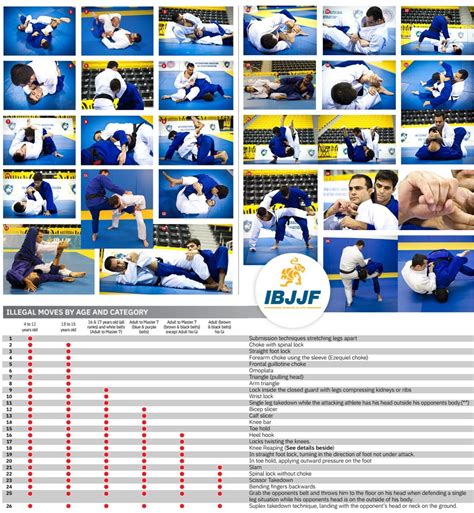
Before exploring the list of banned techniques, it is important to understand how IBJJF determines legality based on belt ranks and age divisions. Certain techniques that are illegal for white belts may be legal for blue belts and above. Similarly, rules differ for juvenile versus adult competitors.
Gi BJJ involves wearing a traditional kimono. No-Gi BJJ does not involve the Gi. It does not matter whether you're training in Gi BJJ or No-Gi BJJ. You must understand the difference between legal and illegal BJJ moves.
Top 10 Banned IBJJF Techniques
By avoiding the Top 10 Banned IBJJF Techniques and focusing on developing clean, effective BJJ techniques, you'll keep yourself and others safe. In the course of progressing in Brazilian jiu-jitsu, you must be aware of the moves, techniques, and strategies that you can use or avoid.
Read also: Complete Guide to IBJJF Rash Guards
- Scissors Takedown (Kani Basami): Scissors takedown, or Kani Basmi, is one of the oldest techniques that are used in both judo and Brazilian jiu-jitsu and is performed by attacking with the legs. The reason that it is called the "scissor takedown" is the motion of the legs. The purpose of this move is to take your opponent to the ground quickly. Unknowingly, a huge number of athletes use this move in their fights. The standing person usually receives hyperextension or dislocations.
- Spinal Locks: In IBJJF competitions, no kind of spinal lock is allowed, including twisters. A forceful application of this move can result in damage to the ligament. That is why in BJJ and all kinds of jiu-jitsu competitions, this move is listed as illegal by the authorities. Neck cranks apply force to the cervical spine, often without a choke, by pulling or twisting the head. Can cause head, neck, and spine trauma.
- Heel Hooks: The heel hook is not a much-liked move in BJJ and the international BJJ body has declared it illegal at all levels. A lot of people hate this move owing to the injuries that resulted from it. Heel hooks are among the most dangerous BJJ moves due to the rotational force applied to the knee.
- Knee Reaping: In a knee reap, you swing your leg towards the opponent’s opposite side while having them in a foot lock. Then, you apply pressure to the opponent’s knees and cause an inward bend. According to the ruleset of UAEJJF too, you cannot use this move at any level of competition to harm your opponents. A large number of knee injuries are found as a result of this move. Knee reaping involves crossing your outside leg across your opponent’s hip during leg entanglements.
- Finger Manipulation: Backward bending of fingers is not allowed at all. However, if you are going to use it for a wristlock, you should be holding all four fingers. A lot of athletes use it for the escaping purpose, to hyperextend the hands or toe joints of their opponents.
- Suplex: One of the illegal techniques that can result in immediate disqualification is the Suplex. In BJJ, you cannot use any type of suplex in which you pick your opponents and slam them to the ground. Suplex can possibly cause back pain, shortness of breath, and paralyzing.
- Slams: According to the rule list of the IBJJF, all types of slams are illegal in all BJJ Gi and No-Gi competitions. You are not allowed to pick your opponent’s up and slam them to the ground. Attempting this move can surely result in a prompt disqualification. However, the international body also restricts you from throwing opponents onto their necks. Practitioners will also ask can you slam in BJJ, as slamming your opponent is illegal in all levels of BJJ, however, it is allowed in a competition like MMA. Slamming your opponent in BJJ will result in immediate disqualification, this includes moves like the suplex, as these maneuvers are extremely dangerous.
- Twisting Leg Locks: At every level of the sport, you can use a lot of leg locks to trap your opponents during a match. Whether you are going for the straight ankle lock, kneebars, or calf slicer, the involvement of twisting can make it unlawful for you.
- Toe Holds: Toe hold is one of the most useful techniques used in the BJJ combats but the rule is turning toes inward. Turning the foot outward can cause rolling of the ankle and damage to the collateral ligaments in the knee. Toe holds are foot locks that twist the ankle.
- Bicep Slicers: Bicep slicers apply pressure to the bicep with the shin or forearm. These BJJ techniques can crush nerves and muscles.
Правила IBJJF 2021 на Русском языке. ПРИЧИНЫ ДИСКВАЛОВ. правила bjj
Legal Submissions in BJJ
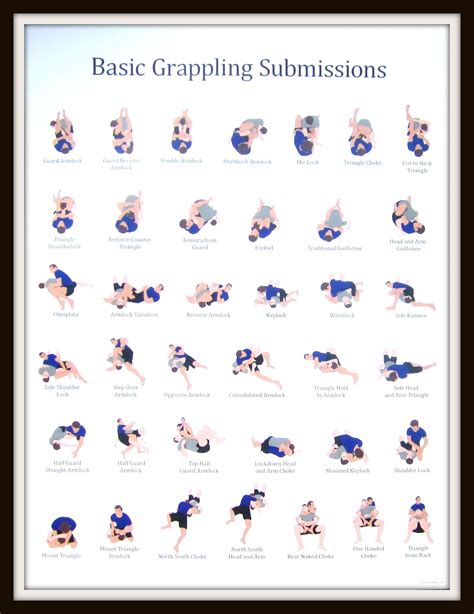
Understanding what's legal in BJJ is just as important. Jiu-Jitsu is a self defense system and a sport that emphasizes controlling your opponent on the ground and submitting them. It is based around a positional hierarchy from which submissions are applied. For example, submissions from the mount and the back, the two most dominant positions, are generally more high percentage than those from other positions. Submissions in jiu-jitsu rely on maximum control and leverage while attacking weaker or more vulnerable areas of your opponent’s body. A submission applied in a controlling manner will force an opponent to tap out but will often times not inflict serious damage.
The mount and the back positions are the two most dominant in jiu-jitsu. In competition these positions are awarded four points each and in a self-defense situation they’re excellent positions for controlling an adversary. The back position is extremely advantageous because it allows you to get behind your opponent and have access to their neck while they have very limited options to attack.
Here are some common and effective legal submissions:
- Rear Naked Choke: The rear naked choke is often thought of as the king of all submissions because, if done correctly, your opponent will be defeated regardless of whether or not they choose to tap.
- Armbar: As one of the most classic and iconic submissions in jiu-jitsu, the armbar is a submission you’ll see at every academy and at every tournament. The submission works by isolating the arm and using the hip to apply pressure to the elbow. Armbars and armbar variations can be utilized from closed guard, half guard, mount, the back, and side control, among other positions. It is often used to connect to other submissions as well, such as triangle chokes and wrist locks.
- Triangle Choke: The triangle choke is synonymous with jiu-jitsu. The submission embodies the principles of maximum efficiency and leverage that are vital to all effective jiu-jitsu techniques. The choke involves trapping an opponent’s neck and one of their arms between your legs and getting the proper angle and leverage to finish the submission. Using both of your legs against an opponent’s neck puts you in position to utilize some of your bodies strongest muscles against a vulnerable part of your opponent’s body.
- Kimura: The kimura is a bent armlock attack that can be applied effectively from many different positions. Like the armbar and the triangle, the kimura can be applied from closed guard, half guard, the back, and side control. Another reason the kimura is so valuable is because it can be chained together with many other submissions. What sets the kimura apart from other submission attacks is that the grip can be used as a controlling position.
- Footlock: The footlock is a lower body submission that can attack an opponent’s foot, ankle, or knee using various grips and leg configurations. There are many variations of foot locks including the straight ankle lock, toe hold, and heel hook. Footlocks are effective not only in their mechanics, but also because they are lower body attacks that can be used alongside upper body attacks to create a more complete submission game.
- Omoplata: Omoplata attacks involve control of an opponent’s shoulder and arm with your legs. Similar to a kimura, the classic finish from the omoplata comes from taking the shoulder out of alignment while the arm is bent at around ninety degrees. There are several variations of the omoplata that involve different leg and arm configurations as well, which have unique setups and add to the versatility of the submission.
While this list of submissions is far from complete, it includes the highest percentage submissions we see utilized at every level of jiu-jitsu.
The Importance of IBJJF Rules
Rules are the backbone of Brazilian Jiu-Jitsu (BJJ) competitions. These guidelines are in place because fighters and spectators alike want safe, fair, and thrilling matches. Of course, rules are necessary to uphold the sport’s integrity and protect the fighters in our communities.
Read also: Mastering BJJ Submissions
At the North American Grappling Association, we have rules for our own Gi and No-Gi tournaments. It’s essential for fighters registering to compete to understand the nuances before stepping onto the mat. Referees in competitions are empowered to stop a match at any moment if they perceive a rule violation, whether it’s an illegal move, sandbagging, or interference from coaches or spectators. If you don’t follow the rules during a match, you can expect to be disqualified.
The global BJJ community is focused on fostering an environment of respect and sportsmanship. NAGA referees spend a great deal of time learning the No Gi and Gi rules. The #1 reason why coaches and competitors argue calls made by a referees is because they don’t know the rules. By Referee Decision in a match that does not end in a submission, disqualification, or clear point victory within the allotted time.
Sandbagging is not allowed in BJJ competitions. If a fighter is caught fighting down a skill level, the referee will stop the match and move the competitor to an appropriate skill level. At registration, NAGA checks records from past grappling events to try and stop sandbagging before a competitor hits the mat. Some competitions have slight variations in which techniques certain age groups or belt levels can use, but the rules of BJJ competitions are generally the same.
Weight classes level the playing field by matching competitors against others of similar physical size and weight. This fairness is crucial in a sport where leverage, weight distribution, and physical control play significant roles in how effectively someone can fight. In NAGA competitions, we have divisions for all ages, weights, and skills. Within each category, there are different weight classes. Adults are also grouped into competition categories based on experience.
Brazilian Jiu-Jitsu tournaments are meticulously designed to ensure fair and exciting competition. Our paramount goal at NAGA is SAFETY. Referees have the authority to halt a match whenever they sense an imminent injury or a fighter is disqualified.
Read also: Submitting from Mount
Staying Safe and Respectful
Practicing dangerous maneuvers can result in serious injury to both a practitioner and their training partners, not to mention the liability nightmare this can pose for an instructor or the owner of a BJJ academy. It can become quite common for newer students to feel the need to try and impress their coaches by learning more advanced movements. This has become apparent with how the game has turned into a leg locking epidemic, students will ask questions like are heel hooks legal in BJJ, as the answer they usually get is, just focus on the basics. Training in heel hooks at such a young age in terms of belt rank can be a mistake, as there are significant dangers attached.
Students can be too aggressive in hunting the tap, which can cause them long-term injury, their training partners can also be too stubborn, and not tap quick enough, which will also cause long-term injury. Submissions like the heel hook can come on really quickly, as there is a fine line between pain and injury, making it extremely difficult to judge when to tap. Many other dangerous maneuvers can be very harmful to a practitioner, or their training partners. Practitioners need to exercise caution when they are training in such an extensively dynamic, and high-impact sport.
Following trends on Instagram won't help a practitioner become highly skilled in BJJ, it is all about building a strong fundamental core. Training in illegal, or frowned upon moves, won't help the practitioner progress through the belt levels, instead, it will leave gaping holes in their game, which can become extensively hard to repair, as once habits are formed they become exceedingly hard to break. The danger of practicing illegal moves means that a practitioner can take the wrong path with their training, which can lead to a poorly structured game plan.
There are quite a few moves that are deemed illegal in Brazilian Jiu Jitsu. Some of these moves are just too dangerous to execute, while others are only illegal for certain belt levels, or in certain competitions. The nature of each submission is different, and different organizations and different instructors have their own ideology behind what they deem acceptable to learn and practice. It is important to make sure that all practitioners are following the guidelines of their academies, and their instructors.
BJJ is purely a grappling-based Martial Art, so that means striking in BJJ is clearly illegal. This means that no punches, kicks, slaps, pinches, eye gouges, headbutts, or any other striking-related techniques are allowed. The only exception to this rule is in the new Brazilian Jiu Jitsu combat league, called the Combat Jiu Jitsu Worlds, which was developed by Eddie Bravo.
IBJJF Rules by Belt Level
The IBJJF stands for the International Brazilian Jiu Jitsu Federation and is the major governing body of Brazilian Jiu Jitsu across the world. This organization has set the standard across the board for the rule sets involved in guiding general BJJ competition. They have a stringent set of rules in place to help keep their athletes safe from any long-term, or serious injuries.
Here’s a breakdown of the rules based on belt level:
- White Belts: White belts also have extra rules in place to protect themselves from injury or inflicting injury upon their opponents. White belts are not allowed to jump guard at any stage of their matches, and they are also not allowed to attempt wrist locks of any kind.
- Blue and Purple Belts: Blue and purple belts have even more rules attached, as they are not allowed to execute heel hooks, toeholds, kneebars, calf slicers, or bicep slicers, meaning practitioners need to be at the higher levels in BJJ, to be able to access a wider range of prolific submission maneuvers. Competitors at the blue to purple belt levels are not allowed to execute moves like the twister, neck cranks, heel hooks, or the scissor leg takedown. This ruleset may seem dangerous to some, as watching blue to purple belts utilise moves that are only allowed by brown and black belts can seem reckless.
- Brown and Black Belts: When the practitioner is competing in a Gi division they are not allowed to execute heel hooks, this is because of the dangers involved. They are also not allowed to reap the knee, which is bringing their leg from outside their opponent, to the inside of their opponent's leg, which is considered dangerous to their opponent. Also executing toeholds with outward pressure is forbidden, and so is any type of spinal crank without choking the opponent, which is all illegal. Competing in the No Gi division has more leniency compared to the Gi division. In this division, practitioners at the brown and black belt levels are allowed to execute heel hooks, but knee reaping is still off the table due to its dangerous nature. Spinal cranks are also still illegal, and so is the scissor leg takedown, which is a jumping attack in which an opponent can hyperextend their knee.
Organisations like Grappling Industries abide by different laws, and rules of Brazilian Jiu Jitsu. Their competitions have been made to help many students access a wider variety of submission maneuvers, giving them more significant experience at the youngest stage in their Brazilian Jiu Jitsu journey.
In the Gi division heel hooks, and reaping the knee, are still illegal, but in the No Gi division, brown and black belts are allowed to do it all. The only real illegal move for these higher belts is slamming their opponent. In the No Gi division in Grappling Industries, students can elect to enter the advanced division, which will mean they can fight higher ranks like brown and black belts. This will give practitioners access to this higher ruleset, giving younger belts a significant experience at the highest stages of Brazilian Jiu Jitsu.
Understanding the fundamentals of Brazilian Jiu Jitsu is one of the most important aspects of becoming a seasoned, and talented Brazilian Jiu Jitsu athlete. Too often these days young athletes are putting too much emphasis on a higher level, or dangerous maneuvers. Practicing a Berimbolo to back take, or an intricate 50/50 guard-to-leg lock entanglement system, or a range of other dangerous and illegal moves, can often lead to a practitioner leaving large holes in their own BJJ game.
Just because international stars like Gordon Ryan, Craig Jones, Mikey Musumeci, and Andre Galvao, can pull off high calibre, and exciting submissions, doesn't mean they didn't start with a strong core of fundamental skills. It is the fundamentals of BJJ but gives a practitioner a solid base, and a platform to explore new pathways in their game styles. If a practitioner puts a significant amount of time into the foundations, then they will have a brand of Brazilian Jiu Jitsu that will hold up at the highest level.
The importance of understanding the little things like when to secure an underhook, or how deep to secure it, as well as other aspects like knowing when and how to frame, or how far to change the angle of your hips, as all of these components are vitally important in executing the right recipe of Jiu Jitsu. That's why it is very important to spend your first few years mastering the basics.
Training in the art of Brazilian Jiu Jitsu is one of the most complexes, and challenging Martial Arts there is to learn. This Martial Art has its hurdles, but can still be one of the most enjoyable, and most fulfilling combat-based sports on the planet.
People from all age groups, ranging from children, to middle-aged, and even older people, can all benefit from what BJJ has to offer. This includes women for self-defense purposes, and even military, and law enforcement agencies, as some of these new systems that are taught have been created by some of the world's most talented BJJ athletes. Anyone can train in BJJ, from the seasoned athlete with aspirations of becoming a world champion, all the way to the average person just looking for fitness, fun, and a bit of camaraderie.
Brazilian Jiu Jitsu is a fun and amazing sport, where instructors and members of the community will embrace all people from all walks of life.
Are you ready to step up your BJJ game with legal and competition-approved gear?
tags: #ibjjf #legal #submissions