In professional wrestling, the DDT is a specific wrestling move where a wrestler has their opponent in a front facelock or inverted headlock and falls down or backwards to drive the opponent's head into the mat. The DDT is one of the most iconic and widely used moves in professional wrestling. Jake Roberts’ use of the DDT, combined with his snake motif, created one of the most memorable personas in wrestling history.
The standard DDT involves the attacker applying a front facelock to the opponent, then falling backward into a seated or kneeling position, driving the opponent’s head and upper back into the mat. The classic DDT is performed by putting the opponent in a front facelock and falling backwards so that the opponent is forced to dive forward onto his or her head.
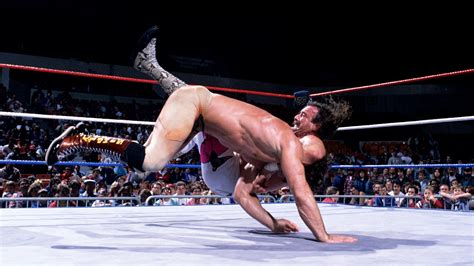
Jake Roberts performing the DDT on Ricky Steamboat
The move was named by Jake "The Snake" Roberts, who accidentally invented the move in the 1980s. Jake Roberts is credited with inventing the DDT in 1979 during a match when he accidentally fell backward while holding a front facelock, causing his opponent’s head to hit the mat.
Top 10 DDT Variations: The Ultimate DDT Countdown
Read also: RKO Evolution: The Cutter's Impact
The Origins of the DDT
The term was popularized by Jake "The Snake" Roberts in the 1980s and refers to a front facelock transition into a backward fall, causing the opponent to land on their back with the head hitting the mat.
The abbreviation itself originally came from the chemical dichloro-diphenyl-trichloroethane, a notorious pesticide, as stated during shoot interviews and on his Pick Your Poison DVD. Many think the term DDT was appropriated because the chemical DDT is something "bad" that is buried in the ground and causes extreme danger (and possible brain damage/birth defects) when there; similarly, a DDT is bad in that it buries an opponent's head into the mat, creating kayfabe extreme danger to the brain and spinal cord.
Rumors abound as to what the letters DDT supposedly stood for, including Drop Dead Twice, Demonic Death Trap, Death Drop Technique and Damien's Dinner Time after Jake's pet python Damien. When asked what DDT meant, Jake once famously replied "The End."
Variations of the DDT
The DDT has been adopted across generations and promotions. Its versatility makes it especially prevalent among high-flyers and technical wrestlers alike. Over time, numerous variations of the DDT have emerged, each with its unique twist on the original move.
Here are some notable variations:
Read also: Mastering the Bulldog in Wrestling
- Argentine Backbreaker Rack DDT: The wrestler lifts the opponent onto his shoulders as in an Argentine backbreaker rack, pushes the opponent's legs while still holding the front facelock, flipping them over to the front of the wrestler.
- Single Arm DDT/Jumping Armbreaker: Also called a Jumping armbreaker, this variation of the armbreaker involves the attacking wrestler grabbing the opponent's left or right arm, holding it across their chest, and then falling backwards, dropping the opponent face-first as well as damaging the opponent's arm and shoulder.
- Elevated Leg-Trap Bodyscissors DDT: The wrestler applies a front facelock to the opponent, then lifts the opponent into an elevated leg-trap bodyscissors position, and finally fall backwards, driving the opponent head first down to the mat. Former WWE and Former AEW wrestler Saraya uses this variation as a finishing move called the Knightcap (previously known as Ram-Paige during her time in WWE).
- Hammerlock Cradle DDT: A variation, known as a hammerlock cradle DDT, involves the attacking wrestler lifting the opponent into a bear hug, applying a hammerlock, then a front facelock, then finally driving the opponent's head into the mat. Innovated by Kenta Kobashi.
- Double Arm DDT/Butterfly DDT: Instead of applying a head or face lock, the wrestler bends his opponent forward and hooks each arm behind the opponent's back, tucks the opponent's head under one of his arms, and then falls back to pull the opponent down either flat on his face, which is the more common variant, or onto the top of their head, causing them to roll over, like in a regular DDT. It is also known as a Double Arm DDT or a Butterfly DDT. Mick Foley, Stevie Richards, Drew McIntyre, and Jon Moxley have all popularized variations of this DDT: Foley used an unnamed jumping version, Richards uses a lifting version he calls the Stevie-T, McIntyre uses a snap version called the Future Shock (formerly known as the Scot Drop), and Moxley uses a lift-and-snap version called the Death Rider (formerly known as the Paradigm Shift), which was referred to as Dirty Deeds during his time in WWE.
- Diving DDT/Halo DDT: A slight variation, known as a diving DDT or a Halo DDT, exists and sees the wrestler and the opponent both on an elevated surface, albeit with the wrestler facing the ring. With the opponent in the front facelock, the wrestler and the opponent both dive off the elevated surface, resulting in the wrestler falling forward to perform the DDT instead of falling backwards.
- Cartwheel DDT: In this variation, the wrestler stands on the top rope with the opponent standing in front of the wrestler. From here, the wrestler performs a cartwheel across the ropes. Then, with his near arm, the wrestler quickly catches the opponent in a front facelock and dives off the ropes, driving the opponent's head into the mat. Also known as a front flip DDT.
- Samurai Driver: Also known as a Samurai Driver this DDT sees a wrestler place his/her head between the thighs of an opponent before jumping up while pushing away from the opponent's thighs to flip up and sit on the shoulders of the opponent. The wrestler then spreads their legs, dropping off the opponent's shoulders as they grab hold of the opponent's head in a front facelock to fall down to the mat back first, driving the opponent's head down to the mat.
- Spinning DDT/Tornado DDT: The tornado DDT is also referred to as a Swinging DDT / Spinning DDT.
- Reverse DDT: Standing behind his / her opponent with the opponent in front of him / her, the wrestler bends his / her back and applies an inverted facelock, then falls backwards to slam the opponent's head into the mat. Also known as a Reverse DDT. is Sting, who uses it as his finisher and calls it the Scorpion Death Drop.
- Sliced Bread No. 2: This is a backflip three-quarter facelock reverse DDT, which is a variation of the Shiranui. In this move a wrestler applies a three-quarter facelock on the opponent and performs a backflip over the opponent while maintaining the facelock turning it into an inverted facelock and then either landing face down to the mat, on their own back to the side, or in a sitting position, to drive the opponent's head back-first down to the mat. Último Dragón innovated this move, which he referred to as the Asai DDT.
Double Team DDTs
In professional wrestling double-team maneuvers are executed by multiple wrestlers instead of one and typically are used by tag teams in tag team matches. Many of these maneuvers are combination of two throws, or submission holds.
Here are some examples of double team DDTs:
- Double Team DDT: For example, a wrestler could perform a DDT on an opponent. This move is best known as being the finisher used by NJPW tag team and Bullet Club members Guerrillas of Destiny. This move is used by WWE Tag Team Awesome Truth as their finisher by name Truth Crushing Finale (TCF).
- Elevated Neckbreaker: This elevated neckbreaker is performed when one attacking wrestler stands facing a bent-over opponent and seizes the opponent around the waist, flipping them over as in a suplex up onto another wrestler's shoulders, leaving them in a prone powerbomb position.
- Wheelbarrow Facebuster: This move first sees one wrestler place an opponent in a wheelbarrow facebuster position while the other wrestler applies a three-quarter facelock.
- Running Cutter/Inverted Powerbomb Combination: This variation sees one of the wrestlers lift the opponent into a Canadian backbreaker rack. From this position the second wrestler runs towards the opponent and grabs their head, performing a running cutter, while the other wrestler completes the inverted powerbomb, driving the opponent face-first to the mat.
Double Team DDT
Is the DDT Safe?
Yes, the DDT is generally safe when executed properly. The key is ensuring the opponent lands flat on their upper back with the head tucked.
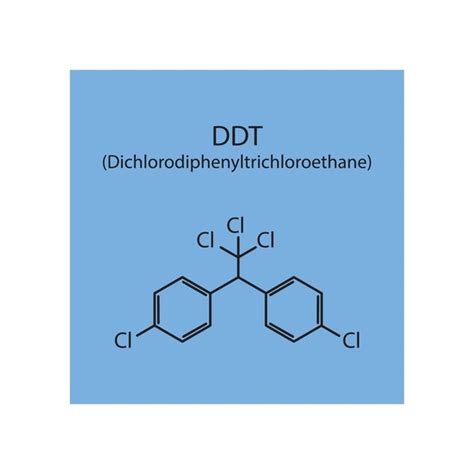
Proper execution of the DDT ensures safety
Read also: Stone Cold Steve Austin's Finisher