Wrestling is one of the most challenging sports an athlete can compete in. To be a great wrestler, an athlete must be strong, explosive, well-conditioned, and tough. It takes a lifetime of dedication and discipline to reach the highest levels of the amateur wrestling world.

In wrestling, muscular strength, endurance, and agility are indispensable components for success. Muscles act as a catalyst, supporting a wrestler's technical skill set, agility, and overall performance, making muscular development an integral aspect of a wrestler's training regimen. Muscles serve as the foundation for a wrestler's physical prowess, offering stability, power, and endurance necessary for executing techniques and maintaining control during matches.
The Role of Strength and Conditioning
Strength and conditioning training is a critical component of creating successful wrestlers. Considering how tough the sport of wrestling is, an athlete's strength and conditioning play a critical role in deciding who wins and who loses. At the national and international levels, skill levels are often nearly equal.
What sets athletes apart is their raw strength, explosive power, speed, and conditioning. By utilizing a well-organized training program, athletes can improve these physical attributes and become dominant within the sport. Every wrestler knows how to shoot a takedown; the raw power and speed with which the takedown is executed decides its effectiveness.
In a sport where brute strength and conditioning play a significant role, it only makes sense that wrestlers can benefit significantly from an adequate strength and conditioning program.
Read also: Growth and Wrestling: What You Need to Know
Strength & Power for WRESTLING (Programming guide)
Conditioning: Building the Gas Tank
When discussing what attributes make a great wrestler, we must first mention conditioning. Unless you are a monster capable of quickly pinning all your opponents, you must build a gas tank to become a successful wrestler. Most wrestlers build this cardiovascular capacity over the years through practice. However, if athletes seek to reach peak performance, a conditioning plan is recommended.
Without an adequate level of conditioning, any strength gained during barbell training will be useless once the athlete becomes winded. Additionally, conditioning work helps to improve the athlete's physical composition. This will help to keep body fat low to make room for lean mass to be gained without affecting the ability to make a specific weight class.
Brute Strength: The Foundation of Control
Brute strength also plays a critical role in wrestling. Ultimately, the sport's objective is to maintain control of the opponent while scoring points or going for a pin. In this sport, strength and conditioning have a harmonious relationship. Without proper conditioning, strength levels will dwindle during a match. Without adequate strength, an athlete risks being physically overpowered by stronger opponents within their weight class.
Assessing an Athlete's Fitness Level
Before an athlete begins a training program, it is essential to get a basic understanding of the athlete's current fitness level. This helps to ensure the initial strength and conditioning programming meets the athlete's current level and does not place unreasonable expectations upon the athlete. With wrestlers, we first want to assess their conditioning level. This can be done in a couple of ways.
First, we can opt to do a basic one- or one-and-a-half-mile run test. With this option, we will simply look to see which athletes are running with the lead pack and which athletes are struggling to keep pace. This will quickly help gauge which athletes need to address their conditioning specifically prior to the beginning of the season. Athletes with acceptable conditioning levels will still utilize conditioning-focused training, just not to the degree of those struggling with conditioning.
Read also: Mike Tyson: Punch Accuracy
Once we have established the athletes' basic conditioning levels, we can move on to testing strength. This will be done in a scaled manner. First, we want to test each athlete's ability to perform bodyweight exercises. These movements will include push-ups, pull-ups, Hindu squats, hanging leg lifts, and planks. We select these exercises to test the strength and work capacity of the upper torso, legs, and trunk.
These movements will help us determine which athletes need to improve their strength the most. If athletes struggle with performing basic bodyweight movements, they will likely struggle to overpower opponents within their weight class.
Next, we will test explosive power. This is done via plyometric exercises, with athletes performing box and broad jumps. We can also perform sprint testing; however, this is not a requirement. Once we have tested explosive power, we will test absolute strength. To do so, athletes will perform squats, bench presses, and deadlifts.
Each movement will require an athlete to work up to a top-set single, leaving a rep in the tank so as not to risk missing during the top set. These tests should be performed with enough space between them to ensure adequate recovery. For best results, we recommend coaches implement one test per week during the first three weeks of training.
The Conjugate Method: A Comprehensive Approach
The Conjugate Method is the perfect method to meet wrestlers' training needs. Conjugate can efficiently improve absolute strength, explosive power, speed, and conditioning. The Conjugate Method framework is perfect for training athletes. Our basic template calls for athletes to perform two max effort workouts per week, along with two dynamic effort workouts.
Read also: Everything About WrestleMania 41
During these workouts, athletes will also perform accessory exercises designed to increase strength, enhance work capacity, and improve physical composition. This schedule can be executed in one of two ways: athletes can choose to follow a four-day-per-week training schedule or a condensed schedule of three days per week, with dynamic effort training combined on the same day. At Westside, we opt to go with the three-day condensed training schedule with our sports athletes.
The first training day of the week will be max effort lower. The objective of this training day is to improve lower body absolute strength. Along with lower body absolute strength improvements, athletes will also benefit from increased lower body bone and tissue density. This training has a significant impact on protecting the ankles, knees, and hips from soft tissue injury.
The next training day is max effort upper. The objective here is mostly the same as max effort lower, except our focus is on enhancing the strength of the upper body. Just as this training benefits the bone and soft tissue density of the lower body, it will also help to increase bone and soft tissue in the upper body. This means athletes can withstand more stress and strain on joints such as the neck, shoulders, elbows, and wrists.
With a sport as physically demanding as wrestling, being able to improve the durability of lower and upper body bone and soft tissue will help reduce injury rates and keep athletes performing at a high level throughout the season.
The final two training days of the week will be dynamic effort lower and upper. These training sessions intend to improve explosive strength, leading to enhanced power capabilities and increases in the rate of force development. The training can be performed on separate days or combined into one day, as previously mentioned.
Conditioning Strategies
Conditioning will be accomplished in multiple ways. If we are in season, we will rely on practice to provide most of the conditioning work. If an athlete needs specific training during the season, we can do that, but typically, practice combined with weight training improves cardiovascular conditioning. During the off-season, athletes perform conditioning exercises twice a week on days when weight training is not scheduled.
These workouts can include actual wrestling, wrestling drills, distance runs, or sprints. The goal on these days is to accomplish enough conditioning training to be effective, but not so much that it significantly disrupts recovery. The coach evaluating the athletes will need to determine the level of conditioning work each can handle.
Plyometric Training for Explosive Power
Plyometric training is an effective means of improving athletes' explosive power and speed. For a wrestler, this means improved takedown strength and speed, the ability to quickly change direction on the mat, and the stamina to perform explosive movements throughout the match. This training is simple to execute and can pay off big during matches.
At Westside, we recommend that athletes begin with box jumps, broad jumps, sprinting, and bounding when introducing plyometrics. Box and broad jumps can be performed to max height or distance or at set heights and distances in a repeated effort manner. We recommend athletes aim to complete 40 jumps per session when plyometrics are used.
Here is how that can be accomplished using one or multiple types of jumps:
- Lateral Bounding â 4 x 10
- Box Jump â 10 x 1 working up to the tallest box possible
- Scissor Jump â 3 x 10
When plyometrics are used, it is crucial to monitor athlete fatigue. Suppose we notice certain athletes are struggling to recover from session to session.
Maintaining Cardiovascular Fitness
As we have repeatedly mentioned, wrestling places a tremendous demand on athletes' endurance and stamina. Maintaining a cardiovascular training program year-round is vital to ensure athletes have the gas tank needed to compete at a high level. We do not want athletes to allow themselves to "rust" from season to season, as this only reduces the overall rate of improvement from year to year.
By focusing on keeping endurance and stamina in check, athletes will show up in proper condition and be capable of handling the initial demands of an escalated training plan. Even if athletes were to take time off from weight training, as long as they continue to maintain an ideal level of cardiovascular fitness, the transition back to weight training will be much smoother and more productive.
Flexibility and Mobility
Given the many different situations that can occur during a wrestling match, athletes must have the mobility to meet these demands. These do not have to be fight-to-the-death sessions; just enough to move through the basic sports movements and ensure athletes maintain the range and agility to accomplish routine sports tasks. Athletes can also perform basic stretch routines to maintain range of motion and flexibility.
However, the stretch protocol used by each athlete will likely need to be modified to keep athletes from potentially injuring themselves. The risk of soft tissue injury during barbell training can increase if stretching is performed too frequently or strenuously.
Another way to ensure athletes can move through basic ranges of motion is to perform all barbell lifts to standard. While we will, of course, perform movements where the range of motion is modified to target specific joint angles, we will also include a good amount of full-range-of-motion exercises to build strong, well-rounded athletes. For some, basic practice will be enough; others may need to focus on improving flexibility and mobility.
Integrating Strength Training with Wrestling Practice
The approach to integrating a strength training program with a wrestling practice schedule will depend on the time of year. In the offseason, we train 3-4 times a week, 6-8 hours before or after practice. Ideally, we would like to schedule weight training sessions before a practice occurs. During the season, we want to limit the chance of weight training interfering with sports success.
Athletes will train 2-3 times per week, with training dictated by the practice and competition schedule. Strength coaches must communicate with sports coaches to ensure each workout leaves the athlete ready to compete on a weekly basis. This may mean only performing a main exercise and following up with some conditioning work. When dealing with in-season athletes, we primarily aim to avoid significant detraining.
As long as we provide worthwhile stimulus 2-3 times per week while in season, it helps the athlete's current performance and allows them to build upon their previous work when the next off-season comes around. Overall, training schedules must be decided by the coaches who observe the athletes on a daily basis. This is a dynamic situation, and adjustments should be made based on the athletes' current state.
Sample Training Schedule
Here is a sample training schedule that integrates strength training with wrestling practice:
| Day | Season | Training |
|---|---|---|
| Monday | Off-season | Max Effort Lower Body |
| Tuesday | Off-season | Conditioning |
| Wednesday | Off-season | Max Effort Upper Body |
| Thursday | Off-season | Conditioning |
| Friday | Off-season | Dynamic Effort Lower & Upper Body |
| During Season | During Season | 2-3 times per week, dictated by practice and competition schedule |
The Mental Edge
Wrestling places tremendous demand on athletes' endurance and stamina. Here are some of the mental benefits of wrestling:
- Personal Accountability: It teaches you the meaning of personal accountability. You learn that you have to take responsibility for every single thing that happens on the wrestling mats.
- Humility: Because it is a 1-on-1 sport, you quickly learn that there is no one else to blame for your performance but yourself. This teaches you to accept failure more readily than others and gives you the ability to move forward quickly.
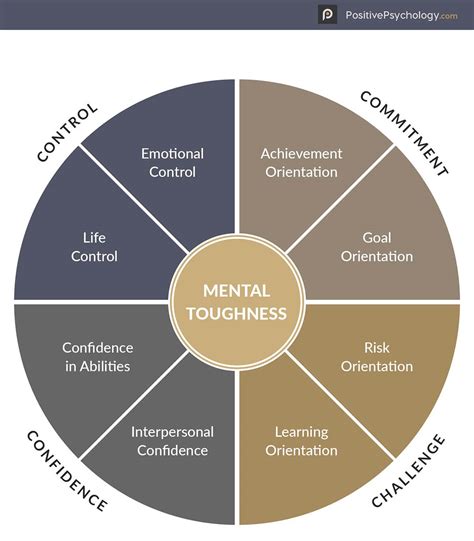
- Mental Toughness: Every wrestling match puts your mental and emotional strength to the test. Through wrestling, youâll learn how to work through failure and disappointment and use your mistakes as a platform for learning.
- Respect: The more you train wrestling, the more you appreciate all the hard work that all your teammates and even your opponents put in.
Frequently Asked Questions
Q: What are the most important strength exercises for wrestlers?
A: We recommend variations of the squat, bench press, and deadlift. For example, a Zercher squat is a great lower-body option, while a floor press is a good choice for upper-body strength.
Q: How can I integrate strength training with my regular wrestling practice?
A: If it is the offseason, we train 3-4 times a week, 6-8 hours before or after practice. Ideally, we would like to schedule weight training sessions before a practice occurs. During the season, we want to limit the chance of weight training interfering with sports success. Athletes will train 2-3 times per week, with training dictated by the practice and competition schedule.
Q: Are there different strength training routines for various styles of wrestling?
A: No. Considering the similarities in required special strengths for all styles of wrestling, the Conjugate Method covers all the bases.
Q: Should wrestlers strength train while cutting weight?
A: It depends on the athlete.