Every sport in the world is known for having its classic period which helped to define and shape it into the product it has become today, and wrestling is no exception. Before the 1950s, wrestling was seen as too violent and dangerous a sport for women to enter. However, with the new styles that were created, women were finally given an equal opportunity to perform on a grand stage. Some of these women are directly responsible for making women's wrestling what it is today. If not for them, wrestling might still be a male-dominated sport.
Let's look back on a few of the original wrestling divas; the golden girls who single-handedly redefined what it meant to be in the wrestling business.
S01E06 Teaser - THE FABULOUS MOOLAH - DARK SIDE OF THE RING
June Byers
Born DeAlva Eyvonnie Sibley, June Byers was one of the first women to be featured on the main stage of women's wrestling. Debuting in 1944, she spent the first few years of her career attempting to score upset wins over established veterans such as Mae Young and Mildred Burke. It wasn't until eight years after her first match, in 1952, that she first gained a title in professional wrestling with her tag team partner, Millie Stafford. Her next taste of gold would come on June 14, 1953, when she won the women's title in a 13-woman gauntlet. It was from this point onwards that she really entered into the realms of mainstream pop culture, guest starring in many popular television shows.
The biggest challenge of her career would come again in the form of Mildred Burke, who vacated the title before Byers won it herself. After a year in the making, it was decided that the ultimate champion would be decided in a two out of three falls match. This match has since been heralded as one of the greatest women's title matches in the history of pro wrestling, and helped to cement the legacy of June Byers as one of the greatest females of her generation. This title would stick with her throughout the rest of her career, even when she didn't hold a respective championship.
However, the title would also be the scene of her biggest controversy, as she was stripped of the title by the Baltimore Athletic Commission in 1956 after she publicly announced her desire to retire as champion. This was much frowned upon by many wrestlers as it was seen as a sign of disrespect towards the younger generation. It wasn't long after this that she retired from professional wrestling.
Read also: Professional Wrestling History
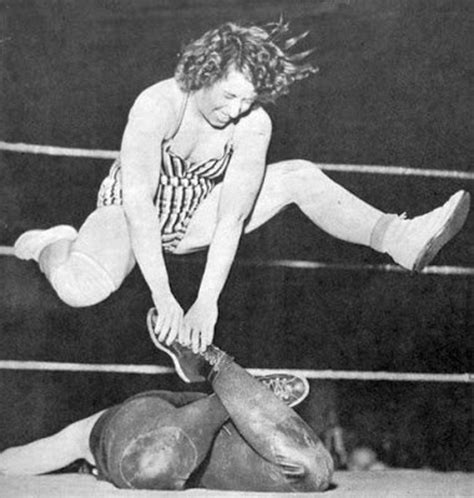
Mildred Burke is one of the wrestlers who influenced June Byers
Ella Waldek
Another great female wrestler to come from the 1950s boom was Ella Waldek. Trained by the Fabulous Moolah, it wasn't long before she held multiple titles including the NWA Florida Women's championship and NWA Tag Team championship. However, despite her many accomplishments, she became despised by many fans over her part in the accidental death of Janet Boyer Wolfe.
During a match with her, Waldek body slammed Wolfe, prompting her to roll to the out of the ring before collapsing. She died shortly afterwards. As no cause of death could originally be established, Waldek, along with the other competitors in the ring at the time, were arrested and held on suspicion of manslaughter. Despite being found innocent, she was soon given the moniker of 'Murderer' by the fans who felt that she had intentionally killed Wolfe. This tag would follow her throughout her career until she retired in 1971 from several nagging injuries that were preventing her from performing safely.
Her prowess and skill made her one of the most difficult opponents for wrestlers to prepare for. It also gained her the respect of many of her peers who regarded her as one of the greatest technical wrestlers of the 1950s.
Penny Banner
Penny Banner was not only a respected athlete, but also a respected commissioner and ambassador for the sport. Within three years of her debut in 1954, she had held the NWA Women's World Tag Team Championship three times with her respective partners, Bonnie Watson, Bettie Jo Hawkins, and Lorraine Johnson. Banner also earned the honour of becoming the first-ever AWA Women's champion in the summer of 1961.
Read also: Golden Boy in MMA
She also earned a second major honour in only losing twice in her last 20 years of active wrestling, being beaten only by The Fabulous Moolah and Belle Stuart. After her retirement, she took on a backstage role, becoming the commissioner for the PGWA (Professional Girl Wrestling Association), a role she held until her death in 1992. During her long and storied career, Banner excited thousands of fans with her innovative moves, such as the Dropkick, the Sunset Flip and the Inside Cradle.
These were moves that, although seen incredibly frequently now, were unheard of in the 1950s. Achieving her place in history, as well as the respect of many of her competitors, Penny Banner is one of the most successful women to come from the 1950's boom.
Mae Young
One of the most recognizable names from any period of wrestling, Mae Young is a wrestler who is still looked at today with awe and respect. Young got her start in the late 1930s, when she defeated the world renowned Gladys Gillem in a shoot fight requested by the promoter, Billy Wolfe. It was after this that she began to extend women's wrestling to outside the United States. In 1941, she and Mildred Burke began to showcase women's wrestling in Canada, before touring Japan in 1954.
This was completely unheard of at the time, but Young wanted to capitalise on the lack of male wrestlers who had subsequently gone to fight in World War Two. This helped to introduce an entirely different audience to women's wrestling, opening up more opportunities for future wrestlers to burst onto the scene. During this period, Young became the NWA Women's champion, as well as the first-ever NWA United States Women's Champion.
After about 1968, Mae Young disappeared from the wrestling business until 1999, when she began to do cameo appearances for the WWF. Her first cameo came during the misogynistic gimmick of Jeff Jarrett, who put her in a figure four leg lock after attacking fellow wrestler, The Fabulous Moolah, with a guitar shot. After that, she and Moolah became prominent comedy characters within the WWF, featuring in storylines that included, amongst others, Young giving birth to Mark Henry's 'child'. Her most recent appearance was at Wrestlemania 25, where she undertook the duties of guest timekeeper for the Miss Wrestlemania tournament.
Read also: KHSAA Girls State Wrestling
Despite this though, Mae Young will always be remembered most fondly for her early wrestling career, in which she helped to escalate the women's division to the heights it has reached today.
The Fabulous Moolah
Known worldwide as the most historic women's wrestler in professional wrestling, Mary Ellison, known as The Fabulous Moolah, almost single-handedly helped define the women's division as one of the most talented on Earth. Moolah got her first big break as the valet for 'Nature Boy' Buddy Rogers in the early 1950s. During this time, she became known as one of the first modern managers of wrestling. In 1955, Moolah began to work for Vince McMahon Sr.'s promotion, Capitol Wrestling Corp. It was at this time that she began to catch the attention of wrestling fans nationwide.
Her most famous achievement came on Sept. 18, 1956, when she won the World Women's championship. This was a title that she would retain for over 10 years. Once she lost the championship, she regained possession a few weeks later, before holding onto it for another eight years, finally relinquishing it in 1976 to Sue Green. During this long title reign, she also made history by becoming the first female to wrestle at Madison Square Garden on July 1, 1972.
The Fabulous Moolah would continue to work right into the 1980s, becoming a key figure in the growing 'Rock and Wrestling Connection', a movement which would help to shape wrestling today. Moolah would go into semi-retirement throughout the duration of the 1990s, until she re-signed, along with Mae Young, to become a cameo figure in the new millennium. It was during this time that she not only became the oldest wrestler on the WWF roster, but she also became the oldest woman to hold the WWF Women's title at 76 years old. After this, she would continue to make sporadic appearances until her death on Nov.
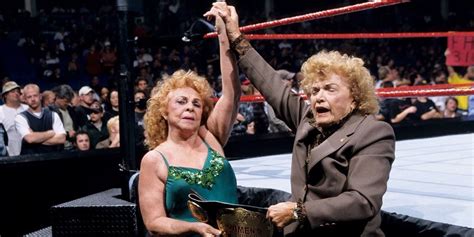
The Fabulous Moolah and Mae Young in 2004
Gorgeous Ladies of Wrestling (GLOW)
Gorgeous Ladies of Wrestling (also known by its initials as GLOW or G.L.O.W.) is a women's professional wrestling promotion that began in 1986 (the pilot was filmed in December 1985) and has continued in various forms after it left television. Colorful characters, strong women, and over-the-top comedy sketches were integral to the series' success. David B. McLane created the series while working as an announcer and promoter with Indianapolis-based World Wrestling Association (WWA) after seeing fans react to women's wrestling. The show runner Dick the Bruiser believed that Indianapolis audiences would not be receptive to a wrestling promotion featuring female wrestlers and dismissed the concept as an unprofitable novelty.
Undeterred, McLane went to Hollywood and posted casting notices in The Hollywood Reporter and Variety, leading to over 500 women showing up for auditions at The Hyatt on Sunset. The first audition was at Gold's Gym, and the dozen finalists selected trained for six weeks at the Broadway Boxing Gym at 108th and Broadway in the South Los Angeles neighborhood of Watts. McLane hired professional Mexican wrestler Mando Guerrero to train them and later brought in wrestling veteran Cynthia Peretti (professionally known as Princess Jasmine) to take over from Guerrero.
McLane partnered with the television distribution company Independent Network Incorporated (INI), headed by former Lorimar-Telepictures executive Irv Holender. Holender's previous credits included producing Gumby, which was revived about the same time. It was through Holender that McLane met Meshulam Riklis, chairman of Rapid-American Corporation, a conglomerate which included ownership of the Riviera Hotel and Casino on the Las Vegas Strip. Riklis arranged for the Riviera Hotel to host GLOW. Holender's firm was in charge of distribution (in a joint venture with a New York City based syndicator, MG/Perin) and McLane headed the venture.
A number of the original dozen wrestlers moved to Las Vegas and were supplemented by local women, many of whom had been actresses and showroom dancers. Lauri Thompson, a future Las Vegas attorney and lead dancer in the Folies Bergère at the Tropicana, played Susie Spirit. Thompson recruited others, creating a recruiting chain of other friends and dancers. One of those, Lorilyn Palmer, who played Colonel Ninotchka, took over training the new women. According to David McLane, the first actress hired was Jeanne Basone (who was working as a phlebotomist at the time) as the character Hollywood. Basone also appeared in Playboy, part of a pictorial titled Lethal Women.
The show was introduced at the 1986 NATPE Convention. Following the successful initial sale to 30 major television markets in the US and six other countries, McLane brought in Jackie Stallone, mother of Sylvester Stallone, to play kayfabe GLOW owner and the manager of the Good Girls. Kitty Burke as Aunt Kitty, was the manager for the Bad Girls. The syndicated GLOW TV show was produced for four seasons (1986â1990). Seasons 1 and 2 were shot at the Riviera on Saturday afternoons with a casino crowd.
McLane and the majority of the original cast left the company in a dispute over the domination of low brow, blue, Hee Haw style comedy Cimber had infused into the show. McLane's new promotion became Powerful Women of Wrestling. Seasons 3 and 4 were filmed at a former warehouse building approximately three miles east of the Riviera hotel which would later be a Harley-Davidson outlet. They wrestled approximately eight matches per live event. The show itself differed from Vince McMahon's World Wrestling Federation (WWF) in that the venture held live events only for the purpose of taping television programming, versus running live shows in various city locations each week.
They had actual television seasons consisting of 26 episodes that were each rerun once to complete the year, with a total of 104 episodes produced and aired. As Cimber focused on producing, Andrew Hecker directed later episodes. A fifth season was being shot when the show went off the air in financial turmoil. McLane performed as the ring announcer and host for Seasons 1 and 2. McLane's announcing voice was replaced in Season 2 to add more comedy feel to the episodes, using Miles Headlock (a computer generated knock-off of Max Headroom), and "Motormouth" Mike Morgan (who sounded a lot like Howard Cosell). Steve Blance was the senior referee in Season 2 before becoming GLOW's "commissioner" in Seasons 3 and 4. He was the regular recipient of a GLOW Girl beatdown in Season 2.
Each of the GLOW performers had their own rap song (personalized lyrics using the same backing track). It was shown on videotape prior to that wrestler's match. Similar to other wrestling promotions' use of wrestler-specific entrance themes, this gimmick may have been influenced by the Chicago Bears' "Super Bowl Shuffle". The music for the rap was written by Hank Donig, who did the music for the first two seasons supervised by Morris I. Diamond. Music for Seasons 3 and 4 was created by Brian Bogle and Ed Ryba under the name "Music out the Yang".
The GLOW company was owned and operated since 2001 by Ursula Hayden, who portrayed Babe the Farmer's Daughter, Princess of Darkness, and Donna Matrix. Her first venture with GLOW was a sold-out 2003 live event at the El Rey Theatre in Hollywood California. Followed by a DirecTV pay-per-view produced by Ursula Hayden and Johnny Cafarella, Glow's ring announcer season 3 and 4. In April 2012, GLOW returned to Las Vegas for a show that reunited former GLOW participants Hollywood (Jeanne Basone), Babe the Farmer's Daughter, Gremlina, Lightning, Thunder Bolt, Melody Trouble Vixen, Ashley Cartier, Godiva, Daisy, and Corporal Kelly. The show also featured new GLOW wrestlers, including Sara Deathray and VH1.
Then later in 2012 she appeared in the documentary GLOW: The Story of the Gorgeous Ladies of Wrestling. It premiered on April 27, 2012, at the Hot Docs Canadian International Documentary Festival and won the Best Documentary award at the San Diego Comic-Con Film Festival. In 2017 after a few years of working with writers Liz Flahive and Carly Mensch, GLOW â a scripted comedy-drama series based on the actual wrestling promotion â was picked up by Netflix. Hayden served as a series consultant for the show until its cancellation due to the COVID-19 pandemic.
A documentary film, GLOW: The Story of the Gorgeous Ladies of Wrestling, was released in 2012. The film was directed by Brett Whitcomb and written by Bradford Thomason. It features the music of ESG. The film premiered to positive reviews at the Hot Docs Canadian International Documentary Festival, and has since been featured in New York Magazine, LA Weekly, RogerEbert.com, VICE, /Film, The Village Voice, and Mental Floss magazine.
GLOW is a TV series that premiered on Netflix in 2017. A scripted comedy drama, it tells the fictional story of a 1980s professional wrestling promotion that is based on the actual Gorgeous Ladies of Wrestling.
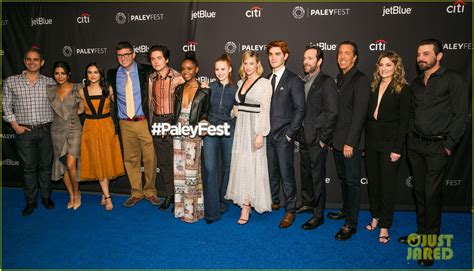
Cast of GLOW at PaleyFest 2018
"The Golden Girls" tackled various sports stories
Also during that time, âThe Golden Girlsâ tackled various sports stories. They visited the racetrack, bought a boxer, did away with an old friend during a tennis match and convinced a professional baseball player to wear womenâs lingerie. Here are those golden moments when the girls traded cheesecake and stories from St.
- Roseâs competitive nature gets the best of her when she ditches Blanche to compete with one of the Nielsen twins in their upcoming bowling tournament.
- Stan gets three tickets to âtodayâs ballgameâ and he canât find anyone to go with him. Dorothy and Sophia agree to join the yutz at the ballpark.
- Rose convinces Dorothy and Sophia to help her coach a football team of 10-year-olds.
- When Sophia is entrusted to deposit some of the girlsâ savings in the bank, she instead invests the money in a prize fighter.
- The girls are taken back to an attempt to get in shape as they reminisce about a jazzercise class and some Xanadu-inspired outfits for Blanche and Dorothy.
- When Dorothyâs high school rival Trudy arrives in Miami, the two set out on a series of competitions.
- When the girls need a big-time MC for the variety show, Rose reveals that (at least she thinks) her father is Bob Hope.
- As Rose seems to fall back in love with Buzz, an unmemorable flame from St.
- When Rose wants to paint a horse, she pleads with Dorothy to take her to the racetrack.
- Blanche dates a baseball player and gives him a shot of confidence by wearing womenâs lingerie.