Martial arts, such as karate, judo, and tae kwon do, can be a good alternative to team sports for children. These ancient practices from Asia were originally meant for self-defense, but today, they offer a wide range of physical and mental benefits. Many families find that martial arts help boost their kids’ self-control and focus.
Why Martial Arts Might Be a Good Fit for Your Child
Kids who learn and think differently can sometimes struggle to find a sport that suits them. Martial arts can provide a supportive and structured environment where they can thrive. Here are nine key benefits of martial arts for kids:
- Focus on Individual Growth: Martial arts emphasize self-improvement rather than team competition. This can be particularly beneficial for kids who struggle with the pressure of competing with others. There’s no “letting down the team,” as the focus is on personal progress.
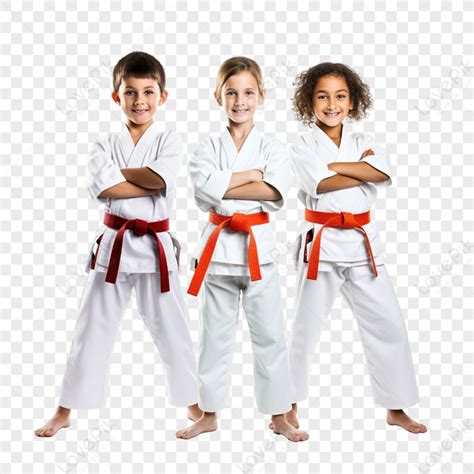
- Work Toward Specific Goals: In martial arts, children work at their own pace and earn a different colored belt each time they reach a new skill level. This can boost self-esteem and keep them motivated, especially for kids who may feel like they never “win” at anything.
- Routines Broken Down into Chunks: Techniques and forms are broken down into smaller, manageable steps. Kids learn gradually, repeating and adding steps as they go. This helps them learn to anticipate the next step and eventually put everything together into fluid movements.
- Emphasize Self-Control and Concentration: Attention is central to martial arts. Kids have to stay focused to learn and perform the movements. Instructors often use the “ready stance” to help children reset and refocus when their attention drifts.
- Help with Coordination: Martial arts movements can improve a child's awareness of their body in space, which is beneficial for kids who struggle with motor skills. It also helps them understand the power of the mind over the body.
- Provide Structure: Good martial arts instructors have clear rules and consistently reinforce them. They also emphasize good behavior both in and out of class, sometimes even providing behavior charts for parents and caregivers to sign.
- Safe Way to Get Out Extra Energy: Despite the misconception that martial arts encourage violent behavior, instructors often emphasize that fighting is a last resort. Kicking and karate chopping allow kids to work out frustration or anger while practicing self-control.
- Accepting Environment: Respect is a core value in martial arts. Kids must show respect for their instructor and peers. Negativity is generally not tolerated, and students are encouraged to support each other.
- They’re Cool: Martial arts can make kids feel special, especially when they're wearing martial arts gear and breaking boards in half.
Types of Martial Arts
There are many different types of martial arts, each with its unique focus and origin:
- Karate: Founded in Japan, karate focuses mostly on strikes using the hands.
- Tae Kwon Do: Originating in Korea, tae kwon do tends to have a greater focus on strikes that involve the feet.
- Judo and Jiu-Jitsu: These martial arts often include grappling and tackling.
- Tai-Chi: With origins in ancient China, tai-chi is largely non-contact and focuses on body positioning and balance.
When studying martial arts, kids might choose Tae Kwon Do, where they learn joint locks, punches, and kicks. Jiu Jitsu is another form, where youths focus on throwing their opponents.
The Benefits of Martial Arts Training for Kids
The Role of Martial Arts in Developing Key Skills
Participating in karate classes offers children numerous advantages. The lessons they absorb in training are carried over into other areas of their lives, such as in the classroom, during extracurricular activities, and even at home.
Read also: Choosing the Right Sparring Gear for Kids Taekwondo
Building Reflexes and Self-Defense Skills
Building reflexes to stand up to a threat is important for children. Learning self-defense maneuvers is a key skill developed by learning karate or other martial arts. When children are confronted by bullies, the techniques they learn in karate give them the ability to defend themselves.
One of the fundamental aspects of self-defense training is heightening awareness. Kids learn to recognize potential threats, assess their surroundings, and make informed decisions about personal safety. They also learn how to block, strike, and escape from various holds or grabs. These techniques empower children with the ability to protect themselves should the need arise.
Confidence and Mental Hardiness
While defensive encounters take skill, having the confidence to stand up to trouble is invaluable, especially for those who are at a malleable age. In karate classes, instructors play a pivotal role in shaping a child’s confidence. Through continual encouragement and constructive feedback, instructors create an environment where each student feels supported in their individual progression.
In martial arts programs, such as Tae Kwon Do, kids quickly learn that an opponent’s physical size matters less than mental hardiness. Small children’s confidence levels soar when they discover in their martial arts classes that solid technique can overcome an adversary who is twice as large or strong.
Leadership and Respect
Karate classes, especially, revolve around a ranking system, where higher belts equate to improved skill. As children ascend through the ranks, they naturally find themselves in roles where they lead by example.
Read also: Empowering Children with BJJ in Encino
Higher-level belts often serve as mentors for lower-ranked students, assisting them in understanding techniques, providing encouragement, and offering support. The leadership skills cultivated in karate extend beyond guiding others; they also involve self-leadership. As children set goals, overcome challenges, and strive for higher belts, they learn to take charge of their own progress. Leadership traits depend on both self-respect and respect for others, both of which are developed during regular training.
Perseverance and Resilience
In order for kids to advance to the next ranks, they must prove their skills. Strengthening their competence takes perseverance. Additionally, in the martial arts youth learn to set individual goals to work toward. Young participants in karate classes are keen on earning their belts, with the black belt, and subsequent degrees and instructor levels being the highest distinction.
Resilience is also developed when children study the martial arts. For example, young karate students who are confronted by bullies summon their learned resilience and coping mechanisms to handle the threat.
Discipline and Lifelong Practice
In the martial arts, constant repetition of various moves is performed in order to achieve perfection in skill. Given that karate classes, unlike seasonal school sports, are available throughout the year, children have the chance to hone their skills through self-disciplined training all year long, and build a lifelong practice.
Martial arts is not a sport; rather, this style of physical and mental challenge is a lifestyle, one that requires the full commitment of the fighter’s mind and body.
Read also: Individual Martial Arts Instruction
Physical Health and Well-being
Regular physical activity of any form helps children develop and maintain a healthy body weight. Children who embrace the martial arts learn to enrich their bodies with healthy foods and nutrients as well as the right amounts of physical activity.
What to Look for in a Martial Arts Class
Your neighborhood may have classes for different kinds of martial arts. Some, like mixed martial arts (or MMA), are more aggressive and might not be the best choice for kids.
Most youth classes teach tae kwon do or karate. However, the type you choose for your child isn’t as important as how a studio teaches. Before you sign on, meet with the head of the studio and be honest about your child’s challenges. Explain what you’re hoping your child will get out of the class. For the best experience, look for a school that:
- Takes a traditional approach that focuses on character development.
- Offers a free pre-evaluation so the instructor can look at your child’s strengths and challenges. You can also see if your child and the instructor are a good fit.
- Has a low student-to-teacher ratio. If there are too many students, your child might not get enough attention.
- Is supportive. It’s important for instructors to push students, but they should also be supportive and understanding about your child’s challenges.
Potential Injuries and Prevention
Injuries that kids tend to get while doing martial arts largely depend on the type and level of martial arts they practice. One recent study found that children generally have a low injury rate in martial arts. Because so many kids participate in martial arts, though, the overall number of injuries do add up. Thankfully, these injuries are often relatively mild.
Common Injuries
- Cuts, Scrapes & Overuse Injuries: The dynamic movements of martial arts at all levels, combined with exposed skin from practicing barefoot, can lead to cuts and scrapes. As kids progress and techniques advance to higher levels, there comes the risk of other injuries to the knees, feet, ankles, arms, and hands.
- Bruises, Fractures & Concussions: Once kids start to get involved with contact martial arts, the potential for other traumatic injuries increases.
Preventing Injuries
To prevent injuries in martial arts, it is crucial to ensure appropriate training, coaching, and refereeing, especially as children start to compete against each other.
Protective Gear & Equipment
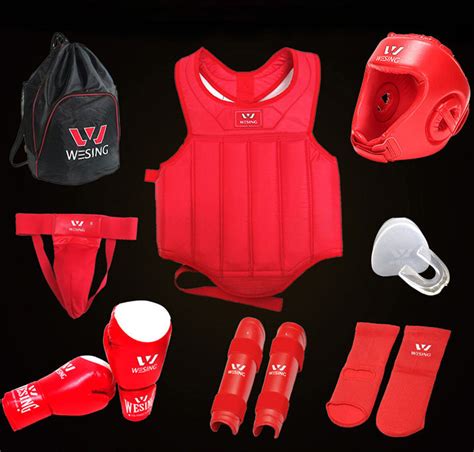
Typical protective equipment for martial arts also depends on the type and level practiced. Often, with non-contact martial arts, there is little in the way of protective equipment apart from foam floor mats. With the addition of contact in martial arts, often kids will use some form of headgear, body gear (particularly of the lower extremity for kicking), and a mouthguard. While these can help with many of the soft tissue and dental injuries, unfortunately, no protective equipment has been shown to help prevent concussions.
Martial Arts and Physical Fitness: A Scientific Perspective
Many studies have explored the application of various martial arts programs in children in order to improve their motor skills and physical fitness. Positive effects could sometimes be visible, especially in children who have been practicing martial arts since childhood. Regarding motor abilities, the development of explosive power, speed of movement, agility, strength, balance, and precision could be noticed, while on the other hand, in addition to specific physical fitness, aerobic and anaerobic endurance were developed.
One study by Pinto-Escalona et al. conducted a one-year investigation in which the experimental group underwent karate intervention at school that led to improved cardiorespiratory fitness and balance in the children. The results showed that the EG had twice the overall growth rate of physical fitness compared to the CG, with the highest growth rate observed in children in the EG in the “Flamingo” pose (balance).
Based on the main findings, karate, judo, taekwondo, and aikido programs showed positive effects on physical fitness components. According to the results, the effects of these programs showed significant differences between the initial and final measurements of most of the examined experimental programs, but also when compared to the control groups.
Summary of Study Results
The following table summarizes the findings of various studies on the effects of martial arts programs on children's physical fitness:
| Martial Art | Study | Duration | Findings |
|---|---|---|---|
| Karate | Kyrpenko et al. | 24 months | Large statistically significant improvement in cardiorespiratory endurance. |
| Judo | Brasil et al. | 12 weeks | Decrease in VO2peak parameter in obese children, statistically significant differences in HR at the VO2peak between non-obese and obese children. |
| Aikido | Pop et al. | 8 months | No statistically significant differences between the EG and the CG in the final measurements of cardiorespiratory endurance. |
| Judo | Sekulic et al. | 9 months | Statistically significant differences in the final measurements of the 4 × 1.98 m shuttle run agility test in an experimental group of subjects composed of boys. |
| Karate | Ma and Qu | 2 months | Statistically significant difference in the final measurement of the EG in the 4 × 5 shuttle run test. |
Martial arts are a great opportunity for kids to build positive self-esteem and find community. Young kids’ eager minds grasp new ideas and techniques readily. Childhood is one of the best times to start on the path toward self-respect, respect for others, respect for healthy authority figures, as well as physical health and emotional balance.