A Kwon Taekwondo uniform, commonly referred to as a dobok, is more than just athletic wear-it's a symbol of discipline, tradition, and personal progression in one of the world’s most dynamic martial arts. Understanding the differences between Taekwondo uniforms helps practitioners choose the right gear for training, competition, or personal development.
Taekwondo is renowned for its fast, high, and spinning kicks, and the uniform plays a vital role in enabling freedom of movement while reflecting the practitioner’s rank, style, and purpose.
The Kwon Taekwondo uniform (or gi) is an essential piece of gear for practitioners at all levels, worn during training, competitions, and formal events. Instructors and students alike rely on Kwon uniforms during daily practice sessions.
Beyond its practical benefits-such as moisture-wicking fabric, reinforced stitching, and breathable construction-the Kwon uniform plays a symbolic role in fostering unity, identity, and focus within the martial arts community.
The tailored cut and high-quality cotton blend provide optimal flexibility, allowing for full-range motion during kicks, blocks, and stances. Durability is especially important during sparring drills and conditioning exercises, where the gi is subjected to pulling, twisting, and impact.
Read also: Is the Century Taekwondo Uniform Worth It?
Kwon uniforms meet the strict regulations set by international governing bodies such as World Taekwondo (WT), ensuring compliance in official tournaments at local, national, and global levels.
Many competitive Kwon gis feature official electronic scoring sensor compatibility and designated areas for national flags, sponsor logos, and athlete names.
Belt promotion tests are pivotal milestones in a practitioner’s journey, and wearing a properly fitted Kwon uniform is a mandatory requirement. Judges evaluate not only skill execution but also the presentation of the uniform-its cleanliness, fit, and proper insignia placement.
Kwon uniforms are standard attire for participants in specialized training events led by master instructors or visiting black belts. Wearing a consistent uniform fosters a sense of equality and shared purpose among attendees, minimizing distractions and emphasizing collective growth.
At public events, school showcases, or cultural festivals, Taekwondo demonstrations highlight the art’s power, precision, and elegance. The crisp white fabric, paired with colored belts and official patches, creates a visually striking presentation.
Read also: The Meaning Behind Taekwondo Belts
During controlled sparring and self-defense drills, the Kwon gi provides both protection and mobility. The durable fabric withstands repeated grabbing and pulling, common in close-range combat training.
For new students, wearing a Kwon uniform marks the beginning of their Taekwondo journey. It instills a sense of belonging, discipline, and confidence from the very first class. Instructors often emphasize the symbolic meaning of the uniform-representing respect, humility, and commitment-which supports character development alongside physical skill.
Beyond physical training, Kwon uniforms are worn during opening/closing ceremonies, award presentations, and dojang (training hall) rituals.
Important: Always ensure your Kwon Taekwondo uniform meets the standards of your governing body or school. A poorly fitted or non-compliant gi can result in disqualification during competitions or a negative impression during gradings.
Selecting the right taekwondo uniform is essential for performance, comfort, and authenticity. Kwon, a respected brand in martial arts apparel, designs uniforms that balance tradition with modern functionality.
Read also: Excellence in Taekwondo
Important Note: The design and materials of taekwondo uniforms can vary significantly based on intended use-whether for training, competition, or demonstration.
A well-fitted Taekwondo uniform (dobok) ensures freedom of movement, safety, and a polished look during practice or competition. There are few things that fill a parent with more pride than seeing their child stand tall in their crisp, white martial arts uniform.
By learning how to manage the sweat, stains, and smells, you can ensure your child’s gear lasts longer and they stay healthy, supporting their martial arts journey from their first white belt to the black belt they dream of.
The dramatic full-body movement associated with Tae Kwon Do forms and sparring require considerable flexibility and range of motion. Don't let your uniform hold you back. ProForce® Tae Kwon Do uniforms offer just the right balance between durability and flexibility, allowing you to kick, jump, and spin without feeling restricted.
While some Tae Kwon Do practitioners (taekwondoin) may choose to wear other colors, most taekwondoin at both novice and master levels wear uniforms in either black or white. You may also see some practitioners wearing uniforms in either black or white with detailing of the opposite color.
If you are still a student, check with your instructor or with another member of dojang staff before purchasing a uniform to ensure you get one in an appropriate color. In many cases, instructors wear a black uniform while students wear white, and junior-level instructors may wear white uniforms with black accents.
Color may not be a matter of personal preference for your dobok, but weight often is. ProForce® Tae Kwon Do uniforms come in a variety of different fabric weights, giving you the power to choose the right material thickness and heaviness.
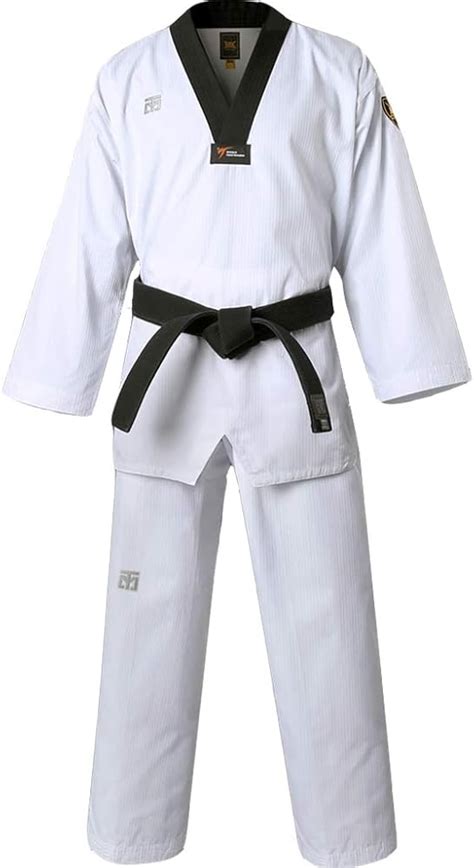
Uniform fabrics with heavier weights tend to be crisper and more durable, but they will weigh on you more and make you feel hotter. Fabrics with lighter weights are typically most suitable for children and beginners, while heavy fabric weights are best suited for instructors and other expert-level practitioners.
Tae Kwon Do uniforms come in three pieces: pants, jacket, and belt. Belts are earned and are usually given by or purchased from your dojang or martial arts gym, though kids' uniform sets may come with a basic white belt. That means you need to worry about sizing and fit for the uniform top and bottoms only.
These are considered unisex garments, but separate kids' sizes are available for younger practitioners. Sizing for most ProForce® Tae Kwon Do uniforms runs in numerical sizes based on height and weight.
If you are heavier and shorter than the proportions listed, we recommend purchasing a larger size to ensure that the pants and jacket do not have too snug a fit.
Many instructors require that students clean and press their Tae Kwon Do uniforms before every class. ProForce® uniforms are made from durable and washable cotton-poly blends that are easy to care for. However, even the best-tended uniform will wear out and become dingy over time.
White uniforms in particular can lose their brightness or become stained. Due to the high kicks and other demanding movements used in Tae Kwon Do, it's important to have a full range of motion, particularly around the waist, hips, and legs. Our Tae Kwon Do pants feature an elastic drawstring waist to facilitate that full range of motion.
You'll also want your pants to have a reasonably loose fit without being so loose that they cause motion impediments of their own. Jackets with side vents at the hips are ideal for allowing high kicks and spinning kicks, which are important movements in Tae Kwon Do.
To figure out your taekwondo uniform size, you'll need to compare your height and weight using a height-weight system[1]. Fit Check: Make sure the uniform fits well.
Test arm mobility by raising your arms overhead, and ensure the pants allow for high kicks without restriction. Material Choice: After finding the right size, pick a material weight that suits how often you train.
Lightweight fabrics may be better for beginners, while heavier options might suit advanced practitioners. Your uniform should offer full range of motion and look polished.
Measure Height & Weight: These are key factors for sizing. Proper sizing improves technique, reduces injury risks, and ensures comfort. As mentioned earlier, dobok sizing follows a specific system. Getting the right measurements is key to finding a dobok that fits well and allows for proper movement during Taekwondo practice.
To measure your height, stand barefoot against a wall. Use a reliable scale to check your weight[1]. For your waist, grab a flexible measuring tape and measure around the narrowest part of your torso - usually just above your belly button. For kids (as explained in the Kids vs Adults Sizing Guide), height is the most important factor. Leave some extra room for growth, as outlined in earlier tips.
Dobok size charts differ by brand but generally follow similar guidelines. Each major taekwondo uniform brand uses its own sizing system. When using brand sizing charts for children's uniforms, it's important to keep growth and movement in mind. Kids grow fast, so their uniforms need to keep up.
To get the most out of a uniform, choose a size based on their current height but leave room for 6-12 months of growth. For instance, a child who is 130cm tall might need a 140cm size[1][3]. If the uniform is slightly big, a few simple adjustments can make it work.
Once you've chosen the right size, keeping your uniform in great shape is all about proper care. Regular maintenance helps avoid shrinkage, which can affect the fit described in sizing charts. If you need to adjust your dobok for a better fit, focus on maintaining its durability and structure. For more complex alterations - like those needed for competitions - consider hiring a professional.
Getting the right dobok size plays a key role in improving training and ensuring safety. For both beginners and seasoned practitioners, a well-fitted dobok not only supports better technique but also reflects the discipline and respect central to Taekwondo.
When making the final choice, prioritize performance. Opt for a size that ensures mobility while keeping the traditional proportions intact[3][4].
The Dobok (Martial Arts Uniform): A Step-by-Step Washing Guide. A clean, bright uniform is a sign of respect in the dojang or gym.
Whether it’s a Tae Kwon Do dobok, a Karate gi, or a Judo gi, the principles of care are largely the same. Keeping it in top condition requires more than just tossing it in the machine.
Step 1: Pre-Treating Stains (Sweat, Grime, and Blood)
Before the uniform ever touches the washing machine, a little pre-treatment can make all the difference.
For Sweat & Grime
The most common culprits are sweat stains and general dinginess, which can make a uniform look yellow over time. To combat this, pre-soak the uniform for about an hour in cold water with a cup of white vinegar or half a cup of baking soda. These natural whiteners break down the oils in sweat without damaging the fabric.
For Blood Stains
In a contact sport, small blood stains from a scuff or a scratch from sparring partners can happen. The absolute key is to act fast and use only cold water. Hot water will cook the protein in the blood, setting the stain permanently. Gently dab the stain with a soft sponge or cloth soaked in cold water and a small amount of mild soap or dish soap. Work from the outside of the stain inward to prevent it from spreading.
Step 2: The Right Way to Wash the Uniform
Once stains are treated, it’s time to wash the uniform.
Detergent Choice
Avoid harsh detergents. Opt for a mild soap or, even better, a sports specific detergent designed to tackle sweat and bacteria in athletic clothing. Regular laundering of cloth martial arts gear with such detergents is crucial to maintain hygiene.
The Golden Rule: No Bleach!
It might seem tempting to use bleach to keep a white uniform bright, but this is the fastest way to destroy it. Bleach breaks down the cotton fibers, making the fabric weak and brittle. Over time, it will actually cause the uniform to turn yellow.
Machine Settings
To regularly wash the pants and jacket, use a gentle cycle. You have a choice between cold water and warm water. Cold water is the safest option to prevent any shrinking and is effective for most washes. If the uniform is particularly grimy, warm water can provide a deeper clean, but never use hot.
Rinse Cycle
Always select an extra rinse cycle if your machine has one. This ensures all detergent residue is washed away, which is crucial because leftover soap can irritate the skin and weaken the fabric over time.
Step 3: Drying Techniques to Extend the Life of the Dobok
How you dry the dobok is just as important as how you wash it.
Best Method
The absolute best way to dry a martial arts uniform is to hang dry or air dry it. Hang it on a sturdy hanger immediately after washing to prevent deep wrinkles from setting in. This method preserves the integrity and shape of the fabric for the longest possible life.