Mixed Martial Arts (MMA) is a dynamic and ever-evolving sport, blending various fighting disciplines into a unique and exciting spectacle. This article explores the essential techniques, highlights key fighters, and offers predictions for the future of MMA.
Understanding MMA Techniques
In this new series, we will examine basic MMA techniques that are an essential part of a modern fighter’s arsenal. We will include video tutorials from YouTube as it is important to provide all information required in order to make these techniques work.
Although there are many variations of each technique, the desired end-result determines how each technique is executed. Different approaches enable or disable certain outcomes, for example they can enhance or compromise the power and speed of the technique or the ability to use follow-up techniques and proper defense.
Instructional resources are of utmost importance, but it is not easy to identify quality content between a large number of available videos. With that in mind, we reviewed hundreds of videos and have collected here the most efficient ones for your viewing pleasure. In some cases, adequate instructional videos were not available so we had to provide fight clips and detailed analysis.
Keep in mind that these techniques are provided in isolation, meaning that they are not explained within the context of a combination or counter. We will focus on combinations in follow-up posts.
Read also: Drawbacks of Elbow Pads in MMA
Leg Kicks
In this first part we will start with low kicks and explosive sweeps (without grips). Attacking the opponent’s legs.
The foot is the stronger weapon in a fighter’s body (the harder one is the knee and the elbow is the fastest). Due to that, kicks are great weapons but there are several factors that can determine their effectiveness:
- Reach and distance: When fighting from a distance, the opponent’s feet are the closest target that we can attack with our own kicks . Reach is of crucial importance when it comes to kicks. It is very difficult to counter a fighter with a significant reach advantage.
- Power and conditioning: Hard kicks are very difficult to defend against. Drilling kicks correctly by using the hips and focusing on explosiveness can enhance power. This can be achieved by kicking the heavy bag. Safe training and proper recovery are very crucial. Shin conditioning in order to deliver and absorb damage is also very important. Do not risk getting injured by kicking against hard surfaces.
- Speed and elimination of telegraphing movement: All the power in the world will not help you if you cannot land the kicks. Proper technique and natural athletic attributes enable some fighters to be faster than others.
- Damage or distraction: Some kicks are designed to land with brute force and others are just uses as distractions, in order to guide the opponents’ attention high or low, left or right so that a second strike or a combination can penetrate their defenses.
- Rhythm: This factor is often the more important one. There are many striking rhythms including but not limited to double and triple attacks, punches to kicks and vice versa and changing gears from power to speed or from short to long penetrating attacks. These factors will get analyzed in detail in an upcoming post.
That being said let’s start studying the main leg kicks used in MMA and kickboxing.
Left Inside Low Kick
This is a fast kick and needs to be used with caution and at a distance in order to avoid counter punches reaching your face.
Here is Dutch kickboxing coach Henri Hooft:
Read also: Elbow Pads and Muay Thai
Left Low Kick to the Back Leg
This kick is very popular in Dutch kickboxing but not as popular in Muay Thai or MMA.
Let’s examine two fight clips, featuring this powerful kick (source):
In the photos above, Dutch kickboxing legend Rob Kaman showcases how powerful a left low kick to the back leg can be. This is a devastating low kick and in photos 1-3 you can see how it can result in opponents taking a back-kicking-like spin and lose their balance. (Click here for clip/gif)
In the other example above (photos 4-6), Rob’s opponent lifts his left kick to shin-block in anticipation of another right low kick and tries to attack with a right cross. Kaman pulls back and lands a hard left low kick to his opponent’s supporting leg dropping him to the ground. (Click here for clip/gif)
Right Low Kick to the Thigh
This is the most popular kick in Muay Thai.
The Oblique Kick
This is a French Savate kick, popularized by Bruce Lee and Jon Jones. Here is Jon teaching the kick:
Bruce Lee’s side kick to the knee This is another Savate kick made famous by Bruce Lee and Jon Jones. It is a great way to attack opponents from a safe distance and score points.
Here are several videos focusing on or including the kick. Analyzed at the 07:16 mark:
Here is an analysis of Jon Jones’ oblique kick and the low sidekick:
MMA: More Than Just Four Disciplines
From time to time, I like to share my personal definition of our great sport, a definition that is obviously stated in these three words: Mixed Martial Arts. MMA is a mix of five individual sports or martial arts.
The commonly mentioned ones are the following four specialized arts: Brazilian Jiu Jitsu, freestyle wrestling, Muay Thai, and boxing. Arts like karate, catch wrestling or sambo can often replace some of the aforementioned arts depending on each athlete’s fighting background.
In general the basic fighting disciplines area punching arta kickboxing art a submission grappling arta takedown art
An inquiring mind will wonder why I insist that MMA, as a fighting art, is comprised of five basic disciplines although I only just mentioned four specialized arts. This is because there is a less obvious art involved and the one that is the most effective.
MMA-Specific Techniques & Combinations
The fifth art is MMA itself, defined by a set of techniques that are MMA-specific. Those are hybrid techniques which are either not used in the same manner or are illegal in the aforementioned specialized fighting sports.
Examples of these techniques are grinding and pummeling against the cage, foot stomps and ground and pound strikes.
As we will see bellow, MMA-specific techniques can also be used in MMA specific unique combinations. This is what MMA commentators often refer to as “mixing things up”.
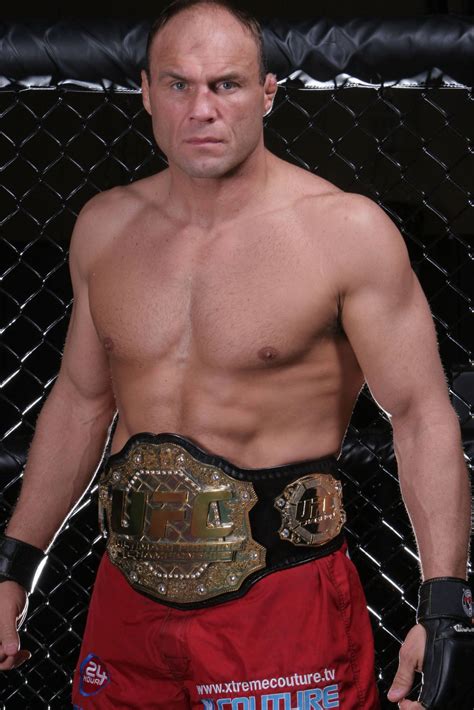
One way to examine how MMA-specific techniques evolved is to study Randy Couture’s career. Randy was a pioneer who combined techniques of his sport of origin (Greco-Roman wrestling) with strikes, to make them effective under Octagon rules, thereby making them MMA-specific.
Examples of these techniques are his famous single necktie to dirty boxing and his underhook control while delivering punches. Mark Coleman is another example of a fighter who modified the advantages of his discipline for MMA. Coleman used his top wrestling game to deliver devastating ground and pound strikes.
Definition of MMA Fighting
So here is a basic definition of MMA as a method of fighting for sport or self defense:
The fighting art of MMA is the unique combination of techniques from specialized fighting disciplines as well as the implementation of these techniques in a way that is not possible in their originating fighting sports. These techniques can be non-MMA specific (a jab) or MMA specific (stepping on the cage to deliver a kick).
Combinations can also be unique/specific to MMA or based on standard specialized arts. Examples of these unique MMA combinations are the use of wrestling to set up punches, the use of striking attacks to set up takedowns and strikes to set up submissions.
This unique combination maximizes the efficiency of each technique making it possible for a MMA fighter to beat a fighter who is very effective in only one of the four specialized arts. For example under MMA rules, a mid-level MMA fighter can beat a Brazilian Jiu Jitsu black belt using ground and pound when the fight hits the canvas, an outcome that would not be possible in a grappling match.
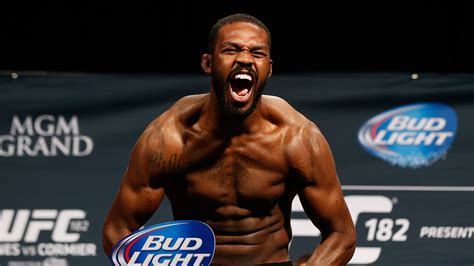
The best pure MMA fighters of the modern era are Jon Jones, Georges St-Pierre and Demetrious “Mighty Mouse” Johnson. They are pretty good at every individual discipline but their strength lies in that they are masters of combining these skills into an art which can beat all other fundamental disciplines. Another fighter who is expanding his skill-set and is starting to fit this description is Henry Cejudo.
My definition of a pure MMA fighter is one that can turn the tables by shifting to another mode of fighting if necessary.
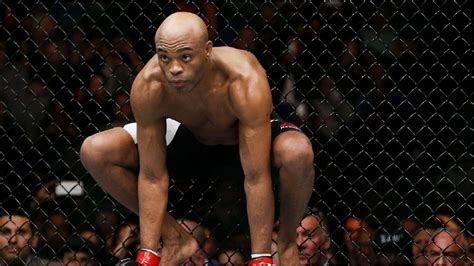
Striking specialists like Anderson Silva or submission artists like Demian Maia, are MMA legends (I am a big fan of both) but do not fit my description of a MMA fighter that can turn the tables by shifting to another mode of fighting. If Anderson is losing a striking fight he will not try to take you down (although he has a great submission game), and Demian will still be trying to submit you no matter how many times he fails to take you down.
That being said MMA competition was built on having specialists of different sports fighting each other and tallent is hard to beat so this post is in no way trying to disrespect these fighters. They are the ones that force competition standards to rise by forcing coaches and fighters alike to find ways to beat their extraordinary skills.
The Melting Pot
MMA is a melting pot which forces all competitors to evolve and modify their game one way or another. Sparring has a lot to do with this transformation.
For example if you come from a karate background and you continuously spar with kickboxers, you will learn how to deal with low kicks, the Muay Thai clinch, jabs, and hooks. Eventually you will become a kickboxer yourself although fans will still identify you as a karate fighter.
Champions from other fighting sports, on the other hand, put different challenges on the table when they start competing in MMA. Mark Coleman, Lyoto Machida, and Mirko Cro Cop had great success in the beginning of their careers until MMA trainers and athletes adapted to their fighting styles using MMA specific methods to beat them.
I do not care who you are, if there is enough fighting footage for them to study, your opponents will train specifically for your strengths and weaknesses and will eventually be able to counter you. As a result, this changes the MMA game by enriching it with new tactics and skills. But keep in mind that specialists are always dangerous and well-rounded fighters should never underestimate them. A BJJ world champion only needs to secure a takedown to beat an MMA fighter. A kickboxer only needs to land once.
MMA specific techniques are important but we must note that in order to expand and sharpen their MMA arsenal, fighters need to train with specialists of other sports any chance they get.
GSP, for example, had training bases in Greg Jackson’s and Firaz Zahabi’s gyms, but also had a boxing coach, a Muay Thai coach, a wrestling coach, and others. This provided him with the opportunity to raise his level way above the average MMA sparring partner’s by sparring against specialists. Rolling with a BJJ world champion is not the same as grappling with your average MMA grappler. Finding good sparring/grappling partners is always a difficult task but is worth the effort.
The MMA Game: Specialized MMA Coaching
The way I look at it, an MMA coach is an architect trying to build a house using the best materials and methods provided by specialized craftsmen. Individual sports are rivers of wisdom that join in the ocean which is MMA.
So, in order to get better in MMA we should appreciate and study all effective forms of fighting in their own sport rules, and at the highest levels. But it takes a true MMA coach to know what works in MMA and what does not. To know, for example, that an overhook in the clinch will save you from getting knocked out in boxing but in MMA it will give an underhook to your opponent, and probably a takedown opportunity.
Unfortunately, this is no easy task. Our sport is relatively new and everybody seems to be learning through trial and error. There are not many MMA masterminds out there. It seems to me that coaches who have a grasp of the MMA game are Javier Mendez, Greg Jackson, and Matt Hume.
GSP’s philosophy in particular is heavily influenced by coach Greg Jackson. Jackson’s fighters would often apply gameplans and tactics that go well beyond your traditional kickboxing or grappling game. For example, they would combine the use of the cage, wrestling, and grinding to make opponents carry their weight and work harder.

Like his former head coach, GSP’s conceptual framework was the “study of the game”. I first heard about the “game” concept from BJJ legend Marcelo Garcia. He focuses on teaching and understanding the grappling game as a whole rather than a list of individual techniques. Each move is a part of a puzzle, creating opportunities or countering attacks.
What comes before and after every move is important, but the game is not just comprised of techniques in chains or combinations. Tactics and objectives for every round are the driving force behind training, performing and game-planning.
This conceptual framework of understanding MMA as a complete game is important in defining MMA striking and MMA grappling and applying them in a way that is unique to MMA.
Definition of MMA Striking
MMA striking is the art of:
- Hitting opponents from the furthest distance away, exposing the least amount of your body, while getting into position to strike with maximum leverage and not get hit.
- Closing the distance in order to strike from angles or to avoid taking damage
- Getting the clinch or pressing against the cage to attack with dirty boxing and clinch fighting strikes in order to neutralize your opponents’ speed, power or reach and make them work while carrying your weight.
- Getting takedowns when your opponents are expecting strikes and connecting with strikes when your opponents are expecting takedowns.
- Delivering ground and pound strikes from dominant positions to punish and cut your opponents with punches and elbows to limit their vision, demoralize them and disrupt their breathing patterns.
- Attacking with strikes from the bottom without exposing your limbs to submissions in order to create space, escape or get a submission.
- Landing strikes when opponents open themselves up to defend submission attempts or getting submissions by isolating your opponent’s limbs when they cover from strikes.
MMA Grappling
MMA grappling is the unique combination of wrestling, strikes on the ground (often referred to as “ground n’ pound”) and Brazilian Jiu Jitsu positions, sweeps, escapes and submissions. This unique combination allows a fighter to: