Neil deGrasse Tyson, a prominent astrophysicist, author of Starry Messenger, host of StarTalk, and director of the Hayden Planetarium in NYC, offers unique perspectives on the intersection of science and religion. His views, shaped by a blend of scientific inquiry and personal experiences, provide valuable insights into how we perceive the universe and our place within it.
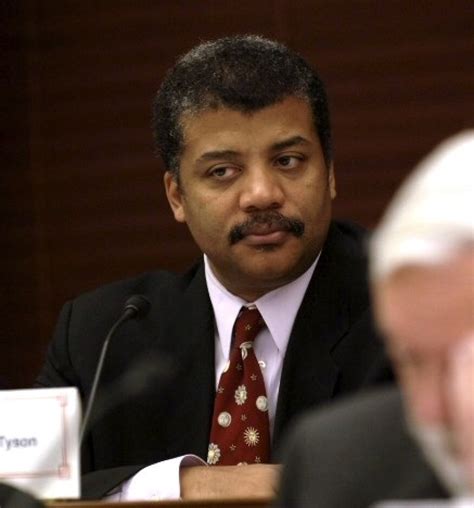
Tyson's approach is characterized by a commitment to rationality and evidence-based thinking, which he applies to a wide range of topics, from cosmology to social issues.
Early Religious Background and the Influence of Science
Growing up in a Catholic family, Tyson attended church regularly and received religious instruction. However, a visit to the Hayden Planetarium at the age of nine profoundly impacted him, sparking a fascination with the vastness and infinitude of the universe. As he delved deeper into science, the teachings he received in church began to make less sense to him.
Importantly, Tyson emphasizes that decisions in his household were never made based on religious texts or doctrines. Instead, reason and potential consequences guided his upbringing. This upbringing contrasts sharply with those who grow up in environments where religious beliefs dictate every aspect of life.
Tyson says:
Read also: Space Travel: A Conversation with Neil deGrasse Tyson
"So in other words, if there’s a reason to do something or to not do something parent to child, the argument was never, what would Jesus think? Or what would happen after we die? Or what would God do?...It was, here’s the reason, okay, you could get hurt doing this or this would have consequences in this other way."
He notes that detaching oneself from deeply ingrained family principles and missions rooted in religion can be a challenging process.
Knowledge of Religious Texts
To better understand religious perspectives, Tyson embarked on a personal study of various religious texts, including the Bible, the writings of Joseph Smith, tracts from Jehovah’s Witnesses, the Torah, and the Quran. This extensive reading has made him remarkably fluent in religious concepts, often surpassing the knowledge of those who identify as religious.
"And what is certainly true is that I know more about your religion than you know about my science. That’s true in almost every case. Yeah. And so that in that way I can have a conversation with people when they quote a Bible passage." - says Tyson.
His fluency allows him to engage in informed discussions and bridge the gap between scientific and religious viewpoints.
Read also: Cosmic wonder with Neil deGrasse Tyson
Bridging the Gap: Dialogue, Not Debate
Unlike some prominent atheists who engage in debates with religious figures, Tyson avoids debates as a matter of principle. He believes that debates often prioritize charisma and likability over the pursuit of truth. Instead, he aims to foster dialogue and understanding, recognizing that truth should not be determined by who is more charismatic.
Neil deGrasse Tyson: Science and Faith | Big Think
Tyson views the relationship between science and religion not as a gap to be bridged, but as a continuum. He points out that many enlightened religious individuals and communities are perfectly comfortable with scientific advancements.
The Role of Interpretation and the Vocal Minority
Tyson highlights the historical role of religious leaders in interpreting religious texts for the masses, especially in times when literacy was limited. He also emphasizes that much of the perceived conflict between science and religion stems from a vocal minority of fundamentalist Christians, whose views are often amplified by the media.
"And appended to the back of that are statements that endorse evolution from major religious organizations, which is a reminder to us that most of the conflict that we see and hear about is from a vocal minority of fundamentalist Christians. And they have the bully pulpit and the press goes to them and they make better clickbait than someone who’s just, yeah, I’m cool with it. That’s not clickbait, but say, well, let’s burn all gays, because that the Bible says so then somebody’s going to click on that, and that voice gets louder and louder and louder." - he explains.
Consistency and Rethinking the Rules
Tyson stresses the importance of consistency in one's beliefs and actions. He observes that societies evolve over time, and some religious practices become outdated or inconsistent with modern values. He points out that cherry-picking certain religious rules while ignoring others can lead to inconsistencies.
Read also: DeGrasse Tyson on Civilization
"So to cherry pick what’s written there and then invoke it is, I’ve always felt was a little bit I don’t want to say unfair. I want to say it’s inconsistent. Yeah, they’re inconsistent. That’s a simpler, better word for it. And I’d like living a consistent life, so that when I see inconsistencies, I have to point it out." - says Tyson.
Cosmic Perspectives on Civilization
In his book "Starry Messenger: Cosmic Perspectives on Civilization," Tyson applies cosmic insights and scientific rationality to a wide range of topics, including risk and reward, gender and identity, color and race, and life and death. He encourages readers to critically examine their beliefs and base them on objective evidence.
Spirituality and the Universe Within
Tyson acknowledges the concept of spirituality, which he defines as a sense of connection to something larger than oneself. He emphasizes that we are not only in the universe, but the universe is also in us.
He beautifully articulates this connection:
"Recognize that the very molecules that make up your body, the atoms that construct the molecules, are traceable to the crucibles that were once the centers of high mass stars that exploded their chemically rich guts into the galaxy, enriching pristine gas clouds with the chemistry of life. So that we are all connected to each other biologically, to the earth chemically and to the rest of the universe atomically. That’s kinda cool! That makes me smile and I actually feel quite large at the end of that. It’s not that we are better than the universe, we are part of the universe."
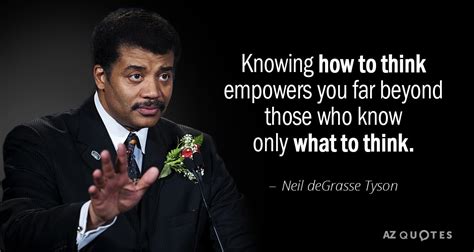
Key Philosophies
Tyson is driven by two main philosophies:
- To learn more about the world each day than he knew the day before.
- To lessen the suffering of others.
Notable Quotes
Here are some of Neil deGrasse Tyson's most thought-provoking quotes:
- "We are all connected; To each other, biologically. To the earth, chemically."
- "The atoms of our bodies are traceable to stars that manufactured them in their cores and exploded these enriched ingredients across our galaxy, billions of years ago. For this reason, we are biologically connected to every other living thing in the world. We are chemically connected to all molecules on Earth. And we are atomically connected to all atoms in the universe."
- "I look up at the night sky, and I know that, yes, we are part of this Universe, we are in this Universe, but perhaps more important than both of those facts is that the Universe is in us."
- "Whether or not you can never become great at something, you can always become better at it. Don't ever forget that! And don’t say “I’ll never be good”. You can become better!"
- "One of the biggest problems with the world today is that we have large groups of people who will accept whatever they hear on the grapevine, just because it suits their worldview-not because it is actually true or because they have evidence to support it."
Neil deGrasse Tyson's unique blend of scientific expertise, philosophical insight, and engaging communication style makes him a compelling voice in the ongoing dialogue between science and religion. His emphasis on rationality, evidence-based thinking, and the interconnectedness of all things provides a valuable framework for understanding the universe and our place within it.