In order to grow as a martial artist, it’s important to keep going back to the beginning. As Wing Chun practitioners, our goal is to keep it as simple as possible. In our case, less is more.
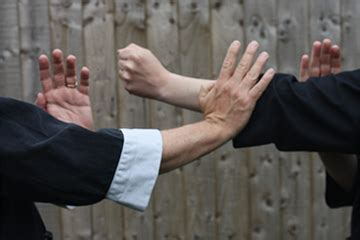
In this article, we are going to talk about Wing Chun basics, specifically the Pak Sao. I often tell my students that in most cases I can get my business done with simple techniques like pak dars, lop sao, etc. The reason is that I have spent countless hours practicing and perfecting these techniques.
As simple as they are to perform it can take many years of training to use these techniques effectively. If we take Wing Chun as a whole there really aren’t many parts to the system. After all, there are only 3 forms and from those forms, we find an arsenal of counter-offensive techniques.
The Importance of Basics
I am not sure how many people I have taught over the years but I am sure it’s in the hundreds and I am sure even more for Sifu Phu. Because of being blessed to have a chance to train with many people, it has also been an opportunity for me to continue going over my basics. Every time I teach a student how to pak sao, it just enforces to me how to do an effective pak sao.
At first, it seems like using these techniques is difficult, however over time with practice they become second nature. And that my friend is the key. I remember when I first started learning Wing Chun, everything to me seemed very difficult. In fact, I use to worry that I would never get “IT”. I did though get “IT”. The main reason why I got it was that I have always been focused on the basics.
Read also: Contributions to Wing Chun
In real combat, we don’t have too much time to think about what to do. So it’s always best to keep things simple. It doesn’t get much more simple than using pak sao (slap block). While it is a deflection you can also use the technique offensively as part of jutting or weapon striking.
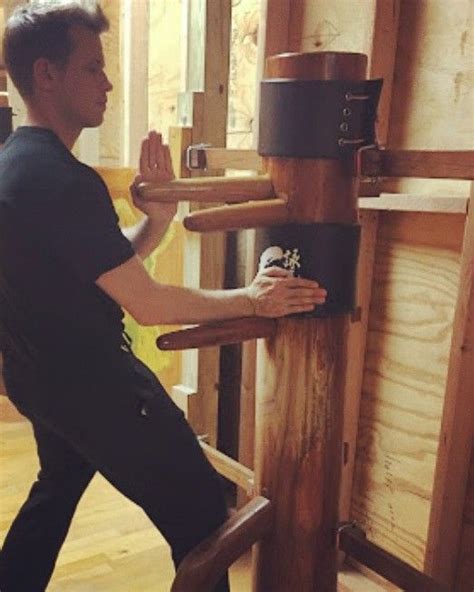
One of the most popular beginner techniques for self-defense is Pak Sao. You will need to maintain a good stance throughout the exercise focusing on your center line. You should perform this exercise paying close attention to the form of the drill, focusing on the wooden dummy.
Inside Pak Sao Technique
A favorite technique of mine, I demonstrate on how I apply the inside Pak Sao technique in Chi Sau and in the Lop Sau drills. Some Chunners say using the pak Sau on the inside is wrong an you can get trapped easy, but I have found it to be very effective to the contrary. Hope you enjoy the video.
Chi sau: Inside & outside pak sau
The dangerous aspect of inside pak-sau is that you potentially open up the line on the side of your paking hand as it crosses center. I'd be especially wary of using it outside of a chisao context, against someone who's really trying to hit you.
When I use the inside pak sau sure there is a risk like you mentioned and I have already calculated it and I'm ready for him to try to hit me with his other hand. If he tries that pak hand is already traveling twords him and will intercept his attack. It will work if the timing is right, so far I have gotten away with it but when they try to use it on my I usually nail them with it. So, although I agree in general it is not the safest technique for myself I can so far pull it off.
Read also: Maximize Your Wing Chun with the Dummy
Is it good to train in Chi Sau? I would say yes but not to a beginner. I explore what I can and cant do and what works for me, so that is how I evaluate and determine what I will and wont use. I think when you take two people who know the same system have about the same level of training and skill, It is the persons who thinks outside the box IMO that will be the winner.
I've generally been taught thus far in my WT lineage that an inside pak to intercept an incoming strike is sort of a last resort or "oh $h!t" reaction. Where inside pak is very useful (and chi-sau emphasizes this) is to open up the center and free your opposite arm to strike once contact has already been made.
Learning attacks and counters in Chi Sao should be a specific method. I also encourage my students to play and find out what works and why. What doesn't work and why. Every attack should place one in a position of advantage and to simultaneously defend one's positions while limiting the opponent's.
There are numerous 'tricks' that work on based on speed and timing vs one not as advanced as you in the Chi Sao platform but will probable get you hurt vs someone attacking at range and at full pressure even though they do not have your skill in chi sao. What will happen when you are vs one who is faster than you or an injury prevents your speed?
It seems like you shift speed from slow to fast during chi sao. If your opponent goes at 50% speed same as you, the moment you speed up to 80-100% you will give yourself a huge advantage not only in reaction time but also movement as well. It always takes time, no matter the skill, for your opponent to react in accelerated speed. A sort of numbness that I believe only a select few grandmasters may probably have mastered.
Read also: Understanding Siu Lim Tao
Wing Chun Drills and Exercises
Many Wing Chun masters “Sifu” recommend practicing Wing Chun drills solo for self-defense before starting training with a partner. But, it can be unclear which training drills to practice alone and which drills to practice with a partner. In this guide, we listed the most effective Wing Chun drills to work on alone and the drills to work with a partner. Also, we described the details of how to perform those solo training drills to benefit the most from them.
Wing Chun Ring Drills
Wing Chun ring drills help learn the positions of the arms in a limited space at home. Using these training drills, students learn to keep their elbows on the center line. That develops extra power to the martial arts attack and defense. These drills help keep shoulders relaxed and develop muscle memory. This is the key point of every Wing Chung movement. The drills help improve arm coordination and Wing Chun hand forms. That helps develop the power by maximizing waist rotation.
The rings are lightweight and can be easily taken anywhere. It’s really up to your individual preference but the Wing Chun ring can be made of tan or other types of wood, metal, or plastic. A ring can be anywhere from half the size of your forearm to the full size of your forearm or somewhere in between. For our students, we recommend a ring between 8 to 9 inches.
You should hold your elbows together. Some students may not be able to touch their elbows and it is totally fine. You may take your funny bone and put your elbows together. Then you will have your hand up and your other hand down but not close to your body. It’s going to be away from your body as your elbows are together. Then from that position, come around to the other side. As you do this, you should do your best to maintain those elbows together and keep them on your center line. Keep the elbows together as you go forward and around as well.
If you can not touch your elbows then you can take something (e.g. a foam roller) and hold it in between and then come across. The benefit of training with Wing Chun rings is that it teaches to maintain elbows and shoulders stability while performing attacks and defenses. It is important to keep elbows and shoulders stable. You can practice at home comfortably and effectively.
Wing Chun Beginner Drills
This is one of the basic exercises of Wing Chun training that will develop your awareness of body positioning and weight distribution. Start with your hands and feet together. Then you need to come out with your feet and bring your hands back with your fists up. While you are in this position you will need to drop your knees down and move them up slowly. This is important legwork that will make your legs stronger when you do this exercise.
In this exercise, you will learn how to turn and twist your body. Put your feet together and then spread them out. Then twist your body while keeping your weight on one leg. The weight distribution should be about 70 to 30 percent. This move teaches you how to walk from this position. It’s important to have the weight on one leg. Try to practice this footwork exercise every morning.
In this exercise, you will learn how to do steps according to Wing Chun’s martial art style. Stand in the position and lift your hands up. You will be tracking your body forward keeping the weight of your body on the rear leg.
Wing Chun Blocking Drills - Tan Sao
Tan Sao (Sometimes spelled as Tan Sau) is one of the basic, foundational Wing Chun techniques for self-defense and you will learn the proper way of doing it. Also, you will get an idea of the wrong way of doing it to avoid mistakes.
Tan Sao (Tan Sau) is very important because it’s used to defend the hook punch or the sucker punch, which is one of the most common attacks in North America. Please be careful, If you do it wrong, the punch will slip through. With the Wing Chun Tan Sao (Tan Sau), the proper way would be the Wing Chun stance. It’s very important that you focus on the elbows and keep them in the center line. An amateur Wing Chun practitioner focuses on the hand, but you should always focus on the elbow. Hands should not be loose but just relaxed. They should always protect your centerline. You should start your movement from the center line and be aware of your body positioning.
When practicing Tan Sao (Tan Sau), another thing you want to look for is your fingers. You do not want to have lazy fingers. Imagine you are holding a plate, your thumb needs to be in. If your thumb is out and you miss, you can break your thumb. But if it’s tucked in, you are going to be okay. The arms angle is also very crucial, it should be 45 degrees. You have to adhere to all these details and go slowly. Using this drill practice movement mechanics and keep your shoulders relaxed but firm like bamboo.
Wing Chun Chi Sao Drills
Wing Chun Chi Sao exercises are conducted with the ball and with the ring. They help develop internal power while keeping hands loose and relaxed. Wing Chun Chi Sao solo training drills are going to maximize your hand sensitivity. That skill of internal power is going to help you perform the other Wing Chun training drills flawlessly.
Usually, the best results are achieved when you perform this drill during four rounds of two or three minutes each. It is completely ok if you feel a burn in your hand muscles at the end of each round as you will train your muscle memory while doing this exercise.
Drills and Exercises To Strengthen Your Core At Home For Wing Chun
Wing Chun requires a good amount of stability in the legs in order to make hands fast and effective. Stand with your back close to the wall and put your heels close to the wall. Bend your knees as low as you possibly can while keeping your back straight, keeping heels on the ground. You will be developing your posture and strengthening your legs at the same time. Put your head against the wall and hold for one minute. Hold this stance for up to 5 minutes.
You will also need to strengthen your lats (latissimus dorsi muscles. They help hold your shoulders down while you are doing the exercises. The plank exercise is recommended to strengthen the lats. You can start on your knees if the plank is too hard at the beginning.
It can be done with a band. Get into your stance, keep your shoulders down and pull your elbows back as much as possible, hold your posture for 5 seconds. Go squat down as slowly as you can. Keep your lower back straight. As you come up, push through your heels, and tuck your pelvis up. Extend one leg and slowly squat down on your other leg. Don’t rest on the other leg when it touches the ground. Switch your legs. Repeat 15-20 times.
In addition to strengthening our bodies, we also need to stretch. Repeat the exercises in the video below daily to improve arm flexibility.
There are 108 forms of this exercise In traditional Wing Chun. Though keep in mind that the wooden dummy is not a punching bag. The wooden dummy drill’s goal is to help condition forearms. It is a very helpful tool to prepare for practice with a partner.
Table of Contents
- Wing Chun Drills
- Wing Chun Drills and Exercises for Solo Practice
- Wing Chun Ring Drills
- How to use Wing Chun rings
- Wing Chun Beginner Drills
- Wing Chun Blocking Drills Tan Sao
- Wing Chun Chi Sao Drills
- Drills and Exercises To Strengthen Your Core At Home For Wing Chun
Wing Chun Curriculum Overview
Wing Chun utilizes very specialized training equipment to enhance and optimize a student’s skill. In some cases, the equipment allows students to express significantly more force than they could with a partner, physically conditioning the student’s body and providing the experience of hitting with power. The Wing Chun Concepts course will primarily utilize the Wing Chun Battle Post or Da Jong, which combines the most important features of both the Wooden Dummy and the wall bag.
The Concepts course includes detailed lessons on how to construct your own Battle Post easily and inexpensively. The Wing Chun Concepts curriculum consists of three primary elements, Structural Development Forms, or simply Forms, Reflex Development Drills, or Drills, and Tactical Development Drills, or Tactics. All of the Wing Chun techniques are first learned from the Forms and Drills.
These sequences provide a safe and effective way to practice and polish the skills. It is important to note that the intent, focus, content, and sequence of movements for both Forms and Drills can change from lineage to lineage, or even from school to school. The most common curriculum framework includes three empty hand forms, one wooden dummy form, and two weapons forms.
Tactics are a modern evolution of traditional (gwoh sau and maai saan jong) combat sparring. Tactical drills pair the Wing Chun technique with Real World self-defense situations to create a laboratory for problem-solving. Tactics are used to incrementally prepare students for sparring and to test the legitimacy of the Wing Chun technique. Tactics may be trained against one or more attackers, with or without weapons present, and you may be defending from a standing position, pinned against a wall, seated, or flat on the ground.
Below is an overview of the entire Wing Chun Concepts curriculum. It follows a strictly linear progression where every completed step in the syllabus builds a foundation for the next. This allows the body to learn, adapt and integrate the techniques until they can be expressed reflexively without conscious thought. The progression also takes into account the changes and transformations in both body and mind.
Wing Chun Concepts does not use belts or formal, military-style ranking. Instead, it uses simple levels of study, much like the progression through college: freshman, sophomore, junior, and senior. Since no one wears kimonos anymore, there is no practical need for belts or sashes. Instead, we use T-shirts, marked and color-coded to note the current level of training.
Levels of Study
- Orientation (Freshman Level): This is the introductory level with a focus on orientation. You learn the requirements for studying Wing Chun Kung Fu, the specific focus of the Zen-based martial arts of Shaolin, and the unique character and objective of the science of Wing Chun’s self-defense system.
- Foundation (Sophomore Level): This is the foundation level with a focus on building strong basics. If you are new to martial arts training, you will want to spend some time at this level to acclimate to the mental and physical demands of training. Building a strong foundation of skill, fitness, and mental endurance at this level assures success in future levels and helps prevent injury. Experienced martial artists should briefly review this level, paying special attention to anything that might be new or significantly different from their previous training. You will learn how to hit without breaking your hand. You will learn about movement and about stillness. If Wing Chun were a legendary sword, this would be the level where the metal was forged, shaped, and tempered. It is also the level where you are given the Keys to the entire system. You will learn the first of three empty-hand forms, learn the shapes and the uses of twenty different Wing Chun “Hands,” and master all of the foundation-level drills of Wing Chun.
- Full-Body Integration (Junior Level): In the equivalent of your sophomore year in Wing Chun, you will learn full-body integration, moving instinctively and intuitively as one continuous whole. You will learn the second empty-hand form, learn to flow through all of the Wing Chun “Hands,” and master all of the intermediate-level drills. You will begin to refine your technique on the Wooden Dummy or Battle Post. You will learn to move, dynamically retarget, and effectively hit and defend all “Gates” or vectors of attack.
- Deepening Understanding (Senior Level): As a junior at the university of Wing Chun, you will be challenged to deepen your understanding of Wing Chun. You will learn the third and final empty-hand form, complete the Wooden Dummy form, and master all of the advanced drills.
- Tactics and Sparring (Graduate Level): The senior or graduate level of Wing Chun is devoted to Tactics and sparring. This is where all of your knowledge and skill - and your physical, mental and spiritual endurance - will be put to the test. This is the level of “stress inoculation,” where you will stare back into the face of raw human violence.
- Classical and Modern Weapons (Post-Graduate Level): This completely optional post-graduate level introduces both classical weapons (the long pole and butterfly swords) and modern weapons (sticks, knives, guns) into the mix. This is the realm of crisis and chaos in the Real World. This is the level of “unconscious competence,” where you hone your skills, reflexes, and instincts to respond without conscious thought.
- Instructor Level: For those to whom Wing Chun has become an inseparable part of their Kung Fu Life, this level provides the skills to become an instructor and take the knowledge of Wing Chun to the next generation. In a sense, this is not the conclusion of training, but rather a new beginning.