Wing Chun is a Chinese martial art with a rich history, originating from the Shaolin Kung Fu lineage. It is a system that emphasizes structure, economy of movement, and directness, making it an efficient form of combat. The art involves various strikes, blocks, and kicks, reflecting a discipline that harmonizes physical techniques with mental fortitude.
The philosophy behind Wing Chun is rooted in practicality and effectiveness. It has produced many famous masters throughout its history, each contributing their unique techniques and skills to the system.
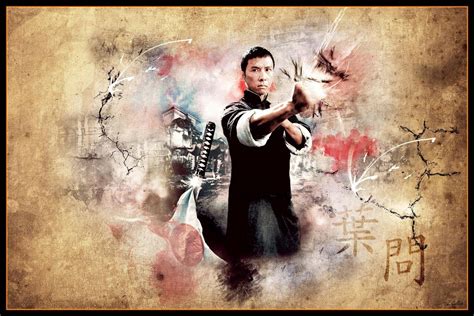
The Origins of Wing Chun
According to legend, Wing Chun was founded by a nun named Ng Mui, who lived during the Qing dynasty in China. Ng Mui was a Buddhist nun who was also a master of Shaolin Kung Fu. She created the system for a young girl named Yim Wing Chun, who was being bullied by a local bandit. The system was designed to be simple, direct, and effective, allowing someone with little physical strength or size to defend themselves against a larger opponent. It involved precise strikes and steadfast blocks that could counter any adversarial kicks.
The Wing Chun Philosophy - 4K (cc for subtitles)
During the reign of Emperor K'anghsi of the Ching Dynasty (1662-1722) Kung Fu became very strong in the Siu Lam [Shaolin] Monastery of Mt. Sung, in Honan Province. This aroused the ear of the Manchu government [a non-Chinese people from Manchuria in the North, who ruled China at that time], which sent troops to attack the Monastery. Although they were unsuccessful, a man named Chan Man Wai, a recently appointed civil servant seeking favor with the government, suggested a plan. He plotted with Siu Lam monk Ma Ning Yee and others who were persuaded to betray their companions by setting fire to the monastery while soldiers attacked it from the outside. Siu Lam was burned down, and the monks and disciples scattered. Buddhist Abbess Ng Mui, Abbot Chi Shin, Abbot Pak Mei, Master Fung To Tak and Master Miu Hin escaped and went their separate ways. Ng Mui took refuge in the White Crane Temple on Mt. Tai Leung [also known as Mt. Chai Har]. It was there she met Yim Yee and his daughter Wing Chun from whom she often bought bean curd on her way home from the market.
Read also: Maximize Your Wing Chun with the Dummy
At fifteen, with her hair bound up in the custom of those days to show she was of an age to marry, Wing Chun's beauty attracted the attention of a local bully. He tried to force Wing Chun to marry him, and his continuous threats became a source of worry to her and her father. Ng Mui learned of this and took pity on Wing Chun. She agreed to teach Wing Chun fighting techniques so she could protect herself. Wing Chun followed Ng Mui into the mountains, and began to learn Kung Fu. She trained night and day, until she mastered the techniques. Then she challenged the bully to a fight and beat him. Ng Mui later traveled around the country, but before she left she told Wing Chun to strictly honor the Kung Fu traditions, to develop her Kung Fu after her marriage, and to help the people working to overthrow the Manchu government and restore the Ming Dynasty.
After her marriage Wing Chun taught Kung Fu to her husband Leung Bok Chau. He in turn passed these techniques on to Leung Lan Kwai. Leung Lan Kwai then passed them on to Wong Wah Bo. Wong Wah Bo was a member of an opera troupe on board a junk, known to Chinese as the Red Junk. Wong worked on the Red Junk with Leung Yee Tei. It so happened that Abbot Chi Shin, who fled from Siu Lam, had disguised himself as a cook and was then working on the Red Junk. Chi Shin taught the Six-and-a-half-point Long Pole techniques to Leung Yee Tei. Wong Wah Bo was close to Leung Yee Tei, and they shared what they knew about Kung Fu. Together they shared and improved their techniques, and thus the Six-and-a-half-point Long Pole was incorporated into Wing Chun Kung Fu.
Leung Yee Tei passed his Kung Fu on to Leung Jan, a well known herbal Doctor in Fat Shan. Leung Jan grasped the innermost secrets of Wing Chun, attaining the highest level of proficiency. Many Kung Fu masters came to challenge him, but all were defeated. Leung Jan became very famous. Later he passed his Kung Fu on to Chan Wah Shan, who took me and my elder Kung Fu brothers, such as Ng Siu Lo, Ng Chung So, Chan Yu Min and Lui Yu Jai, as his students many decades ago. It can thus be said that the Wing Chun System was passed on to us in a direct line of succession from its origin.
I write this history of the Wing Chun System in respectful memory of my forerunners. I am eternally grateful to them for passing to me the skills I now possess.
Key Figures in Wing Chun History
The Wing Chun system of Kung Fu is one of the most respected and influential martial arts in the world. The art has been passed down through generations of masters and students, each contributing to its development and growth. Some of the most famous Wing Chun masters include:
Read also: Understanding Siu Lim Tao
- Yip Man
- Wong Shun Leung
- Chu Shong Tin
- Philipp Bayer
- Gary Lam
- Nino Bernardo
Yip Man (1893-1972)
Yip Man is arguably the most famous Wing Chun master in history, largely due to his influence on the art’s popularization in the West. He was born in Foshan, China in 1893 and began learning Wing Chun at a young age from his master, Chan Wah Shun. In 1949, Yip Man moved to Hong Kong, where he began teaching Wing Chun to the public. He gained a reputation as a skilled fighter, and his classes soon attracted a large number of students.
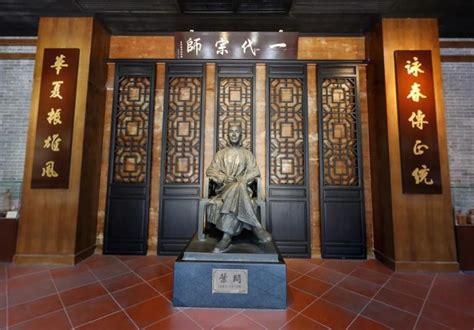
Yip Man was known for his smooth, flowing movements and his ability to generate power and speed with minimal effort. His Wing Chun techniques emphasized efficiency and directness, making them effective in real-world combat situations. He also placed great importance on the development of the mind and spirit, believing that a calm and focused mind was essential to the practice of martial arts.
The father of modern Wing Chun is acknowledged to be the late Grandmaster Ip Man, who lived from 1893 until 1972. Ip Man was born and lived in Foshan China where he started his Wing Chun training at the age of six under his Sifu, Chan Wah Shun, who was taught by the legendary Leung Jan. Ip Man studied Wing Chun for six years until Chan Wah Shun passed away in 1905. Before Chan Wah Shan died he asked Ng Chung Sao to help Ip Man complete the Wing Chun System. In 1909 while studying at St. Stephen Collage in Hong Kong, Ip Man, through classmates, came to know Leung Bik, the second son of the legendary Leung Jan. Ip Man studied with Leung Bik for about four years.
Many years passed, by which time Grandmaster Ip Man had returned to Foshan where he married Cheung Wing Sing and had four children, sons Ip Chun, Ip Ching and daughters Ar Sum and Ar Wun. In 1949 Grandmaster Ip Man left China for Hong Kong and it was around May 1950 that Grandmaster Ip Man first started to teach Wing Chun. The first class opened with only eight people, but it was not long before more schools whee opened and the name of Wing Chun spread to the outside. It was between 1955-1957 that one of Grandmaster Ip Man's more famous students Lee Siu Lung (Bruce Lee), started to learn Wing Chun. In 1962, Grandmaster Ip Man's two sons, Ip Chun and Ip Ching, came to Hong Kong from Foshan. It was not long after their return they started to resume their Wing Chun training under the guidance of their father. Grandmaster Ip Man moved to Tong Choi Street around 1964, where he mainly taught private tuition.
Leung Ting (Born 1947)
Leung Ting was born in Hong Kong in 1947 and began learning Wing Chun from Yip Man when he was 11 years old. He was one of Yip Man’s top students and eventually became one of his assistants, helping to teach his classes.
Read also: Wing Chun Pak Sao Basics
Leung Ting’s Wing Chun techniques emphasized a strong structure and the use of angles and leverage to gain an advantage in combat. He also developed a unique system of Chi Sao training, which involved practicing sticky hands with a partner to develop sensitivity and reflexes. Under Leung Ting’s leadership, the International WingTsun Association grew to include thousands of students and schools around the world. He has also authored numerous books on Wing Chun, which have become popular resources for practitioners of the art.
Wong Shun Leung (1935-1997)
Wong Shun Leung was born in Hong Kong in 1935 and began learning Wing Chun from Yip Man when he was 18 years old. He was known for his tough, aggressive fighting style and his ability to apply Wing Chun techniques in real-world combat situations.
Leung was a frequent participant in street fights, which earned him the nickname “King of Talking Hands.” He was known for his quick reflexes and the power of his punches, which he developed through extensive training in the Wing Chun system. Wong Shun Leung also played an important role in the development of modern Wing Chun. He was one of the first Wing Chun masters to openly spar with practitioners of other martial arts, such as Karate and Muay Thai. These matches demonstrated the effectiveness of Wing Chun techniques in a live combat situation and helped to dispel the myth that traditional martial arts were ineffective in real-world scenarios.
Chu Shong Tin (1933-2014)
Chu Shong Tin was born in Guangdong Province, China in 1933 and began learning Wing Chun from Yip Man in Hong Kong in the 1950s. He was known for his mastery of the internal aspects of Wing Chun, which involved the use of Chi Sao and other techniques to develop sensitivity, relaxation, and power.
Chu Shong Tin’s approach to Wing Chun emphasized the importance of relaxation and natural movement, which allowed practitioners to execute techniques with speed and precision. He believed that the key to developing internal power was to focus on the internal aspects of the art, rather than just the external techniques. Chu Shong Tin’s teaching attracted many students, including several who went on to become famous Wing Chun masters themselves.
Philipp Bayer (Born 1964)
Philipp Bayer was born in Germany in 1964 and began learning Wing Chun in the early 1980s. He studied with several masters, including Leung Ting and Wong Shun Leung, before founding his own school, the Philipp Bayer Wing Chun Academy, in 1990.
Bayer’s Wing Chun techniques emphasized a strong structure, fluid movement, and the use of body mechanics to generate power. He also developed a unique system of Wing Chun forms, which he used to teach his students the fundamental principles of the art. Bayer’s school grew rapidly, and he became one of the most influential Wing Chun masters in Europe.
Gary Lam (Born 1950)
Gary Lam was born in Hong Kong in 1950 and began learning Wing Chun from Wong Shun Leung when he was 16 years old. He became one of Wong’s top students and helped to teach his classes in Hong Kong. In 1974, Lam moved to Los Angeles, where he began teaching Wing Chun to the public. He was one of the first Wing Chun masters to teach the art openly in the United States, and his classes quickly attracted a large following.
Lam’s Wing Chun techniques emphasized power and speed, as well as the use of body mechanics and structure to gain an advantage in combat. He has trained many successful fighters and has also developed a unique system of Wing Chun forms, which he uses to teach his students the fundamental principles of the art.
Nino Bernardo (Born 1961)
Nino Bernardo was born in the Philippines in 1961 and began learning Wing Chun in the early 1980s. He studied with several masters, including Leung Ting and Wong Shun Leung, before founding his own school, the Bernardo Wing Chun Kung Fu Academy, in 1995.
Bernardo’s Wing Chun techniques emphasized speed and efficiency, as well as the use of sensitivity and reflexes to gain an advantage in combat. One of Bernardo’s most famous students is Donnie Yen, who played the role of Yip Man in the popular Ip Man movie series. Yen trained with Bernardo to prepare for the role, and Bernardo also served as a fight choreographer for the movies.
Bernardo has trained many other successful Wing Chun practitioners and instructors, and his school has become one of the most respected in the world.
The Spread and Evolution of Wing Chun
The history of Wing Chun is rich and varied, and the art has been passed down through generations of masters and students. Today, Wing Chun is practiced by people all over the world, and its popularity continues to grow.
The techniques and principles of Wing Chun have been adapted and modified by many different practitioners and schools, each emphasizing different aspects of the art. Some schools focus on the internal aspects of Wing Chun, while others emphasize the practical applications of the techniques in real-world scenarios. Despite these differences, all Wing Chun practitioners share a common goal: to develop their skills and knowledge of the art to become better fighters and better people.
Today, Wing Chun is practiced by people of all ages and backgrounds, from beginners to advanced practitioners. Whether you are interested in learning self-defense, improving your health and fitness, or simply exploring the rich history and tradition of Chinese martial arts, Wing Chun is a rewarding and fulfilling way to achieve your goals.