In recent years, a new generation of MMA superstars has emerged from the North Caucasus region, Dagestan. Fighters like the legendary Khabib Nurmagomedov, Islam Makhachev, Magomed Ankalaev, Usman Nurmagomedov, and many more have achieved great success in their MMA careers, and it seems like this is only the beginning. Many of them have a similar fighting style, focused on wrestling and positional dominance on the ground, which has led them to become world champions and top-tier fighters. But what are the key factors behind this remarkable dominance?
Deep in the rugged terrain of the North Caucasus, Dagestan is a region famous not just for its scenic beauty but also for being a powerhouse in the world of combat sports, particularly wrestling and mixed martial arts. This small Russian republic has produced a disproportionate number of world champions and top-tier fighters, which has intrigued and inspired sports enthusiasts and professionals worldwide. This success can be attributed to several key factors.
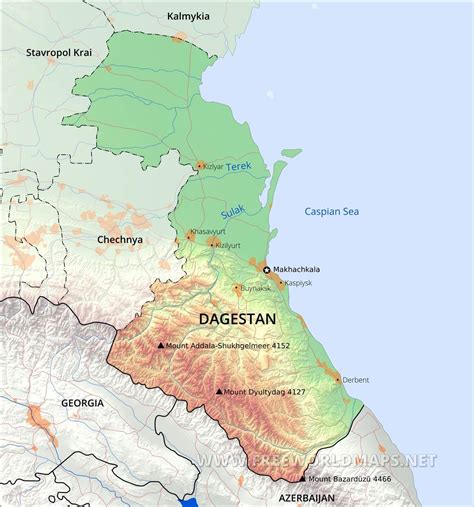
Map of Dagestan
A Culture Steeped in Combat Sports
Combat sports are not just a pastime in Dagestan but a way of life. The region boasts a rich history of traditional wrestling and martial arts that form an integral part of the local culture and social fabric. From a young age, children are encouraged to take up wrestling as a respectable pursuit that teaches discipline, respect, and perseverance. This cultural love of combat sports creates a supportive community that promotes fighters and motivates individuals to pursue excellence in wrestling and MMA. In Dagestan, wrestling and Judo are more than sports; they are seen as important elements of personal and community pride. This deep passion is supported by extensive institutional support, where schools, local governments, and sports organizations provide the infrastructure and resources necessary for nurturing talent.
Ibragimov explained that a young Dagestani’s MMA journey is made that much easier because the previous generation has already walked that path and is around to give advice where needed. “‘We live in the middle of nowhere in the mountains. You look one way and there’s nothing there, you look the other way and there’s nothing there. Back where they come from, there’s absolutely nothing. There’s no other option. There are cauliflower ears everywhere. It’s just who they are.
Read also: Pros & Cons of Martial Law
Historical and Socio-Economic Factors
Throughout its history, Dagestan has been through many hardships and wars. During Stalin’s rule, industrialization largely bypassed Dagestan, making it the poorest region of the Soviet Union. Additionally, in 1999 the republic of Dagestan was invaded by Chechen Islamist groups, which began the Dagestan war. As a result of these factors and the geographical location of Dagestan, this is a tough place to live. Many fighters here grew up surrounded by poverty, and fighting was their only way out.
Ibragimov told CNN Sports: “In Dagestan, guys really want to be fighters. In the whole of Europe, there’s not many guys who really want to be fighters. They just pretended like they are fighters. They want to be like fighters. But in Dagestan, there’s so many guys that really want to be fighters. Not all (European fighters). I’m not speaking for all of them, but I’d say like 30% or 50% of the guys, they don’t really want to be there." The combination of those factors breeds a relentlessness in Dagestani fighters, according to Lyubimov.
Wrestling Prowess
There is no other region in the world with more success in freestyle wrestling than Dagestan. Dagestan has produced many Olympic champions, and the region is known for its technical wrestlers. Dagestan’s training system is based on drilling and specific sparring, making their wrestlers extraordinarily precise and technical. One of the greatest wrestlers of all time is Buvaisar Saitiev. This Dagestan-born wrestler was known for his exceptional technique, and he won the Olympic gold three times and is a six-time world champion. Nowadays, another excellent wrestler is coming from Dagestan, Abdulrashid Sadulaev. Sadulaev is a two-time Olympic champion and a four-time world champion.
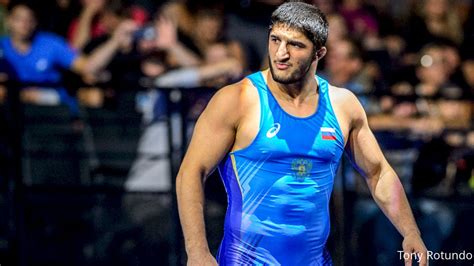
Abdulrashid Sadulaev
Unique Training Methods
Dagestani fighters are known for their versatile and unique training methods that blend traditional wrestling techniques with unorthodox practices. This mix not only includes classic wrestling and Judo drills but also incorporates local fighting styles and unconventional training methods that utilize the natural environment. For example, athletes often engage in exercises like climbing steep hills, lifting heavy stones, or wrestling on uneven terrains, which enhance their strength, agility, and ability to manage unpredictable combat scenarios.
Read also: Wrestling Tag Team: The Good Brothers
One of the most distinctive aspects of Dagestani combat sports training is the use of high-altitude camps in the Caucasus Mountains. These camps provide a serene and distraction-free environment, helping to focus training and exposing athletes to the physical benefits of training at altitude. Training at higher elevations is proven to increase red blood cell count and improve cardiovascular endurance, giving athletes an edge in terms of stamina and resilience.
The physiological benefits of altitude training have been well-documented in various sports, and Dagestani athletes have integrated this into their regular training cycles. The thin mountain air forces the body to adapt by enhancing its oxygen-efficient metabolic pathways, thereby improving overall aerobic capacity and endurance.
In Dagestan, gyms are government funded or recreational where people can come in. But at the beginning level, most of it is free. That rugged upbringing builds character and toughness.
The Khabib Effect and Mentorship
What Will Harris Learned Staying with Khabib in Dagestan | Joe Rogan
Since retiring in 2020, Nurmagomedov has transitioned into a mentor for the next generation of Dagestani fighters. He has had a hands-on effect on the burgeoning career of Makhachev, who is the No. When you train in Khabib’s gym, and then, especially when he’s in there controlling you, there’s no limits,” he told CNN Sports. “It’s like sometimes he doesn’t even set the timer for training. And then we just train non-stop.
Read also: Life Lessons from Brazilian Jiu Jitsu
Adaptation and Skill Refinement in America
“Obviously America is Mecca for making the name for yourself, right?” he explains. “The lights are much brighter when they hit the American promotions. It’s teaching them how to adapt and how to just refine their skills in general, just making better fighters, understand the game better, understand the rules better, understand what to expect better, get them to deal with medicals, with fight preparations, with weight cutting. The diet, the weight cuts, everything because they do it one way over there.
Lessons for Martial Artists
It is impressive to see how this region of the world has created some of the toughest and most well-rounded combat athletes worldwide. As martial artists, it is always a smart idea to see how the top athletes in the world do their training. One important lesson that we can learn from the Dagestanis is that you don’t have to possess the most advanced training tools to excel in your chosen sport. Most of the training facilities you see are simple, yet they were enough to produce top-level athletes in many combat disciplines. The exceptional success of Dagestani grapplers in wrestling and MMA can be attributed to their unwavering passion for sports and martial arts. At the end of the day, it is not about the facilities, equipment, or even crazy training that will create champions. The desire to grind consistently for years is what transforms regular folks into world-class competitors.
The following table summarizes the key factors contributing to the success of Dagestani fighters in MMA:
| Factor | Description |
|---|---|
| Cultural Passion | Deep-rooted love for wrestling and combat sports as a way of life. |
| Historical Hardship | Overcoming socio-economic challenges and wars, fostering resilience. |
| Wrestling Excellence | Exceptional wrestling training and technical proficiency from a young age. |
| Unique Training Methods | Blending traditional techniques with unconventional, environment-based exercises. |
| High-Altitude Training | Utilizing the Caucasus Mountains for enhanced endurance and cardiovascular health. |
| Mentorship | Guidance and training from legendary fighters like Khabib Nurmagomedov. |
| Adaptation in America | Refining skills and understanding the business side of MMA in the US. |