World Class Championship Wrestling (WCCW), later known as the World Class Wrestling Association (WCWA), was an American professional wrestling promotion headquartered in Dallas and Fort Worth, Texas. The company was initially an NWA territory and went independent in 1986 to become a major national promotion.
WWE owns the rights to the pre-1989 WCCW tape library, while post-1988 rights are held by International World Class Championship Wrestling. WCCW experienced tremendous success from 1981-1985, shattering attendance records and achieving global exposure through their syndicated television program.
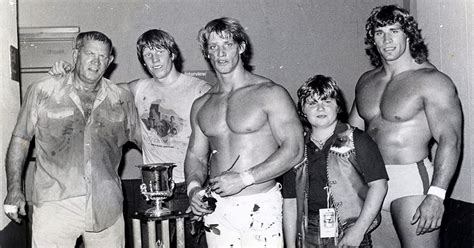
This is the story of the impactful Texas promotion where a lot of A24’s upcoming film, ‘The Iron Claw,’ took place. WCCW was one of the truly great territories, one whose story will likely always be remembered by the wrestling faithful as well as hold a special place in the hearts of the people of Dallas. People will most remember the Von Erichs, the family of wrestlers most associated with the promotion. They will remember how they captured the hearts of many through their battles with the Fabulous Freebirds as well as their run-ins with the Nature Boy, Ric Flair.

World Class Championship Wrestling Logo
The Early Years: From Big Time Wrestling to WCCW
Originally named Big Time Wrestling, the promotion rebranded to World Class Championship Wrestling in 1982, a name suggested by Mickey Grant, who produced its broadcasts. WCCW was originally known as Big Time Wrestling and, until the late 1970s, was dominated by its owner, Fritz Von Erich.
Read also: The Rise and Fall of WWA
Jack Adkisson, a.k.a. Fritz Von Erich, booked and ran the Dallas/Ft. Worth National Wrestling Alliance-affiliate starting in 1966. In 1966, Von Erich and Ed McLemore-owner of the Dallas Sportatorium- bought out the Dallas/Fort Worth Wrestling Office, breaking away from Houston Wrestling Office, which was managed by Paul Boesch.
In 1969, Von Erich took sole control over the Office after McLemore died from a heart attack, and also gained ownership of the Dallas Sportatorium. Von Erich began his wrestling career portraying a Nazi but was working as a babyface by the late 1960s, becoming a top star in the territory through the ’70s.
Initially playing his longtime role of a snarling, goose-stepping Nazi monster heel and sometimes teaming with "brother" Waldo, Fritz turned babyface in late 1966 and began feuding with Gary Hart and his stable of wrestlers (which at this time included Karl Von Brauner, Al Costello and the masked Spoilers); the feud between Hart and Fritz (and his sons) would continue off and on for more than two decades.
Fritz's other classic rivalries during this early period were with such stars as Johnny Valentine, Stan Stasiak, Professor Toru Tanaka, Lord Alfred Hayes, The Sheik, Bruiser Brody and The Great Kabuki. Babyface wrestlers playing secondary roles in the promotion at various times included Wahoo McDaniel, Pepper Gomez, Red Bastien, Jose Lothario and Lonnie "Moondog" Mayne.
As his sons began to launch wrestling careers of their own in the mid-to-late 1970s, Fritz gradually cut back on his in-ring appearances and concentrated on promoting, finally retiring from the ring altogether after a 1982 NWA American Title win over King Kong Bundy at Texas Stadium in Irving.
Read also: The Story of WBC Muaythai
Technological Innovations and Production Style
In 1982, the promotion-then known as Big Time Wrestling-changed its name to World Class Championship Wrestling in concert with the beginning of a new television show on Channel 39 in Dallas. Mickey Grant, who was working at the station, pitched the idea of a weekly wrestling show with a different production style.
Like most wrestling shows, their previous show was a two-camera shoot, with one camera on a stationary wide shot of the ring and a second camera on a dolly. Grant switched to a multi-camera shoot featuring six camera operators, some using shoulder-mounted cameras, which worked great to get close-ups of the in-ring action.
Inspired by how Don King produced boxing events, Grant also started putting microphones in the ring to pick up the sounds of wrestlers striking each other and the reverberations from the ring. WCCW also began incorporating the relatively new instant replay and slow-motion technology. The ability to replay portions of the match would especially highlight the stiffness of Texas wrestling, particularly Kevin Von Erich, notorious for not caring how hard he hit his opponents. The slow-motion replays showed every bit of that impact.
Most other pro wrestling television programs focused on short matches with the stars wrestling enhancement talent or jobbers, often filmed in a television studio and designed primarily to draw fans to attend upcoming local live events. World Class Championship Wrestling was filmed at the Dallas Sportatorium during their live shows, with each episode airing the main events from their weekly cards; they would even air the main events of their larger supercards like Star Wars and the Parade of Champions.
The Von Erich Era
The change in name and TV station also coincided with a shift in the focus of the promotion. As Fritz’s in-ring career began to wind down, the spotlight turned to his five sons. David, Kerry, and Kevin were all young, good-looking athletes, and the show focused primarily on various friends turning their backs on them and mercenaries brought in by longtime familial rivals like Gary Hart and Skandor Akbar to take them down.
Read also: History of WoS Wrestling
WCCW also helped pioneer the use of vignettes and video packages to introduce wrestlers and further along angles. With the mix of marquee matches and top-shelf production, WCCW was a big ratings draw worldwide. The Von Erichs soon became international stars, traveling to other NWA territories in St. Louis and Florida and touring Japan. The Von Erich brothers were so revered in Israel-partly due to satellite TV technology allowing World Class Championship Wrestling to gain popularity in the region-that Kevin Von Erich had his last match in 2017 on a show in Israel, teaming with his sons.
At that time in Texas, even if one did not follow wrestling, they knew who the Von Erichs were. Kevin was the oldest son of the Von Erichs. Kevin, like all of the brothers was extremely charismatic and is most remembered for wrestling barefoot, making him easily recognizable in a sport where almost all wrestlers wear high-topped boots. He actually never intended to use such an idea until his boots were once hidden before a match, so he decided to wrestle barefoot, which later become a signature of his.
David was the brother who had been groomed to eventually become the NWA World Heavyweight Champion. Standing at 6’7”, “The Yellow Rose of Texas” more than looked the part and he even competed against the 8-time world champion Harley Race, where he battled him to a draw. Several years later, he would feud with Ric Flair, the current NWA champion. Over the course of the feud, Flair called out one of the brothers Mike, saying that he (Flair) could easily pin him under a minute. David challenged him that if Mike could wrestle Flair for ten minutes without being pinned, then David would receive a title shot.
Kerry Von Erich, with his incredibly strong looking physique, was seen as the total package when it came to what a wrestler needed to be. Wildly charismatic, he played a big part in establishing a female viewership for the company. Kerry would also be a catalyst in the feud against the Fabulous Freebirds that took the promotion to new heights. After feuding with Ric Flair for the world championship in 1982, Kerry got another title shot on May 6th, 1984 at Texas Stadium in front of 45,000 people. The championship shot was supposed to go to his older brother David, who had passed away only three months before. In front of the largest wrestling audience in history at that point, Kerry pinned Flair for the championship. Watching it is truly heartbreaking knowing that this match and the entire show was dedicated to the memory of his older brother. Kerry was also a main target for Vince McMahon when he decided to take the WWF national.
Mike was the Von Erich who always felt like he needed to prove himself. Being of a slighter build than his three older brothers, mot wondered if he could make it like the rest of his family. Many wrestlers have also said that Mike never wanted to be a wrestler.
Chris Von Erich spent much of his life growing up doing odd jobs and camera work around WCCW. Standing around 5’5”, Chris was well below the average height and build of the men in his family, but that only drove him to prove that he could still be a world class wrestler.
The Legendary Feud: Von Erichs vs. The Fabulous Freebirds
The biggest feud of the early 1980s-in WCCW and throughout wrestling-was the Von Erich family’s battles against the Fabulous Freebirds (a team of Terry Gordy, Buddy Roberts, and Michael Hayes). Before coming to Texas, the Freebirds succeeded in the Georgia and Mid-South territories. While they initially came in as allies of the Von Erichs, their feud started when Hayes served as a special referee on Christmas Night 1982 for the NWA Worlds Heavyweight Championship match between then-champion Ric Flair and Kerry Von Erich that led to a program that broke box office records in Texas.
In 1982, Kerry was feuding with Ric Flair for the NWA World Heavyweight Championship. On Christmas Day, 1982, he competed in a steel cage match against the Nature Boy. In the months leading up to this, The Fabulous Freebirds had arrived in WCCW hailing from Georgia and had appeared to make friends with the Von Erich family. Because of this, the fans chose Michael Hayes to be an extra referee inside the cage to make sure Flair did not try anything illegal as he was accustomed to doing. Another Freebird, Terry Gordy, was put outside the ring as an enforcer to make sure that no one interfered in the match.
Michael Hayes, who had been very physical in separating the two opponents throughout the match, decked Flair after the two exchanged words. Hayes then began screaming at Kerry to cover Flair for the pinfall, but Kerry refused to win under such circumstances. As many of you know, the other way to win a steel cage match is to escape through the door or to get out of the cage first in general. As Kerry crawled to the door, ringside enforcer Terry Gordy slammed his head in the door.
The two groups would battle so fiercely that it could only end one way: with a Loser Leaves Town match between Kerry and Hayes at the Thanksgiving Star Wars show almost a year later. The two teams would go on to do battle for the next two years, as they traded victories in three on three tag matches or one member of each respective group would go head to head. The feud saw almost every match stipulation, from a simple no disqualification all the way to a leather strap country whipping match.
The two teams truly had incredible chemistry, and the intense nature of the feud even led Kerry to once proclaim, “This rivalry isn’t between Texas and Georgia, it’s between decency and filth!” Without the antagonist for the Von Erichs, WCCW never would have received the national and international exposure that it did.
The Von Erichs vs The Freebirds. WCCW 1983
Music and Ring Entrances
The Freebirds were some of the earliest pioneers in using popular songs as ring entrance music, sometimes alternating between the eponymous “Freebird” by Lynyrd Skynyrd and “Georgia on My Mind” by Willie Nelson. The success of that part of their act led WCCW to incorporate more popular rock songs as entrance music for other wrestlers, with the Von Erichs walking down the aisle to “Tom Sawyer” by Rush, while George Thorogood’s “Bad to the Bone” was used for the Dynamic Duo of Chris Adams and Gino Hernandez. Using popular music for ring entrances became a huge part of ’80s pro wrestling until licensing fees caused WWE and WCW to go with in-house compositions instead.
Almost a decade later, songs like “Enter Sandman” by Metallica, “Walk” by Pantera, and Dr. Dre and Ice Cube’s “Natural Born Killaz” were a big reason Extreme Championship Wrestling (ECW) became such a phenomenon. Since AEW’s 2019 debut, Tony Khan has wisely paid for licensed music when necessary, from the themes for Jon Moxley and Ruby Soho to Orange Cassidy and Hook to securing John Tesh’s “Roundball Rock” for the best-of-seven series between the Elite and the Death Triangle.
Tragedy Strikes: The Von Erich Curse
World Class Championship Wrestling remained hot throughout 1983 and early 1984 when the first Von Erich family tragedy hit. David Von Erich died while on tour in Japan. David’s death was front-page news in Dallas, and WCCW did an hour-long tribute show full of video packages and taped memorials. The rumor was that the NWA had scheduled David to win the world title from Ric Flair in May of 1984. Kerry took that spot, winning the title from Flair at the first annual David Von Erich Memorial Parade of Champions in front of 32,000 fans at Texas Stadium.
Kerry would lose the title to Flair a week later in Japan as the NWA was too concerned about Kerry’s out-of-ring habits to keep the title on him longer. (Fritz is also said to have made Mike Von Erich begin wrestling in November 1983 to have Mike pick up where David left off, despite Mike never having aspirations or the natural abilities to be a pro wrestler. Mike took his own life in 1987, as did their youngest brother Chris in 1991, and Kerry in 1993.)
Something that many do not actually realize is that the Von Erichs (real name Adkissons) had actually lost their first son when he was six years old. Jack Adkisson Jr. I have mentioned the death of David Von Erich several times before, as it probably affected the success of his family’s promotion in a big way. As I said, David was in line to win the NWA championship from Ric Flair around April or May of 1984. In February of that year, he was touring Japan when he began complaining of stomach pains. On February 10th, 1984, David was found dead. The official records state that he suffered a heart attack as a result of ruptured intestines. The reason for the rupture was evidently acute inflammation of the small intestines, otherwise known as enteritis.
Several other theories were proposed in the years after, one coming from Ric Flair saying that David had in fact committed suicide by overdosing. According to Flair, Bruiser Brody, a longtime friend of David, found David and flushed the narcotics down the toilet to cover up the suicide.
Mike never really wanted to wrestle. He felt that he was not on the same level as his family members, but after the death of David in 1984, Mike was thrust into the feud with the Fabulous Freebirds in order to fill David’s spot. Because of this and because of the fact that Mike and David looked very alike in the face, many fans held expectations that he would be as great as David. Many people said that this caused Mike great stress over the pressure that was placed upon him. He was also diagnosed with toxic shock syndrome, which is very similar to the staph virus and can cause issues all over the body. Mike later was involved in a car accident that caused multiple head injuries. His brother Kevin said that Mike often came unglued because of the frustration he felt with his condition.
The only thing Chris ever wanted to be was a wrestler. Unfortunately, it was not meant to be as his body would just not allow for him to compete. He was also greatly depressed over the deaths of his brothers, especially Mike’s suicide.
Kerry Von Erich would go on to have a successful career in the WWF (now WWE) where he was an Intercontinental Champion among other things. Before wrestling for the WWF, Kerry unfortunately lost his leg in 1986 after a motorcycle accident. He was actually able to wrestle with a prosthetic leg for the rest of his career, including his time in the WWF, which honestly seems incredible, especially considering his success. However, the loss of his foot would eventually lead to an addiction to pain killers, which resulted in multiple arrests. The second arrest occurred while he was still on probation, which likely would have caused him to serve a substantial amount of time in jail. On February 18th, 1993, one day after he was indicted, Kerry committed suicide by a single shot to the chest on his father’s ranch in Denton County, Texas.
Bret Hart said in his biography that Kerry had told him months before that he planned to commit suicide. Fritz Von Erich would live to see five out of his six sons die before his own death on September 10th, 1997. He had been previously diagnosed with lung cancer, which then spread to the brain.
The Downfall of WCCW
WCCW was still booming in the mid-’80s, posting solid TV ratings and attendance numbers across the board. Adams and Hernandez (along with Hart) assumed the Freebirds’ role after the faction left WCCW; 26,000 people showed up at the second Cotton Bowl Extravaganza to see Kevin and Kerry beat the Dynamic Duo in a hair vs. hair match.
However, the dark cloud over WCCW eventually ended their boom period. First, the death of Hernandez cut short a promising feud between him and his ex-partner, Adams. Then, in 1986, the NWA decided that the world champion would no longer be touring to other promotions, leading WCCW to withdraw from the NWA and crown its own world champion. WCCW would recycle the feud with the Freebirds and attempt to recreate the Chris Adams angle with the less talented Brian Adias, with neither retread working as well the second time. They even brought in a fake Von Erich cousin, Lance, to fill in for an injured Mike.
While wrestling is built on artifice, the fans’ connection with the Von Erichs was real. The insertion of a fraudulent family member damaged that. With their competitors adopting WCCW’s filming and sound design approach, it no longer felt cutting edge. WCCW did get a television deal with ESPN in 1988, although they primarily showed older footage from the prime period in the early 1980s rather than the current product.
By 1988, WCCW was in a bit of a rough spot. They had withdrawn from the NWA in 1986, a year that had also seen the Texas oil business take a huge hit, which hindered their fanbase. Their popularity had gone down after their peak from 1981-1985 and they were having to compete with a WWF (now WWE) that was rapidly expanding into all markets nationwide. WCW was also in control of a national audience, making it even more difficult for WCCW to succeed.
The writing was on the wall, but Fritz Von Erich continued to try and take the promotion national. In 1988, Fritz attempted a merger with two other promotions, the AWA and then the CWA out of Memphis. This merger became known as Pro Wrestling USA. After their failure, Fritz sold WCCW to the owner of CWA, Jerry Jarrett. The combined federation was known as the United States Wrestling Association. A feud within this new promotion would occur that essentially pitted Texas wrestlers against Tennessee wrestlers, which led to a match on August 4, 1989. The match determined who would have control of WCCW. A wrestler named Phil Hickerson represented WCCW while Eric Embry represented USWA. Embry would win, prompting several of the USWA wrestlers to go to Section D of the Dallas Sportatorium and tear down the WCCW banner. They would then spit on it and stomp it into the ground, and the journey of WCCW had officially ended.
The Legacy of WCCW
Eventually, WCCW would merge with the Continental Wrestling Association, and by 1989 they would sell the promotion-renamed the United States Wrestling Association-to Memphis promoter Jerry Jarrett. WCCW ended in embarrassing fashion, featuring an angle where a cage match between Eric Embry and PY Chu-hi decided the company’s fate. After Embry’s win, Sportatorium fans and wrestlers were cheering as he ripped down the World Class Championship Wrestling flag and replaced it with the USWA banner.
The WCCW era only lasted seven years, from 1982 to 1989, but had an outsized influence on professional wrestling. In many ways, WCCW was the 1980s version of ECW, a promotion that caught lightning in a bottle by breaking the stodgy mold of pro wrestling-although WCCW drew much bigger houses and made way more money than ECW ever did. However, once promotions with deeper pockets adopted those innovations, they couldn’t survive. Still, WCCW’s impact was felt throughout the wrestling history which followed.
There are simply not enough words to describe what the Von Erich clan meant to wrestling, but especially to the people of Dallas. They were simply rock stars that everyone knew about. I recently shared with the mother of a good friend of mine that I love wrestling and she told the story of how her father had taken her to a show when she was young. The only thing she really remembered is that there was this family of wrestlers there that everyone loved. After a moment of thought, she exclaimed that their name was the Von Erichs and that she had always remembered just how amazing they truly were.
Nowadays, there is very little left to prove that WCCW ever existed. The Dallas Sportatorium was demolished in 2003 after years of rumors that it would be done. Even though it is said the Sportatorium had many problems, including heating and cooling problems, unsanitary conditions, and a pit in the foundation, it will always be remembered as one of the best wrestling venues in history. There is also very little left of the Von Erich clan themselves. Kevin is the only surviving member of the second generation of Von Erichs and now lives in Hawaii with his wife and four kids, who are all adults.
In 2009, the Von Erichs were inducted into the WWE Hall of Fame. They were inducted by their old rival, Michael Hayes, and Kevin was there to accept the induction on behalf of his family. The speech is truly wonderful, as it demonstrates the spirit that was fostered by the great Von Erichs. He talks about the his last wrestling tour in Africa, which occurred right after Kerry’s death. All of the wrestlers knew how hard it was on him, and they treated him like family throughout their time together.
Its absolutely true what Kevin said. The Von Erichs’ memory is still very much alive in the memories of those that witnessed their passion and talent. It still lives in anybody who happens to stumble across the old tapes of their wrestling shows.
The table below summarizes key events in the history of WCCW:
| Year | Event |
|---|---|
| 1966 | Jack Adkisson (Fritz Von Erich) takes control of the Dallas-Fort Worth wrestling territory. |
| 1982 | Big Time Wrestling is renamed World Class Championship Wrestling. |
| 1982 | The legendary rivalry between The Von Erichs and The Fabulous Freebirds ignites. |
| 1984 | David Von Erich mysteriously dies in Japan. |
| 1989 | WCCW merges with Jerry Jarrett’s Memphis-based CWA, becoming the United States Wrestling Association. |
| 2009 | The Von Erich family is inducted into the WWE Hall of Fame. |
The Von Erichs
tags: #world #class #championship #wrestling