Wing Chun's long pole, known as the luk dim boon Gwan or Dragon Pole, is a formidable weapon employing a devastating centerline fighting principle with a reach of eight to thirteen feet. It harnesses the strength and reinforcement of the entire body, utilizing both sides of the pole and its frontal striking power at the tip.
Historical Significance
The Wing Chun long pole, also known as the 6/12 point pole or Luk Dim Boon Kwan, is often considered one of the first weapons learned in the system. Its historical demand has always been high, though quality poles made from the original wood have sometimes been scarce. As a respected weapon used in the Kung Fu style of Wing Chun, the Wing Chun pole is highly regarded by many Kung Fu fighters.
There are several stories surrounding the origins of the long pole in Wing Chun. One account suggests that Leung Yee Tai learned the dragon pole techniques from Abbot Chi Shin, a Shaolin monk who escaped the destruction of the Shaolin Temple by the Manchu Government. Abbot Chi Shin, disguised as a cook, hid with a red junk boat opera troupe.
Another story tells of a Hung Gar master who worked with boatmen, teaching them a swift method to develop internal power and strength, which was then integrated into their Wing Chun training. The straightforward and rapid fighting movements of the dragon pole (luk dim boon gwan) proved to be ideal complements to the Wing Chun system.
This narrative illustrates Wing Chun's openness to learning, adapting, and respecting other arts. The system embraces effective and simple methods to quickly end a fight, focusing on reactions-direct and centerline-oriented-rather than elaborate techniques.
Read also: Contributions to Wing Chun
Historical Context
Historically, the dragon pole (luk dim boon gwan) served as a boat pole, guiding vessels, pushing them away from rocks, and propelling them forward, similar to the poles used on Gondolas in Italy.
Following the Manchu Government's consolidation of power in China, weaponry was outlawed to control the Chinese population. The Manchu government restricted the work of the Hon’s (Chinese), increased their taxes, burdened there economy and forbid them from reaching the higher levels of government office. The Manchu government also forbid and banned the Hon’s (Chinese) from any type of Kung Fu training.
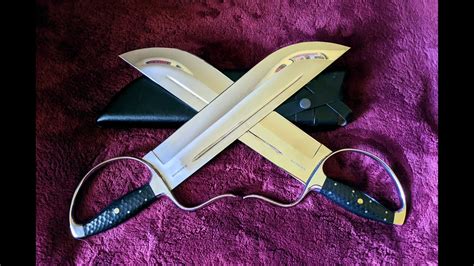
Wing Chun survived by going underground, employing concealment, assassination, and espionage. Rebel Wing Chun masters, often hiding on boats as actors, traveled between southern and northern China, targeting Manchu generals and politicians in back alleys. Wing Chun’s concealed weapons, fast hands, and quick reactions were ideal for these close quarter fights. Sharp side or not, imagine getting hit in the neck, joints, ribs, face, wrists, arteries, veins or tendon’s with the speed and precision of Wing Chun with the steel and brass of Wing Chun Butterfly Swords.
Training with the Long Pole
Long pole weapon fighting training is saved for those students who demonstrate they understand the basic fundamentals and are ready to begin the intermediate to advanced training these weapons provide. Remember that advanced Wing Chun classes in weapons are an extension of your empty hand training.
The fighting mindset of the dragon pole fighter (luk dim boon gwan) should prioritize the most direct and efficient use of the pole, aiming to start and end fights quickly. Drills should cultivate both internal and external power. These poles are employed as defensive weapons aimed at developing unarmed power generation.
Read also: Maximize Your Wing Chun with the Dummy
Wing Chun Liu Dian Ban staff, also termed as Lok Dim Boon Kwun, translates to "Six and a half Point Pole." It is a form that involves a series of around seven moves, each being the half point. The power achieved when wielding the weapon is concentrated at the point of a flexible force. These wing chun forms requires one to use tremendous strength from all parts of the body hence form is essential in developing the back and the shoulders, the biceps and the triceps, the forearm and the wrists plus the legs.
The typical pole is crafted from ironwood or teak, worked with great dexterity to achieve a smooth surface. The Long Pole is a tapered wooden pole; the length of a normal pole can vary but in most cases its length is around 8 feet but sometimes other poles will go as far as 10 feet but not easily found outside of Hong Kong and Mainland China. Due to the difference in diameter of one end of the pole to the other end (the head) which is even thicker, the Wing Chun long pole has been nicknamed the ‘tat-tail pole.’
Possessing only 7 essential techniques, this Wing Chun weapon has proven to be very precise, simple and elegant with a rather compact form sequence which as always demonstrated the efficient nature of the Wing Chun martial art. The techniques involved in handling the long pole are based on a number of major theories which enable the practitioner to effectively correct and reorganize his or her own movements as soon as it is fully understood.
It can be important to note that there have been several misconstrued forms of long pole however, the late Grandmaster Yip Man is the only person who has practiced and mastered the essential sequence of pole fighting as an authentic long pole form and has passed it down to several generations. These include his seven basic movements which are flip, spear, cover, sweep, sideward flick and the half fence.
Wing Tsun long pole training - #DasWingTsun - Wing Chun weapons
Read also: Understanding Siu Lim Tao
Grandmaster Yip Man
Grandmaster Yip Man is often credited with popularizing the Wing Chun long pole. When Ip Man moved to Hong Kong several years after, he taught friends and relatives as well as some students including Bruce Lee. Even after his death, Ip Man Wing Chun is still being taught to many martial arts students.
In 2008, a Hong Kong film starring Donnie Yen called Ip Man was released in cinemas. The movie was based on the life of Ip Man. Many artifacts of Ip Man’s life and history of the art of Ip Man Wing Chun had been left behind when he died.
Wing Chun Drills and Exercises
Many Wing Chun masters “Sifu” recommend practicing Wing Chun drills solo for self-defense before starting training with a partner. But, it can be unclear which training drills to practice alone and which drills to practice with a partner. In this guide, we listed the most effective Wing Chun drills to work on alone and the drills to work with a partner. Also, we described the details of how to perform those solo training drills to benefit the most from them.
Wing Chun Ring Drills
Wing Chun ring drills help learn the positions of the arms in a limited space at home. Using these training drills, students learn to keep their elbows on the center line. That develops extra power to the martial arts attack and defense. These drills help keep shoulders relaxed and develop muscle memory. This is the key point of every Wing Chung movement. The drills help improve arm coordination and Wing Chun hand forms. That helps develop the power by maximizing waist rotation. The rings are lightweight and can be easily taken anywhere.
It’s really up to your individual preference but the Wing Chun ring can be made of tan or other types of wood, metal, or plastic. A ring can be anywhere from half the size of your forearm to the full size of your forearm or somewhere in between. For our students, we recommend a ring between 8 to 9 inches.
How to Use Wing Chun Rings
You should hold your elbows together. Some students may not be able to touch their elbows and it is totally fine. You may take your funny bone and put your elbows together. Then you will have your hand up and your other hand down but not close to your body. It’s going to be away from your body as your elbows are together. Then from that position, come around to the other side. As you do this, you should do your best to maintain those elbows together and keep them on your center line. Keep the elbows together as you go forward and around as well. If you can not touch your elbows then you can take something (e.g. a foam roller) and hold it in between and then come across.
The benefit of training with Wing Chun rings is that it teaches to maintain elbows and shoulders stability while performing attacks and defenses. It is important to keep elbows and shoulders stable. This is one of the basic exercises of Wing Chun training that will develop your awareness of body positioning and weight distribution. You can practice at home comfortably and effectively.
Wing Chun Beginner Drills
Start with your hands and feet together. Then you need to come out with your feet and bring your hands back with your fists up. While you are in this position you will need to drop your knees down and move them up slowly. This is important legwork that will make your legs stronger when you do this exercise.
In this exercise, you will learn how to turn and twist your body. Put your feet together and then spread them out. Then twist your body while keeping your weight on one leg. The weight distribution should be about 70 to 30 percent. This move teaches you how to walk from this position. It’s important to have the weight on one leg. Try to practice this footwork exercise every morning. In this exercise, you will learn how to do steps according to Wing Chun’s martial art style. Stand in the position and lift your hands up. You will be tracking your body forward keeping the weight of your body on the rear leg.
Wing Chun Blocking Drills Tan Sao
Tan Sao (Sometimes spelled as Tan Sau) is one of the basic, foundational Wing Chun techniques for self-defense and you will learn the proper way of doing it. Also, you will get an idea of the wrong way of doing it to avoid mistakes. Tan Sao (Tan Sau) is very important because it’s used to defend the hook punch or the sucker punch, which is one of the most common attacks in North America. Please be careful, If you do it wrong, the punch will slip through.
With the Wing Chun Tan Sao (Tan Sau), the proper way would be the Wing Chun stance. It’s very important that you focus on the elbows and keep them in the center line. An amateur Wing Chun practitioner focuses on the hand, but you should always focus on the elbow. Hands should not be loose but just relaxed. They should always protect your centerline. You should start your movement from the center line and be aware of your body positioning.
When practicing Tan Sao (Tan Sau), another thing you want to look for is your fingers. You do not want to have lazy fingers. Imagine you are holding a plate, your thumb needs to be in. If your thumb is out and you miss, you can break your thumb. But if it’s tucked in, you are going to be okay. The arms angle is also very crucial, it should be 45 degrees. You have to adhere to all these details and go slowly. Using this drill practice movement mechanics and keep your shoulders relaxed but firm like bamboo.
Wing Chun Chi Sao Drills
Wing Chun Chi Sao exercises are conducted with the ball and with the ring. They help develop internal power while keeping hands loose and relaxed. Wing Chun Chi Sao solo training drills are going to maximize your hand sensitivity. That skill of internal power is going to help you perform the other Wing Chun training drills flawlessly. Usually, the best results are achieved when you perform this drill during four rounds of two or three minutes each. It is completely ok if you feel a burn in your hand muscles at the end of each round as you will train your muscle memory while doing this exercise.
Drills and Exercises To Strengthen Your Core At Home For Wing Chun
Wing Chun requires a good amount of stability in the legs in order to make hands fast and effective. Stand with your back close to the wall and put your heels close to the wall. Bend your knees as low as you possibly can while keeping your back straight, keeping heels on the ground. You will be developing your posture and strengthening your legs at the same time. Put your head against the wall and hold for one minute. Hold this stance for up to 5 minutes. You will also need to strengthen your lats (latissimus dorsi muscles. They help hold your shoulders down while you are doing the exercises. The plank exercise is recommended to strengthen the lats. You can start on your knees if the plank is too hard at the beginning. It can be done with a band. Get into your stance, keep your shoulders down and pull your elbows back as much as possible, hold your posture for 5 seconds. Go squat down as slowly as you can. Keep your lower back straight. As you come up, push through your heels, and tuck your pelvis up. Extend one leg and slowly squat down on your other leg. Don’t rest on the other leg when it touches the ground. Switch your legs. Repeat 15-20 times.
In addition to strengthening our bodies, we also need to stretch. Repeat the exercises in the video below daily to improve arm flexibility.
There are 108 forms of this exercise In traditional Wing Chun. Though keep in mind that the wooden dummy is not a punching bag. The wooden dummy drill’s goal is to help condition forearms. It is a very helpful tool to prepare for practice with a partner.
Pak Sao and Lap Sao
One of the most popular beginner techniques for self-defense is Pak Sao. You will need to maintain a good stance throughout the exercise focusing on your center line. You should perform this exercise paying close attention to the form of the drill, focusing on the wooden dummy. With Lap Sao you pull one arm and then punch with the other. once you master this drill individually, you can practice Pak Sao and Lap Sao together with a partner. The key is to focus on your form, direct your energy forward, and go slow in the beginning.
While doing the above solo training drills on the Wooden dummy, It is very important to keep the gap between you and the dummy closed. The video below will show you nine moves that you can start with and also how you can apply them in a real fight. All the moves in this video are a combination of blocks to deflect opponents’ attacks and punches.In Wing Chun, most of the blocks are done with the forearm. The punches are done with the open palm or the fist. When practicing the techniques you can punch high, in the chin, or low, in the center of the body. Most of the kicks are done low to deflect the opponent’s kicks. You can also grab your opponents behind the neck and pull on their arms to get them out of balance and clear way for your next move or attack.
You can combine the movements, blocks, and attacks. The focus of this Wing Chun offensive technique is to punch rapidly and overwhelm an opponent with multiple attacks. An opponent’s attack is deflected by this type of palm block. The purpose of the drill is to teach you to move directly. This is a great way to train yourself on what to do when your punch or arm is obstructed. The Grabbing Hand (or Pulling Hand) technique. This technique teaches that it is often better to rely on one’s intuition or feelings in a fight, rather than trying to see what the opponent is doing. With both arms working at the same time, the three seeds are now incorporated, but still independently of each other.
Training Equipment
Wing Chun utilizes very specialized training equipment to enhance and optimize a student’s skill. In some cases, the equipment allows students to express significantly more force than they could with a partner, physically conditioning the student’s body and providing the experience of hitting with power. The Wing Chun Concepts course will primarily utilize the Wing Chun Battle Post or Da Jong, which combines the most important features of both the Wooden Dummy and the wall bag. The Concepts course includes detailed lessons on how to construct your own Battle Post easily and inexpensively.
Wing Chun Concepts Curriculum
The Wing Chun Concepts curriculum consists of three primary elements, Structural Development Forms, or simply Forms, Reflex Development Drills, or Drills, and Tactical Development Drills, or Tactics. All of the Wing Chun techniques are first learned from the Forms and Drills. These sequences provide a safe and effective way to practice and polish the skills. It is important to note that the intent, focus, content, and sequence of movements for both Forms and Drills can change from lineage to lineage, or even from school to school. The most common curriculum framework includes three empty hand forms, one wooden dummy form, and two weapons forms.
Tactics are a modern evolution of traditional (gwoh sau and maai saan jong) combat sparring. Tactical drills pair the Wing Chun technique with Real World self-defense situations to create a laboratory for problem-solving. Tactics are used to incrementally prepare students for sparring and to test the legitimacy of the Wing Chun technique. Tactics may be trained against one or more attackers, with or without weapons present, and you may be defending from a standing position, pinned against a wall, seated, or flat on the ground.
Below is an overview of the entire Wing Chun Concepts curriculum. It follows a strictly linear progression where every completed step in the syllabus builds a foundation for the next. This allows the body to learn, adapt and integrate the techniques until they can be expressed reflexively without conscious thought. The progression also takes into account the changes and transformations in both body and mind.
Wing Chun Concepts does not use belts or formal, military-style ranking. Instead, it uses simple levels of study, much like the progression through college: freshman, sophomore, junior, and senior. Since no one wears kimonos anymore, there is no practical need for belts or sashes. Instead, we use T-shirts, marked and color-coded to note the current level of training.
The levels of training are:
- Orientation (Freshman): This is the introductory level with a focus on orientation.
- Foundation (Sophomore): This is the foundation level with a focus on building strong basics.
- Integration (Junior): In the equivalent of your sophomore year in Wing Chun, you will learn full-body integration, moving instinctively and intuitively as one continuous whole.
- Application (Senior): As a junior at the university of Wing Chun, you will be challenged to deepen your understanding of Wing Chun.
- Tactics (Graduate): The senior or graduate level of Wing Chun is devoted to Tactics and sparring.
- Weapons (Post-Graduate): This completely optional post-graduate level introduces both classical weapons (the long pole and butterfly swords) and modern weapons (sticks, knives, guns) into the mix.
- Instructor (Kung Fu Life): For those to whom Wing Chun has become an inseparable part of their Kung Fu Life, this level provides the skills to become an instructor and take the knowledge of Wing Chun to the next generation.
| Level | Focus | Description |
|---|---|---|
| Orientation (Freshman) | Orientation | Introduction to Wing Chun Kung Fu and its unique character. |
| Foundation (Sophomore) | Building Basics | Building a strong foundation of skill, fitness, and mental endurance. |
| Integration (Junior) | Integration | Full-body integration, moving instinctively and intuitively as one continuous whole. |
| Application (Senior) | Application | Deepening your understanding of Wing Chun. |
| Tactics (Graduate) | Tactics and Sparring | Putting your knowledge and skill to the test. |
| Weapons (Post-Graduate) | Classical and Modern Weapons | Introduction of classical and modern weapons. |
| Instructor (Kung Fu Life) | Instructing | Provides the skills to become an instructor and take the knowledge of Wing Chun to the next generation. |
The Long Pole in Ving Tsun
The Long Pole is a weapon between 8 and 10 feet long and is made out of very hard, strong, but flexible wood and looks like a giant pool cue. The best is when is made from Red Oak hard but flexible wood, and weighs between 5 and 6 pounds. If you are an average sized or larger sized male you should probably use a 9 foot pole for training purposes but some of my customers want a larger and heavier pole. The pole is a relatively recent development in Ving Tsun. It is probably derived from the other kung fu styles, but the movements were modified to suit the ving tsun principles. In Wing Tsun the pole is never used in a swinging motion, but instead in a stabbing motion, like a spear but without the metal point. Although two hundred years ago the long pole was actually used in combat, today it is learned mostly for historical reasons by ving tsun fanatic types and advanced instructors, and also as a unique method of strength training that is said to greatly increase power in the empty hand techniques.
In Ving Tsun schools the pole is generally not taught until you have achieved some hand skills. In some Wing Chun schools only the basic strength building exercises are taught, not the long pole form or the actual pole fighting techniques. The pole is said to help develop the ability to strike with power in a very short range. This is variously called “Fa Jin”, or “inch force”, as well as other names. This type of power is essential to Ving Tsun because in Ving Tsun we never pull back our hand before a punch or strike. Ving Tsun considers pulling back to be too slow, too telegraphic, and it also creates an opening for your opponent to come in.
Because in VT you must strike without pulling back, and because, in general, Ving Tsun is a close quarters fighting style, the ability to exert power in a short distance is very important. Incidentally, this kind of power is not unique to Ving Tsun, nor to Eastern Martial Arts styles. While eastern martial artists explain short range power in terms of Chi, or the “silk reeling force”, westerners talk about fast twitch muscle fibers and kinetic linkages. Both eastern and western stylists would agree that the Ving Tsun punch utilizes a unique snapping of the wrist at the moment of contact to create extra power. Also both would agree that having a strong wrist is an important part of punching power due to the fact that when your punch hits a solid object such as an opponent’s body the impact creates a rebound or recoil force which has a tendency to collapse the weak points, if any, of the attacking weapon. Both the wrist and the elbow are potential weak points in the punch.
Because the wrist is often the weakest point in the “linkage” it must be fully trained to prevent any collapse on impact before the punch can reach its full potential. Remember Boxers and other ring fighters use not only gloves but hand (and wrist) wraps which stabilize the wrist. While the pole is not all that heavy due to its great length and leverage factors it does build up tremendous strength in the wrists and forearms as well as exercising various stabilizer muscles. After a hard workout with the pole, you will feel pain in muscles you never even knew you had.
Kung Fu Magazine - The WingTsun long pole technique, known in Cantonese as luk dim boon gwun (six-and-a-half point pole), is one of the least understood elements of WingTsun kung fu. Today there are a multitude of books and videos for sale by different teachers, each claiming to show the original long pole form that was passed down by the late Grandmaster Yip Man. Oddly enough, no two versions look the same! This leaves the observer to wonder which one is the true form taught by the late Grandmaster Yip Man, and which ones were made up by the person selling the book or video.